Skip to content

Posts from the ‘France’ Category

No. 43: Les Rosbifs

As I’ve mentioned several times in other posts, I do love the fact that living in France affords me the opportunity to not only visit the United Kingdom, but has also allowed me to make friends with a group of wonderful British women living in Paris. Interestingly I actually seem to fit in better with the British community and the other non-American expats than with my own kind.

Yep, one of the 365 things I love about France is indeed *les rosbifs. I find their humor and candor refreshing and of course, I love their accents. I like their worldliness and global perspective. I like that they provide a reality check on America’s place in the world. I like the fact that their national news is international. And, I love their vocabulary. Why be “great” when you can instead be “brilliant”?

Have a go at these few lines:

Having skived off work and legged it to his mate’s flat, they had a knees up with the neighbors and faffed around. The next morning feeling a bit wonky, the poor bloke was so knackered he had a kip wearing nothing but his pants. Even though it was monkeys outside when he woke up, he popped over to the chemist wearing only his pants and his mac to pick up some nappies, plasters, and bog roll. At least he wasn’t starkers. On the way back home a tosser of a lollipop man stopped him as a long parade of lasses eating fairy cake and candy-floss blocked the street. He thought to himself, this is “total pants”, but not wanting to whinge about it, decide to make the best of a bad situation and pop into a pub for a pint and some bangers and mash.

Have you lost the plot?

Vocabulary:

bangers and mash: sausage and mashed potatoes

blog roll: toilet paper

chemist: the pharmacy/ pharmacist

candy-floss: cotton candy

had a knees up: to go to a dance party

faffed around: dither, waste time

fairy cake: cupcakes

it’s monkeys outside: it’s very cold

kip: sleep or nap

knackered: exhausted

lass(es): girl(s)

leg it: run or run for it

lollipop man/woman: crossing guard

lost the plot: gone crazy

mac: raincoat, short for Macintosh

nappies: diapers

pants: underwear (the Brits say trousers)

plasters: Band-Aids

skive off: evade or avoid something

starkers: naked

tosser: idiot

total pants: nonsense, rubbish, crap

whinge: whine

wonky: not right

**les rosbifs: Calling a Brit a “roast beef” is a French insult in line with the Anglo insult “frog”. I believe it was originally a gastronomic term describing the English style of cooking beef. At some point in history, a French king sent a delegation to England to learn this specialize way of cooking meat. Clearly this was before the French became the culinary champions of the world.


No. 41: The “Frogs”

While in London this weekend, I asked around about why the Brits call the French “Frogs”. Most people assume the nickname comes from the Frenchies taste for frog legs. However, it turns out there are a whole bunch of different theories about where this term of endearment or offense (depending on your prospective) originated.

Here are a few of my favorites:

The Fleur-de-Lys: During the Middle Ages the French flew a blue flag with a gold fleur-de-lys on it. The English, unfamiliar with the fleur-de-lys, mistook the flower for a frog, and had a right old laugh about a country that would put a gold frog on their flag, and thus began sarcastically calling their nemesis “frogs”.

Elizabeth I & Her Term of Affection: Apparently England’s Queen Elizabeth I had a strong affinity for frogs and often used the word to refer to her closest friends and lovers. At some point one of her dangerous liaisons was with her top diplomat to France, and their juicy correspondence often began with “My dear frog…” Somehow word got out about this term of endearment, and the French became the frogs.

The Swamp: Before Napoleon and Haussmann came in to clean up Paris and transform it into the city we know today, the city was much less the city of light and much more the city of frogs (quite literally). Paris was swampy and therefore full of many little croakers. The now upscale Marais–which means swamp, was in fact a swamp, back in the day, and a very undesirable place to live. The monied-folk living outside of the city in places like Versailles began referring to those who lived in the swamp, as the “frogs”. Foreign ambassadors took a shine to the term, and voilà, the French became the frogs.

Culinary Observations in WWI: British soldiers observed their French comrades odd affection for eating frog legs while serving side-by-side in the trenches, and felt they had no other choice than to call their allies frogs.

Camouflaged Foes: During the next war, WWII, it is claimed that the French resistance fighters were so brilliant at hiding from the Germans, that the Germans began to grumble that trying to find them was like trying to find a frog in a murky pond.

So there you have it. Which do you prefer? Do you know any other stories that explain the amphibian nickname?

Next up: Why the French call the British “roast beefs”…

No. 40: Hidden Gems

I love it when agreeing to do an ordinary favor for a friend turns into a secret discovery. Secret discoveries in Paris are not all that unusual, especially when you make a conscious effort to slow down, take life as it comes, and frankly, just look around.

With 5 million things to do today before I head off for a short trip to visit Kitcat in her new home in Epsom, I agreed to head to a part of Paris I don’t usually hang out in—except when I’m craving the world’s best falafel or need some gefilte fish: le Marais. The delightful French girl Kitcat lives with in the UK was anxious to be reunited with her guitar and I promised to fetch it and carry it across the Chunnel.

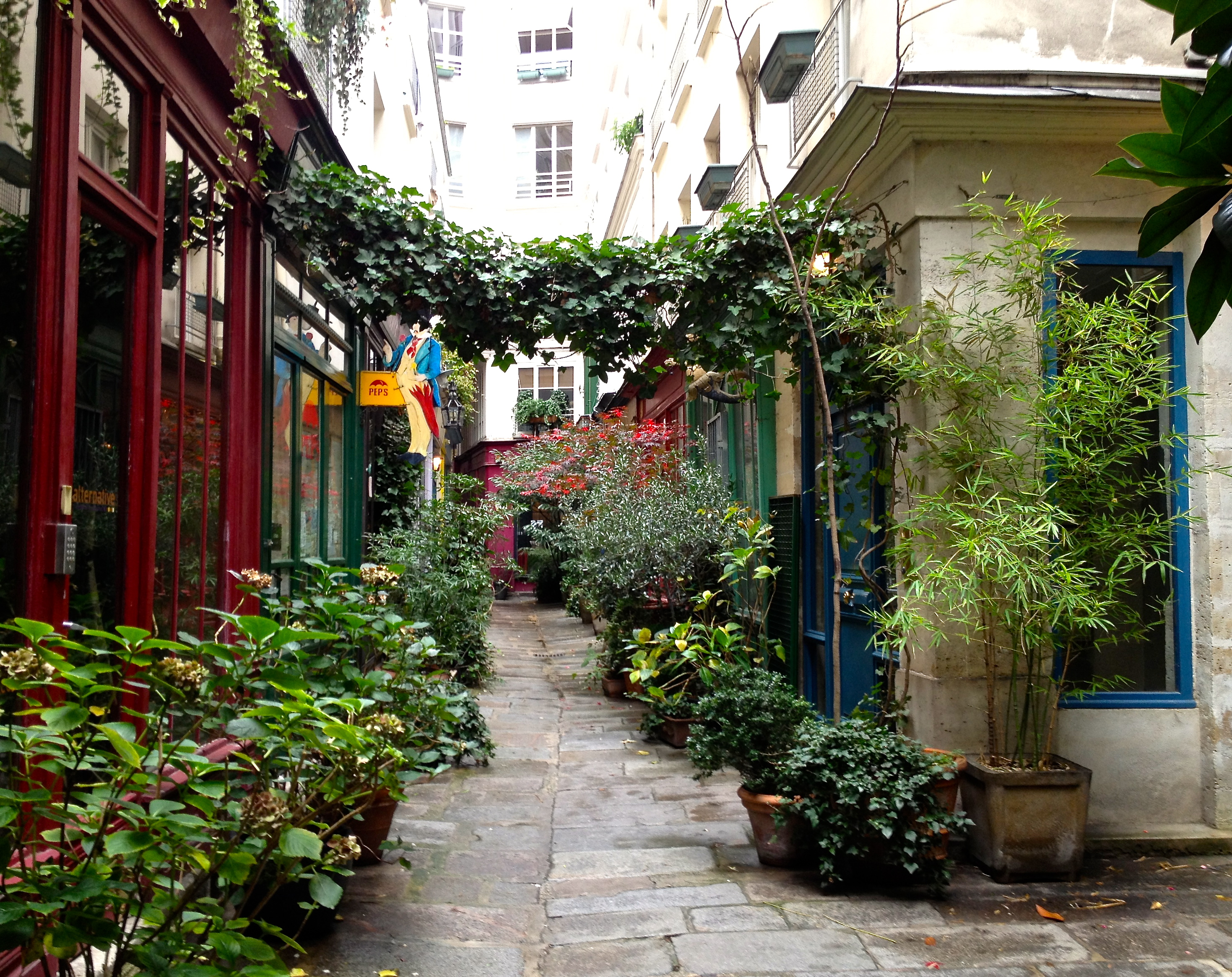
And I’m really glad I did. I ended up in le Passage de l’Ancre, one of the oldest, if not the oldest passageway in Paris. There are hundreds of hidden worlds behind unassuming doors in the French capital, but this one is a real gem. Stepping through the modest blue gates, I was transported to a world that time left behind—Paris at the turn of the 19th century—the stuff of which movies are made. C’est un passage extraordinaire!

IMG_1859

Although the passage was restored 10 years ago, it hasn’t lost its original charm. Bursting with leafy trees, sidewalk planters and lovely window boxes, the brightly colored storefronts are home to a number of interesting workshops and specialty stores. Pep’s, the celebrated atelier, where sick umbrellas and parasols are healed, is the most famous of them, but I’m happy to report that the whole guitar-errand-thing landed me a front row seat to another magical shop, la Bicyclette. Owned by Kitcat’s roommate’s family, I had a guided tour through the past in the tiny, but enchanting workshop of Thierry Marscarell. Nestled among the bicycles, ancient typewriters, antique shoe inserts, sepia-toned photos, wooden oars and skis and of course, bicycles, are modern lights, tempting home decorations, and funky, minimalist adornments. If I had a home in Paris to decorate, this unique store would be my first stop.

IMG_1877

Just a few steps away from le Centre George Pompidou, you can access le Passage de l’Ancre (and la Bicyclette) by two different entrances: 223 rue Saint-Marin or 30 rue Turbigo, 75003.

Vocabulaire

atelier: workshop

C’est un passage extraordinaire! It is an extraordinary passageway.

No. 39: Les Vacances

madamethomasfrench.wordpress.com

Just freshly back from the Toussaint holiday, it’s clear that one of the 365 things any sane person would love about France is les vacances. The French do vacation right. I don’t think it is an overstatement to say that the French are always on holiday. They truly are.

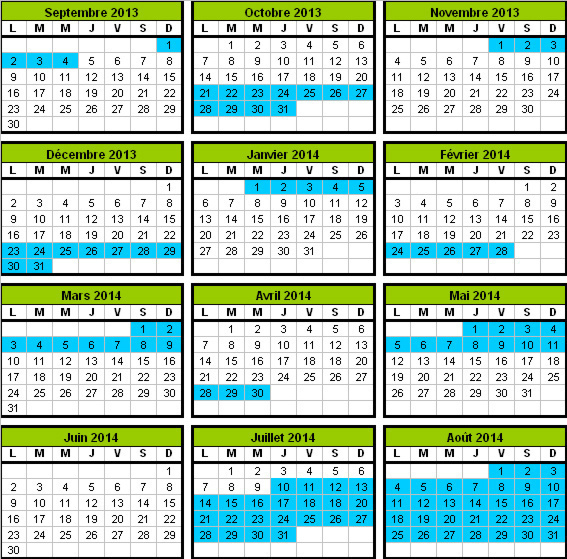
On the books, France has just one public holiday for which workers are guaranteed a paid day off every year — Labor Day on May 1; mais in reality, most French workers enjoy 11 national jours fériés per year.  During the month of May alone there is a holiday nearly every week. In addition to national holidays, France has one of the most generous vacation policy, mandating a minimum of 30 paid days off per year…which you would think would be enough, but the way the school calendar shakes out, it would appear that even with 41 days off per year, most parents must have to either take time off without pay, or pay for a lot of extra daycare. (Take a look at this school calendar. Blue means vacation–and doesn’t include all the of the extra national holidays. Just look at all that blue!)

school holiday calendar for France, zone C (Paris and environs)

school holiday calendar for France, zone C (Paris and environs)

At Button’s French bilingual school, she follows a schedule of roughly 6-8 weeks on, with 2 weeks off, with a handful of other holidays scattered throughout.

Meanwhile, the average US worker receives a scant 16 paid vacation days and holidays combined. In fact according to the Center for Economic and Policy Research, “the US is the only advanced economy in the world that doesn’t require employers to offer paid vacation time.” C’est fou! Contrast these two scenarios and you can understand why les vacances ranks high on my list of things I love about France.

IMG_2897

I don’t think the French will ever budge when it comes to their right to holiday–to them vacation is sacred. France nearly shuts down in the summer as the entire population takes the entire month of July or August (or sometimes both) off. What’s even better, as far as I can tell, is that the French jamais, jamais, jamais, take their work on the road. Vacation is vacation. There is no place for work while on holiday. Indeed the French have co-opted a verb (rentrer) and turned it into a noun with a BIG “r” :  la Rentrée, to describe the en mass homecoming when families return from vacation at the end of August and kids head back to school.

Alors, as long as I am lucky enough to live in France, I will continue to be faithful to the saying “à Rome, fais comme les Romains.” Vive les vacances!!

alexandracollege.eu

Vocabulaire 

à Rome, fais comme les Romains: In Rome, do as the Romans

C’est fou! That’s crazy!

jamais, jamais, jamais: never, never, never

jours fériés: holidays

la Rentrée: THE homecoming (after the summer hols)

les vacances: vacation

mais: but

rentrer: to return (home)

Toussaint: All Saints (Day/Holiday period)

Vive les vacances! Long live vacation!!


No. 38: Edible Insults en Français

As I soldiered on with my intensive French course today, le prof decided to liven things up by presenting us with a list of insults / reprimands en Français. He taught us some good ones and they are so yummy, I just had to share them with you!

…in keeping with the food theme of last week’s French idioms, all of these insolent phrases continue to pay homage to France’s love of, and connection to, food.

Amusez-vous!

AndouilletteSay for example, you are angry with someone, and you want to be more descriptive than simply calling him/her an idiot, you could say instead:

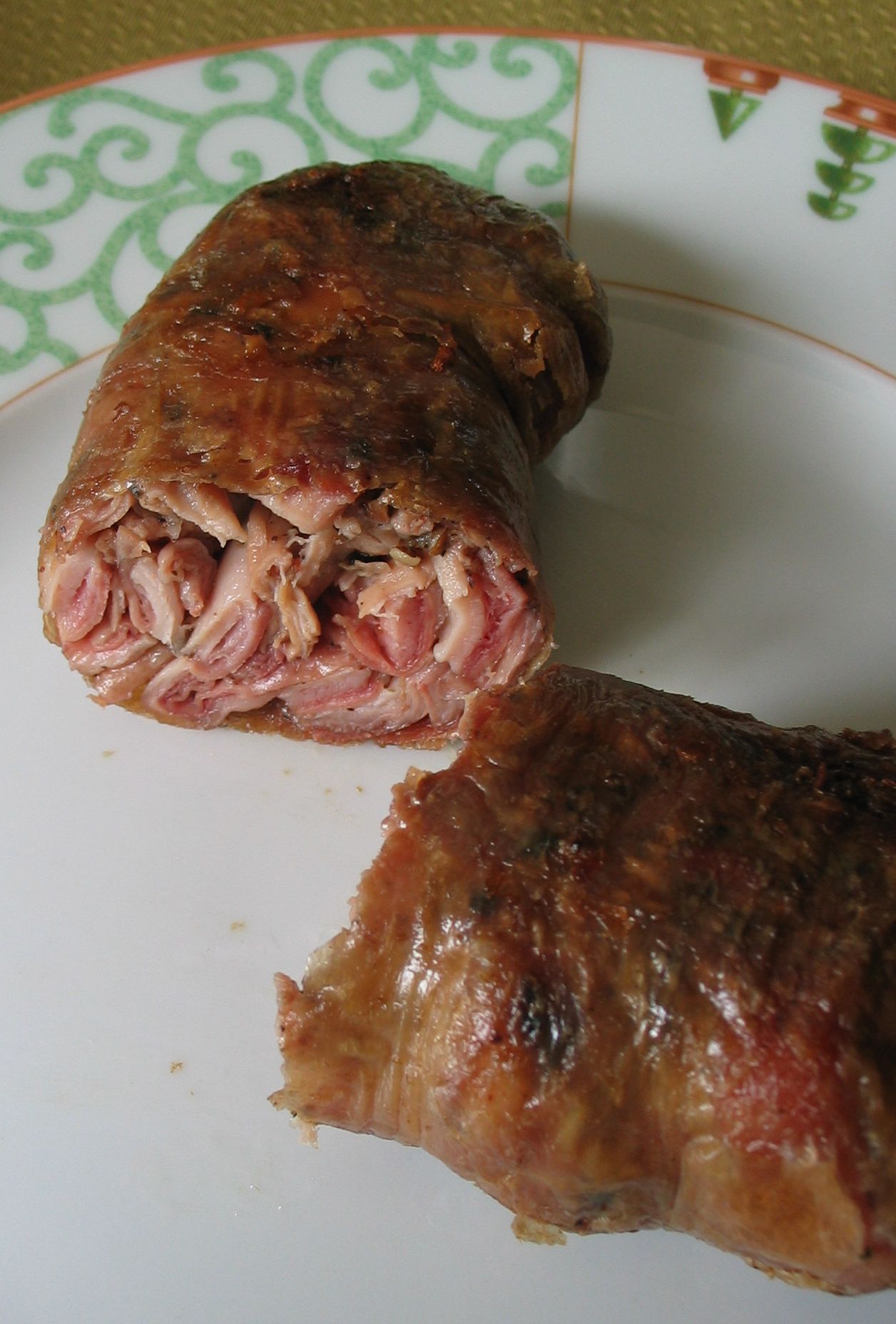
Espèce d’andouille! (You) piece of sausage!

Une vraie courge!  (What) an utter squash!

Quelle nouille!  What a noodle!

Quelle poire!  What a pear!

 If you want to tell someone to go where the sun don’t shine, you could say:

Va te faire cuire un œuf! Go cook yourself an egg! (Go to hell!)img_0244

Want to tell someone to mind his own beeswax? Try this gem:

Occupe-toi de tes oignons!Mind your own onions!

If you think your colleague is one twist short of a slinky, you might tell your boss:

Elle travaille de la cafetièr.  She’s working from her coffee pot!

OR

Elle pédale dans la choucroute!. She pedals in the sauerkraut!images 2

If you want to criticize a person’s looks you can handily compare them to some common food. For example, you could tell a woman:

Vous avez deux oeufs sur le plat. You have two fried eggs on the plate. (You’re flat-chested.)

Think someone’s ears are too big? Try:

Vous avez des oreilles en chou-fleur.  You have ears made of cauliflowers.

Have a friend who has become a bit pudgy around the middle? How about comparing him to a breakfast bun?

Il a de la brioche.  He has some brioche. (a potbelly)

Do you have a friend who is much taller than the average? You could always call him:

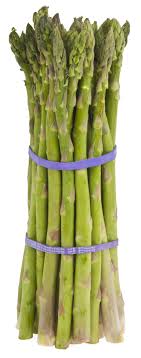
Une grande asperge. A big asparagus.images

Oh, I love this tricky and vivid language! Please let me know if you have come across any other charming food-related insults (and if I have made any mistakes).

Vocabulaire

Amusez-vous!  Enjoy! / Have fun!

en Français: in French

le prof: the teacher (short for le professeur-informal)


No. 37: Guy Roux Maître Chocolatier

Leave it to  the French to produce amazing sugar-free chocolate.  Guy Roux is affectionately known as the le roi du chocolat sans sucre. Using a selection of beans from South America, he and his artisanal staff produce pure cocoa butter chocolate without sugar. It’s 100-percent natural (no artificial sweeteners), has 40-percent fewer calories, and it is surprisingly delicious!

After hours of tastings, it was pure delight to come across this exciting young chocolatier. I was dubious chocolate sans sucre would tempt my taste buds, but indeed it did.  His mendiants were deliciously on par with others at le salon du chocolat, but what really “took the cake” was his  chocolate spreads.  Handing out his products and gamely chatting with the crowd, he and his creamy and subtly sweet cocoa concoctions completely won me over.

Vocabulaire

le mendiants: traditional French confection composed of a chocolate disk studded with nuts and dried fruits representing the four mendicant or monastic orders of the Dominicans, Augustinians, Franciscans and Carmelites. Each of the nuts and dried fruits used refer to the color of monastic robes with tradition dictating raisin for the Dominicans, hazelnuts for the Augustans, dried figs for Franciscans and almonds for Carmelite. Usually found during Christmas, recipes for this confection have veered away from the traditional combination of nuts and fruits to other combinations incorporating seeds and fruit peels. Wikipedia.

le roi du chocolat sans sucre: the king of chocolate without sugar


No. 36: Salon du Chocolat Encore

“Chocolate doesn’t make the world go ’round, but it sure does make the trip worthwhile!”

 IMG_3984

The theme of this year’s Salon du Chocolat was enchantment, the question asked, “Why is chocolate so magical?” The event itself was certainly enchanting, delicious, and completely over the top. If you are passionate about chocolate, and I am, this is the not-to-be-missed event of the season.

The annual salon brings together an amazing collection of chocolatiers, pastry chefs, cocoa experts and confectioners. This year, over 180 French and international chocolate makers filled the grand exhibition space (20,000 sqm) at Port de Versailles representing (and providing tastings of!) some of the biggest names and the highest quality chocolate products from around the world. Another 350+ participants provided samplings of bonbons, cakes, ice cream, crepes and sugarcoated delights.

I met my girlfriend Em first thing in the morning and spent nearly 8 hours nageant dans le chocolat. It was fabulous. Imagine a whole day bathed in a space completely dedicated to chocolate and sweet treats. The first floor, the Tendance Confiserie was dedicated entirely to fantastical sugary confections, new trends in confection and included a space devoted to les enfants offering little ones the chance to make and decorate les bonbons. For me the space was more eye-candy than mouth-candy. It was a photographer’s dream a fairy-tale land of colorful sweeties and fun.

The second floor on the other hand was for the serious chocolate connoisseur. This is where the big guns come to play and show off their newest creations. Just like the fashion industry the superstars have the chance to roll out their new fall line and share their established winners. And there were a lot of winners…and things got a little carried away! Never has the saying “so much chocolate, so little time” been more accurate.

Moderation, schmoderation…by the end of the day, we were completely chocolated-out, but completely and contentedly under the spell of the magic of chocolate.

“Oh, divine chocolate!

They grind thee kneeling,

Beat thee with hands praying,

And drink thee with eyes to heaven.”

― Marco Antonio Orellana

Vocabulaire:

les enfants: the children

nageant dans le chocolat: swimming in the chocolate