Skip to content

Posts from the ‘People’ Category

No. 42: London

It may be a bit cheeky to add London to the list of the 365-things-I-love-about-France, but with the ability to jump on a high-speed train and arrive less than 2 ½ hours later smack dab in the middle of the world’s most popular city, it deserves a place on the list.

And if you’re still not convinced that it’s list worthy, consider this French connection: more French people live in London than in Bordeaux, Nantes or Strasbourg. Yep, 400,000 “frogs,” reside in London making it the sixth largest French city in the world!

No. 41: The “Frogs”

While in London this weekend, I asked around about why the Brits call the French “Frogs”. Most people assume the nickname comes from the Frenchies taste for frog legs. However, it turns out there are a whole bunch of different theories about where this term of endearment or offense (depending on your prospective) originated.

Here are a few of my favorites:

The Fleur-de-Lys: During the Middle Ages the French flew a blue flag with a gold fleur-de-lys on it. The English, unfamiliar with the fleur-de-lys, mistook the flower for a frog, and had a right old laugh about a country that would put a gold frog on their flag, and thus began sarcastically calling their nemesis “frogs”.

Elizabeth I & Her Term of Affection: Apparently England’s Queen Elizabeth I had a strong affinity for frogs and often used the word to refer to her closest friends and lovers. At some point one of her dangerous liaisons was with her top diplomat to France, and their juicy correspondence often began with “My dear frog…” Somehow word got out about this term of endearment, and the French became the frogs.

The Swamp: Before Napoleon and Haussmann came in to clean up Paris and transform it into the city we know today, the city was much less the city of light and much more the city of frogs (quite literally). Paris was swampy and therefore full of many little croakers. The now upscale Marais–which means swamp, was in fact a swamp, back in the day, and a very undesirable place to live. The monied-folk living outside of the city in places like Versailles began referring to those who lived in the swamp, as the “frogs”. Foreign ambassadors took a shine to the term, and voilà, the French became the frogs.

Culinary Observations in WWI: British soldiers observed their French comrades odd affection for eating frog legs while serving side-by-side in the trenches, and felt they had no other choice than to call their allies frogs.

Camouflaged Foes: During the next war, WWII, it is claimed that the French resistance fighters were so brilliant at hiding from the Germans, that the Germans began to grumble that trying to find them was like trying to find a frog in a murky pond.

So there you have it. Which do you prefer? Do you know any other stories that explain the amphibian nickname?

Next up: Why the French call the British “roast beefs”…

No. 38: Edible Insults en Français

As I soldiered on with my intensive French course today, le prof decided to liven things up by presenting us with a list of insults / reprimands en Français. He taught us some good ones and they are so yummy, I just had to share them with you!

…in keeping with the food theme of last week’s French idioms, all of these insolent phrases continue to pay homage to France’s love of, and connection to, food.

Amusez-vous!

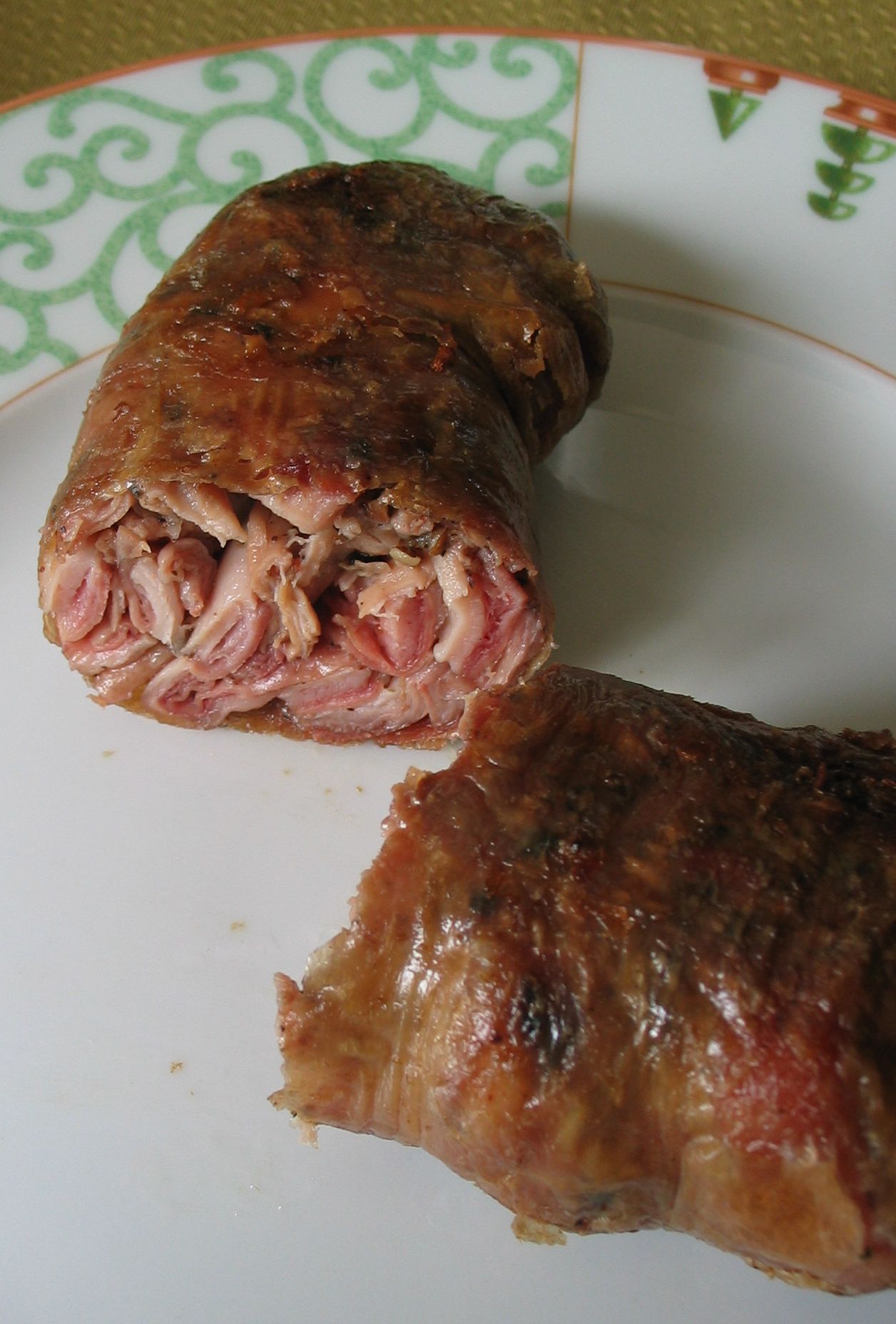
AndouilletteSay for example, you are angry with someone, and you want to be more descriptive than simply calling him/her an idiot, you could say instead:

Espèce d’andouille! (You) piece of sausage!

Une vraie courge!  (What) an utter squash!

Quelle nouille!  What a noodle!

Quelle poire!  What a pear!

 If you want to tell someone to go where the sun don’t shine, you could say:

Va te faire cuire un œuf! Go cook yourself an egg! (Go to hell!)img_0244

Want to tell someone to mind his own beeswax? Try this gem:

Occupe-toi de tes oignons!Mind your own onions!

If you think your colleague is one twist short of a slinky, you might tell your boss:

Elle travaille de la cafetièr.  She’s working from her coffee pot!

OR

Elle pédale dans la choucroute!. She pedals in the sauerkraut!images 2

If you want to criticize a person’s looks you can handily compare them to some common food. For example, you could tell a woman:

Vous avez deux oeufs sur le plat. You have two fried eggs on the plate. (You’re flat-chested.)

Think someone’s ears are too big? Try:

Vous avez des oreilles en chou-fleur.  You have ears made of cauliflowers.

Have a friend who has become a bit pudgy around the middle? How about comparing him to a breakfast bun?

Il a de la brioche.  He has some brioche. (a potbelly)

Do you have a friend who is much taller than the average? You could always call him:

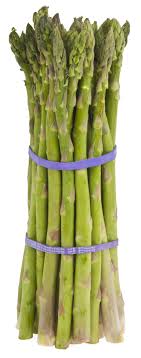
Une grande asperge. A big asparagus.images

Oh, I love this tricky and vivid language! Please let me know if you have come across any other charming food-related insults (and if I have made any mistakes).

Vocabulaire

Amusez-vous!  Enjoy! / Have fun!

en Français: in French

le prof: the teacher (short for le professeur-informal)


No. 32: Blue-and-White Stripes

One of the many happy surprises of our p’tit week-end down south was our encounter with stripes. I was thrilled to see that particular French cliché alive and well and wandering the streets of Marseille. En fait, les rues were bursting with stripes. Once we saw our first friend dressed in stripes, we started to see them everywhere. It was good fun stalking and photographing the best stripes, turning into un jeu du chat et de la souris. The cat holding the camera while the mice scurried through town.

The more blue-and-white stripes I saw, the more I wanted to learn the history behind the stripes. I always associated the stripes with the French sea and it turns out that the striped shirt was indeed part of the official uniform of the French Navy. The theory was that if there were a “man over board” he would be more easily spotted among the waves and brought to safety if he was wearing stripes. Originally the uniform had 21 stripes, each one symbolizing one of Napoleon’s victories. At the time the uniform was conceived, the majority of the French Navy was located in Brittany, so the shirt became known as the “Breton”.

The “Breton” became popular with the non-military crowd once Coco Chanel, enamored with the sailing shirt, made it part of her fashion line for the modern woman. By the early 1930s the blue-and-white stripes were considered haute couture, and in the decades that followed, the “Breton” featured prominently in French cinema and Hollywood’s motion pictures, until it reached a sort of iconic status.

Today in Marseille you see mostly blue-and-white stripes, with a healthy handful of red-and-white ones thrown in…such a playful break from the black-on-black of Par-ee!

If you haven’t already seen Audrey Tautou in Coco Before Chanel, take a look at this teaser. Moi, j’adore ce film! Maybe you will like it too.

Vocabulaire:

En fait, les rues…  in fact, the streets…

Moi, j’adore ce film! Me, I adore/love this film.

un jeu du chat et de la souris: a game of cat and mouse

 un p’tit week-end: long weekend get-away (literally a small weekend)

No. 26: Small(er) People

Initially I thought I’d call this post: Small People.

However, upon reflection, I have concluded that the French actually aren’t as small as they are rumored to be. Only a few short years ago the French were considered small compared to Americans, but now it appears that smaller is the more accurate adjective. The “e-r”, sadly, is a necessary addition.

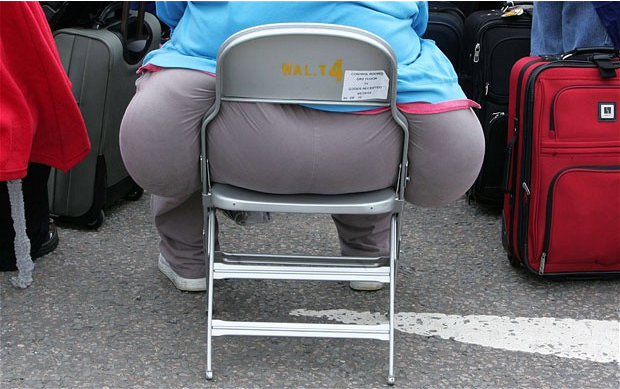
That said, the Frenchies are still thinner than their American counterparts. Americans claims a 35 percent obesity rate, and this difference in girth is very obvious when you cross the ocean after being away for a long time.

I certainly don’t want to rail against overweight people, but I must admit, I am discouraged by the aspects of our culture that make it so easy to become overweight and complacent. It’s difficult to see so many big folks living large in America.

I recognize that I live in a bit of a bubble in Paris, but the number of extremely hefty people I have seen this past week in America has alarmed me. It’s a HUGE problem (in all senses of the word) for the USA, and it pains me to see that our bad habits and patterns are beginning to make their way to the other side of the Atlantic.

While the French can still claim the title of the slimmest people in Europe, a previously unfathomable 15 percent of France’s population are now obese and over 30 percent are considered overweight. And according to an article recently published in the Daily Telegraph “the most significant weight gains (are) among 18 to 24-year-olds, whose obesity levels have shot up by 35 percent in the past three years.”

French actor Gerard Depardieu Photo: REX FEATURES

French actor Gerard Depardieu Photo: REX FEATURES

I find those statistics staggering and disturbingly familiar. For a country that prides itself on eating small portions, fresh food, and family meals, the French-don’t-get-fat-myth doesn’t quite ring true anymore.

No. 17: Edith Piaf

www.cineoutsider.comToday is the 50th anniversary of the death of the celebrated cabaret singer Edith Piaf.

Over the last nine months, there have been numerous Piaf tributes both in France and around the world. I have been a little bit surprised by this because while I (as an expat and Francophile) see her as a national treasure, I guess I suspected that the French saw her only as one BIG French cliché.

Think of France, and especially Paris, and what comes to your mind? Outdoor cafés, baguettes, buttery croissants, men is blue and white striped shirts, women in floral dresses riding bicycles, cigarettes, berets, strolling along the Seine, wine, cheese, shared kisses by the Eiffel Tower… and all with the music of Edith playing in the background. For some reason I thought the French had outgrown her, even moved on, and maybe preferred to be associated with what’s good and modern in France today.

I was quite mistaken. This morning the anniversary of her death was a lead story on all the major news channels. Each story was a touching tribute to a post-war icon, “a symbol of French passion and tenacity.”

Marche Av Saxe

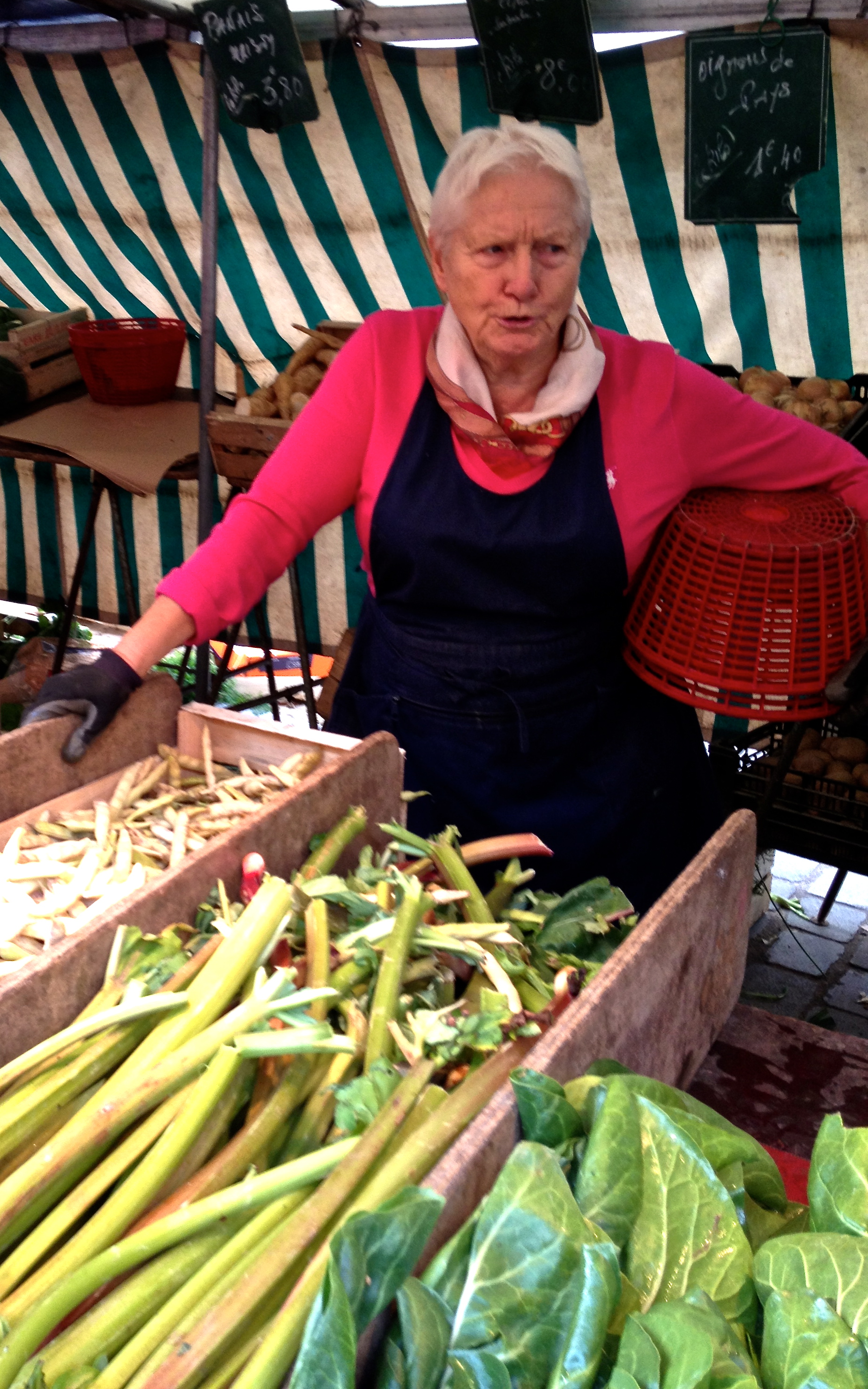
Mme vendeuse de légumes sings la vie en rose

Then while shopping at the marché a few hours later, my favorite vendeuse, and purveyor of the best and most beautiful produce, was cheerily helping her customers while exuberantly singing La vie en rose…

…it was so lovely and so charming and exactly why I love living in France.

Listen along to hear Edith singing it herself in 1954.

Vocabulaire:

La vie en rose: Life through rose-colored glasses, literally: life in pink

vendeur/vendeuse: vendor, seller, salesperson