Skip to content

Posts from the ‘France’ Category

No. 18: Fruits de mer

Poissonnerie

I love the French word for seafood: fruits de mer. Fruit from the sea. It’s the perfect way to describe the many colorful and sometimes bizarre fish and shellfish found in France.

Some of my favorite crustacean friends are: crabs, lobster, langoustines, mussels, oysters, octopus, scallops, shrimp and urchins. I use “friends” in the loosest sense, as I am actually a bit afraid of most of them. But thankfully I have just discovered a new word in French: décortiqué, peeled or shelled. So now when I go to a restaurant at least I know that if I don’t see that magic word on the menu, the waiter will be bringing me a plate with the heads and legs still attached to the little guys I ordered, their beady little eyes staring me down.Fish at market
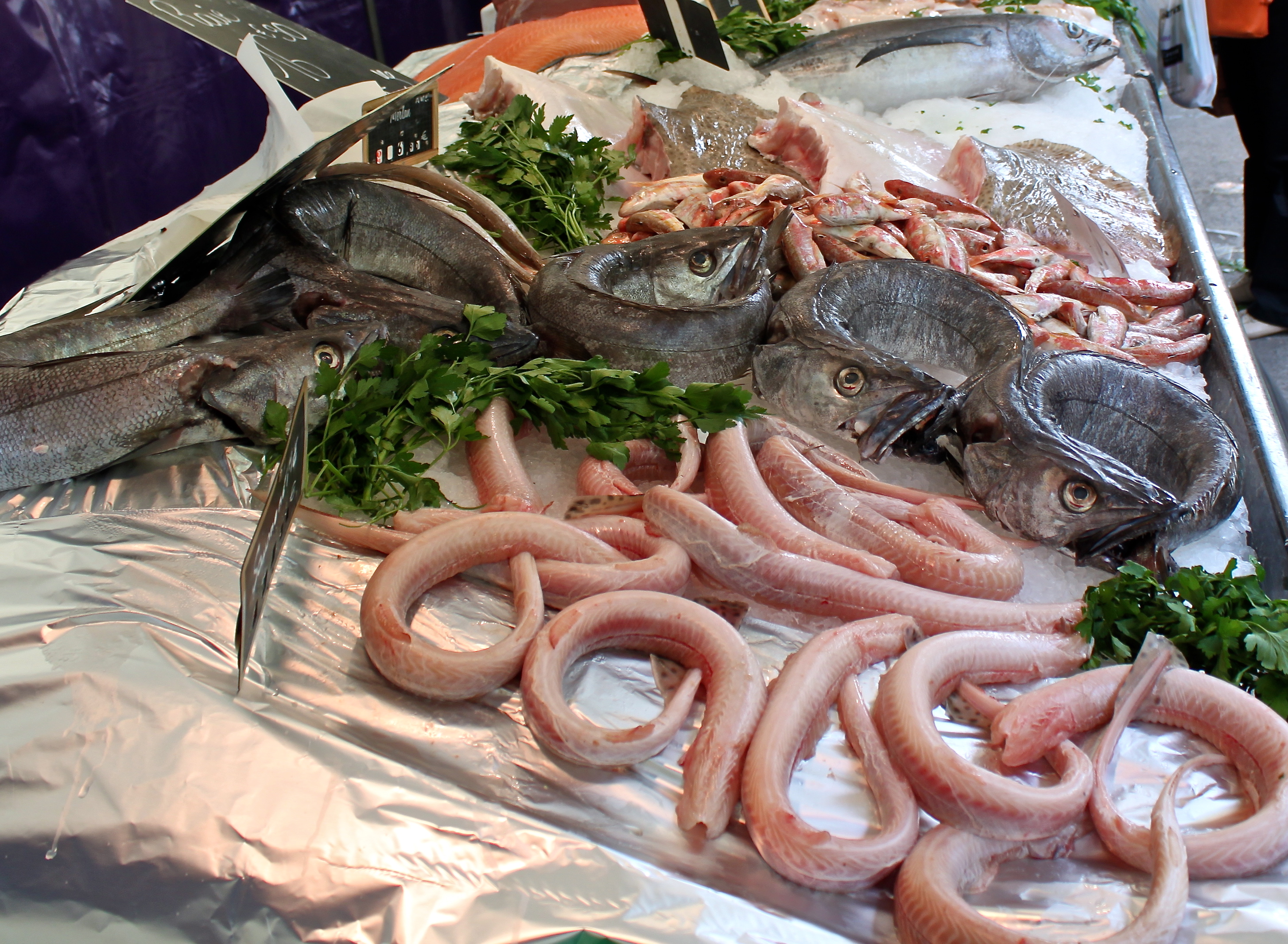
At any of the large outdoor market in France, you are sure to find at least two or three stands selling the fresh catch of the day. The hard part is figuring out what the heck the French word is for the few types of seafood I actually recognize, and then screwing up the courage to order it from le poissonnier. Once you get over that hump, you’re still not quite finished. Now you have to figure out how you want it prepared, which for me, is actually a real luxury. I have so many memories of standing on a chair next to my daddy in front of the kitchen sink gutting and scaling fresh Colorado trout, I am quite happy to have someone else take over.FIsh
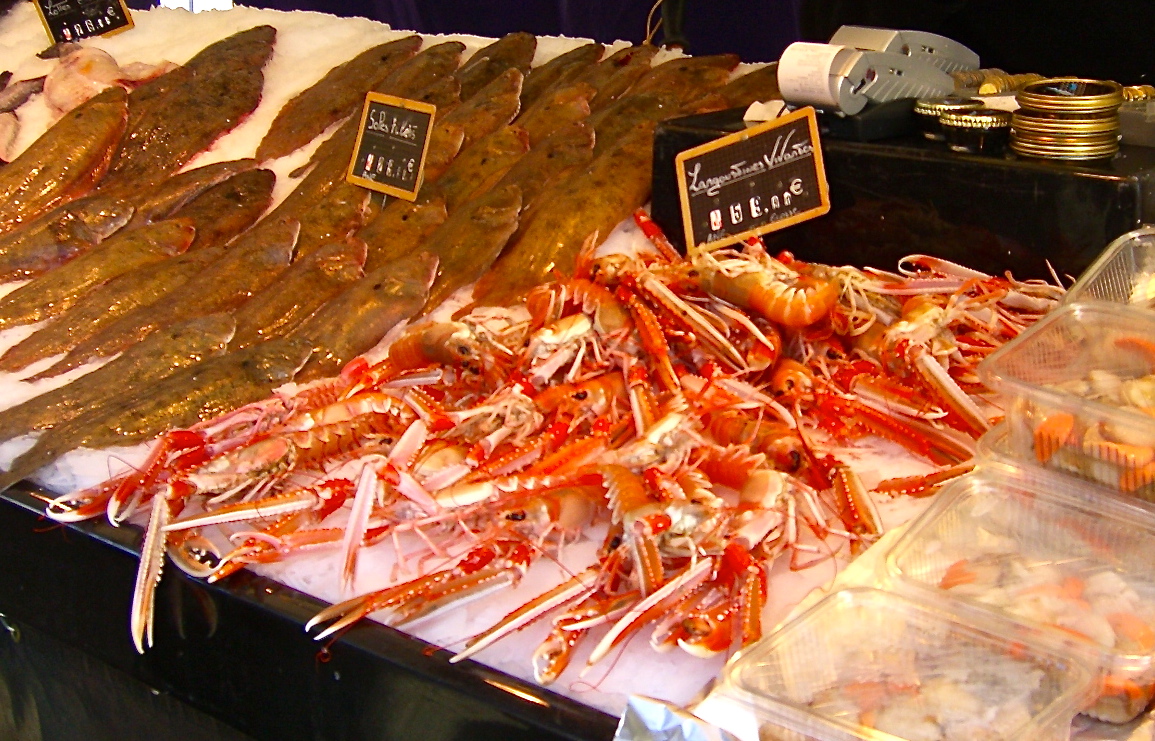
Luckily the handy French phrase: Pourriez-vous me le préparer s’il vous plâit, seems to do the trick…until he asks me just how I want it prepared. Bones out? Gills removed? Heads to make soup? Shells and skins for the stock? I think, although I can’t be sure, I’ve even been given advice on what to use the eyeballs for.

Oh, la vache! Someday I hope my French is good enough to answer these questions, but for now, a generous smile and a frequent merci bien is working well enough.

oursin/ sea urchin

oursin/ sea urchin

Vocabulaire:

 décortiqué: peeled or shelled

le poissonnier:  fishmonger

merci bien: thanks a lot

Oh, la vache! Holy cow!

Pourriez-vous me le préparer s’il vous plait: Could you please prepare it for me (which usually implies gutting, scaling and deboning)

No. 17: Edith Piaf

www.cineoutsider.comToday is the 50th anniversary of the death of the celebrated cabaret singer Edith Piaf.

Over the last nine months, there have been numerous Piaf tributes both in France and around the world. I have been a little bit surprised by this because while I (as an expat and Francophile) see her as a national treasure, I guess I suspected that the French saw her only as one BIG French cliché.

Think of France, and especially Paris, and what comes to your mind? Outdoor cafés, baguettes, buttery croissants, men is blue and white striped shirts, women in floral dresses riding bicycles, cigarettes, berets, strolling along the Seine, wine, cheese, shared kisses by the Eiffel Tower… and all with the music of Edith playing in the background. For some reason I thought the French had outgrown her, even moved on, and maybe preferred to be associated with what’s good and modern in France today.

I was quite mistaken. This morning the anniversary of her death was a lead story on all the major news channels. Each story was a touching tribute to a post-war icon, “a symbol of French passion and tenacity.”

Marche Av Saxe

Mme vendeuse de légumes sings la vie en rose

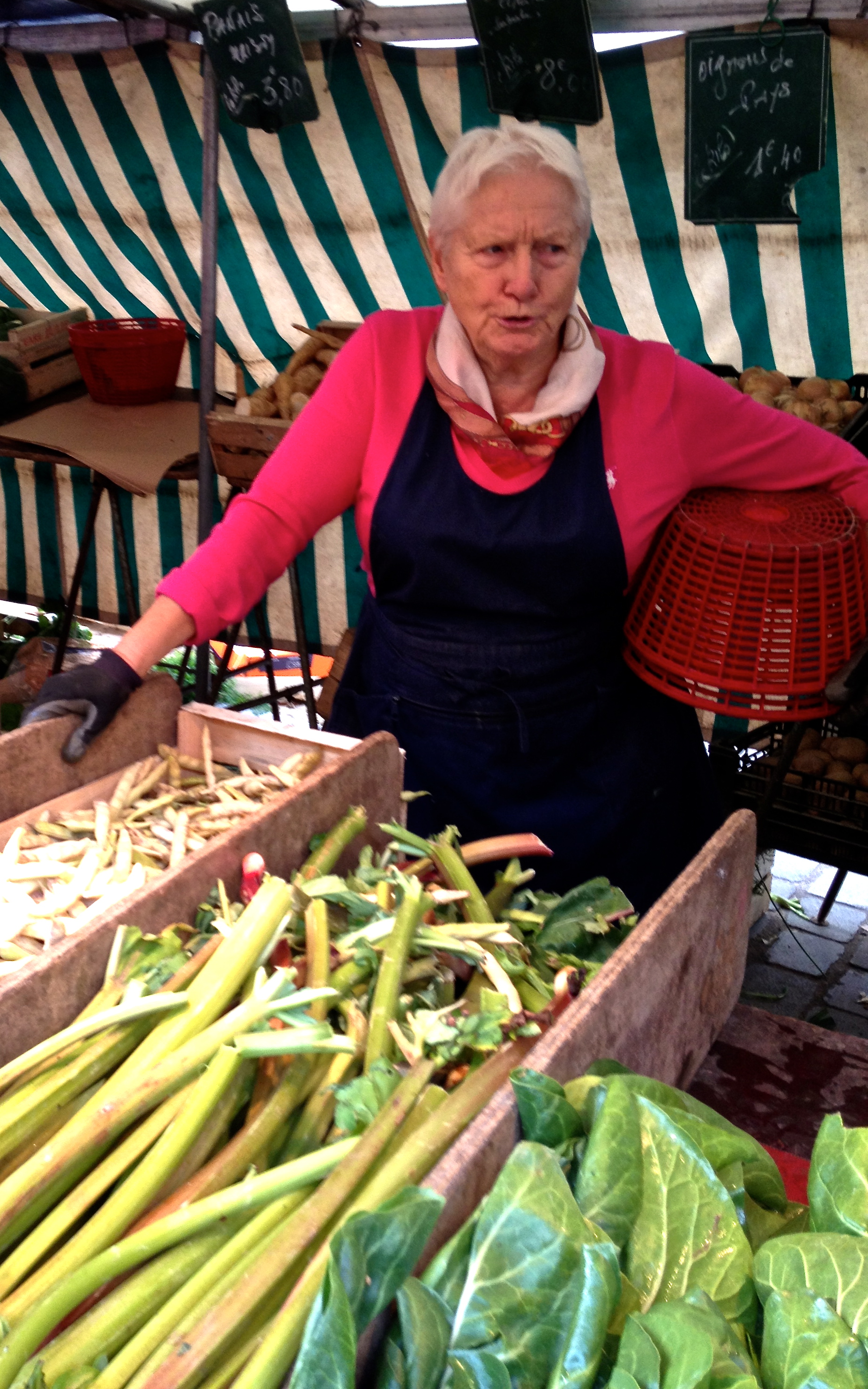
Then while shopping at the marché a few hours later, my favorite vendeuse, and purveyor of the best and most beautiful produce, was cheerily helping her customers while exuberantly singing La vie en rose…

…it was so lovely and so charming and exactly why I love living in France.

Listen along to hear Edith singing it herself in 1954.

Vocabulaire:

La vie en rose: Life through rose-colored glasses, literally: life in pink

vendeur/vendeuse: vendor, seller, salesperson

No. 16: The Rain

It rains a lot in France. In fact my British friends say that the weather in Paris is just as bad, if not worse, than the weather in London. According to weather sites, we get 150-175 days of rain a year here in Paris. In the last few months, we have had some major downpours, and a lot of grey.

However, lately I have been thanking the All Mighty for sending the rain, because I simply can’t take another day of sidewalks splattered with man pee. What is it with the French and peeing in public?

Please use the WC! Thanks.

Please use the WC! Thanks.

It is the rule, not the exception, for me and Taz to run into at least one man who is “faire-ing” the pipi each morning. Do they just forget to go to the bathroom before they leave for work?  Does that first teeny-tiny shot of espresso do their bladder in? Does it feel good to air their junk out in the morning, before shutting it up in the office for the day?

Just exactly what do they think is NOT gross about leaving a huge puddle of urine on the walls and sidewalks of the city?

Besides the fact that Taz tugs on his leash to get in on the splashing action, what makes it even more awkward is the casual way they finish up with a just-shaking-the-drip-off-flourish, before tucking in, zipping up, and sometimes even winking.  Aidez-moi!

So please, please, please send the rain by Saturday. The sidewalks need a shower. We’ve got a whole mess of man pee to wash away.

Vocabulaire:

Aidez-moi!  Help me!

faire pipi: to pee, to go number 1

No. 15: Salade de chèvre chaud

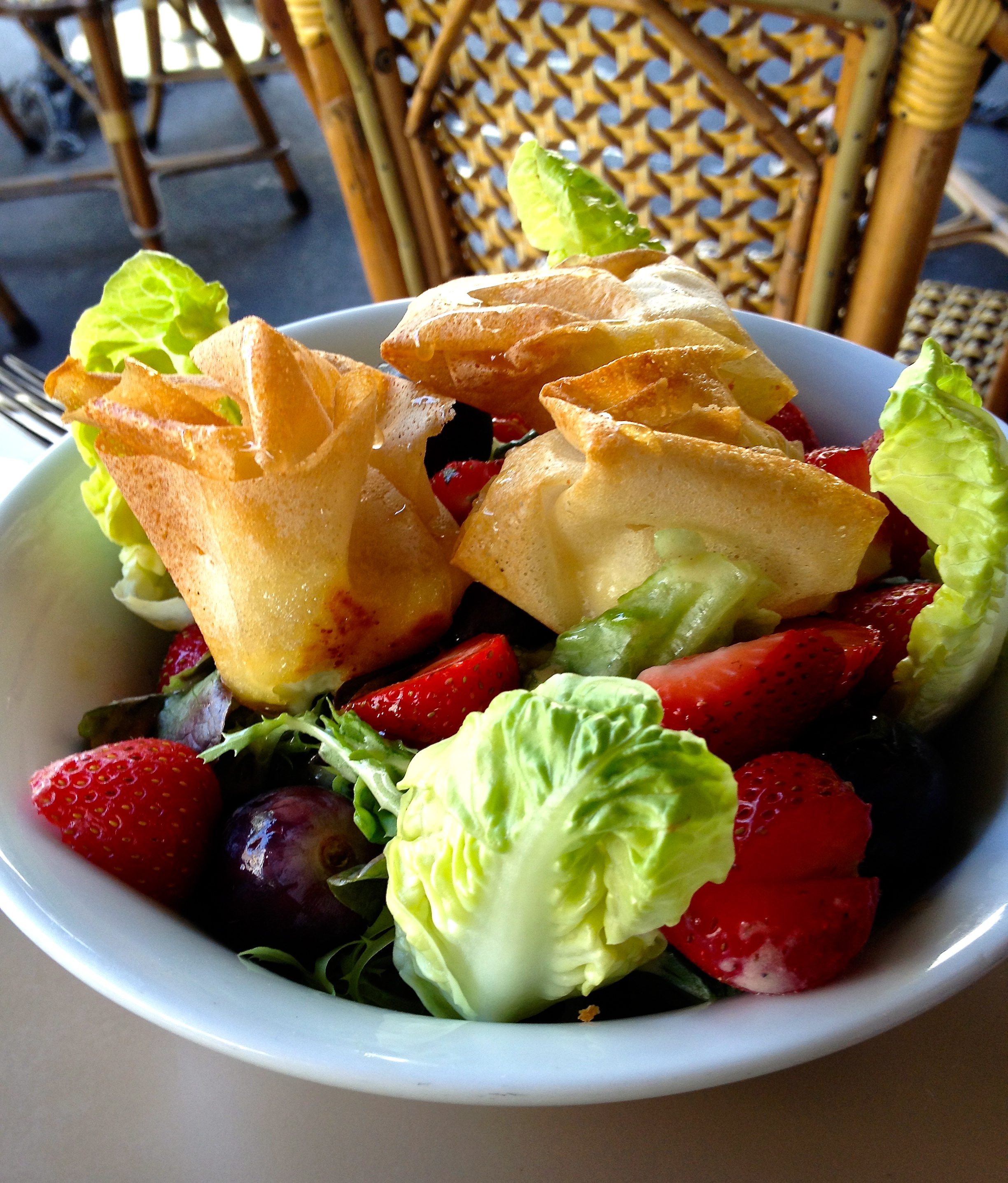
salade de chèvre chaud croustillant

salade de chèvre chaud croustillant

Before I moved to Paris, my only experience with goat cheese was those small white logs of pasteurized cream cheese-like stuff, hermetically sealed in a thick, clear plastic casing, with annoying plastic green leaves pressed along the sides.

Thankfully in France there are somewhere around 400 different types of cheese, so one can only assume a large number of those are chèvre. The Frenchies seem to be crazy for chèvre, and so am I.

Nearly every time I go out to lunch with a Parisienne (female), one of us orders a salade de chèvre. As everyone in Paris (male or female) is concerned about their weight, somehow the goat cheese salad has become a mythical weight loss entrée for at least the women. (Calorie-wise, I’m not so sure.) Calorie count or not, all those French goats and their delicious cheese, make it very easy to add salade de chèvre to my list of 365-things-I-love-about-France.

There are two main goat cheese salads in France: salade de chèvre chaud and salade de chèvre chaud croustillant. My favorite is croustillant, but the main thing is to make sure it is chaud (warm). There is something about the contrast of the warm cheese with the cold salad greens that knocks the socks right off my tastebuds.

On a simple salade de chèvre chaud the cheese is usually served crouton-style on thin, toasted slices of baguette. On the more decadent salade de chèvre chaud croustillant, the goat cheese comes wrapped in phyllo dough with a slight hint of honey and rosemary. Heavenly!

Here’s an anglicized recipe from Mademoiselle Slimalicious (one of my new favorite blogs, written by a French expatriate in Australia). Bon appétit!

Vocabulaire:

chaud: hot, warm

chèvre: goat

croustillant: crispy, crusty 

No. 14: Olives

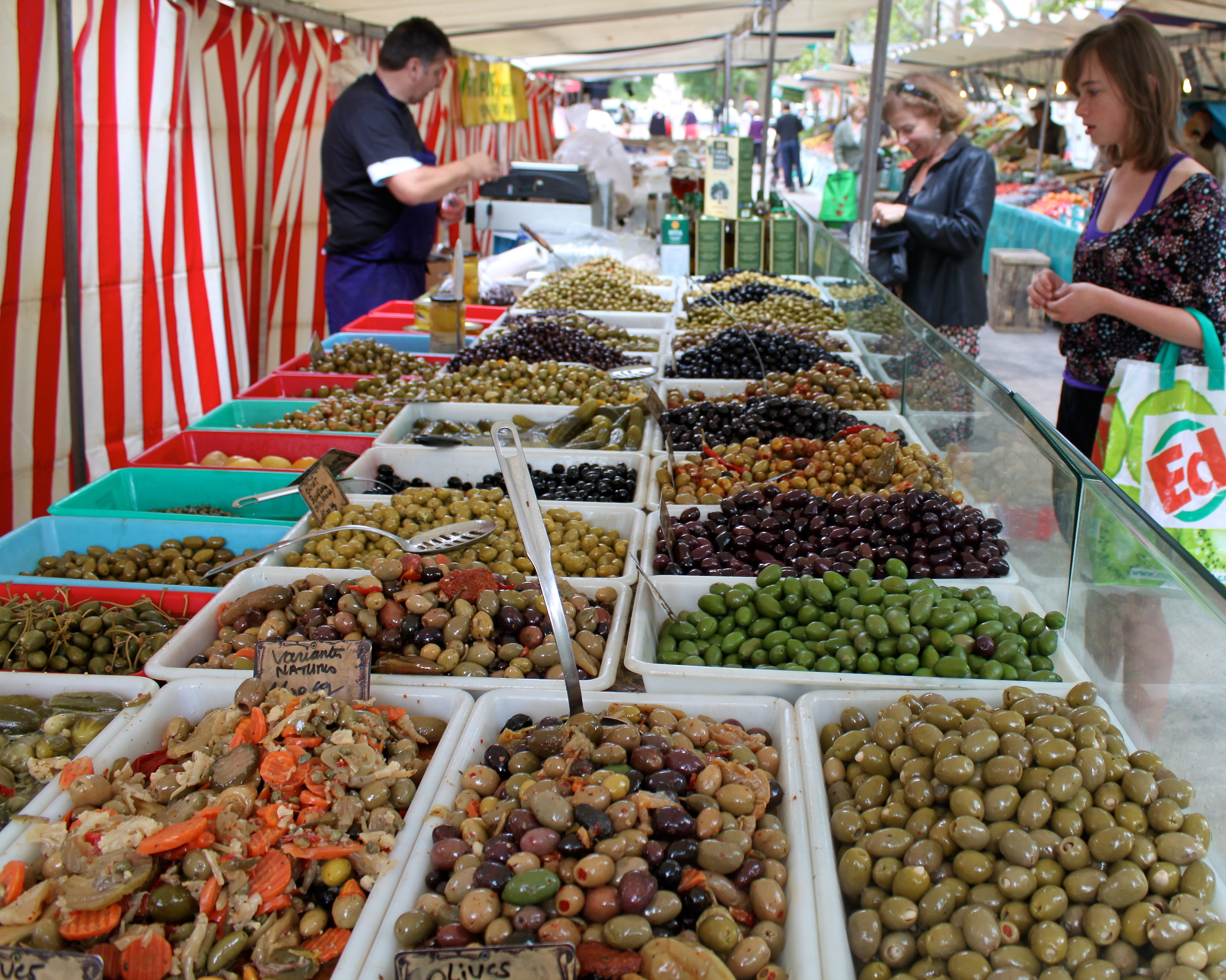
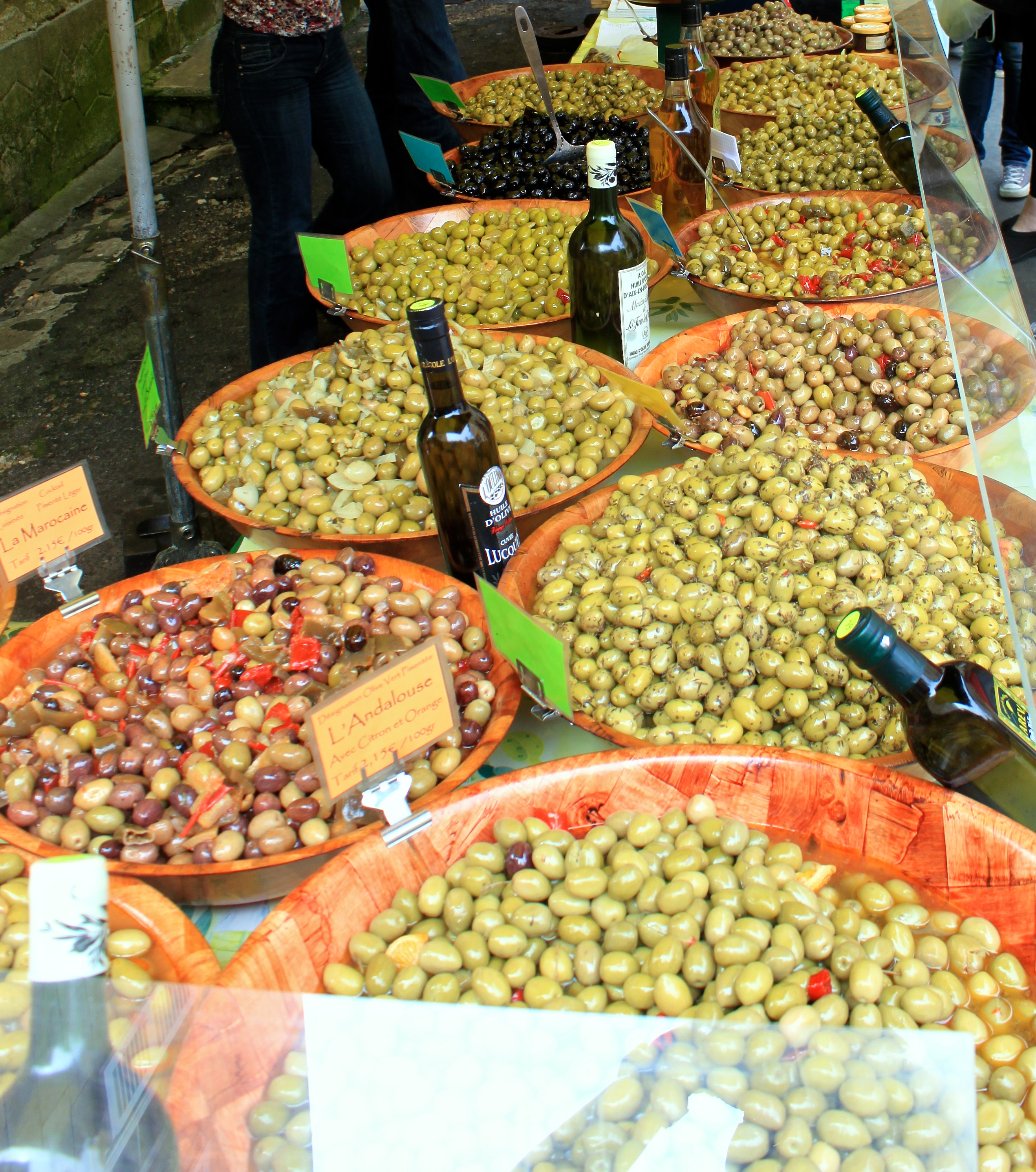
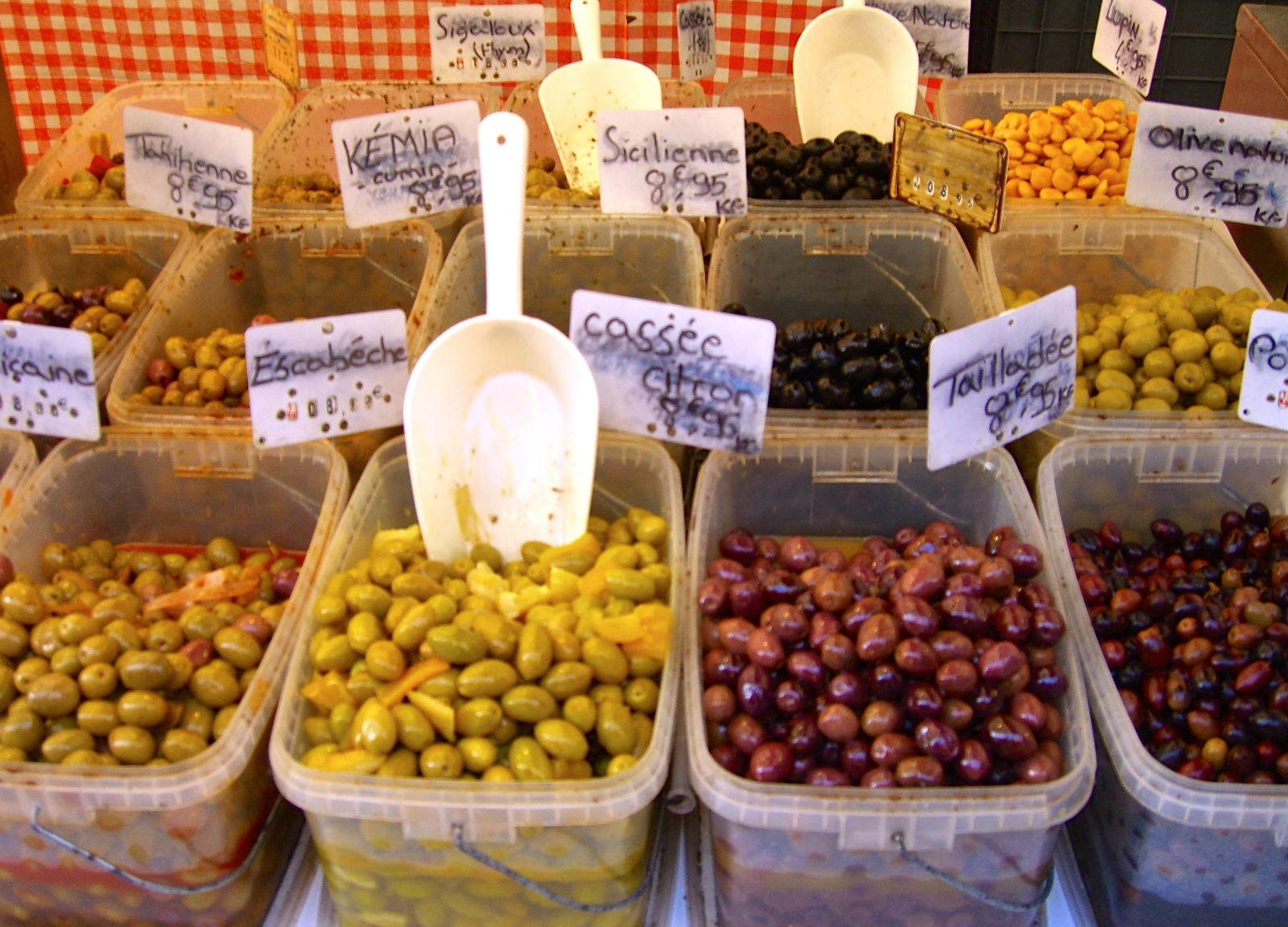
Olives! Olives! Olives! You’ve got to love olives if you live in France.olives

Superman and Button are fond of having olive eating contests, so I need to keep the fridge stocked. It’s not unusual to find a mound of pits, neatly arranged on someone’s salad plate chez nous, or a newly clipped recipe ready to be shared, the starring role played by an olive.

olivesFor my family, olives are one of the many pleasures of living in France. Every open air market is full of fabulous, colorful olives. In fact more than a hundred varieties of olive trees are cultivated here. I find that simply amazing. I’m already overwhelmed by the 15-20 choices I have each week as I faire les courses at my favorite marché, I can’t imagine having to choose between an assortment of another eighty.olives2012

Vocabulaire

chez nous: at our house

faire les courses: to do the shopping; run errands

le marché: the market, usually refers to an open air market

No.11: Automne

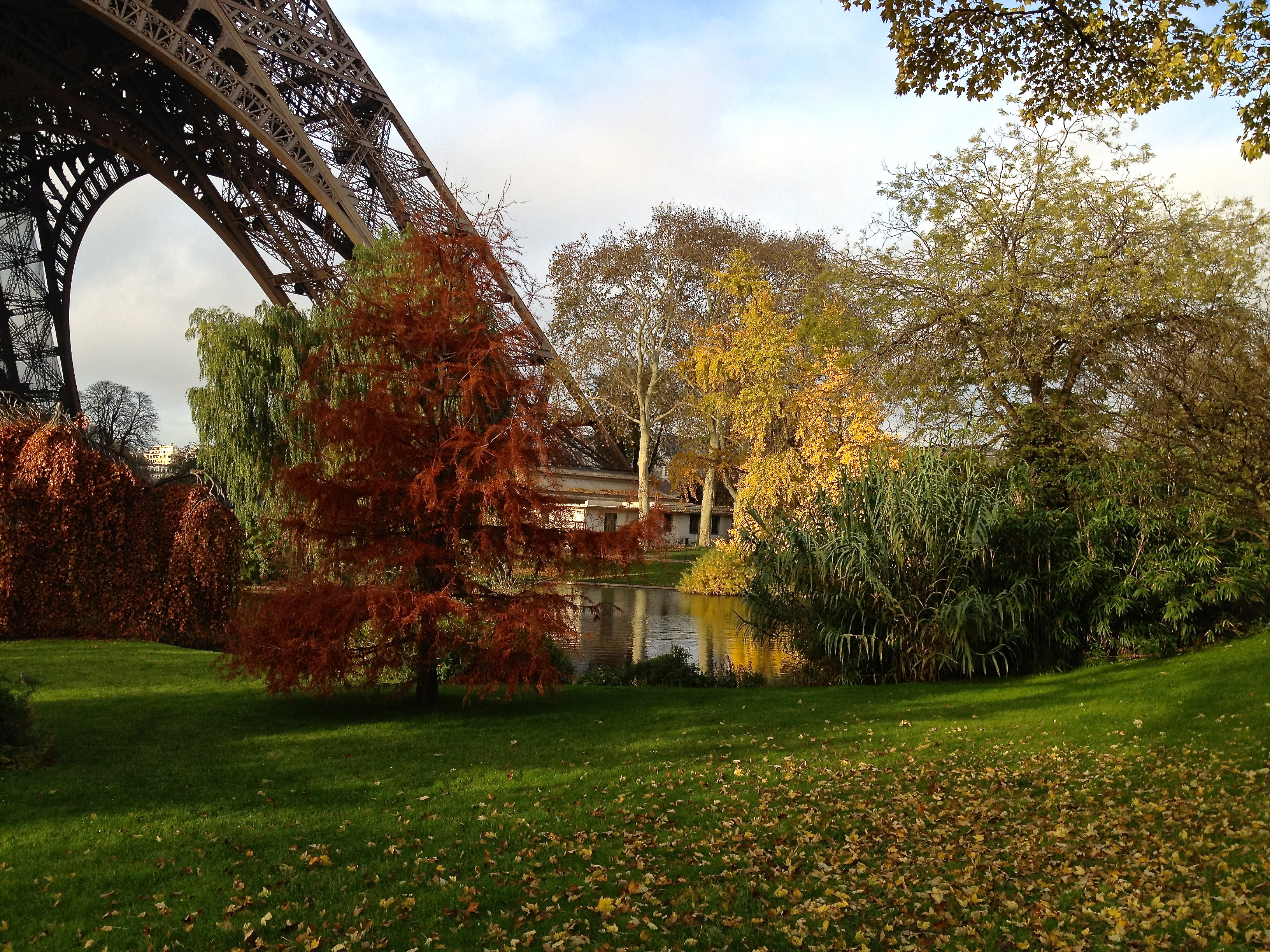
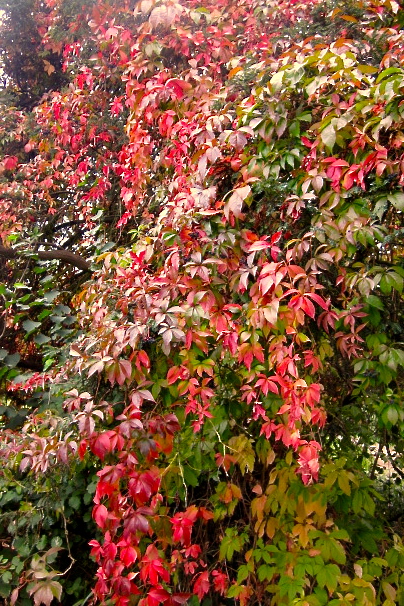
fall 2012I love fall in France. I suppose I love it more than most because I come from a region of the USA where there is a conspicuous lack of deciduous trees. So, the radiant blushes of color surrounding me in France never cease to amaze. Sometimes I feel like a dolt, pointing out the vibrant reds and oranges that I suppose seem quite normal to most. But lately, I just can’t help myself. With summer gone, and the impending grey winter on my mind, I plan to enjoy every last drop of scarlet, amber and tangerine.

cascading colors

cascading colors

I think what makes fall even more special for me in France, is that there seems to be a boundless amount of planning, both at the public level as well as at the individual level. This dedication to civic design, on the government’s part is seen throughout France, from the smallest village to the major cities. The October flowerbeds and gardens fiery and fierce, compliment the arbors and forest, thoughtfully planted and groomed sometimes centuries ago. Meanwhile I think the Frenchies take pride in their own small piece of the world. They seem to have a very strong sense of follow through and possibly a sense of duty to their fellow citizens to provide their neighbors and community with something lovely to look at. Their sense of esthetics and beauty saturates what might otherwise be a gloomy backdrop to life.  I feel a commitment to beauty in France.

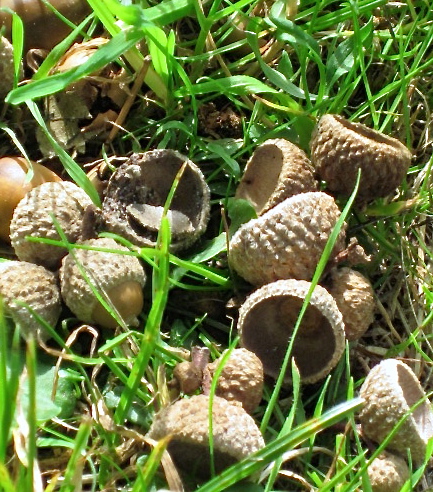
fall 2013 acorns

So when autumn is in the air and the seasons begin to change, not only are we spoiled by nature’s streaking sweep of the paintbrush, we are also spoiled by la madame’s sixth floor window boxes and her not-so-amateur palette of colors.

La jardinière de notre voisin

La jardinière de notre voisin

No. 10: Chagall

La Danse 1950-1952

La Danse 1950-1952

I am a huge fan of Marc Chagall.

I was lucky enough to see the Chagall exhibit at the Musée du Luxembourg in Paris at the end of summer, and it was stunning. I adore his vibrant palette and enthusiasm. Boy, could Chagall do color! As Picasso said, “When Matisse dies Chagall will be the only painter left who understands what color really is”. Je suis d’accord, brother.

Although Chagall was born in Belarus, the French considers him first a French artist, and then a Russian painter. While he did spend the majority of his life in France, much of his work reflects and was inspired by his memories and dreams of his homeland in Vitebsk. But, fortunately for all us admirers, many of his most famous works can still be found in France.

Le Paysage Bleu, 1949

Le Paysage Bleu, 1949

The expos. A remarkable thing about living in Paris and France is the exceptional access to great works of art. At this exhibit, I fell in love with his fiddlers dancing on the roofs and his ghostly figures gliding through his magical sky, the green and yellow dancers and whimsical forms, the purple roosters and blue violins, the stuff that dreams are made of…his hopes, longings, and losses—a delightful and thought-provoking display of some of his major works.

A night at the symphony. The Palais Garnier, Paris’ famous opera house, is also the home to his famous, fanciful ceiling. Although there was a whole heap of debate and some very disgruntled Frenchies when he was first commissioned to paint it in 1963, it has become a much beloved part of any evening at the opera or ballet.

Palais Garnier, Paris

Palais Garnier, Paris

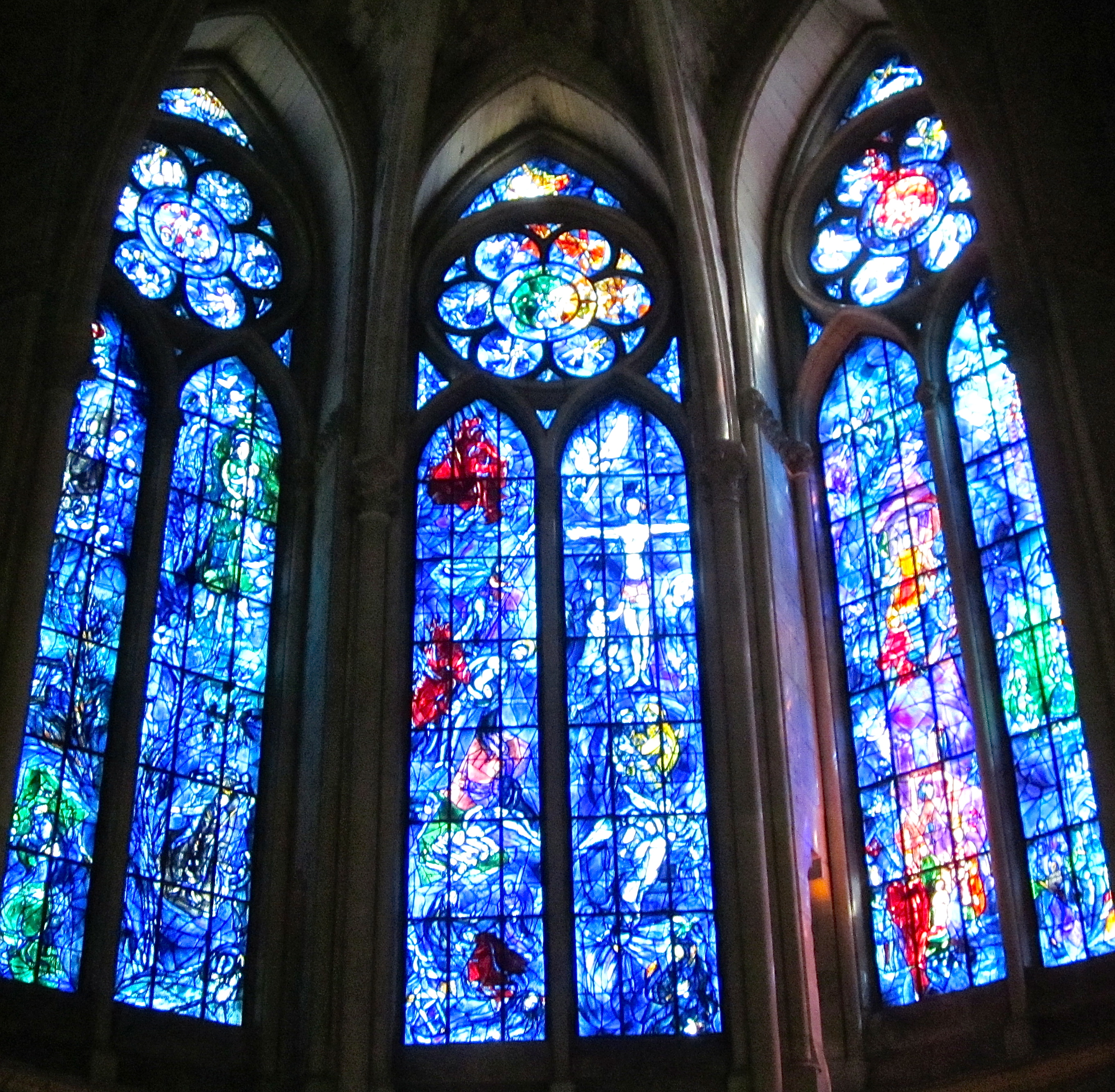
The windows. You may not know that a set of Chagall stain glassed windows is housed in Reims at the gothic Notre-Dame Cathedral. I was oh so pleasantly surprised to find them when touring Champagne country. Someday soon I hope to make it to Metz to visit Saint-Etienne Cathedral to see, as one French friend has told me the most “flamboyant” of all of Chagall’s windows.

Reims Cathedral

Reims Cathedral

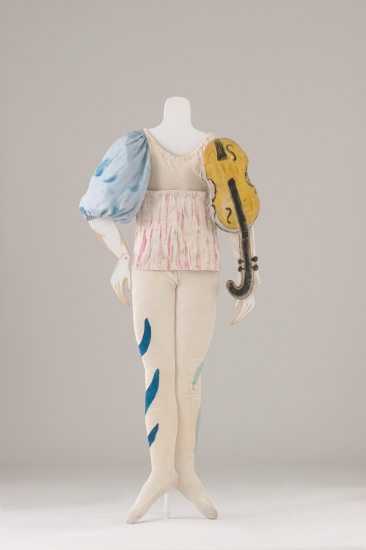
The sets and costumes. On top of that, I just learned from my lovely daughter and dancer, Kitcat, that Chagall also designed and hand-painted the madly imaginative costumes and sets for the1942 production of Aleko, for the New York Ballet Theatre and did the same for New York’s Metropolitan Opera’s production of the Magic Flute, later in the 1960s. (Do I have to go to New York to see them? Does anyone know where they are housed?)

Fish

Fish

Clown costume, Aleko

Clown costume, Aleko

Most definitely on my radar this fall, is a trip to the Carrières de Lumières, via Marseilles, to see the “Monet, Renoir… Chagall: Journeys around the Mediterranean” expo…and, of course Nice is my Mecca. Someday I hope I’ll visit the Musée National Marc Chagall.

Vocabulaire:

Je suis d’accord: I agree