No. 347-349: la Madeleine, Madeline, and les Madeleines
Which one is your favorite?


source: http://www.jbkitchen.com

source:ediblelife.net
Here’s a yummy Madeleine recipe to try at home.
Aug 14
Which one is your favorite?
Here’s a yummy Madeleine recipe to try at home.
Only by interrogating the other passengers could I hope to see the light, but when I began to question them, the light, as Macbeth would have said, thickened.
– Hercule Poirot, Murder on the Orient Express
If you are in Paris and you haven’t yet seen the intriguing Once Upon a Time the Orient Express expo at the Institut du Monde Arabe, make your plans now. Its final departure is 31 August 2014, 19h. France’s national railway (SNCF) and the Institut du Monde Arabe worked together to bring this real-life and cinematic legend to the public. Film enthusiasts and vicarious travelers get ready for a nostalgic journey on the extravagant train line.


One of the finest exhibits I have seen, the detailed curators make it easy to imagine those first voguish passengers who boarded the luxurious liner in Paris in 1883 for their 80-hour journey to exotic Constantinople. The train oozes with the old glamor of courtesans and kings, duchesses and diplomats, spies and starlets, smugglers, tycoons, treasure hunters and rogues. It took nearly a year for SNCF to restore the 20th century locomotive used in the film “Murder on the Orient Express”, and they did not spare any expense. Visitors can marvel at the sheer opulence of the era that must have rivaled, if not surpassed, Europe’s finest hotels of the time.
The tour starts inside the Institute with vitrines filled with advertisements, travel documents, luggage and personal items and then continues with fully restored compartments and period clothing. After that you wander back outside to the Seine and board the lavish locomotive beautifully reflected in the institute’s glass-paneled walls.


It is great fun to marvel at the sumptuous wooden paneled corridors and leather-covered ceilings, rich leather armchairs, art deco bars and other early 20th century excesses. The curators have meticulously included all the details: Harry Potteresque newspapers with photographs that come alive with scenes of the time, original china, cutlery, silk sheets, velvet curtains and personal items famous travelers brought aboard.


Look for the steam and listen for the whistle, two weeks left to clamber up the stairs and catch your ride on the Orient Express!
Il était une fois l’Orient Express runs until August 31, 2014 at the Institut du Monde Arabe, 1 Rue des Fossés Saint-Bernard, 75005 Paris, France.
Aug 12
I am not sure why it took me nearly three years to discover these delightful golden cats with the Cheshire grin because I always make it a habit to look up.
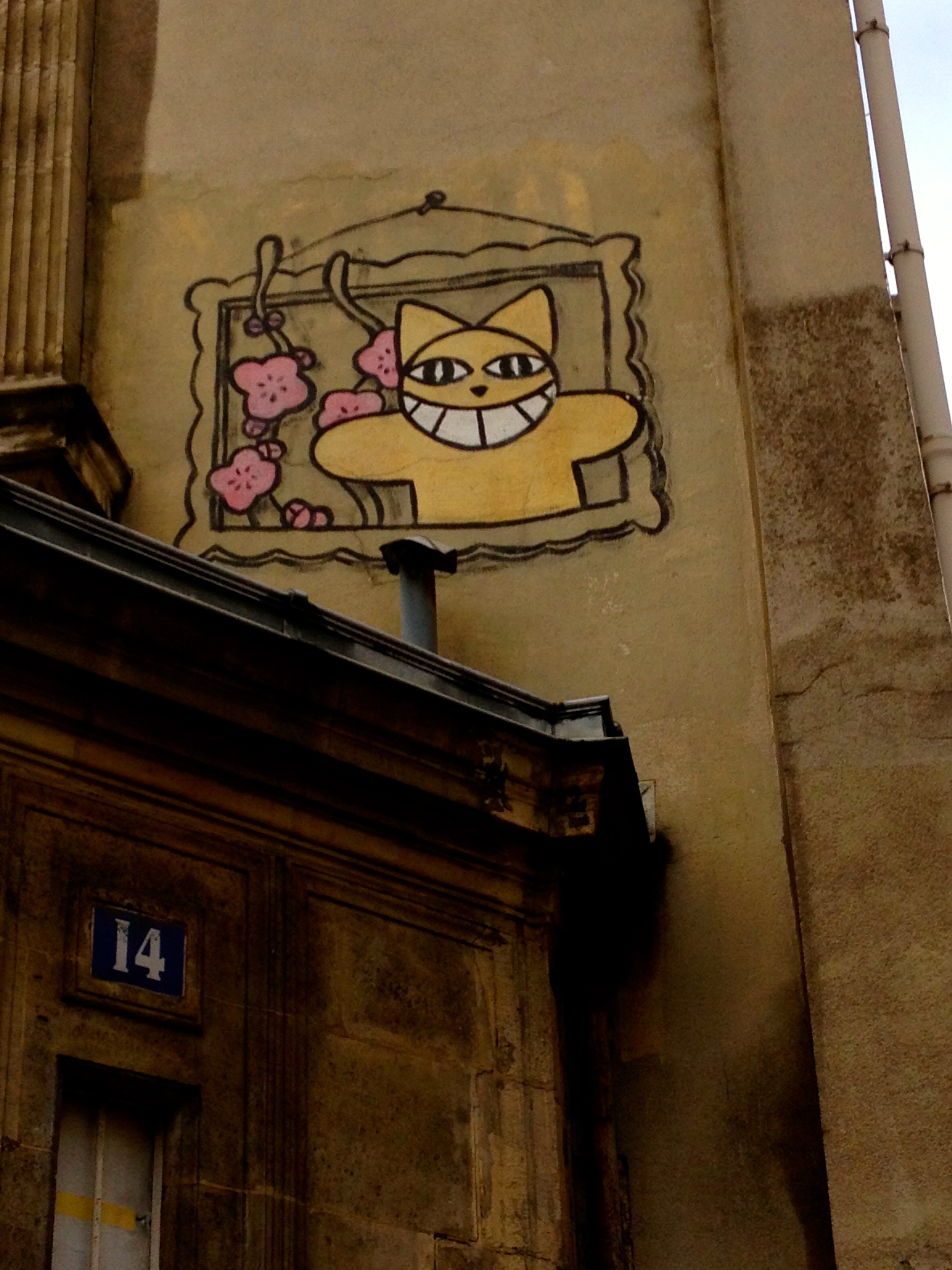
And ‘up’ is where you will find them, mischievously smiling down. I came across them in Orléans earlier this summer, and now I see them peeking out at me here at home. I have even seen them as far away as Geneva, and rumor has it this roving rascal has made it all the way to the big time in New York City.
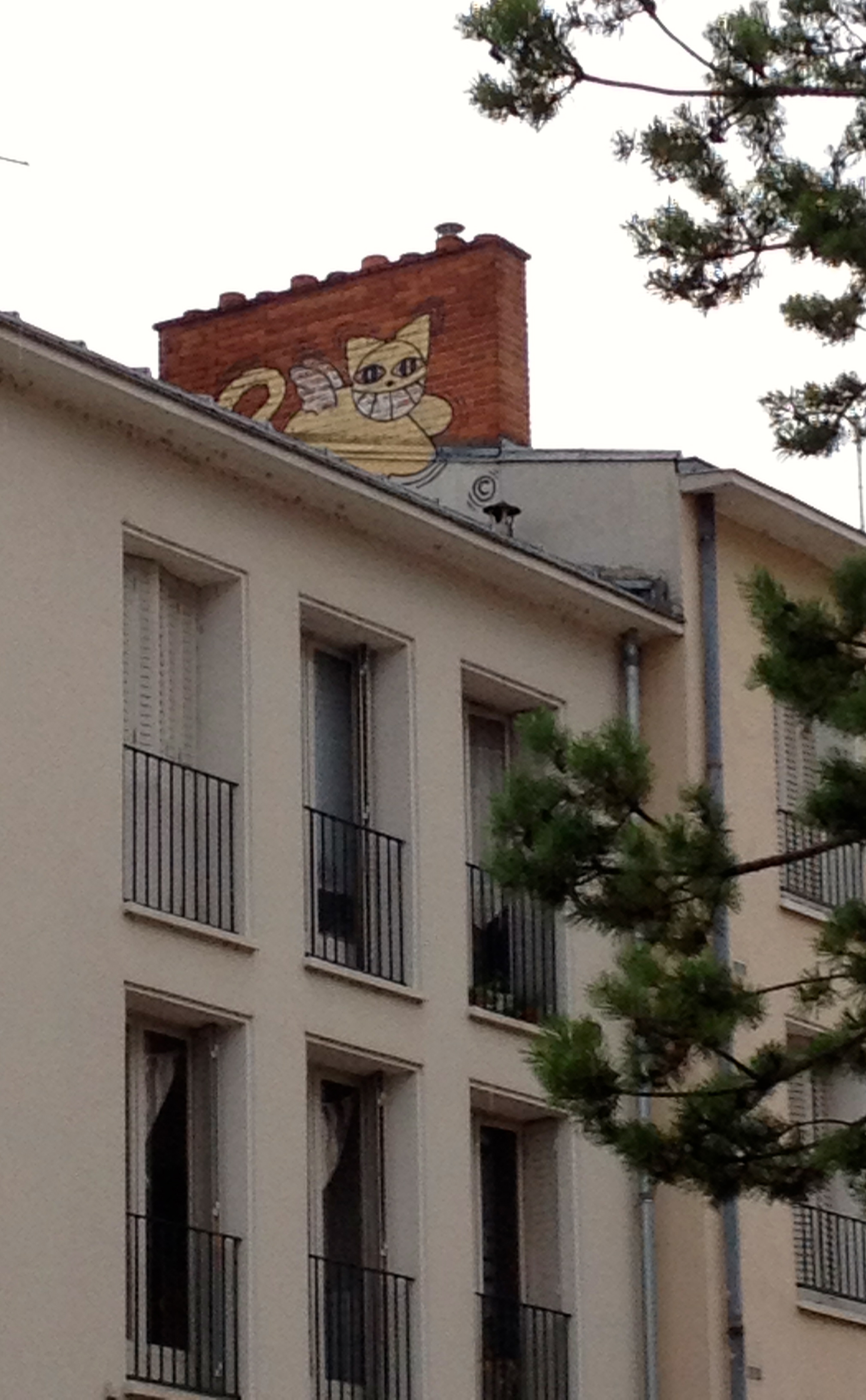


This fancy feline appears under the cover of darkness when his puckish painter comes out to play tag. Spray cans in hand; the artist’s imagination takes flight late at night on high above rooflines and sand colored walls. Sometimes you find them grinning uncertainly from chimney pipes and gutters. And sometimes their paws reach out for the sky while their faces laugh at the sun. I even saw this cool cat winging it with angels in front of the pearly gates.
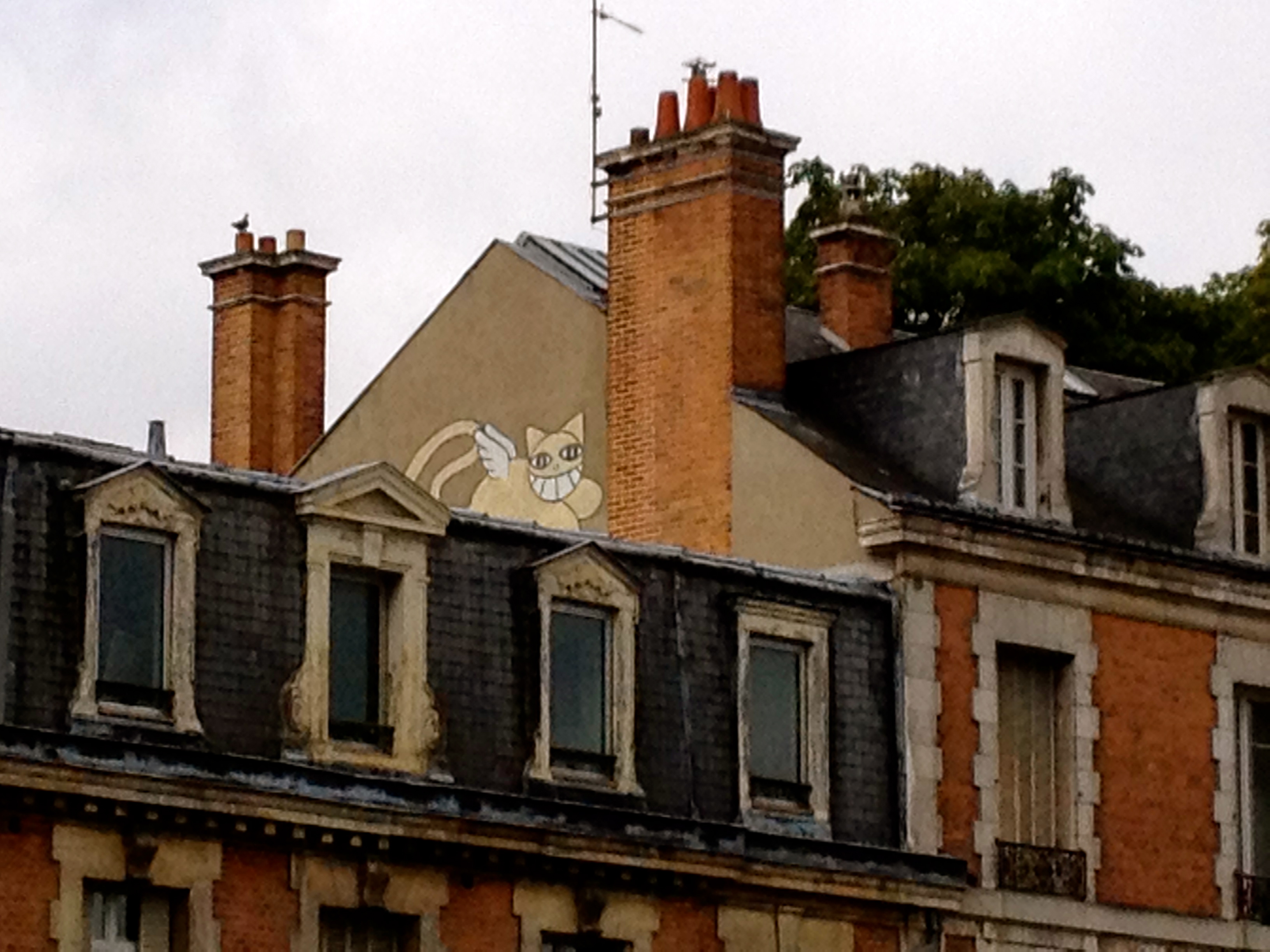
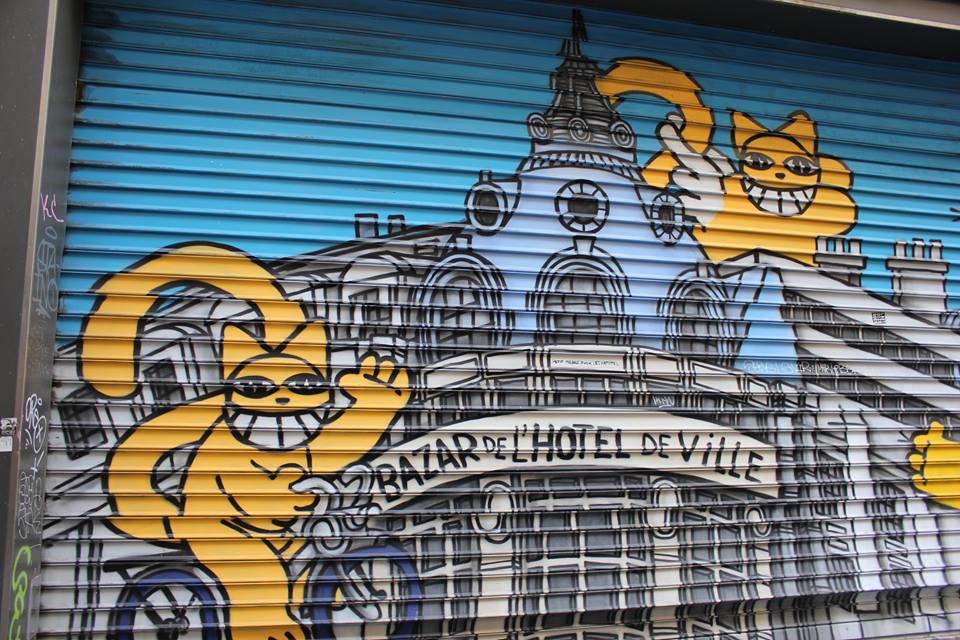
Monsieur Chat is my favorite skyline treasure hunt. Where have you seen this traveling tomcat?
Aug 9
So long charming beauty,
cobbled streets, steep, stone stairways and solitary cypress.
À bientôt windswept hill towns,
vast valleys, medieval ramparts,
and burnt Siena edges.
Ciao for now silvered olive trees,
Romanesque chapels, streaming sunlight and painted sunsets.
Arrivederci aromatic Brunello and salacious Chianti,
already missing the rustic Italian good life and countryside pace…


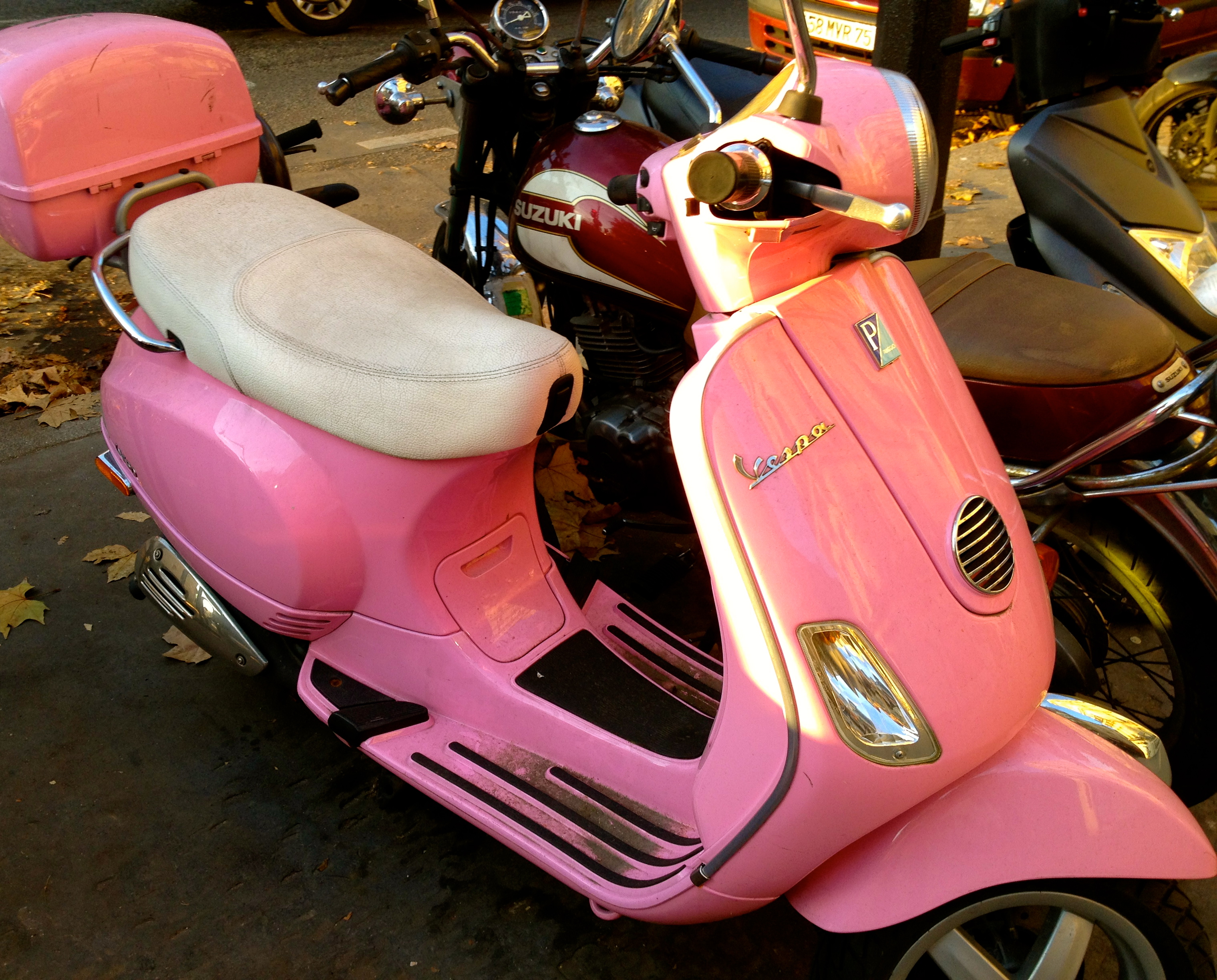 We have now made our way to Italy, so it seems appropriate to write about their beloved and iconic Vespas. I have actually been collecting photos of these lovable shiny scooters in Paris and around France over the years, and now that I am in their homeland, I am thinking that it is time do a little poetic waxing on the subject.
In the interest of full disclosure, I have never driven a Vespa, never taken a ride on one, and never even sat on one. I guess I am just plain chicken when it comes to anything with only two wheels, except for my beloved vélo. Still, in my mind’s eye, I see myself on one of these snappy, multihued machines, tooling through the French (or Italian) countryside or zipping between cars on the Paris streets, harmonizing helmet protecting my noggin. I have a couple of girlfriends in Paris who brave the wacky French drivers, and scoot about on their Vespas, and I must say, they look quite marvelous, and save a lot of money on petrol to boot.

The Vespa came about as a response to the realities of post-WWII Italy. It was a cheap and reliable mode of transport for struggling Italians who needed to get around the bombed out country. However, had it been only a form of transportation, I doubt we would still be talking about them; but a fashion statement, now that is another story.

original 1946 Vespa…source: http://www.businessweek.com
The original prototype designed by the Piaggio Company was based on the small motorcycles made for parachutists and nicknamed “Paperino” (the Italian name for Donald Duck) because of its strange shape. Not quite right, the head of the company ask for a redesign. Using their technological and design know-how gleaned from designing rail carriages, luxury coaches, seaplanes and of course, airplanes, propellers and engines for the war, and “unfettered by any preconceptions about what a motorcycle or scooter should look like”, the slick, sporty Vespa was born. Equally important to function and drivability was comfort and style. The Vespa was designed to keep its driver looking smart, not disheveled, but perfectly intact for any photo-finish. Piaggio decided to call its creation the wasp (vespa) based on the sound of its engine, its aerodynamic form, and its lean, but curvy, and sexy shape. Once he introduced the snazzy and sleek colors, we were all goners.


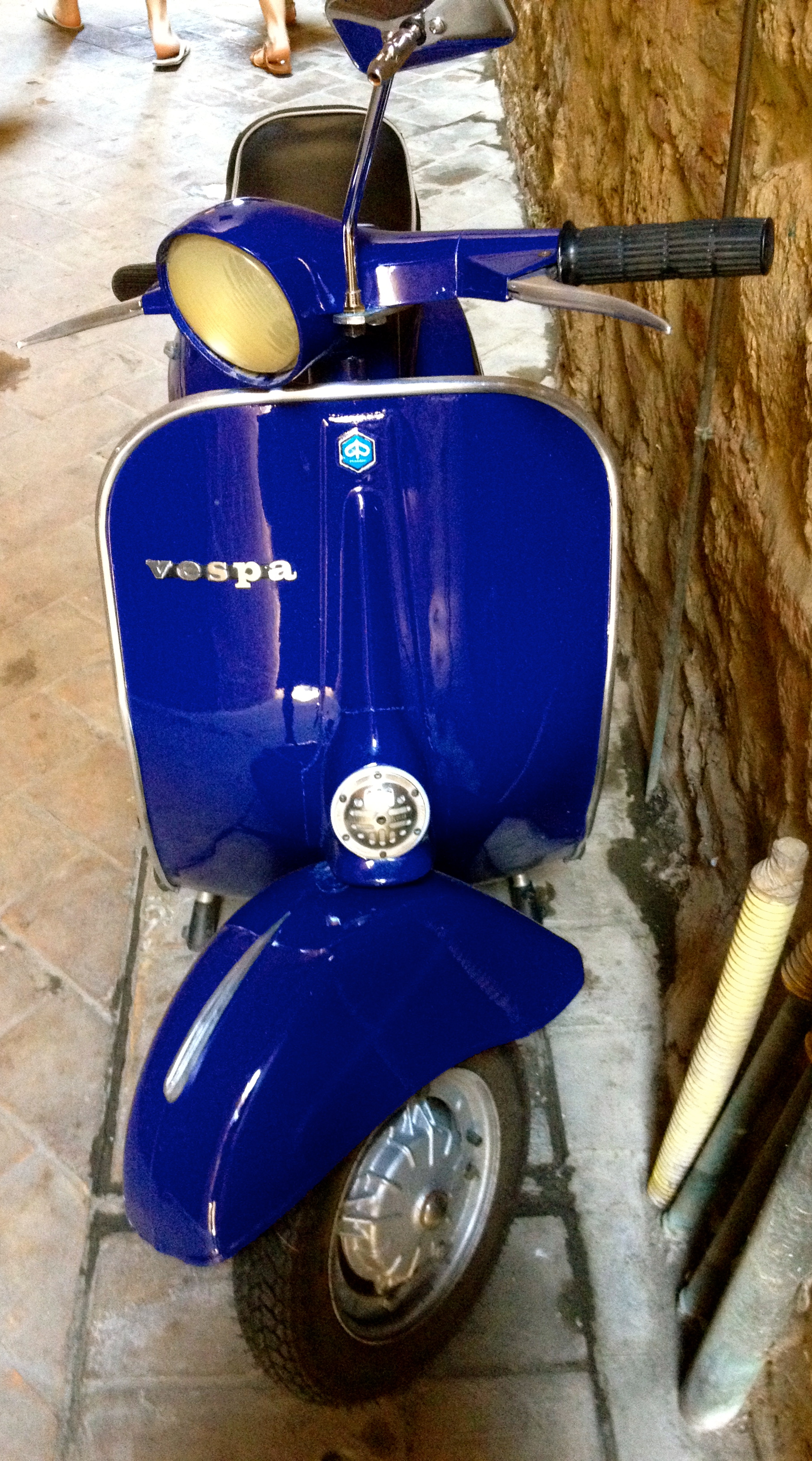 Nowadays the Vespa is an intrinsic part of Italian (and French) social history. Riding one today, I imagine you still feel a kinship to the “Dolce Vita” years. Maybe someday I will have the guts to jump on one and ride through the splendid countryside or romantic cities of Italy and live my own “Roman Holiday”…I can picture that…
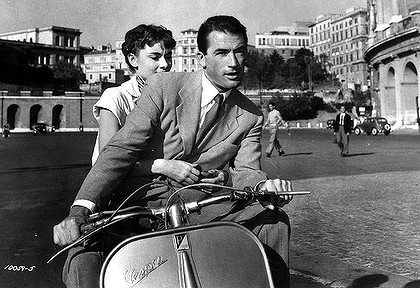
Audrey Hepburn and Gregory Peck in Roman Holiday
Viva la Vespa!
Aug 3
 As we travel through southern France and the Alps, we have seen a fair bit of domesticated wildlife. This got us thinking about what animals say in French. You know, those lovely onomatopoeias that phonetically replicate the sounds that animals make? Animal sounds are different in most languages, and some of them are adorable en français.
Par exemple:
A frog in American English croaks, Ribbit! Ribbit! but the hoppy amphibian in French belts roughly, Côa! Côa! American horses have been heard to say, Neigh! while French horses laugh, Hihihi! In Paris satisfied French chats hum, Ron-Ron! but their Manhattan amis naturally prrrrrrr, and then prrrrrr some more.
In the countryside in the States, we wake up to a screeching, Cock-a-doodle-doo! mais in France nature’s alarm clock is slightly more pleasing, Cocorico! (Italy’s roosters top them both with their melodious, Chicchirichi!) In contrast their better halves, the hens, say, Cot-Cot-Cod! not Cluck! Cluck! Cluck! as the fluff-ball baby Yanks chirp, Cheep! and Peep!, the French bèbès warble, Piou! Piou!
Both the wild boars and the pigs in France grunt, Groin! Groin! (grwan grwan) whereas their piggy-tailed American chums, squeal, Oink! Oink!


The donkey below our mountain chalet brays, Hiii-hearnn! or sometimes, Ihà Ihà, which does sound a lot like the familiar, Hee Haw! Hee Haw! The birds in the canopy call, Cui! Cui! (kwee-kwee) not, Tweet! Tweet! The canoodling French doves whisper softly, Rou! Rou! Rou! while their fine-feathered-friends respond, Coo! Coo! Coo!
French ducks on the lake quack, Coin! Coin! Coin! (kwan-kwan-kwan), as the wild turkeys in the bush gobble, Glou! Glou! Glou!
The cows on both side of the Atlantic can be heard lowing, Meuh! or Moo! And the sheep and goats sound alike bleating, Bêê! and Bah! and Naaah! and Naaah!
…but can you tell me please, what does the fox say?
Aug 2
I love driving through France. It gives you a strong appreciation of how quickly the geography changes, and as the landscape changes, so do the people, languages and cuisines.
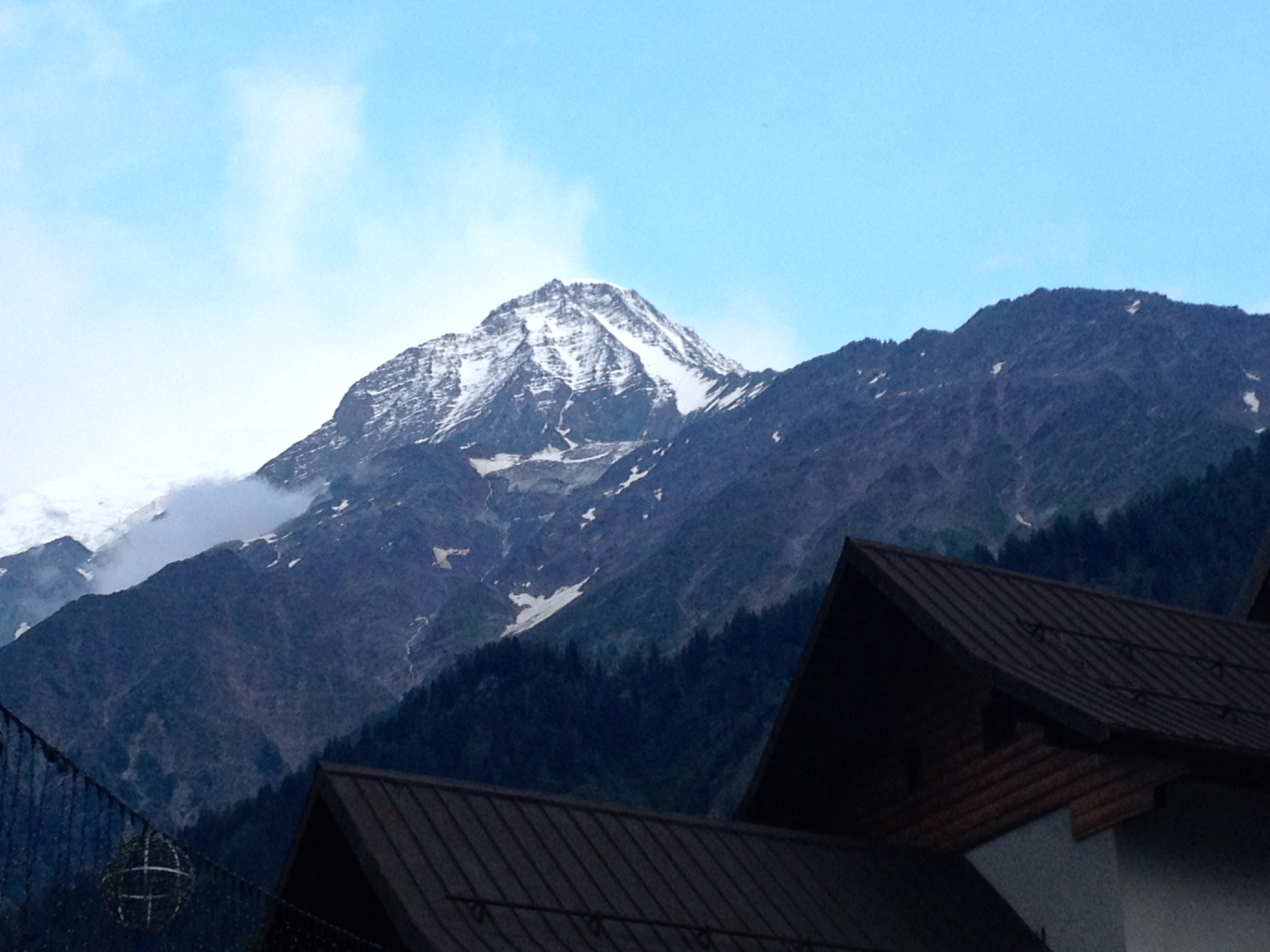
We just passed through the French Alps, or the Savoie, famous in the summer for her high, snow-capped mountains, pristine lakes and chic spa towns. Paragliding, hiking and climbing above and among the vast fields of wild flowers seem to be the activities of choice. With the backdrop of Europe’s highest mountain, Mont Blanc, it is indeed a spectacular part of France.
Trying to get to our next destination as quickly as possible, we were a bit disheartened to see that the wait time to travel to Italy via the tunnel burrowed through the majestic mountain was nearly 2 hours. Hungry and tired, we made a snap decision to dine in the small resort town of les Houches about 6-kilometers from Chamonix. This impromptu-pretty-village stop turned out to be a brilliant break, as the quiet town is nestled directly under the impressive mountain. Old wooden Savoyard farmhouses and restaurants dot the ski-town, and the centre ville boasts a sweet country church along with a friendly and relaxed atmosphere, all with a 360-degree view of Mont Blanc.
 We found a traditional resto with a warm-enough terrace (the weather is oddly cool for August), and tucked ourselves in next to a jolly young Scotsman who was bursting to tell someone about his marvelous achievement. It turns out that les Houches is the starting point of the popular ‘Tour de Mont Blanc’ trek, and our humble, but proud, Scottish lad had, after four previous attempts, just succeeded in summiting his highland foe. Although completely caught up in his enthusiasm, I was at first less than impressed that it had taken him four separate trips to the mountain to realize his dream. But as he continued to regale us with his story, I began to understand the skill and dangers involved in trekking the Alp’s highest peak. While the scenery is magnificent on the way up, the trail gets quite rugged, and the final, exposed, snow and ice-covered summit ridge sounds harrowing. En fait, not only is Mont Blanc Europe’s highest apex, it is also the deadliest. As he modestly described his dramatic high-altitude climb and final achievement, I felt so pleased for him. Proud, like a big sister delighted for her brother. He also told us about the well-appointed hut system and fabulous food to be had on the trek, which all seemed so very French to me.


This brings me of course to our own fabulous and calorific Savoyard meal in les Houches: Raclette.
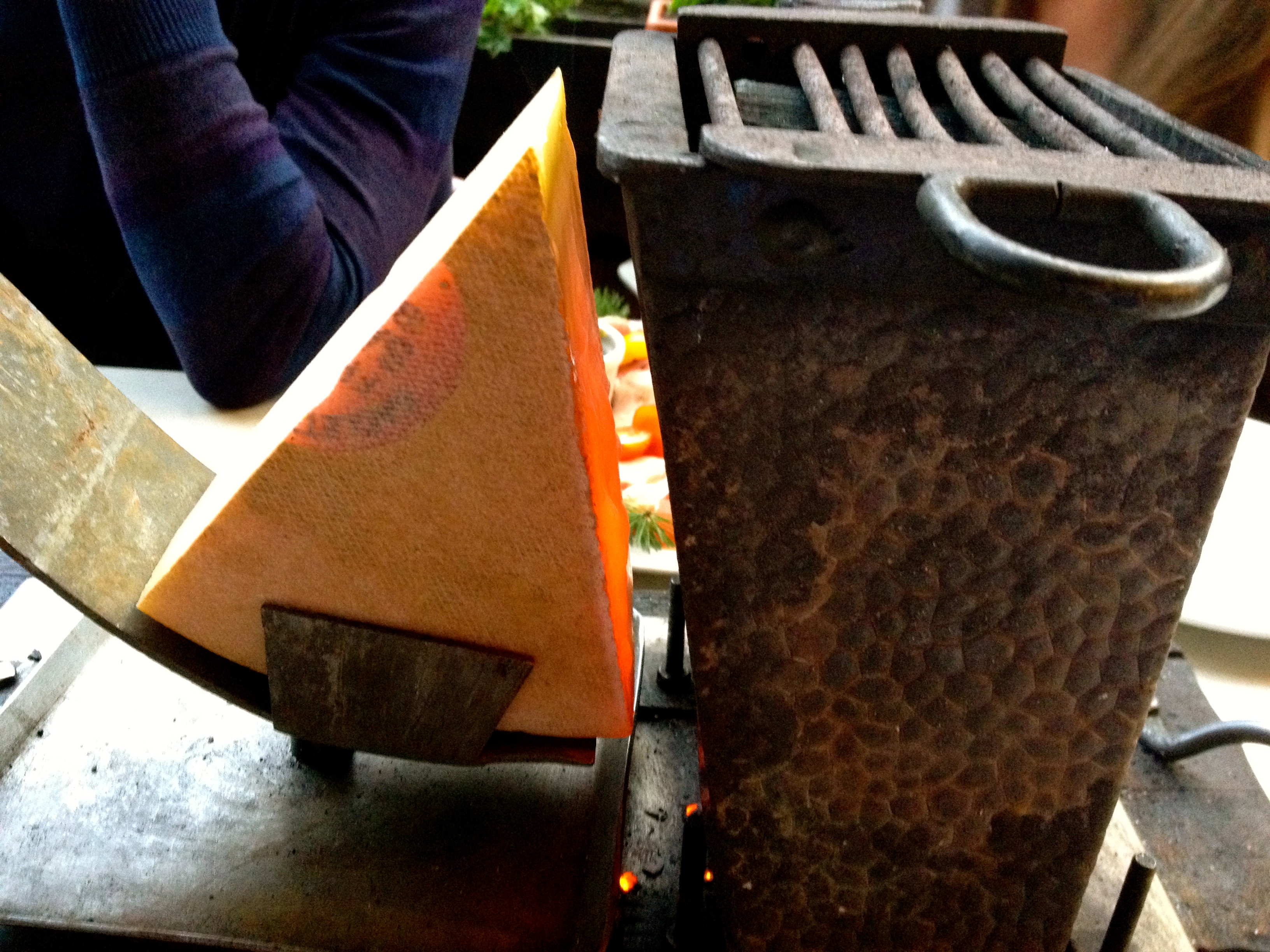
If you have never had raclette, you should. Although it originated in the Swiss Alps, you can order it all over France, but it is especially delicious down here in the Chamonix Valley. There are centuries of tradition behind this simple feast (first mentioned in writings as early as 1291!), but as far as I can tell, things haven’t changed much. This semi-hard, mild, and slightly salty cows’-milk cheese (also called Raclette) was, and is still, easy to transport and yummy to eat; shepherds and farmers originally ate it over an open campfire as they broke from work. They would place a block of cheese by the fire, and as it became soft, they would drizzle the melted cheese over potatoes, onions and pickles.


“Raclette” comes from the French word racler, meaning “to scrape.” It is a bit like fondue, but you have to work a little harder and be quick on the draw to scrape the cheese as it melts from the rind. I have used the modern fancy Raclette grills at the homes of French families in Paris, but I much prefer the old-style Raclette board to enjoy this delicious fare. The warm, rich and scrumptious cheese heaped on boiled potatoes, and these days charcuterie, accompanied by crunchy pickles and healthy green salad is perfectly perfect for warming the body and soul in the cool mountain air.


 365+ Things I Love About France