Skip to content

Posts from the ‘Art’ Category

No. 71: Bobbles

Paris is covered in sparkling bobbles en ce moment, et je les adore!

With les boules de Noël in all colors, sheens, and sizes, it’s beginning to look a lot like Christmas…

Vocabulaire

en ce moment: at the moment

et je les adore! and I love them!

boules de Noël: the bobbles, ball-shaped Christmas ornaments

No. 70: Young Artisans, les petits rats de l’opéra

Today I spent the afternoon watching a very young group of artisans at the annual demonstration of the petits rats de l’opéra at the opulent Palais Garnier.

Les petits rats are a select group of students of the Paris Opéra Ballet, all of whom dream of becoming stars, the best of whom go on to become professional dancers in the Paris Opera Ballet Company.

There is limited information on where the term “petit rat” comes from. When I first saw the term, I thought it referred to the fact that the very young students are always cast in the role of the mice in the Nutcracker. But what I learned today, is that the term more likely comes from the dodgy early history of the lives and “careers” of the young children who danced for the opera house.

Louis XIV established the Paris Opera Ballet and School in 1713. En fait, the school is the oldest ballet school in the world and is where classical ballet technique and terminology was standardized. Louis had high hopes for his ballet but unfortunately his drive for excellence took quite a toll on his dancers, especially the children.
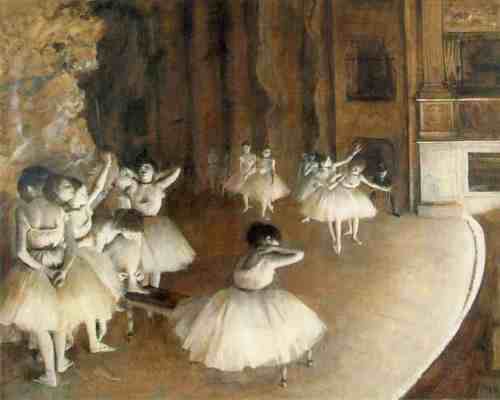
The young dancers in training were not the children of the haute bourgeoisie who lived in the elegant quartiers of Paris. Rather, most were children of the working poor who lived in an extremely different world in the marginal quartiers of Paris. They joined the Opéra between the ages of six and eight to help support their families and worked six day weeks like factory workers. Mostly malnourished, with not much more than the clothes on their backs, many of the dancers were forced to supplement their income by offering sexual favors to the abonnés (bourgeois ballet subscribers). Because of their poor living and working conditions, they became known as the “petits rats de l’Opéra”, or the little rats of the Opera.

Nowadays the rats train in a modern, state-of-the-art location in a suburb of Paris, which houses dance studios, classrooms and dorm rooms. Children come from across the economic spectrum. They attend academic courses in the morning and train between four and six hours in the afternoon. They live and breathe ballet, and pretty much give up their childhood in exchange for the hope of becoming l’étoiles. There are still rumors that their lives are not much better than the earliest rats, published reports (denied by the Opéra) have described an extremely grim daily existence at the school.

Still there is no denying the results are magnificent. The children are thrilling to watch. Their strength, poise, talent and stage presences is staggering for such young dancers. It was inspiring, albeit a bit sad after researching the school, to see these young artisans expressing their passion for their craft, and dancing as if it was the only thing in the world worth doing.

Ecole de danse (saison 2010-2011)

Sur cette photo, tu peux voir les “petits rats” de l’Opéra de Paris lors d’un cours de danse avec un de leurs professeurs. (© Agathe Poupeney)

No. 69: l’artisan, Maison Légeron: It’s in the Details

IMG_3538Recently I was lucky enough to have the opportunity to tour an atelier of another unique group of artisans, la maison Légeron.

La Maison Légeron is home to a handful of talented craftspeople (mostly women) that skillfully turn silk into flowers and ostrich feather into finery and create intricate accessories seemingly out of thin air. They do this for the prestigious fashion houses of Paris, Dior, Givenchy, Chanel, Courreges, Ungaro, Lacroix, as well as a number of extremely wealthy clients from around the world.

You might say these are the artisans who take care of the details.

Founded in 1727, Légeron’s handiwork has dazzled the ballrooms of the royals, decorated the bridal gowns of heiresses and princesses, walked the red carpet in Hollywood, and graced the catwalks of all major fashion houses this year.

Their work is rooted in tradition and trusted only to highly trained and certified artists. From the dyeing of each individual flower petal to the sewing of every last bead, it is all done by hand. The results are exquisite and delicate, one-of-a-kind creations, lovingly designed and equally as suited for the Museum of Decorative Arts as for a Chanel gown.

I love baring witness to petite moments of pure imagination and creativity.

Perhaps in my next life I’ll come back as one of these gifted artisans and spend my days creating beauty for the sake of beauty, and making sure that the details shine.

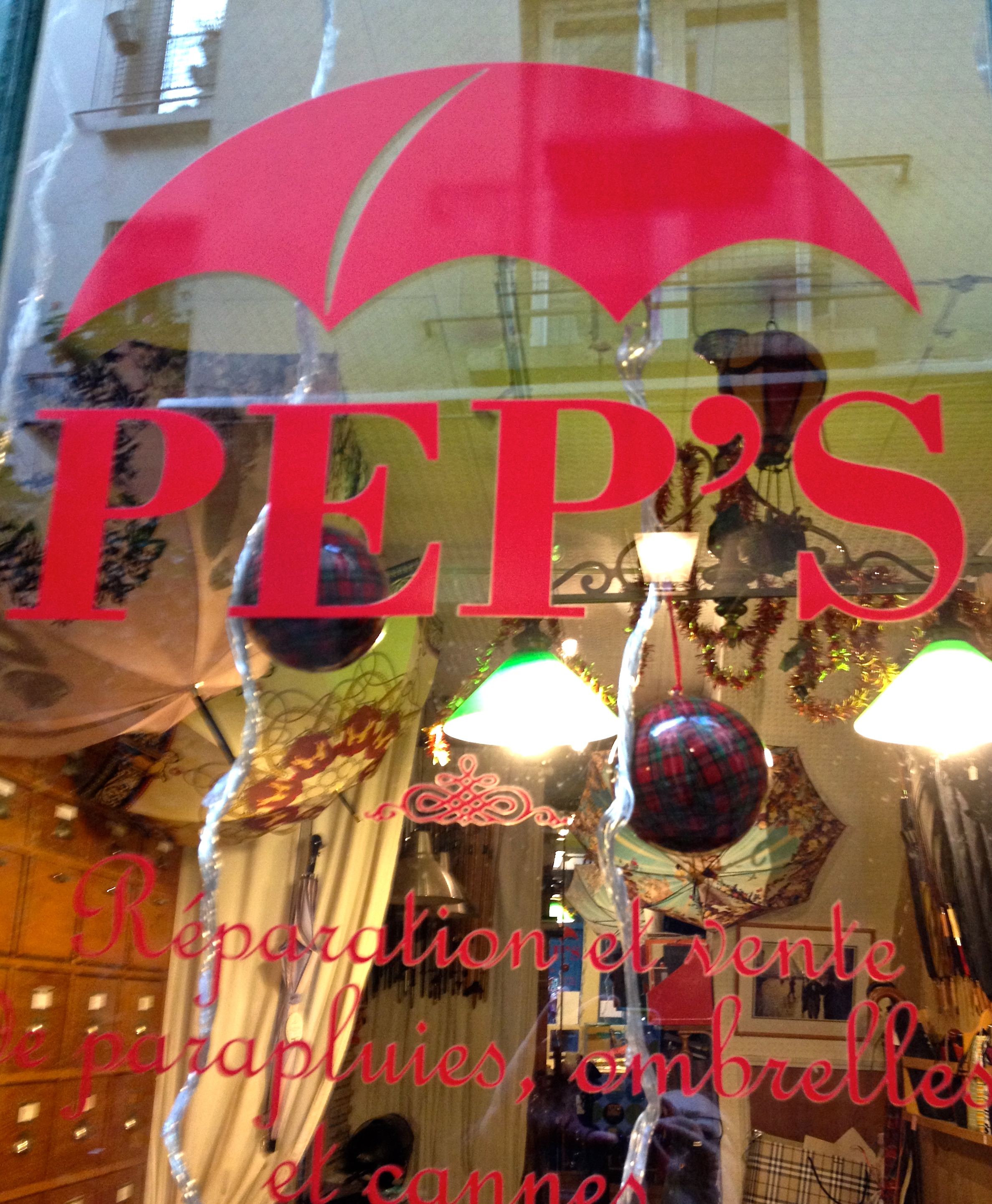
No. 68: L’Artisans: PEP’s, Réparation de Parapluies

artisan: a worker in a skilled trade, especially one that involves making things by hand; craftsman, craftswoman, smith, wright, journeyman; one that produces something (such as cheese or wine) in limited quantities often using traditional methods.

IMG_2300

I love that France is full of artisans and that the French government only allows craftspeople who have studied, apprenticed and passed all their exams to call themselves artisans.

Yesterday, I was delighted to visit PEP’s Réparation & Vente Parapluies, Ombrelles & Cannes, and meet the only artisan in Paris who will diligently and lovingly repair your broken umbrella, parasol, or cane.

IMG_2299

PEP’s

Passage del’Ancre Royal

30 rue de Turbigo

75003 Paris

01 42 78 11 67

No. 61: The Other Eiffel Tower Park

IMG_2030


Affiche-Expo Solidaire copie

No. 59: 29 avenue Rapp, Paris

29 avenue Rapp is one of my favorite buildings in Paris. How lucky I am to live right around the corner from it and pass it nearly every day when I’m out and about. It’s one of those building though, no matter how many times you see it, that still catches your eye and makes you wonder….

And wonder I have until today when, after years of wondering, I decided to find out the 411 on this whimsical piece of eye-candy.

It turns out to be the masterpiece of Jules Aimé Lavirotte, a famous French architect who, working in the early 1900s, designed nine (still standing) buildings in Paris, most of them in the 7ème arrondissement. Obviously he was a master of art nouveau. All of his buildings feature natural but stylized forms, arcs, oval and parabolas, wood, metal, glass, ceramics—mythical and ordinary creatures, realistic but abstract and unexpected.

29 avenue Rapp has all of the above and more. Lavirotte designed this madly decorated facade in 1901 along with his pal Alexandre Bigot, a ceramist. Together, and with the aid of Jean-Baptist Larrivé, a sculptor, this outrageously extravagant building came to life.

And one hundred and twelve years later, it is still teeming with life. The lavish entrance watches the avenue with two huge bug eyes, while a bust of a maiden with an animal pelt wrapped around her neck looks on. The green ceramic, oval windows, and balconies pulse. The shiny bronze lizards scamper and the wooden door sighs. This building has a rhythm—it’s hard to define—you must see it to feel it.

So the next time you are on your way to the Eiffel Tower, take a 10-minute detour and experience 29 avenue Rapp.

No. 57-58: l’Opéra (gâteau) & l’Opéra (Palais Garnier)

I am crazy for the opéra, both the one with the colorful Chagall ceiling and the one with six layers of divine chocolate and coffee cream.

I started buying l’opéra when we first came to Paris because it was the easiest thing to pronounce (and read) at the pâtisserie. Thank goodness for bad handwriting and a language with strings of silent letters, without which I may have never ordered this yummy chocolate prize.

IMG_8708

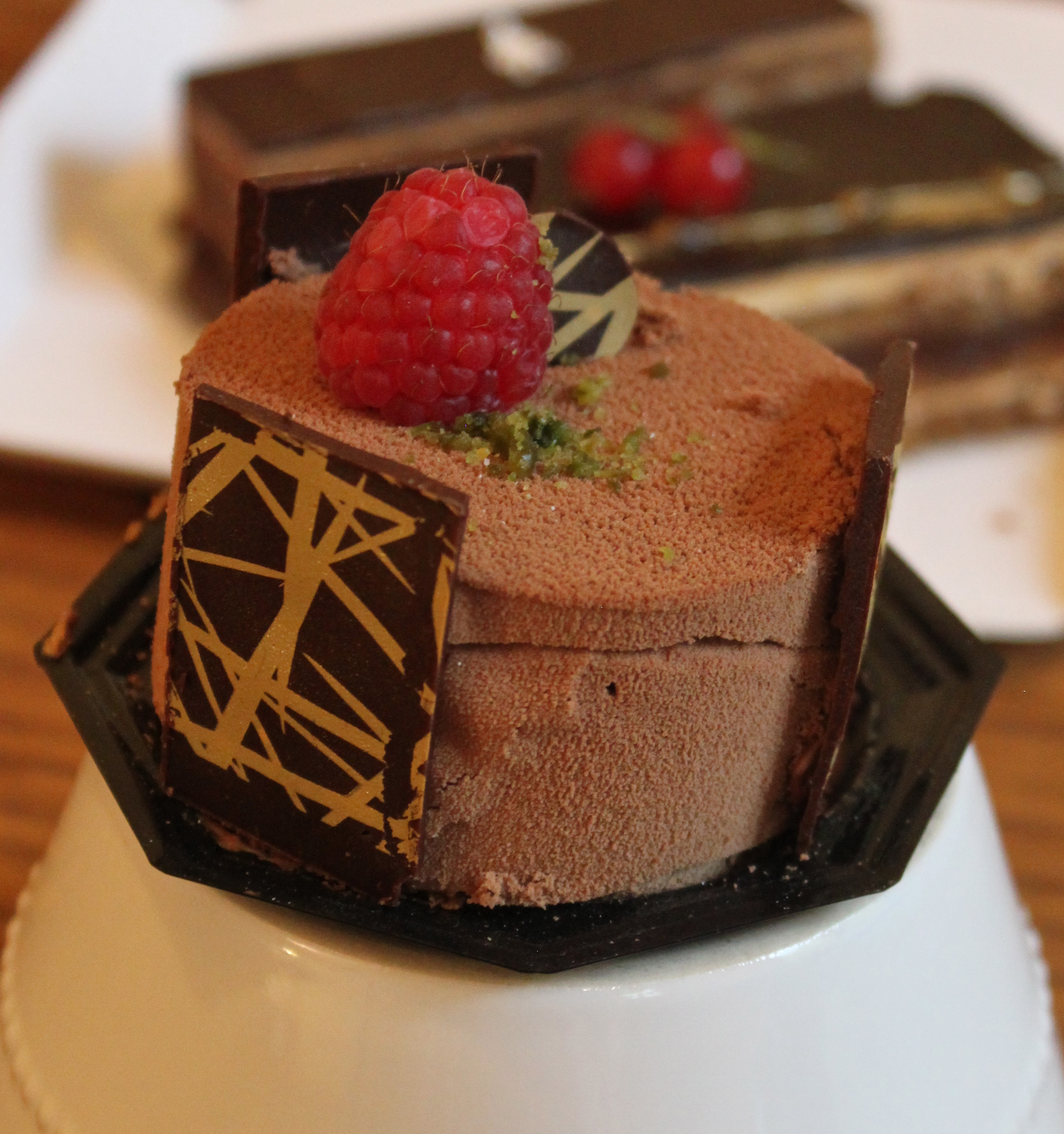
There are several different theories about who invented l’opéra cake and where it was first served. But whether it made its debut in 1890 at the Paris Opéra itself (filled with coffee to keep the audience awake) or in the early 1900s under another name (the Clichy cake), or did not arrive on the pastry stage until the pastry chef at Dalloyau introduced it in the 1950s (honoring a ballerina or the Garnier itself), I’m just glad that some brilliant chef pâtissier came up with this  tasty cake recipe.

The gâteau opéra is a great piece of theatre—a work in six acts, you might say. The play begins with three thin layers of sponge cake soaked in a heady coffee syrup and in between those scenes, a layer of espresso-flavored buttercream, followed by a layer of bittersweet chocolate ganache and concluding with a topping of chocolate glaze. Et enfin, l’opéra is always crowned with some subtle jewel, usually a bit of gold leaf, often toasted almonds, and sometimes the word opéra is delicately penned across the glaze.

My other great love is the real opéra, le Palais Garnier (Garnier Opera House) in Paris. Built on the orders of Napoleon III and carried out by Baron Haussmann as part of the “great Parisian reconstruction”, the opera house is one of the greatest legacies of Napoleon’s reign. Unfortunately for Napoleon, his empire fell before he ever got to ride up in his carriage or had the chance to use his personally designed box seats.

Completed in 1875, the Garnier was the place to see and to be seen. The sweeping staircases were designed so that two finely dressed nineteenth century women could make their grandiose entrances in their grandiose gowns at the same time. Aside from the velvety red theatre, there is a grand foyer that resembles the hall of mirrors at Versailles and is often used by Hollywood when they can’t secure the real deal. If you are a fan of Gaston Leroux’s Phantom of the Opera this is the place for you; the opera house, rumors of haunting, and a vault lake, inspired his story. Marc Chagall’s vibrant ceiling playfully dancing around an 8-ton chandelier is one of my favorite bits of “decoration” is this wildly over-the-top French treasure.

Looking through my pictures this morning of my two beloved opéras, I came up with another theory of why the opera cake was created. I think the two actually resemble one another. Layer after luxurious layer. What do you think?


…if you are going to have l'Opéra, you've also got to have la symphonie…my latest yummy find...

…if you are going to have l’Opéra, you’ve also got to have la symphonie…my latest yummy find…

Vocabulaire:

chef pâtissier: pastry chef

et enfin…and finally

gâteau opéra: opera cake