Skip to content

Posts from the ‘Around France’ Category

No. 317: Relax, Max!

Are you ready, Freddy?

Tomorrow is the (unofficial) start to the French summer vacances…meaning if you hang around Paris for another week or so, everything will be closed down. (Well, not everything, but a lot of things.) The French are extremely good at holiday-making and turning off their phones and professional life for the last weeks of July and all of August. Many will head to their vacation homes, some to Corsica and the overseas departments, like Martinique. A lot will head down South.

We will be joining that madness in the late morning. Fingers, toes, and eyes crossed that the circulation will be circulating. I am looking forward to a break from my sweet, but overworked Korean students, and my final obligations to my daughters’ alma mater.

It is time to chill, Will. Or as the French say, “Tranquille, Emile” or how about “à l’aise, Blaise”. Let’s be cool, Raoul!

1-2-3, c’est parti!

For more great French sayings with names, take a look at the always lovely Geraldine from Comme une Française.


No. 315-316: Cute Little French Towns and Half-Timbered Houses

France is sprinkled with cute little French towns. Well actually it is more than sprinkled, I think “slathered” might be a bit more accurate. It seems like once you leave Paris, the cuteness-factor goes up by about 100. The French do an outstanding job of flowering their hamlets, and as I have mentioned before, compete for the designation of les Villes et Villages Fleuris (Towns and Villages in Bloom) and the title of Les Plus Beaux Villages de France (Most Beautiful Villages in France). They are also quite keen to preserve and present the history of their centres-villes anciens.


In 2013 the Huffington Post published their list of France’s 10 most charming towns. So far I have only visited two of their top-10, which thankfully gives me plenty of undiscovered villages to look forward to in the coming years. Les Plus Beaux Villages Association also provides their annual list, which you can find here—this year there are 157.

While I can’t say that I have been anywhere close to 150 French villages, I have been to my own fair share of small enchanting towns, and every time I turn a corner on my bike or by foot, I find myself smack dab in the middle of another one. And, it just tickles me pink.

Lately the half-timbered houses that add to the image of these fairytale towns have especially charmed my socks off. As these split-lumber dwellings seem to be everywhere I turn, I decided to do a little bit of research and find out how they are built.

It appears that French examples of these houses-of-charm dates all the way back to the twelfth century. Although the country was blessed with an abundant supply of oak, it was still an expensive building material, so most could only afford to use it for framing. According to medieval historians the term “half-timbering” refers to the fact that the logs were halved, or a least cut down to a square inner section. The fact that they used oak so long ago is an added bonus for us; its durability explains why so many medieval half-timbered houses are still standing.

While in modern framed buildings we installed the walls on the outside and inside of the frame, in the ancient half-timbered houses the walls were filled in between the structural timbers. What were they filled with? Why, wattle-and-daub, of course. In case this term is new to you, as it was to me, it was a mixture of different lengths of branches woven together and covered by muddy clay or bricks and sometimes plaster. (The best translation I could find for wattle-and-daub was clayonnage et torchis en français—ça marche? Native French speakers aidez-moi!)


These days most of the surviving structures are extremely narrow and surprisingly tall, and packed together like sardines. This has to do with the taxing structure of the time where buildings were taxes on the amount of street front they took up. As time went on and living conditions improved, faux half-timbers were added as decorations to improve the facades of newer houses. The wobbly and slanting timbers and windows we see nowadays on the ancient buildings are not due to shoddy workmanship of the time, but simply victims of the passage of time and the expected buckling of aged wood.

So there you have it, a brief history lesson on the half-timbering that makes these little towns so darn adorable. C’est très charmant, n’est-ce pas?

No. 312-314: La Loire à Vélo, Bike Share Programs and Biking in Dresses

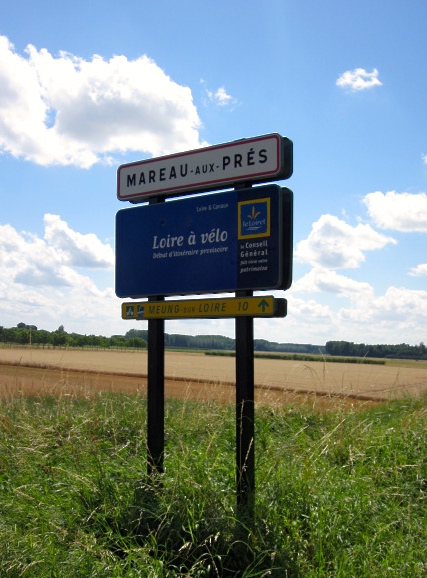
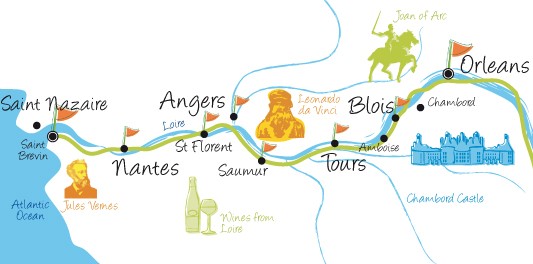
la_loire_a_velo_bike.jpgFor a Colorado girl accustom to always having to ride the hills, the Loire à Vélo is a gem of a bike trail. The 800km path spans two regions of France, the Centre and the Pays de la Loire, and connects six cities: Orléans, Blois, Tours, Saumur, Angers, Nantes. There are no hills, en fait, recreational and professional riders are faced with nothing more than minor “bumps” as they make their way to or from the Bay of Biscay. Hands down, it is one of the most enjoyable vélo paths in France. La Loire à Vélo was an enormous public works undertaking that took the better part of two decades and cost a whopping €52 million to develop and signpost. A favorite among the French and tourists alike, over 800,000 cyclists follow some part of the trail each year. Happily our family is a lucky addition to that statistic.

There is really no excuse not to give it a go, as the usually friendly (when not striking) folks at SNCF make it an extremely easy bicycle holiday by allowing you to take your bike with you on their Interloire-trains. Between Orléans and the bay there are over 20 train stations with quick access to the trail, which makes it very easy to cycle as far as you want and then hop the train back to where you started.

We have biked the Loire as day trips from Paris and as long weekends. I plan to celebrate the BIG 50 by biking the whole 500 miles in 2015. Even if you are not as ambitious as me, or don’t have your own bike, it still makes a super fun and undemanding afternoon outing from any of the cities listed above, because the French have made it super easy. If you only want to go for an hour or two, you can rent a bike for a few euros in most cities from their vélib or bike share programs. So even if you spend the morning visiting museums and lunching on the local cuisine, you can still hop on a bike (ladies, go ahead and bike in your dresses—the French are not the “gearheads” that Americans are), and enjoy some of the most beautiful landscapes in France…mais, bien sûr don’t forget your (chic) bicycle helmets.

Bon vélo!

stage-loire-valley-eurovelo6

No. 311: Mornings on the Loire River

loire_river_5.jpg

loire_river_4.jpg

loire_river_a.jpg

loire_river_6.jpg

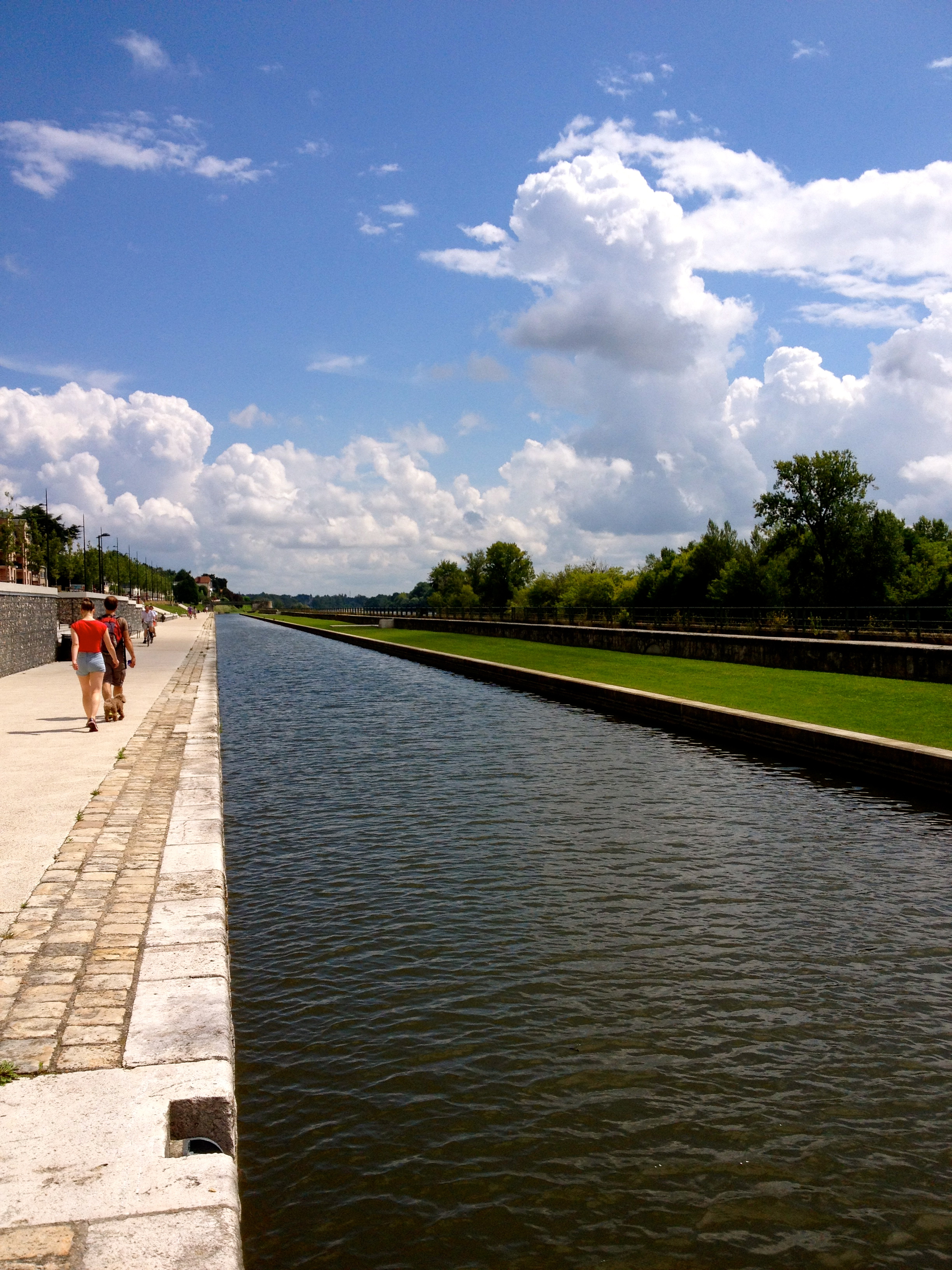
The Loire River, the longest river in France—flowing north and west for nearly 350 miles and spilling into the Atlantic Ocean south of Bretagne, is one of our favorite places to spend a morning.

No. 310: BBC Arts

As my time continues to tick away–only 44 days until I have to leave France–I am starting to notice a lot more little things I am going to miss about living in France.

p01z51wh

One is the easy (and timely) access to the BBC and the complete lack of American broadcast news. How lovely is it to live somewhere where the world doesn’t revolve around the USA? Very lovely. I love being reminded every day that the whole world matters, not just “the greatest nation in the World”. On top of that bit of humility, I like the fact that international news programs focus on things other than the top stories and sensationalized local events. I love the fact that they dedicated 5-10 minutes an hour during their primetime broadcasts to telling us about the arts too. The top-5 news stations in the US would never dream of doing this crazy promotion of the ARTS, nor would the viewers ask for it.

Only 44-days left of my free and easy access to the BBC, but a continued subscription is at the top of my list, right along side my Nespresso machine.

France_Support_art.jpg.

No. 304-308: Five Things I love about le Quartorze Juillet à Paris

You can pretty much count on the French to go all out for their beloved quatorze juillet festivities in an average year, but this year it seems likes efforts have been twice doubled as the world marks the centennial of the First World War. It has been a day of huge and meaningful celebrations in the capital and around France. It has also been a lot of fun.

But before I get to the five things that I love about this day, let’s clear up a significant vocabulary inconsistency between us Anglophones and the Francophones. Chiefly: this day is NEVER called Bastille Day in France. It is ALWAYS called le Quatorze Juillet (the fourteenth of July) or la Fête Nationale (literally, National Day). Even though le Quatorze Juillet does commemorate the storming of the Bastille Prison—the beginning of the French Revolution (1789) and the end of the monarchy in France, please don’t wish a French person a “Happy Bastille Day” today. Such a greeting will unquestionably confirm to them that you are indeed one strange (and misguided) étranger, clearly a few clowns short of a circus. When in doubt, please stick to bonne fête, mais no more “Happy Bastille Day” s’il vous plaît.

With that common mistake cleared up, let’s move on to the Five Things I Love about le Quartorze Juillet à Paris:

The Parade: The French know how to put on a parade, that’s for darn sure. This year 76 countries who were all involved in the conflict, regardless of which side they fought on, were invited to march down the Champs-Elysées from the Arc de Triomphe to Place de la Concorde. Although I didn’t actually count, there were supposed to be 53 planes, 203 vehicles, 82 motorbikes, 36 helicopters, 3,752 soldiers, the President of the Republic, François Hollande, hundreds of horses, numerous WWI wheeled cannons, a WWI American ambulance, the surviving ‘Marne taxis’ used to transport reinforcements to the Marne battlefields during the war, and a partridge in a pear tree. Of course, as always, there were the impressive and tricolor military flyovers. (Major props to demotix photos for their excellent photos of the parade. Something is up with my camera. Vive mon iPhone!)

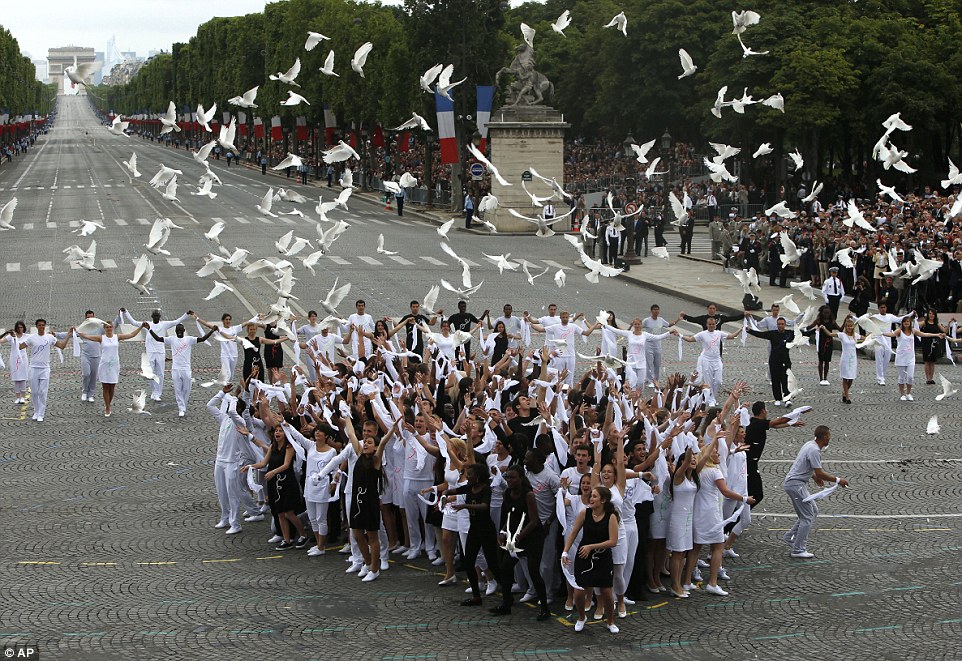
The Dorky but Sincere Interpretive Dance: As this was an extra special quartorze juillet, those adorable and sincere Frenchies added an unique centennial flourish on the Place de la Concorde at the parade’s end. Choreographer José Montalvo set a dance performed by young couples dressed in black and white, each with a dove in hand, to “deliver a message of universal peace”. Its necessary seriousness made me giggle, I must admit. (Is that bad?) The best way to describe this dance was to listen to the squeals of certain expats which sounded something like this: “Oh, my gosh. That’s SOOOOOOO…. French!” Enough said. (Please check back to watch the video once it is released.)
source: AP images

source: AP images

Le Fête des Tuileries and the Poilu Bivouac: On this exceptional fourteenth of July, a fascinating WWI infantry camp was setup in the Tuileries Gardens just across from Place de la Concorde along side the annual family friendly Fête des Tuileries, a fair with the customary sketchy carnival rides, French themed food vendors, and the same lovely (but way over-priced) ferris wheel that graces that space during the Christmas holidays. It all felt a little like “home” —wherever that is for me these days.

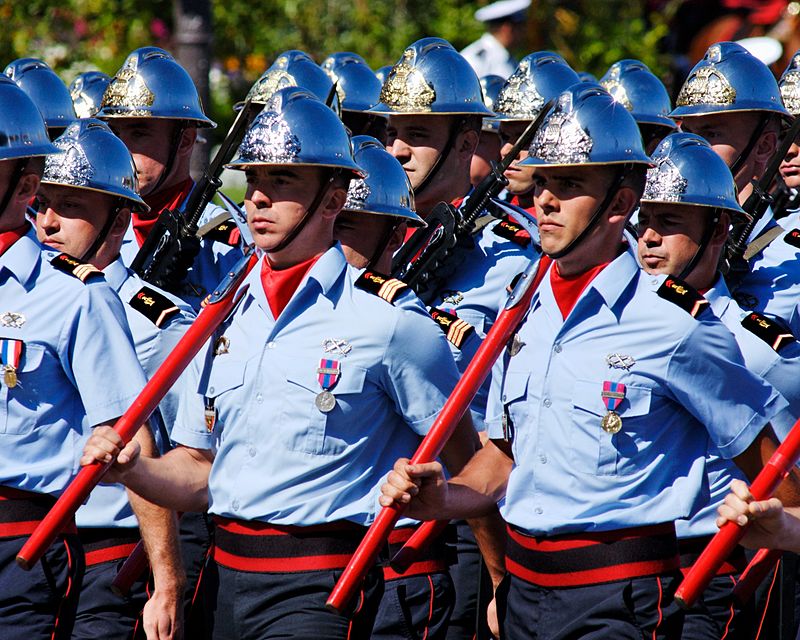
The Firemen’s Ball: The fetching French fire brigade throw two huge parties to mark this day of independence from the monarchy: one on the night of July 13, and one the night of July 14. Each night the young and the old, and everyone in between, start to gather around 9:00 pm and keep on partying until the wee hours of the morning. In Paris le Bal des Pompiers are held in firehouses in each arrondissements. Le ball features live entertainment, crazy costumes, wild wigs, fairy lights, beer and champagne, and street dancing, but meeting the dishy pompiers up-close-and-personally is the real draw for many merrymakers. If you like Michael Jackson, and the Village People (think “YMCA”), and/or have a Chippendale dancers fetish, this is the place for you…bring your five Euro notes. An old-style drum is left at the entrance for revelers to donate funds for improvements to the firehouses and to increased staffing.
source: wikipedia
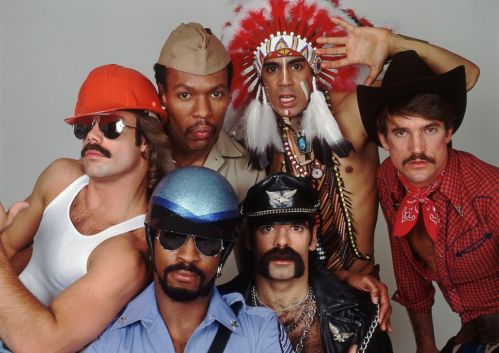
source: wikipedia

…I want to stay at the YMCA...

…I want to stay at the YMCA…

The Fireworks:  On the eve of la Fête Nationale, firework displays are everywhere in France. In Paris les feux d’artifice light up the skies behind the Eiffel Tower and this year it was too spectacular for words. I will never see a fireworks show like this again. In fact, I don’t have enough superlatives in my vocabulary to describe the wonders on the Champ de Mars tonight. It was, as the rest of the day was, a remembrance of those who fought and died in WWI. Mostly classical music was used to tell the story of the last 100 years, with John Lennon’s Imagine to remind us of what is possible. Chapeau to the fabulous French and their ability to express themselves through art. I so love this aspect of France and the French. Simply stunning. Incroyable!

Vocabulaire

Chapeau: a tip of the hat

étranger: ‪foreigner, ‪stranger, ‪alien, ‪outsider, ‪intruder

Incroyable! Incredible!

le Bal des Pompiers: Firemen’s Ball

les feux d’artifice: fireworks

pompiers: firemen

No. 303: La Coupe du Monde

I loved every moment of it and liked being part of the World. Félicitations Allemagne, and I won’t cry for you, Argentina. You’ll be back. Can’t wait for 2018…

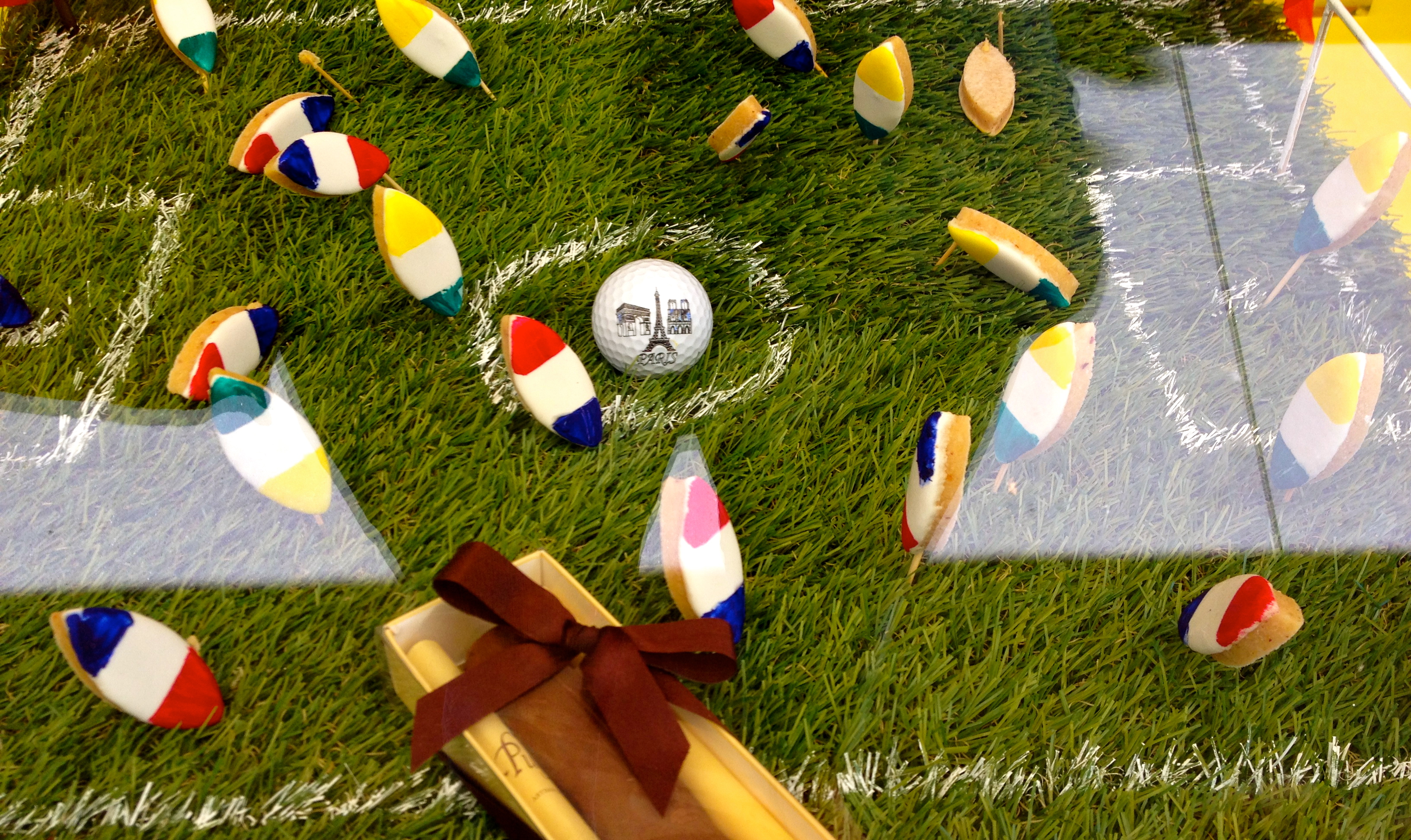
The world cup (France v Brazil) as portrayed by calissons…