Skip to content

Posts from the ‘Around France’ Category

No. 74: Père Noël’s Reindeer

…and what about Père Noël and his renne (reindeer)?

reindeer-herd-056-2

source: rukakuusamo.com

Well naturally some of them have different names in French, but to make things even easier for Santa on his big night,  the French have assigned each reindeer an unique attribute, just to make sure things run smoothly…

… et alors, you know…

TORNADE, le plus rapide, the quickest – DASHER

DANSEUR, la plus gracieuse, the most graceful—DANCER

FURIE, le plus puissant, the most powerful—PRANCER

FRINGANT, belle et puissante, the beautiful and powerful—VIXEN

COMÉTE, qui apporte le bonheur aux enfants, who brings children happiness—COMET

CUPIDON: qui améme l’amour aux enfant, who brings children love—CUPID

TONNERRE, le plus fort, the strongest (thunder)—DONNER

ÉCLAIR, qui apporte la lumière, who brings light, (lightning)—BLITZEN

…but do you recall, the most famous reindeer of all…RODOLPHE LE RENNE AU NEZ ROUGE…

rudolph-hermie-

And even though in English, the carol starts by introducing the reindeer one-by-one, in French, it starts this way, while sung to the same familiar tune:

Quand la neige recouvre la verte Finlande,

Et que les rennes traversent la lande,

Le vent dans la nuit

Au troupeau parle encore de lui

When snow covers green Finland

         And reindeer cross the moor

         The night wind

         Still talks to the herd about him…

Take a look here to see the whole song in action. Amusez-vous!


Vocabulaire

Amusez-vous! Have fun!

Père Noël: Father Christmas, Santa Claus

.


No. 73: Fun Christmas Words

It’s been awhile since I’ve done a language post, but I’ve come across several holiday words and phrases in the last few days that have made me grin. Here is a petite sample:

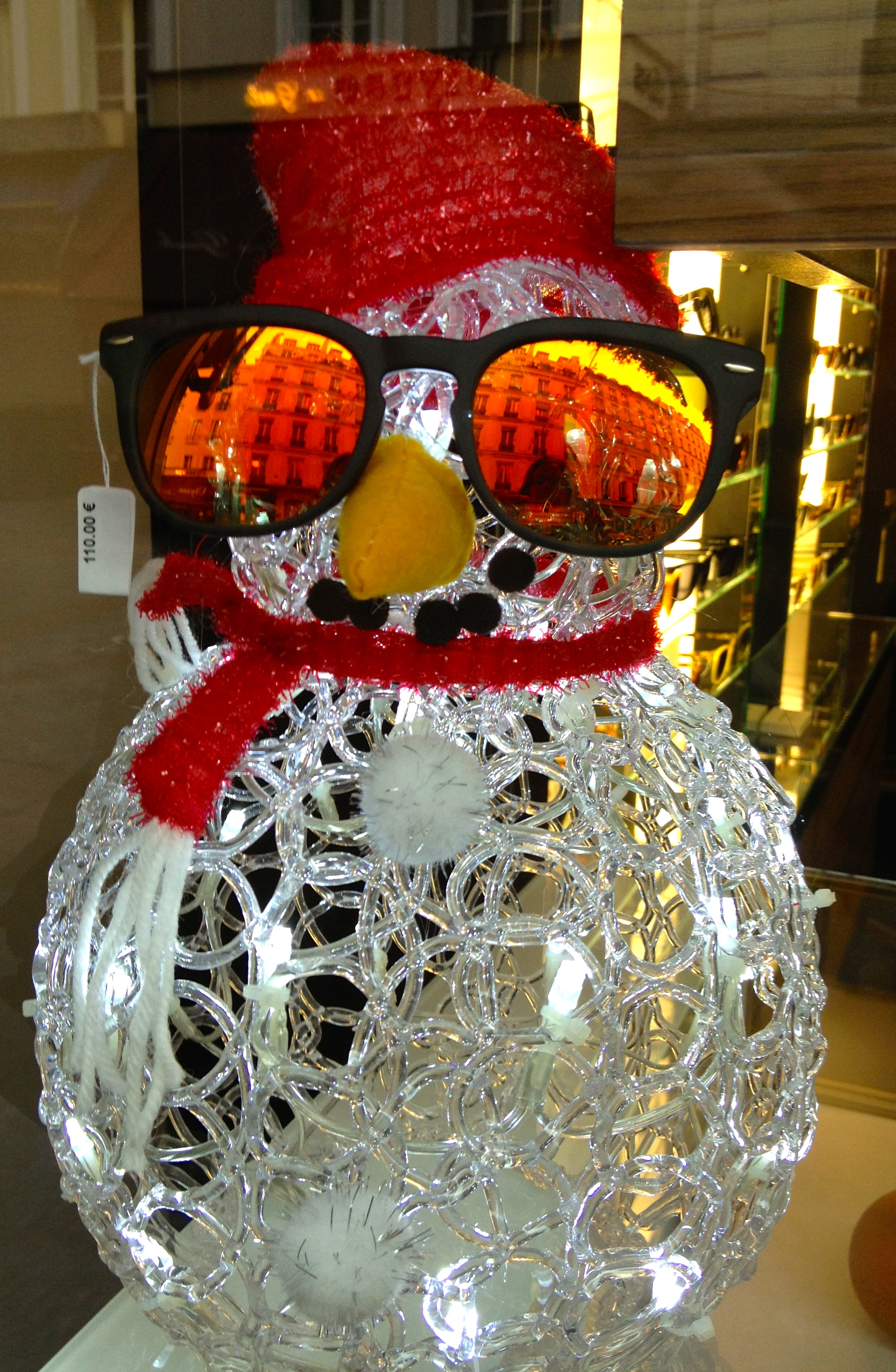
le bonhomme de neige, a good old chap made of snow (or in this case lights)

le bonhomme de neige, a good old chap made of snow (or in this case lights)

  • Un bonhomme de neige: a snowman, but literally a snow “chap”, “fellow”, or “old sport”.  I love the jovial image that one conjures up, and it makes me wonder if a gingerbread man is called “un bonhomme pain d’épice”, because, after all, they are quite jolly fellows too. (Please do let me know.)IMG_2201
  • Noël sous le neige: white Christmas, but literally “Christmas under the snow.” How I love Christmas when it is under the snow!
  • canne à sucre: a candy cane, but literally a sugar stick, nothing like calling a spade a spade.IMG_2218
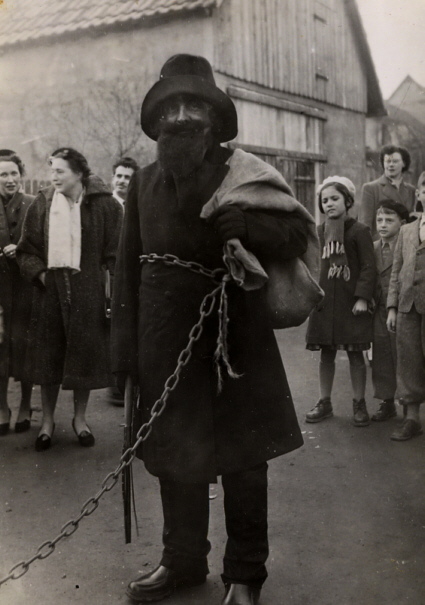
  • Père Fouettard: the boogeyman (who tags along with Saint Nicolas, and depending on the family, hands out coal to the naughty children, or in the worse case scenario, flogs the child); literally “father spanker” or “father whipper”.Hans_Trapp
  • Noël malin: Christmas sales, but literally “shrewd Christmas”; obviously only for those clever enough to shop the sales.

No. 72: la guirlande de Noël

IMG_2468

The French shopkeepers do a marvelous job of gussying up their storefronts for Noël, doing their best to make it the most wonderful time of the year. The decoration of choice is la guirlande. From the grand boulevards to the smallest alleys and passageways, garland is wrapped around doorframes, dangling from awnings and framing candle-lit windows.

It’s easy to recapture that childlike excitement and anticipation at Christmastime in France.

Enjoy the Christmas magic I’ve come across this week.

Vocabulaire

la guirlande: garland

No. 71: Bobbles

Paris is covered in sparkling bobbles en ce moment, et je les adore!

With les boules de Noël in all colors, sheens, and sizes, it’s beginning to look a lot like Christmas…

Vocabulaire

en ce moment: at the moment

et je les adore! and I love them!

boules de Noël: the bobbles, ball-shaped Christmas ornaments

No. 68: L’Artisans: PEP’s, Réparation de Parapluies

artisan: a worker in a skilled trade, especially one that involves making things by hand; craftsman, craftswoman, smith, wright, journeyman; one that produces something (such as cheese or wine) in limited quantities often using traditional methods.

IMG_2300

I love that France is full of artisans and that the French government only allows craftspeople who have studied, apprenticed and passed all their exams to call themselves artisans.

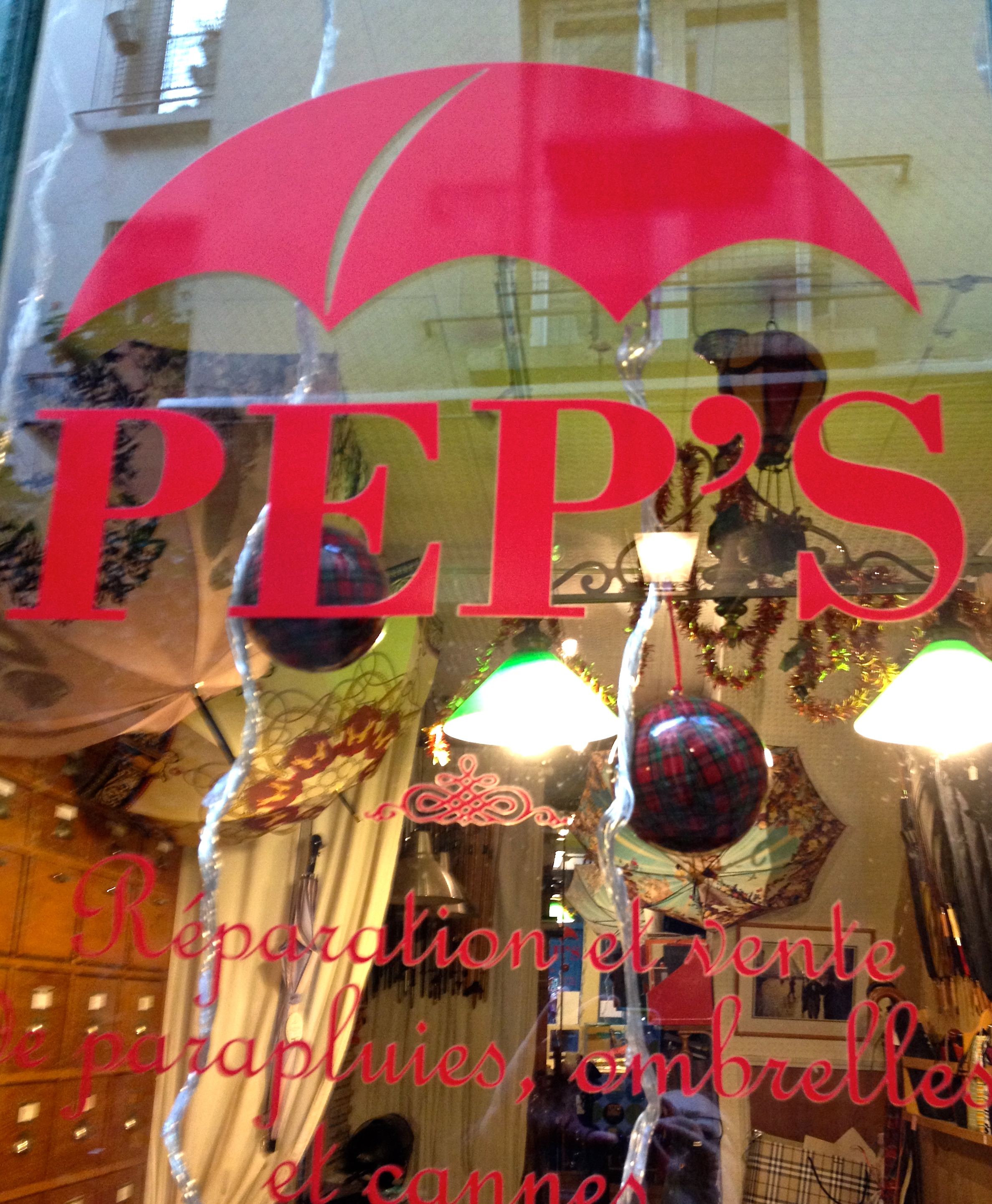
Yesterday, I was delighted to visit PEP’s Réparation & Vente Parapluies, Ombrelles & Cannes, and meet the only artisan in Paris who will diligently and lovingly repair your broken umbrella, parasol, or cane.

IMG_2299

PEP’s

Passage del’Ancre Royal

30 rue de Turbigo

75003 Paris

01 42 78 11 67

No. 66-67: Croque Monsieur et Croque Madame

Croque

During November, I became slightly addicted to a bit of French comfort food, the Croque Monsieur.

It wasn’t great for my waistline, but it certainly helped me get through my daily intensive French class. I justified eating a couple a week (okay, sometimes four), by telling myself that I needed to speak French with the real French, in the real world (e.g. my boulanger), on the way home from my course. You know, to reinforce the daily lessons.

When made right, this creamy and delicious French sandwich is the answer to a really good and buttery greasy-spoon-American-diner grilled cheese sandwich, with the brilliant addition of béchamel sauce.”

Yes, you heard me right, béchamel sauce.

Julia Child may have said, “if you are afraid of butter, use cream”, but I would say, “if you are afraid of anything (par exemple, un cours de français), add béchamel sauce.

The story surrounding the Croque Monsieur (literally, crunchy/crispy mister) is that a couple of French laborers “invented” it when they accidently left their lunch pails filled with ham and Gruyère sandwiches by a hot radiator in the morning, and by lunchtime found themselves enjoying warm and gooey grilled sandwiches. Who knows if this is true, but by the early 1900s, the Croque Monsieur was a standard on every French café menu, and the rest, as they say is history.

So, what is a Croque Madame? It is a Croque Monsieur with an egg on top, because the ladies, of course, can always do better than the gents.

And, just incase neither the Croque Monsieur nor Croque Madame is decadent enough for you, you could always try the croissant au jambon (with béchamel sauce, bien sûr).

Still need a little bit more? Here are some delectable variations on the original:

  • Croque Auvergnat: substitute blue cheese for Gruyère cheese
  • Croque Campagnard: substitute hardier bread, country ham, and add a mix of three cheese: Comté, cheddar and Parmesan
  • Croque Norvégien: substitute smoked salmon for the ham
  • Croque Provençal: add tomatoes
  • Croque Savoyard/Croque Tartiflette: substitute Reblochon cheese for the Gruyère cheese and add thinly sliced fried potatoes.

If you don’t have a French café nearby, try this recipe from www.recipes4us.co.uk at home:

Croque Monsieur  (Serves 4)    

Ingredients

8 slices sandwich bread

2 tbsp Dijon mustard

8 thin slices of Ham

176g/6oz Gruyère cheese, grated

2 tbsp Butter, softened

120ml/4fl.oz. COLD Bechamel sauce

Instructions

  1. Preheat the grill to hot.  Spread 4 slices of bread with the mustard then top each with a slice of ham
  2. Reserve 2 tablespoons of the cheese and divide the remaining cheese between the ham topped slices of bread, sprinkling it evenly over the ham.
  3. Place the 4 remaining sliced of ham on the cheese and top with the remaining 4 slices of bread to make a sandwich.
  4. Place the sandwiches on a baking sheet, butter the top slices with the butter then grill for 4- 5 minutes until well browned and crisp.
  5. Turn them over, and grill for a further 3-4 minutes until well toasted.
  6. Remove from the grill, turn them over again then spread the top of each with the cold béchamel sauce, sprinkle with the reserved cheese, place back under the very hot grill and cook until golden and bubbling. Serve immediately.

Vocabulaire:

boulanger: baker

croissant au jambon: croissant with ham

par exemple, un cours de français: for example, a French course

No. 65: Gustave Eiffel: Magician of Iron


“The first principle of architectural beauty is that the essential lines of a construction be determined by a perfect appropriateness to its use.”

— Gustave Eiffel

Anyone who knows me well knows that j’adore la tour Eiffel.

I’ve written a lot about it in the past, and I’ve read many books and articles on its construction. Every time I read something new, I am stuck (again) by Gustav Eiffel and his vision. Because I am a woman obsessed, I just spent the last couple of days, reading even more about this fascinating man and his iconic structures. Every time I tried to stop myself and get on with some paid work, I got sidetracked by another enticing story or structure.

Yes, structures, plural. While most of the world knows him and loves him for his “tragic street lamp”, la tour Eiffel, I am equally enamored with his less known, but certainly not less beautiful, creations.

Born in Dijon in 1832, to a family of weavers, Eiffel graduated from the École Centrale des Arts et Manufactures in 1855 as a civil engineer and began to specialize in constructing with metal. Initially he made his name designing bridges for the French railway network, but as we all know, he didn’t limit himself to bridges only.

Here are some Eiffel’s structures I find most interesting—some already visited, but most on my Gustave Eiffel bucket list:


Passerelle Eiffel Iron Bridge in Bordeaux, France, 1858passerelle1861

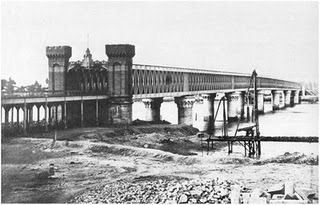
At only 26-years-old, Eiffel was the construction designer of an iron bridge in Bordeaux designed to link the Orleans rail station to the Midi rail station. Imagine the spectacle before the bridge was completed, when carriages were transferred between the two stations on a ferry across the Garonne River.

Suspension Bridge, Parc de Buttes Chaumont, Paris, 1867

The suspension bridge designed by Eiffel was one of two bridges used to access the park’s “Temple of Sybille” in one of Paris’ most beloved parks. It is 64 meters in length and 8 meters above ground. Unfortunately it is currently closed to foot traffic.


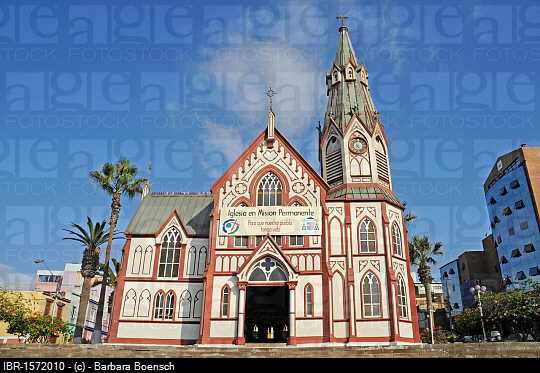
Church of San Marco, Arica, Chile, 1871-1875
© - Barbara Boensch

© – Barbara Boensch

In 1871, the Peruvian President José Balta commissioned the workshop of Gustave Eiffel to build this church. The all-metal prefabricated building was manufactured in France and shipped to South America in pieces to be assembled on site.


Bon Marché, Department Store, Paris, 1872-74

Eiffel collaborated with the architect. L.A. Boileau on the first glass and cast iron department store in Paris. This popular and fashionable store still stands, albeit with its masonry skin added in the 1920s.


Les Halles (Dijon Covered Market), Dijon, France, 1875

Beautiful, light and airy, this historic covered market in Eiffel’s hometown features his iconic iron columns and glass and is a wondrous market to visit.


Statue of Liberty, Internal Frame, 1876

When the Statue of Liberty’s initial internal engineer unexpectedly died, Eiffel was hired as the new engineer. Eiffel created a skeletal system for the statue that relied on the internal metal structure to support Bartholdi’s copper plates and sculpture. EIffel and his company built the statue from the ground up and then dismantled it for its journey to New York.


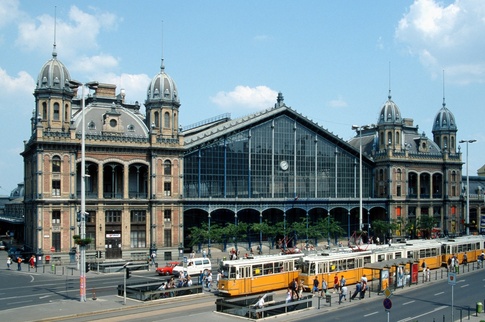
Nyugati Railway Station, Budapest, Hungary, 1877
Budapest railway station (www.quora.com)

Budapest railway station (www.quora.com)

One of the earliest examples of the combined use of metal and masonry, this train station is definitely high on my list to visit. Where you might have seen it: The 2011 film Mission: Impossible – Ghost Protocol took place in and around this station.


Ruhnu Lighthouse, Estonia, 1877

wikimedia commons

wikimedia commons

A lighthouse with a red metal cylindrical tower made in the Le Havre plant in France and shipped and reconstructed on the highest spot on Ruhnu Island, in 1877. It is the only lighthouse of its type left in the Baltic Sea region.


Ponte Maria Pia, Oporto, Portugal, 1877

One of Eiffel’s most famous bridges which spans the Douro River in Portugal. No longer in use, two Portuguese architects want to transform the bridge into a monument by moving the disused structure from its present location to the city center (as seen above).


The Eiffel Bridge, Viana do Castelo, Peru, 1878

The Eiffel Bridge crosses the River Lima near the mouth and connects the city of Viana do Castelo. Its two stories are more than 560 meters in length and a spectacular feat of engineering.


Observatory Dome, Nice, France, 1879

Moving away from bridgework, Eiffel created the dome for the astronomical observatory in Nice, France. It is most notable for a revolving cupola that opens to the sky. The building itself was designed by Charles Garnier (architect of the Opera Garnier and one of the most prominent critics of the Eiffel Tower).

Where you might have seen it: The 1999 film Simon Sez.


Garabit Viaduct, Ruynes-en-Margeride (Cantal), France, 1884

Maybe Eiffel’s most famous bridge, this engineering marvel spans the River Truyère (near Ruynes). It significantly shortened the rail route between Paris and Marseilles.

Where you might have seen it: Henri-Georges Clouzot 1964 film The Inferno (L’Enfer)


The Eiffel Tower, Paris 1887-1889

A subject of another detailed post soon. Meanwhile see: The Sparkling Tower.


Konak Pier, Izmir, Turkey, 1890

Originally built as a warehouse and French customs office and restored in 2003, it is now an upmarket shopping center, featuring seaside restaurants and cafés.


Ho Chi Minh City (Saigon) Main Post Office, Vietnam, 1886-1891

saigon central post office, 1886-1891 (wikimedia commons)

saigon central post office, 1886-1891 (wikimedia commons)

Designed and constructed by Eiffel when Vietnam was part of French Indochina.

Do you have other favorite Eiffel creations? If so, let me know, I’d love to add them to my bucket list.