Skip to content

Posts tagged ‘Paris’

No. 76: la petite bûchette

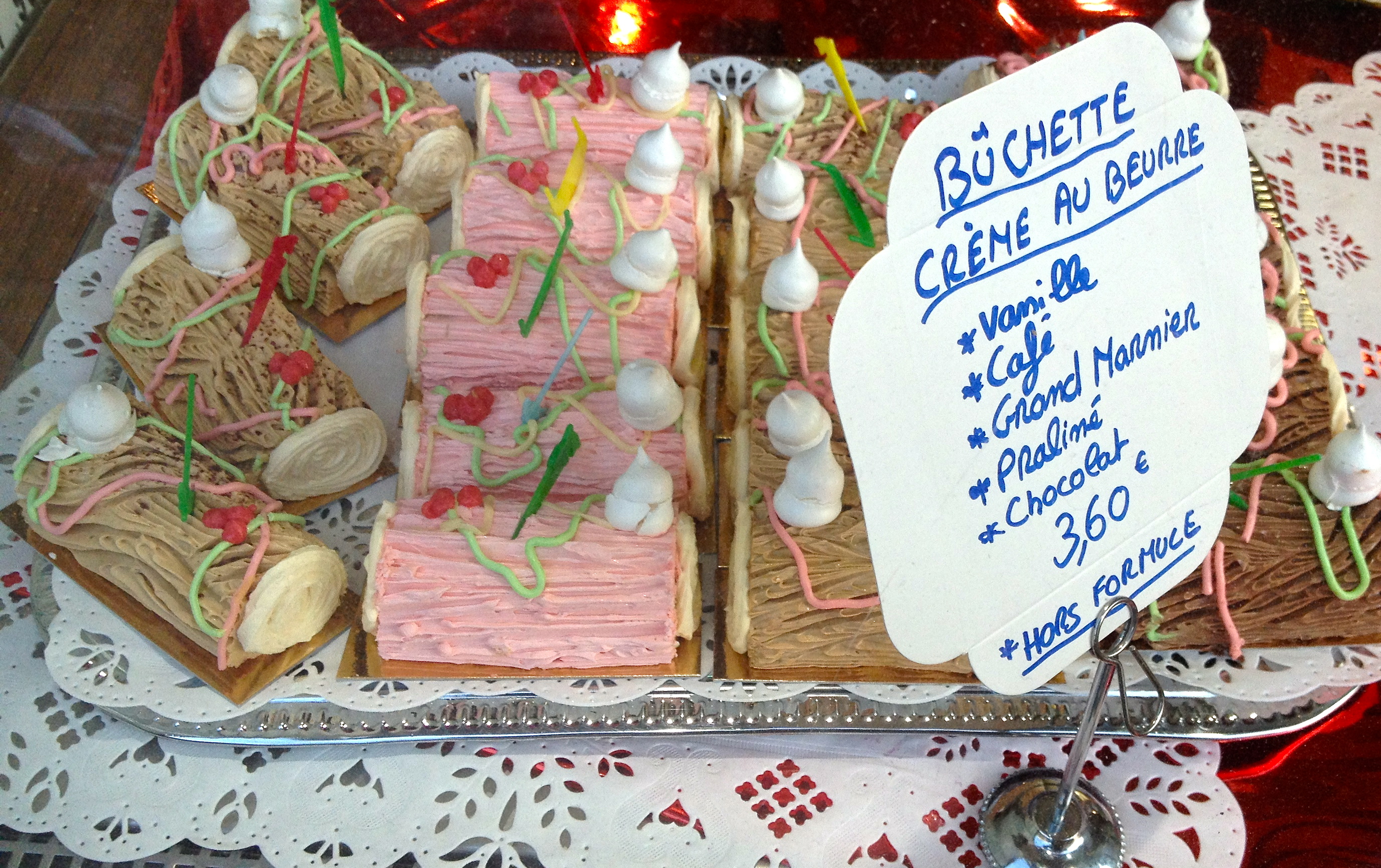
IMG_2576

Imagine my delight when right after my Bûche de Noël afternoon with Marie-Françoise, I wandered into my corner pâtisserie to pick up some bread for dinner, et voilá, there behind the glass were these adorable bûchettes. As you know, j’adore anything mini in France, so I couldn’t pass them up. Four didn’t seem too lucky, so I bought five.

No. 71: Bobbles

Paris is covered in sparkling bobbles en ce moment, et je les adore!

With les boules de Noël in all colors, sheens, and sizes, it’s beginning to look a lot like Christmas…

Vocabulaire

en ce moment: at the moment

et je les adore! and I love them!

boules de Noël: the bobbles, ball-shaped Christmas ornaments

No. 69: l’artisan, Maison Légeron: It’s in the Details

IMG_3538Recently I was lucky enough to have the opportunity to tour an atelier of another unique group of artisans, la maison Légeron.

La Maison Légeron is home to a handful of talented craftspeople (mostly women) that skillfully turn silk into flowers and ostrich feather into finery and create intricate accessories seemingly out of thin air. They do this for the prestigious fashion houses of Paris, Dior, Givenchy, Chanel, Courreges, Ungaro, Lacroix, as well as a number of extremely wealthy clients from around the world.

You might say these are the artisans who take care of the details.

Founded in 1727, Légeron’s handiwork has dazzled the ballrooms of the royals, decorated the bridal gowns of heiresses and princesses, walked the red carpet in Hollywood, and graced the catwalks of all major fashion houses this year.

Their work is rooted in tradition and trusted only to highly trained and certified artists. From the dyeing of each individual flower petal to the sewing of every last bead, it is all done by hand. The results are exquisite and delicate, one-of-a-kind creations, lovingly designed and equally as suited for the Museum of Decorative Arts as for a Chanel gown.

I love baring witness to petite moments of pure imagination and creativity.

Perhaps in my next life I’ll come back as one of these gifted artisans and spend my days creating beauty for the sake of beauty, and making sure that the details shine.

No. 68: L’Artisans: PEP’s, Réparation de Parapluies

artisan: a worker in a skilled trade, especially one that involves making things by hand; craftsman, craftswoman, smith, wright, journeyman; one that produces something (such as cheese or wine) in limited quantities often using traditional methods.

IMG_2300

I love that France is full of artisans and that the French government only allows craftspeople who have studied, apprenticed and passed all their exams to call themselves artisans.

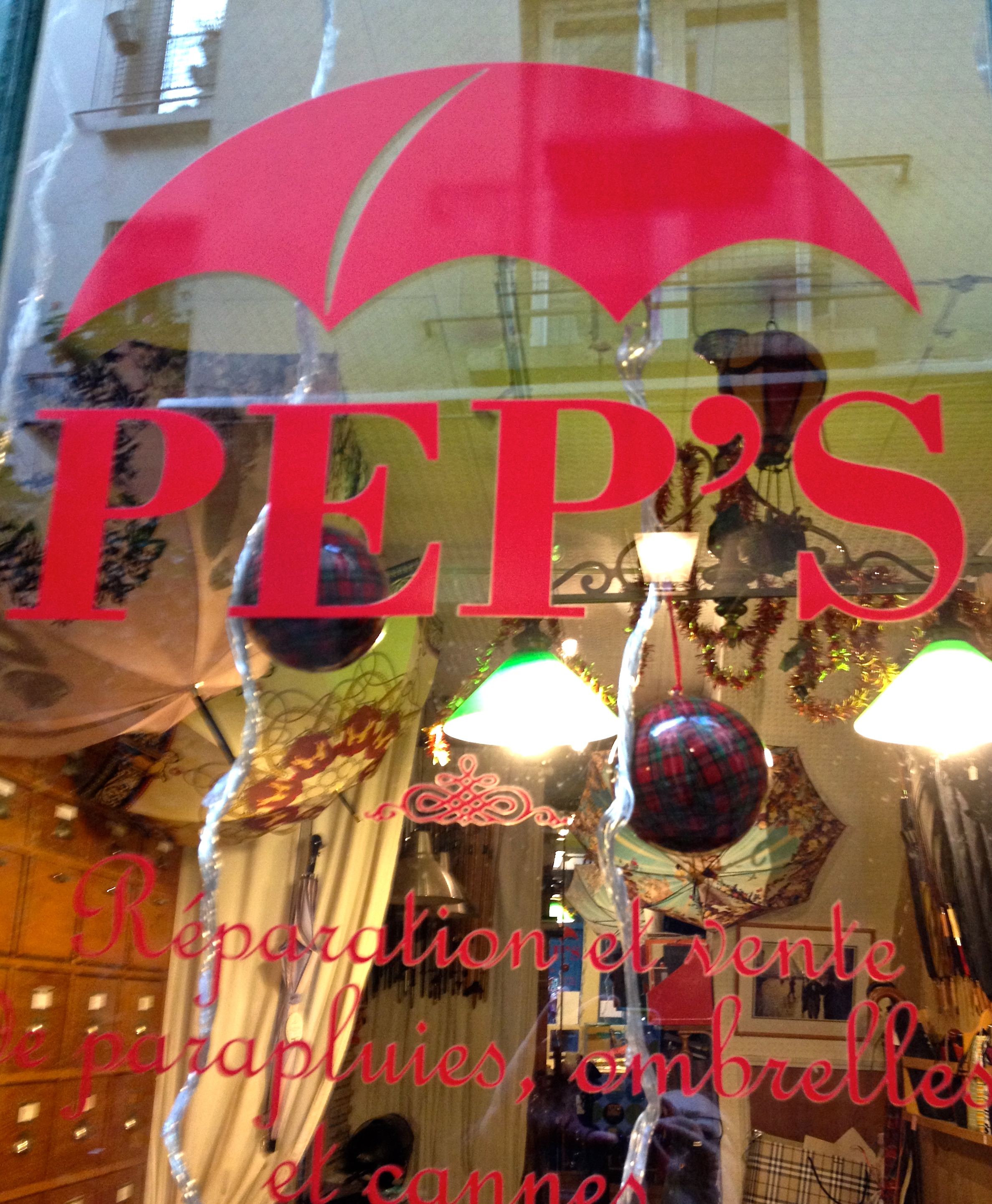
Yesterday, I was delighted to visit PEP’s Réparation & Vente Parapluies, Ombrelles & Cannes, and meet the only artisan in Paris who will diligently and lovingly repair your broken umbrella, parasol, or cane.

IMG_2299

PEP’s

Passage del’Ancre Royal

30 rue de Turbigo

75003 Paris

01 42 78 11 67

No. 65: Gustave Eiffel: Magician of Iron


“The first principle of architectural beauty is that the essential lines of a construction be determined by a perfect appropriateness to its use.”

— Gustave Eiffel

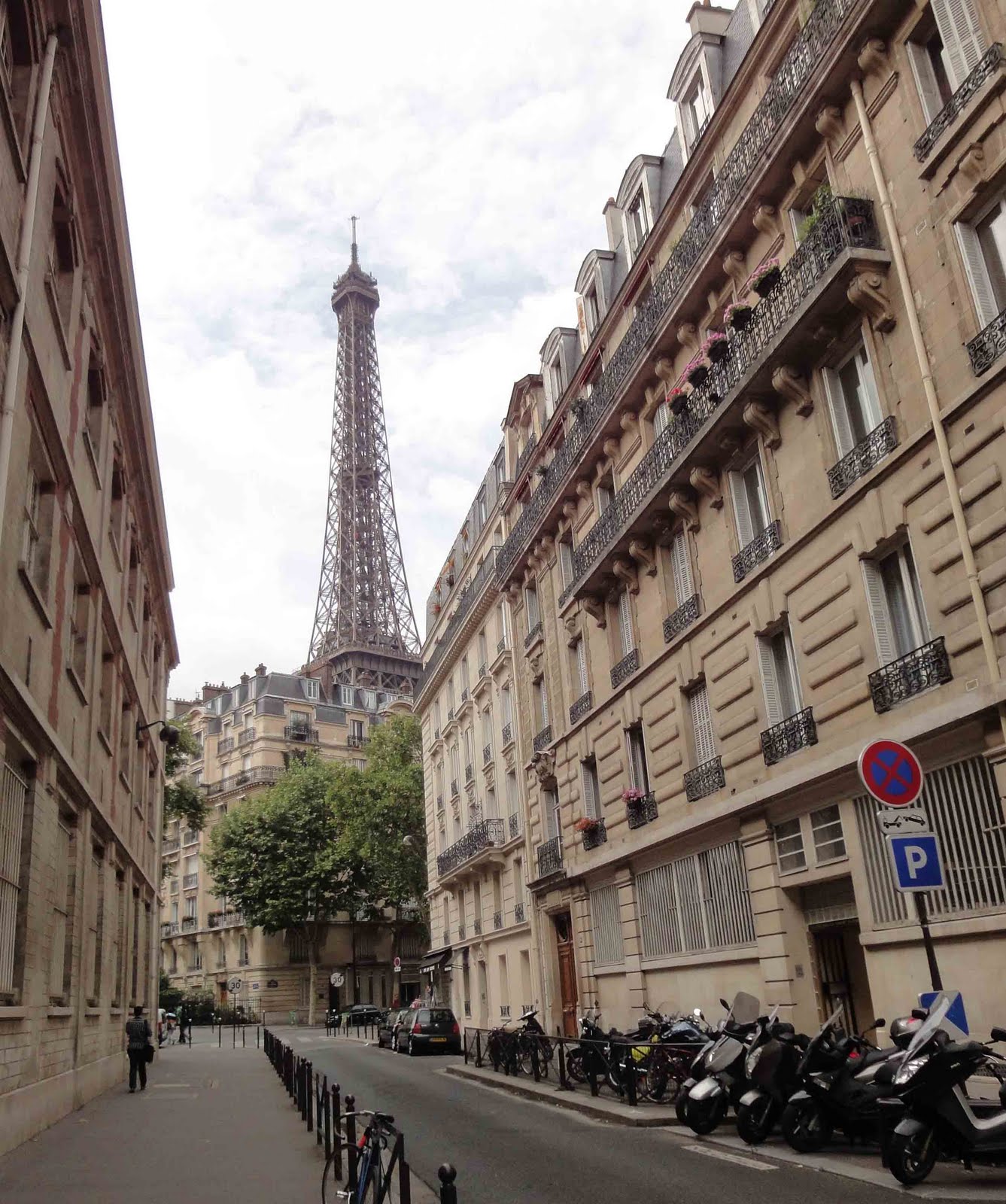
Anyone who knows me well knows that j’adore la tour Eiffel.

I’ve written a lot about it in the past, and I’ve read many books and articles on its construction. Every time I read something new, I am stuck (again) by Gustav Eiffel and his vision. Because I am a woman obsessed, I just spent the last couple of days, reading even more about this fascinating man and his iconic structures. Every time I tried to stop myself and get on with some paid work, I got sidetracked by another enticing story or structure.

Yes, structures, plural. While most of the world knows him and loves him for his “tragic street lamp”, la tour Eiffel, I am equally enamored with his less known, but certainly not less beautiful, creations.

Born in Dijon in 1832, to a family of weavers, Eiffel graduated from the École Centrale des Arts et Manufactures in 1855 as a civil engineer and began to specialize in constructing with metal. Initially he made his name designing bridges for the French railway network, but as we all know, he didn’t limit himself to bridges only.

Here are some Eiffel’s structures I find most interesting—some already visited, but most on my Gustave Eiffel bucket list:


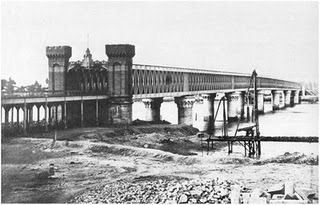
Passerelle Eiffel Iron Bridge in Bordeaux, France, 1858passerelle1861

At only 26-years-old, Eiffel was the construction designer of an iron bridge in Bordeaux designed to link the Orleans rail station to the Midi rail station. Imagine the spectacle before the bridge was completed, when carriages were transferred between the two stations on a ferry across the Garonne River.

Suspension Bridge, Parc de Buttes Chaumont, Paris, 1867

The suspension bridge designed by Eiffel was one of two bridges used to access the park’s “Temple of Sybille” in one of Paris’ most beloved parks. It is 64 meters in length and 8 meters above ground. Unfortunately it is currently closed to foot traffic.


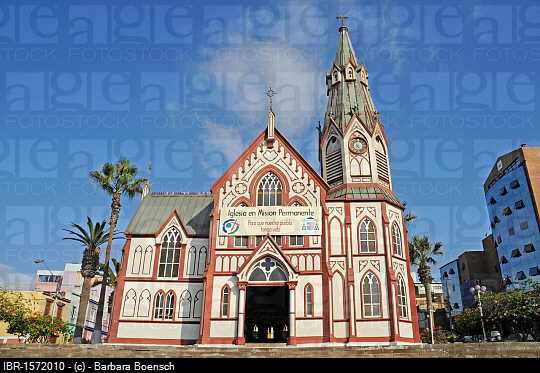
Church of San Marco, Arica, Chile, 1871-1875
© - Barbara Boensch

© – Barbara Boensch

In 1871, the Peruvian President José Balta commissioned the workshop of Gustave Eiffel to build this church. The all-metal prefabricated building was manufactured in France and shipped to South America in pieces to be assembled on site.


Bon Marché, Department Store, Paris, 1872-74

Eiffel collaborated with the architect. L.A. Boileau on the first glass and cast iron department store in Paris. This popular and fashionable store still stands, albeit with its masonry skin added in the 1920s.


Les Halles (Dijon Covered Market), Dijon, France, 1875

Beautiful, light and airy, this historic covered market in Eiffel’s hometown features his iconic iron columns and glass and is a wondrous market to visit.


Statue of Liberty, Internal Frame, 1876

When the Statue of Liberty’s initial internal engineer unexpectedly died, Eiffel was hired as the new engineer. Eiffel created a skeletal system for the statue that relied on the internal metal structure to support Bartholdi’s copper plates and sculpture. EIffel and his company built the statue from the ground up and then dismantled it for its journey to New York.


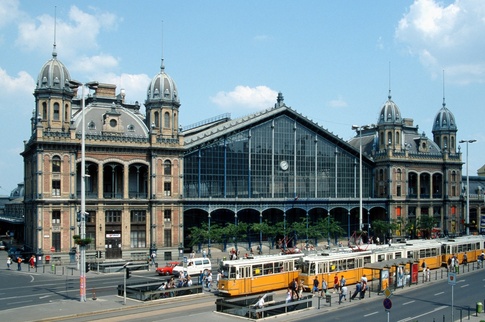
Nyugati Railway Station, Budapest, Hungary, 1877
Budapest railway station (www.quora.com)

Budapest railway station (www.quora.com)

One of the earliest examples of the combined use of metal and masonry, this train station is definitely high on my list to visit. Where you might have seen it: The 2011 film Mission: Impossible – Ghost Protocol took place in and around this station.


Ruhnu Lighthouse, Estonia, 1877

wikimedia commons

wikimedia commons

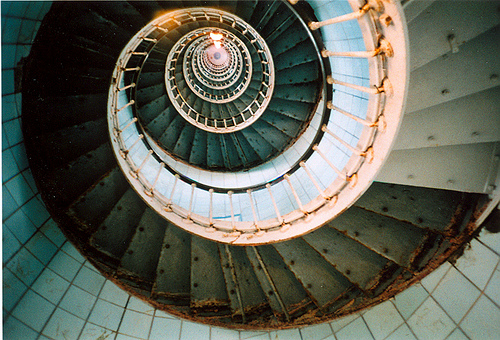
A lighthouse with a red metal cylindrical tower made in the Le Havre plant in France and shipped and reconstructed on the highest spot on Ruhnu Island, in 1877. It is the only lighthouse of its type left in the Baltic Sea region.


Ponte Maria Pia, Oporto, Portugal, 1877

One of Eiffel’s most famous bridges which spans the Douro River in Portugal. No longer in use, two Portuguese architects want to transform the bridge into a monument by moving the disused structure from its present location to the city center (as seen above).


The Eiffel Bridge, Viana do Castelo, Peru, 1878

The Eiffel Bridge crosses the River Lima near the mouth and connects the city of Viana do Castelo. Its two stories are more than 560 meters in length and a spectacular feat of engineering.


Observatory Dome, Nice, France, 1879

Moving away from bridgework, Eiffel created the dome for the astronomical observatory in Nice, France. It is most notable for a revolving cupola that opens to the sky. The building itself was designed by Charles Garnier (architect of the Opera Garnier and one of the most prominent critics of the Eiffel Tower).

Where you might have seen it: The 1999 film Simon Sez.


Garabit Viaduct, Ruynes-en-Margeride (Cantal), France, 1884

Maybe Eiffel’s most famous bridge, this engineering marvel spans the River Truyère (near Ruynes). It significantly shortened the rail route between Paris and Marseilles.

Where you might have seen it: Henri-Georges Clouzot 1964 film The Inferno (L’Enfer)


The Eiffel Tower, Paris 1887-1889

A subject of another detailed post soon. Meanwhile see: The Sparkling Tower.


Konak Pier, Izmir, Turkey, 1890

Originally built as a warehouse and French customs office and restored in 2003, it is now an upmarket shopping center, featuring seaside restaurants and cafés.


Ho Chi Minh City (Saigon) Main Post Office, Vietnam, 1886-1891

saigon central post office, 1886-1891 (wikimedia commons)

saigon central post office, 1886-1891 (wikimedia commons)

Designed and constructed by Eiffel when Vietnam was part of French Indochina.

Do you have other favorite Eiffel creations? If so, let me know, I’d love to add them to my bucket list.

No. 64: The American Library in Paris

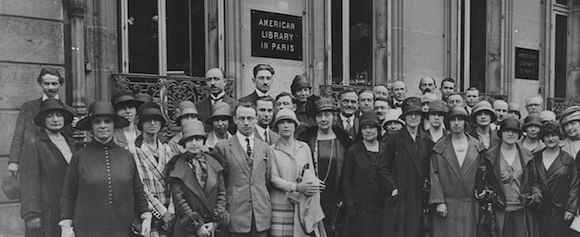
When you are a foreigner in a foreign land, sometimes it is nice to make a break for the familiar. For me, the American Library in Paris provides the homey haven I occasionally need.

As the largest English-language lending library on the European continent, it has enough books, magazines and media and enough of an Anglo-feel to sooth my occasional American longings.

It also has quite an interesting history (retold here thanks to their informative website) beginning in the final years of WWI when hundreds of American libraries launched a massive project to send books to the doughboys fighting in the trenches (accumulating in nearly a million and a half books by the end of the war). As the website says:

“When the American Library in Paris was founded in 1920, its initial collection was composed of those wartime books. With the motto: Atrum post bellum, ex libris lux: After the darkness of war, the light of books, its charter promised to bring the best of American literature and culture, and library science, to readers in France.

History_of_the_American_Library_in_Paris

Among the first trustees of the Library was the expatriate American author Edith Wharton. Ernest Hemingway and Gertrude Stein were also early patrons. Thornton Wilder and Archibald MacLeish borrowed books. Stephen Vincent Benét wrote “John Brown’s Body” (1928) at the Library, and Sylvia Beach donated books from her lending library when she shuttered Shakespeare & Co. in 1941.

With the coming of World War II, the occupation of France by the Nazi regime, and the deepening threats to French Jews, Library director Dorothy Reeder and her staff and volunteers provided heroic service by operating an underground, and potentially dangerous, book-lending service to Jewish members barred from libraries. One staff member was shot by the Gestapo when he failed to raise his hands quickly enough during a surprise inspection.

When Reeder was sent home for her safety, Countess de Chambrun rose to the occasion to lead the Library. In a classic Occupation paradox, the happenstance of her son’s marriage to the daughter of the Vichy prime minister, Pierre Laval, ensured the Library a friend in high places, and a near-exclusive right to keep its doors open and its collections largely uncensored throughout the war. A French diplomat later said the Library had been to occupied Paris ‘an open window on the free world.’image4

The Library prospered in the postwar era as the United States took on a new role in the world, the expatriate community in Paris experienced regeneration, and a new wave of American writers came to Paris – and to the Library. Irwin Shaw, James Jones, Mary McCarthy, Art Buchwald, Richard Wright, and Samuel Beckett were active members during a heady period of growth and expansion. During these early Cold War years the Director Ian Forbes Fraser barred the door to a high-profile visit from Senator Joseph McCarthy’s notorious minions, who were touring Europe in search of ‘red’ books in American libraries.”

For the last 48 years, the Library has been located two blocks from the Seine and two blocks from the Eiffel Tower, on rue du Général Camou, handily right around the corner chez moi.

Library2

When I find myself too distracted by laundry and household chores to get any work done, I make my way to the Library’s large reading room and nestle in for a quiet day of writing and French. Other times, I take advantage of the large selection of French and English DVDs (currently on my list of must “sees”: Le Petit Nicolas, Rue Cases-Nègres, and LOST, Season 4).

Superman regularly checks out a stack of non-fiction reads, and Button heads there to study, and thankfully it also serves as a shelter for me when I have locked myself out of my apartment for the umpteenth time…

…yes, Nicola, I did it again!

No. 60: Châtaignes grillées on an open fire…….

IMG_4397

It’s chestnut time of the year in France, and I love roasted chestnuts. In French they are called both châtaignes and marrons…I haven’t figured out the difference between them, or when to use which word. Most signs around Paris say “marrons chauds”, but a French chef friend of mine always says “châtiaignes”. Which ever it is, they are all over town these days…at the top of every metro stop, by all the major tourist attractions, and even on the bridges.

At 1-2€ for a newspaper cone filled to the brim, it’s the perfect healthy snack for a cold day.