Skip to content

Posts tagged ‘Martinique’

No. 96: une grève: a strike

Yesterday we had big plans. We were going to drive the length of the island and see what we could see. Trunk packed with hiking shoes and guidebooks, maps and mosquito spray, rain gear and beachwear, we were ready for anything.

Anything, that is, except une grève.

The French are famous for their strikes, and it appears that Martinique is no exception. Unfortunately the strike involves gasoline and all the gas stations were/are closed. Of course, our tank was nearly empty.

Because we are on holiday, we have not been listening to the news, so we had no idea this was coming, but as it turns out, neither did the Martiniquais. Usually in France, the strikes are announced ahead of time (and often you even know exactly how long they will last), but this one was not. Sprung upon the island, on the day most mainland French vacanciers were arriving and expecting rental cars with full tanks of gas, this one was/is a proper and effective strike.

So, you may ask, how do I turn une grève into something I love about France? The girls had the same question. The answer: forced relaxation.

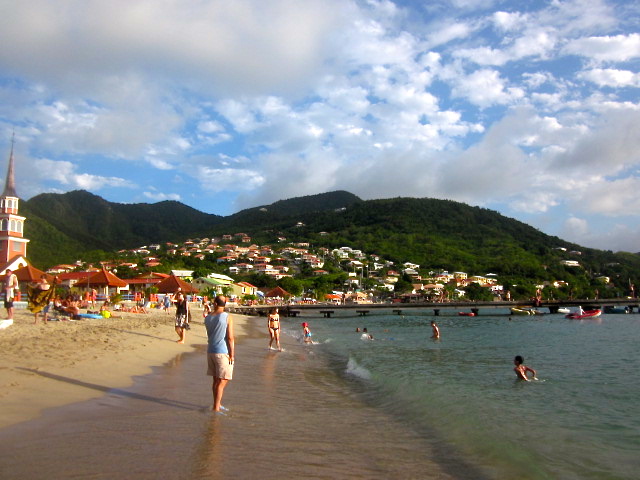
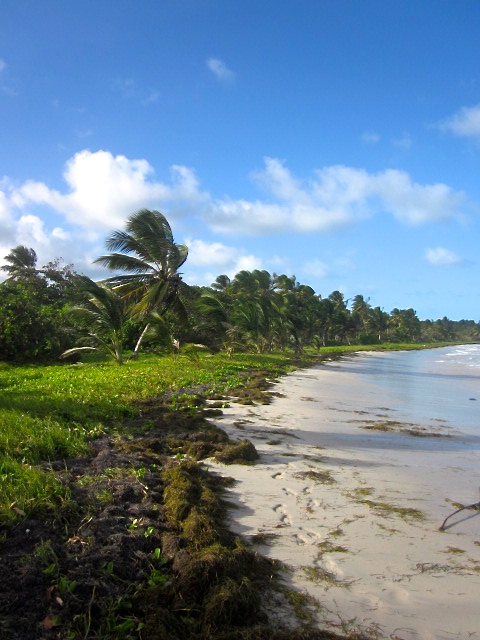
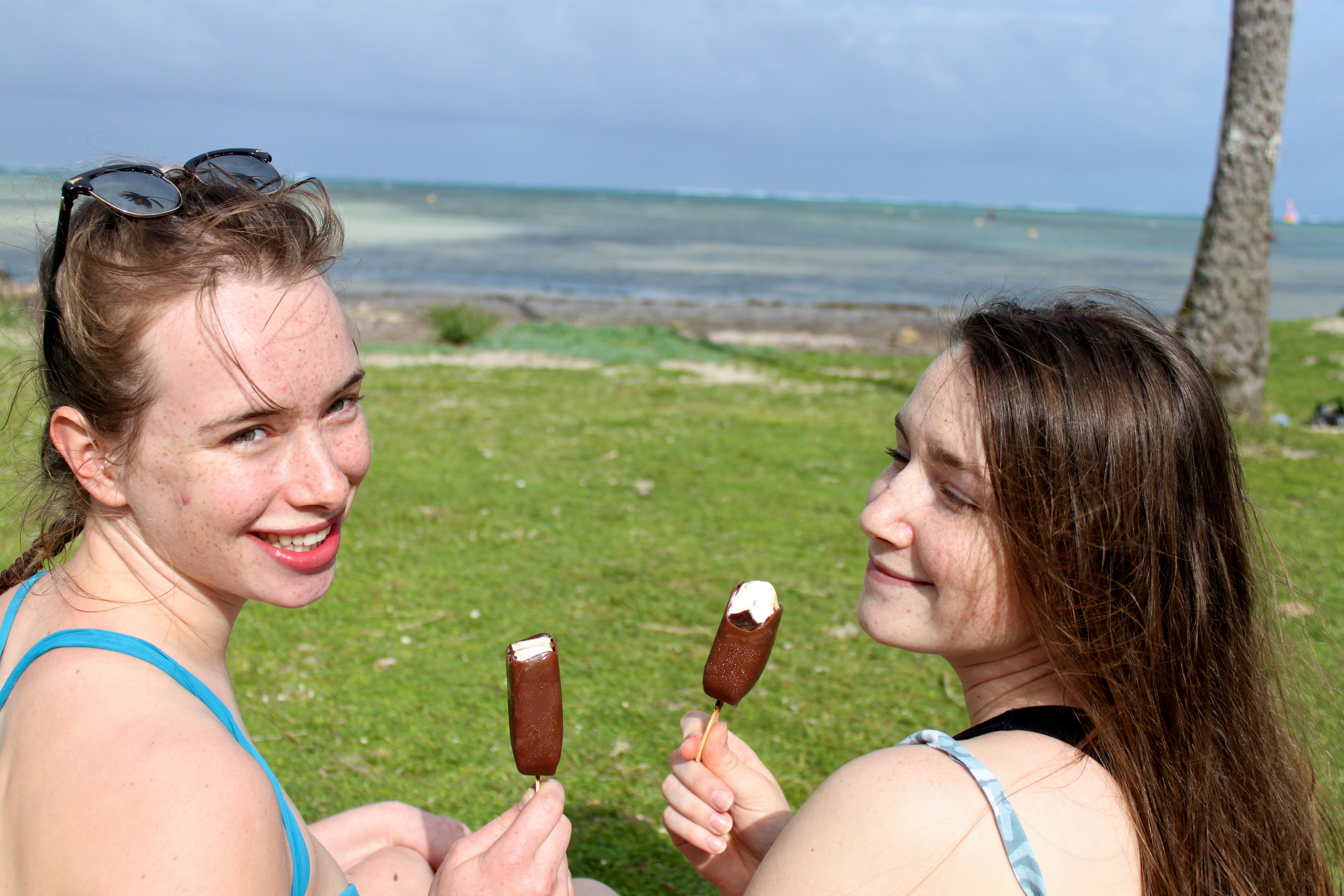
With no gas in the tank and no place to go, we were forced to head to the small local beach and spend the day resting, talking and laughing, playing cards, reading and eating ice cream, watching the locals’ picnic and play with their beautiful families and remember how lucky we are to have each other.

IMG_9362

Fun family time. The silver lining to une grève.

Vocabulaire

une grève: a strike

vacanciers: vacationers

No. 95: Quirky French History

Yesterday I came across a bit of inspired French history on our way to Anse d’Arlet on the south western shore of Martinique.

IMG_4714

To access Anse d’Arlet, a sleepy fishing village, we had to pass by Rocher du Diamont. Diamond Rock is a volcanic island across from Diamond Beach. Lush and green and 600 feet high, it sticks out like a sore thumb.

Nowadays it is a famous diving spot renowned for its colorful sea life and assortment of marine birds, but it has a bit of quirky history attached to it from the colonial days.

IMG_4719

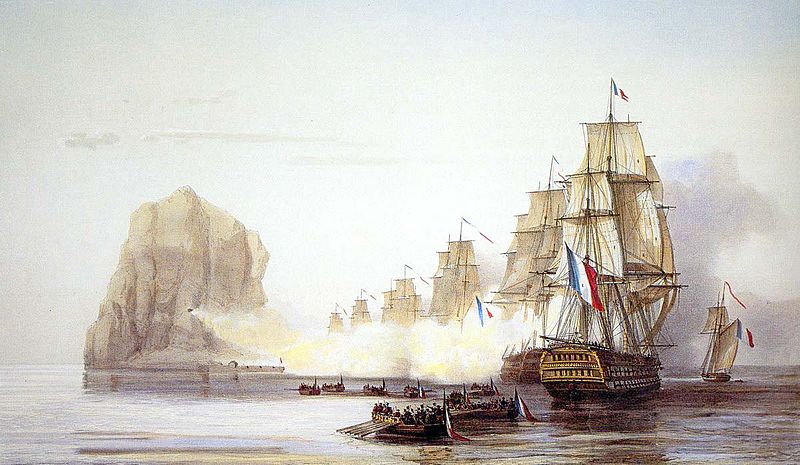
Although Martinique was mostly held by the French colonialists, the British governed (or attempted to govern) the island for a few years here and there. In 1804, about a 100 English sailors landed on the rock and constructed a fort and armory. Once established, they proceeded to pester the French navy with surprise attacks and cannon fire as they attempted to cross the passage to deliver necessary supplies for the colonialists. These constant disruptions forced the French to abandon this passage. After 18 months (and no luck in retaking the fortified rock), the French decided to get creative.

Having heard that the British soldiers were becoming distraught from their long confinement on the rock and that the limited access to fresh water was contributing to their restlessness, they hatched a plan. They sent a small sailboat loaded with rum to the island. (Some accounts have them simply floating barrels of rum across the channel.) However the rum reached the soldiers, between the combination of thirst and stir craziness, the Brits were soon completely sloshed.

The French retook the outpost in a matter of days.

800px-Capture_of_Diamond_Rock

Now that’s some pretty clever military strategy, n’est-ce pas?

Vocabulaire

n’est-ce pas? isn’t it?

Rocher du Diamont: Diamond Rock


No. 94: Le Réveillon

71144759

All day yesterday (Christmas Eve), the friendly Martiniquais were wishing each other (and us) un bon Réveillon. Le Réveillon is the huge feast traditionally following la Messe de Minuit.

Although not many of my French friends attend midnight mass, they certainly wouldn’t miss out on le Réveillon. The meal can run into the wee hours of the morning, and usually includes a pause for the older children (the little ones are already tucked in bed) to open their presents from Père Noël.

In Paris le Réveillon is not for the faint of heart (or for the vegetarian in your life). No self-respecting Réveillon would be complete without foie gras, oysters, smoked salmon, a chestnut stuffed capon, turkey, or goose, and possibly some assortment of wild game.

For some families this late evening meal is the gastronomic highlight of the entire year.

This year we stuck to our family tradition of fondue, followed by snuggling together to watch a Christmas movie (usually A Christmas Story, but this year It’s a Wonderful Life), while happily ensconced in our petite maison en Martinique.

While each region in mainland France has its own slight variation on the traditional Christmas menu (in Provence, apparently it includes 13 dessert!), the Réveillon en Martinique is made up of an entirely different menu.

IMG_9345

I’m lucky enough to know this because our landlords here (or our Martiniquais grandparents) were kind enough to recreate le Réveillon for Christmas lunch today. After four appetizers and five main course dishes, we all had the top button of our pants undone. The highlights of the feast included accras (fried fish and vegetable dumplings), petits patés Créole (bite sized savory meat pies, filled with langoustine, shrimp or pork), smoked caramelized ham, cooked yellow-fleshed bananas with tender pork ragu, and of course, Punch coco.

On my I-don’t-think-I’ll-eat-that-again list: Boudin noir —a fat sausage of spicy pig’s blood.

Donc, a Christmas very well spent. I am so grateful for our new friends, this wonderfully diverse country and all the marvelous encounters we have had along the way.

Joyeux Noël à toutes et à tous une bonne nuit.

Vocabulaire

Joyeux Noël à toutes et à tous une bonne nuit. Merry Christmas to all and to all a good night.

la Messe de Minuit: midnight mass

le Reveillon: Christmas/New Year’s Eve feast, literally, eve, from the verb réveiller, to wake up, awaken, or revive.

petite maison en Martinique: small house in Martinique


No. 93: Wild Beaches

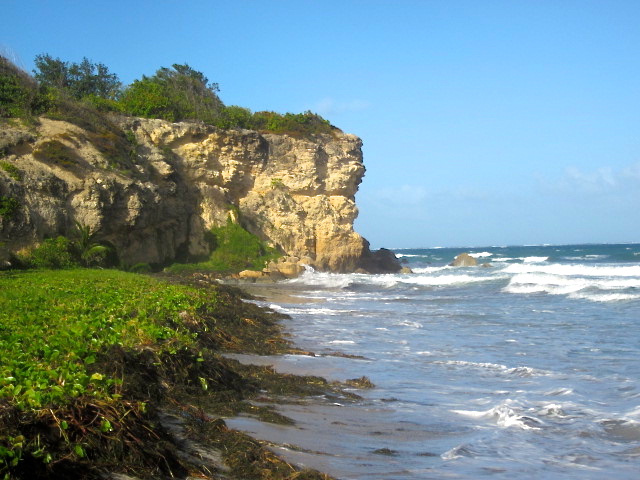
I am a huge fan of wild beaches. When Superman and I lived in Washington, D.C. our favorite weekend getaway was backpacking and camping at Chincoteague Island in Virginia with the wild horses. We were both happily reminded of that wonderful beach when we took a wrong turn the other day in Martinique and ended up at Macabou.

IMG_4580

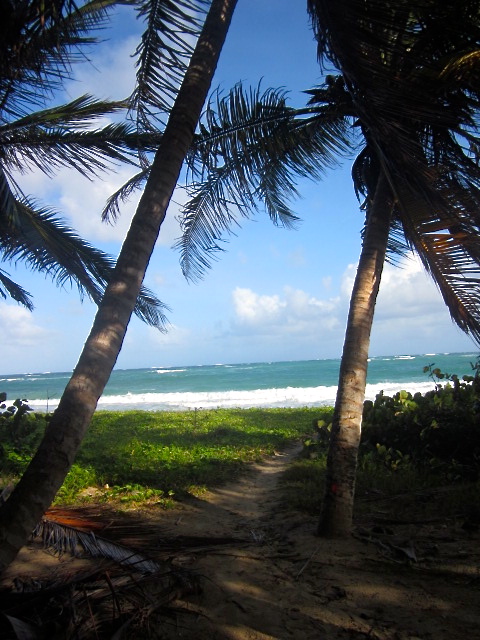
The translation for wild beaches in French is plages sauvages—savage beaches—which in my mind captures this beach exactly.

IMG_4567

IMG_4566

As I am currently addicted to the American television series LOST (yes, a decade after everyone else was), stepping onto the beach at Macabou was like stepping into the world of Jack Shepard and the evil Benjamin Linus. There was even the cliff where Hurley attempted suicide.

IMG_4584

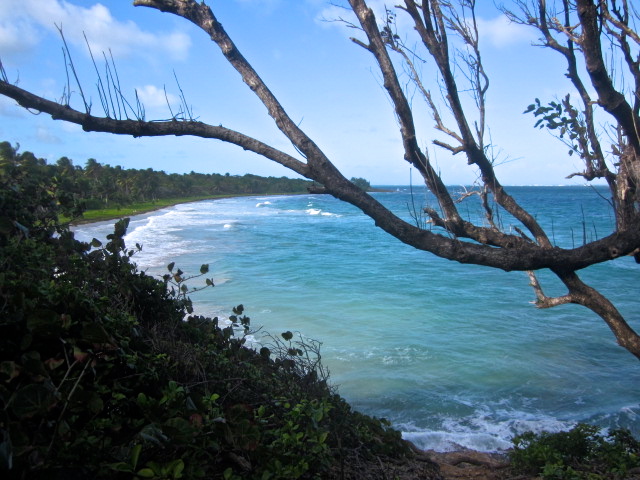
The waves were vicious, the wind was roaring, and there wasn’t a soul in sight. The shore covered mostly with dry plants washed in with the tide, we had to hike in about 15 minutes to find a tiny bit of sand among the fierce vegetation.

Completely alone, it was as if no one else existed. Beautiful. Undisturbed. A small slice of heaven on Earth.

No. 92: The Houses of Martinique

The colors of Martinique are a refreshing break from the black of Paris. These brilliant color choices make me smile. How about you?

No. 91: Overseas Departments: Martinique

139_w

One of my goals this year is to see as much of France as possible, so I feel incredibly lucky to have the opportunity to visit one of the five overseas departments belonging to France.

Having secured a sweet deal on flights (it would have almost cost as much to take the four of us to Strasbourg’s Marché de Noël by TGV), I am thrilled that we chose Martinique.

It’s a funny thing to think of a Caribbean island as part of France. I’d love to have a conversation with our new friends here about whether or not they consider themselves French, and what they think about mainland France.

Martinique, like many countries taken over by European and American colonialist, has quite a sad history. The more time I spend on this island, the more I wonder what life would be like here today, if the French had ignored it the way Columbus did when he first sighted it in 1502.

Thanks to Columbus’ indifference, the indigenous population was granted an 85-year reprieve before the French claimed them and began colonization in 1635. This is when the true atrocities of colonial history (now conveniently whitewashed in history books) began. In every article or book I read about Martinique before leaving Paris, the initial colonization of Martinique was reduced to barely two sentences, and it was presented something like this:

“…colonization began in 1635, when the French promised the native Caribs the western half of the island, in return for establishing a settlement on the eastern half. Then the French proceeded to eliminate the Caribs…”

After annihilating 6,500 years of civilization in a few short decades, the French realized they were short on manpower and began to “import” African slaves as sugar plantation workers. With no indigenous population to stand in their way, a tropical climate, an abundance of sugarcane, and free slave labor to boot, Martinique quickly became one of France’s most valuable colonies.

As rum production (from sugarcane), distilleries, and sugar refineries became more lucrative, the African slave trade became even more important to the colonialist and life for the slaves became even more unbearable. In addition to providing the labor for the sugar and rum production, the slaves were also recruited into the island militia to fend off the British attempts to take control of the island. (In return they were promised their freedom.)

The Brits did manage to occupy the island for a short while in 1762, but returned it the following year in exchange for a small country called Canada. They invaded and held the island once again in the early 1800s, but in the end, it was returned to the French.

By the mid-1800s, Martinique had more slaves and “freedmen” than free colonists. Slavery was abolished in 1848. Obviously life was still not peachy for the former slaves and things got worse when in 1902 Mount Pelée erupted and destroyed the capital, Saint Pierre, wiping out 30,000 inhabitants in less than an hour.

So in many respects, Martinique’s society is a very young one, made up mostly of decendents of African slaves , decendents of their former colonial masters, and often a mix of both. Their language is a fusion of Créole and French, with French the official language. The food is a mingling of French and Créole, heavy on the Créole side and influenced by the locally grown products. There is definitely a French vibe to Martinique, but not too much to stifle the vibrant and colorful culture.
IMG_4463

No. 90: Mwen ka palé Kréyol

Le Vauclin, Martinique

Le Vauclin, Martinique

Mwen ka palé Kréyol.

Je parle Créole.

I speak Creole.

Not that I need another language knocking around in my old brain, but here are some simple words and phrases in Créole I hope to learn by week’s end. I’ll give it the old college try.

bonjou: bonjour, good morning/hello

mésyé zé dam bonjou: Mesdames et messieurs, bonjour, ladies and gentleman hello/good day.

bonswa : bonsoir, good evening

mèsi: merci, thank you

mwen ka rimèsié’w anlo: je te remercie beaucoup, thank you very much

souplè: s’il vous plait, please

Mi plisi! Avec plaisir! With pleasure!

ni pwoblem: pas de problème, no problem

 IMG_4688

tanzantan: de temps en temps, from time to time

An pa tini pwen lajan. Je n’ai pas d’argent. I have no money.


Sa ou fé ? Comment ça va? How are you?

Sa ka maché, è wou? Ça va bien, et toi? Fine, and you?


Ka ki là? Qui est la? Who is there?

Ka sa yé? Qu’est-ce que c’est? What’s that?

Ki laj a ou? et Ki laj ou ka fè? : Quel âge avez-vous? Quel âge-a tu? How old are you?


Annou ay!  On y va! Let’s go!

Resté la, an ka vin!  Restez là, je viens! Stay there, I’m coming!

IMG_4462 

bagail la chô: il fait très chaud, it’s very hot!

et enfin….

ti-bo: un bisou, a kiss

Mwen aimé ou doudou: Je t’aime mon cher. I love you dear.

 Créole-Martiniquais

And another bonus…Kréyol verb conjugation. Hmm…looks a mite bit easier. Maybe we should move to Martinique and take up Kréyol instead.


French                                                        Kréyol

je chante                                               mwen ka chanté

tu chantes                                             ou ka chanté

il ou elle chante                                     i ka chanté

nous chantons                                      nou ka chantè

vous chantez                                        zot ka chanté

ils ou elles chantent                              yo ka chanté