No. 155: A Munchy, Crunchy Tower
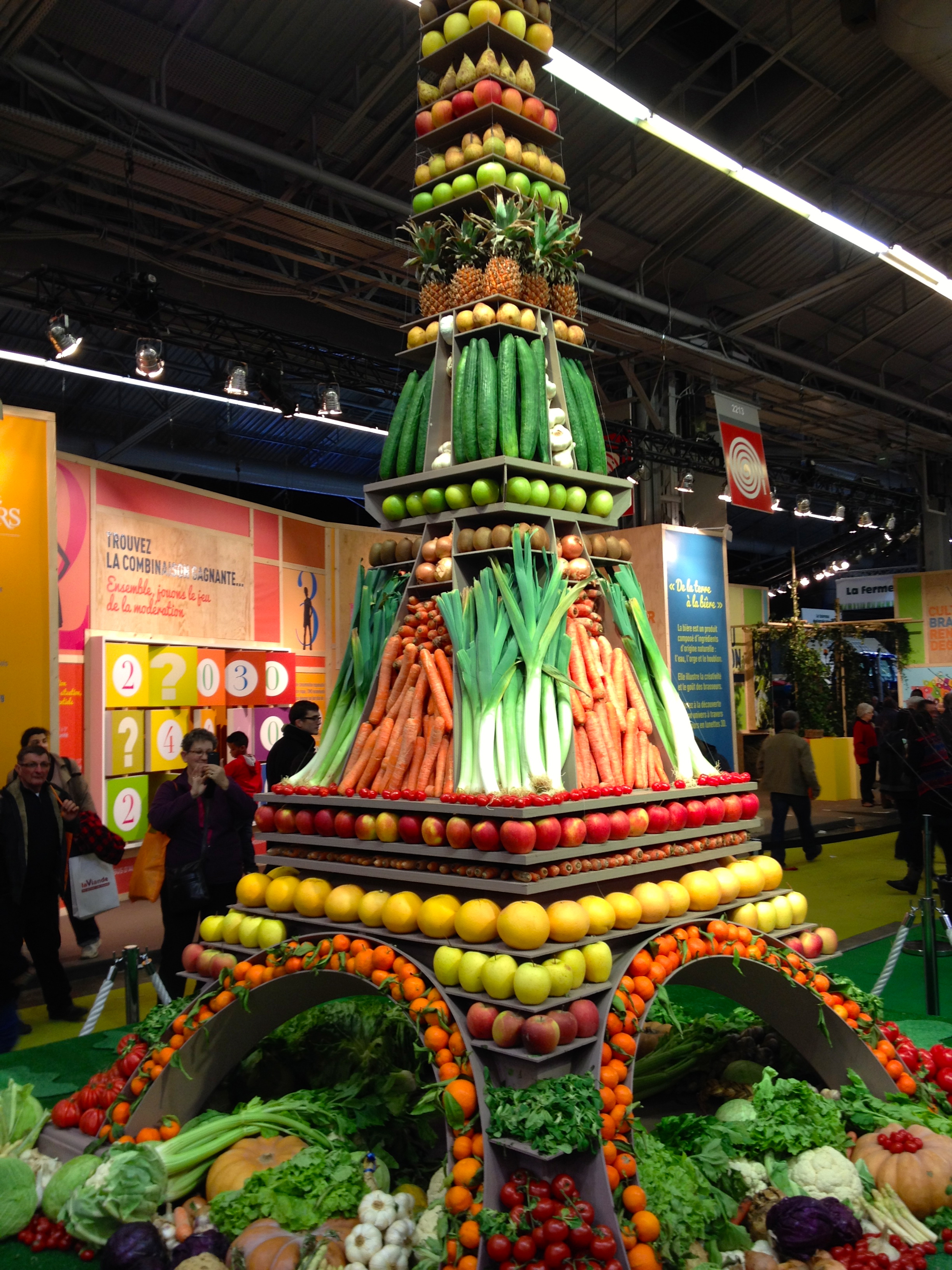
Imagine how healthy we would be if this was our “food pyramid”…the edible Eiffel Tower…


Mar 1
Imagine how healthy we would be if this was our “food pyramid”…the edible Eiffel Tower…

I love going to the movies. I always have. My daddy was a big filmgoer and I have many fond memories of us watching movies together. One of my best memories with him is sitting through JAWS three times on Denver’s largest movie screen in the summer of ’75 and, by the way, still being scared out of our wits when the credits rolled for the final time.
source: plumdeluxe.com
Well, luckily for me, I now live in a country with the highest number of movie screens per million inhabitants: 89…versus 60 in Germany, 56 in the UK, and 24 in Japan. In Paris, the weekly what’s-on-in-Paris guide, the PariScope, usually has 50-60 pages listing all the films showing in the city. That’s a lot of movies, my friends.
The number of Art Houses in France also seems much higher than other places I’ve lived and there are lots of exciting film festivals held around the country throughout the year.
And here’s a small bit of history that I just discovered: France is also home to the world’s oldest surviving cinema. The Eden Theatre in La Ciotat (in the Provence-Alpes-Côte d’Azur region near Marseille) just re-opened a few months ago after a massive and spectacular overhaul. The Eden is the theatre where the Lumière brothers showed the very first moving picture to a dazed and frightened audience in 1899. The 50-second black-and-white silent movie, filmed in 1895, shows a train pulling into la Ciotat station and passengers getting on and off. The audience was so spooked by the train hurling towards them that they dove from their seats in horror, at least that’s how the story goes…
…oh, the French, they do love their stories and films (and everyone else’s too)…and boy have we’ve come a long way, Baby, since that first chugging choo-choo.
In 2014, we English speakers in France have to be patient as we wait for the new releases from the US and the UK to arrive, but eventually most everything comes our way. They’ve even started running French films with French subtitles for the hearing impaired, or the linguistically challenged (comme moi).
On top of that there are several cartes de fidélité which allow you to watch as many films as you want to (or are able to) for a monthly subscription. The best deal I’ve found is the UGC Illimité. Every month for a 20€ inscription, I can see a movie at one of 600+ different salles in Paris, as well as use my card when I’m traveling throughout France.
C’est super, génial, formidable, et chouette, n’est-ce pas? It’s hard not to become a film fanatic in France.
Vocabulaire
cartes de fidélité: frequent viewing/buying cards
C’est super, génial, formidable, et chouette, n’est-ce pas! That’s super, great, terrific and cool, don’t you think?
comme moi: like me
n’est-ce pas: isn’t that so/ don’t you think
salles: room, hall, screening room
And, by the by….

…les Césars (the French equivalent of the BAFTAs and Oscars) are being handed out in Paris at the Théâtre du Châtelet as I publish this. François Cluzet (Intouchables) is hosting and there’s lots of French political drama unfolding as Julie Gayet the new “First Girlfriend” (sort of?) to the President is up for a supporting actress award for Quai d’ Orsay. Stay tuned.
Feb 26
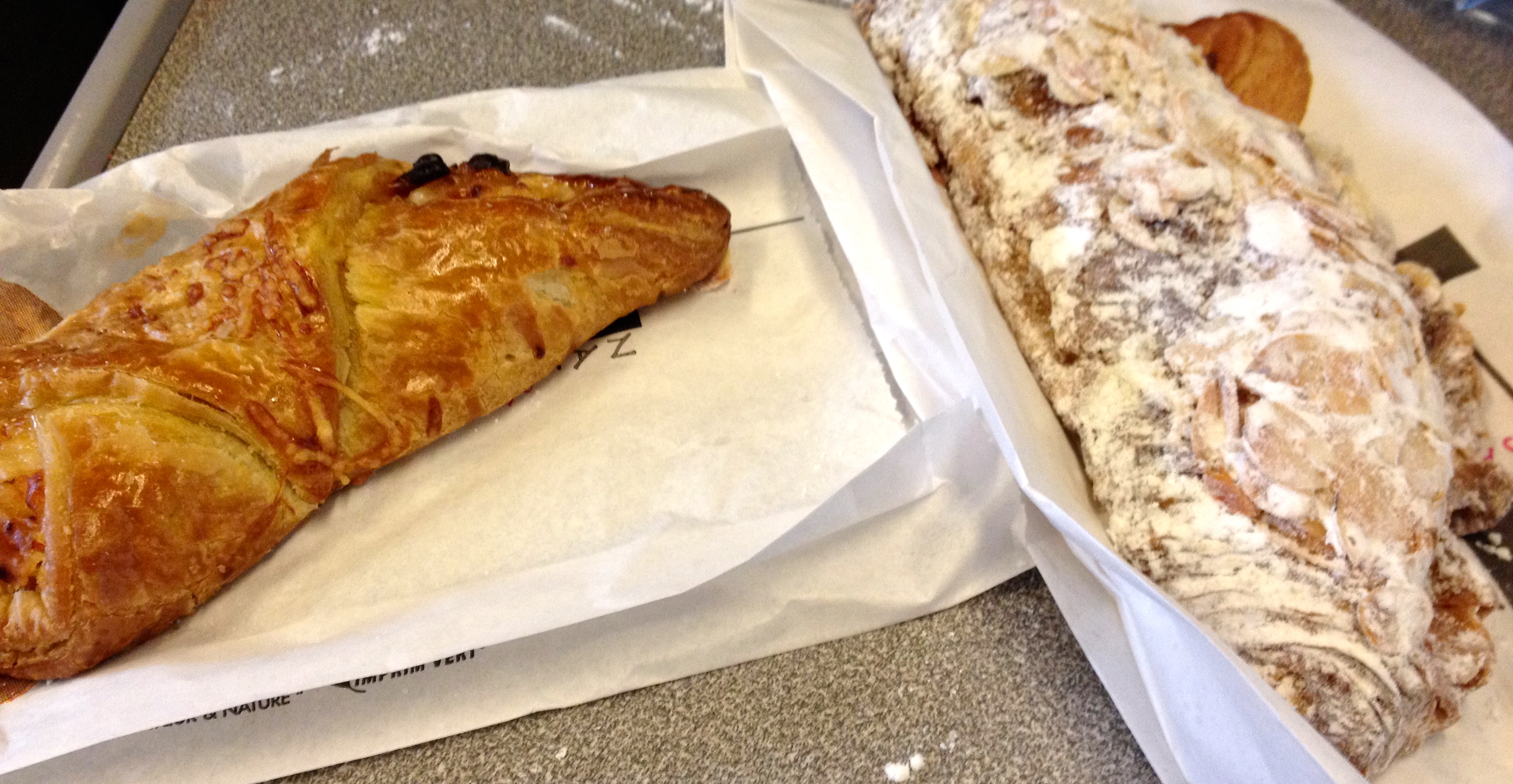
croissant au jambon et fromage et croissant aux amandes
In a testament to how seriously the French take their pastries, I have found that even train station pâtisseries are delicious, and I’m not talking about the Paul chain of boulangeries. Even the less known and more mom-and-pop type stands sell high quality croissants and civilized, albeit, not spectacular, espressos.

My very last croissant au jambon before the real regime starts on March 1.
After nearly 2 weeks of travelling on the East Coast, and too many train, plane and ferry terminals (where we grabbed far too many crappy and prepackaged meals), I’m happy to be back in the land of buttery flakiness and artisanal bakers.
Feb 24

The new Paramount Theatre at Emerson University, Boston
After following Button around on a 10-day audition whirlwind tour between Boston and New York City, my appreciation for the quiet and calm restaurants of France has only deepened.

Holy Smokes! Eating out in America can be agitating.
Between the throbbing red lights at Lolita’s Mexican Restaurant in Boston and the Vanderbilt in Brooklyn serving up pounding heavy metal music at 11 p.m. on a Sunday evening, my vocal cords and eyeballs could use a rest. There is nothing worse than shouting at your girlfriends or daughter between bites of a fancy meal or $15 cocktails. So glad we had a kitchen to cook in for most of our days in the States.
The best meal we had was a late-lunch at Legal Seafood in Boston (a chain restaurant of all places) because we arrived at 3 p.m. after the lunch crowd and were the sole guests dining. The lobster rolls and crab cakes were wonderfully fresh and the noise level was limited to two expats using our “French voices”, or our inside voices, which Americans seem to have forgotten how to use inside. To top things off there were no flashing lights, no obnoxious soundtrack imposed on our meal, and no one trying to rush us out so they could give the table to the next guest.

The crab cakes in Boston are amazing…

Lovely lobster roll
I know some Anglophones complain about restos being so hush-hush in France and the French squelching the fun out of dinnertime, but I am convinced that the unruffled atmosphere in French restaurants makes French food taste even better, is infinitely better for the digestion, and certainly more conducive to cultivating friendships. Even in a crowded café the noise levels never require you to raise your voice. I couldn’t imagine the French engaging in a shouting conversation over a meal, and I wish it wasn’t the norm in the States too.
While it is always nice to spend some time in my homeland and there are many things I miss, I am happy to be headed home today and am looking forward to enjoying some serene meals en famille surrounded by quiet French voices.
Vocabulaire:
en famille: with family
restos: short for restaurant
Feb 20
I love my new French phrase: métro, boulot, dodo.
I’ll be using it a lot when winter break is over, and we’re back to keeping our noses to the grindstone.
Métro:


Boulot:

…back to work for Taz in Paris…
DoDo:

La routine: commute, work and sleep; the rat race
Feb 20

I came across this the other day in Boston…
Here’s a dessert to desert. It ranks right up there with the deep-fried Twinkie Burger. Jeezel! Only in America, non?

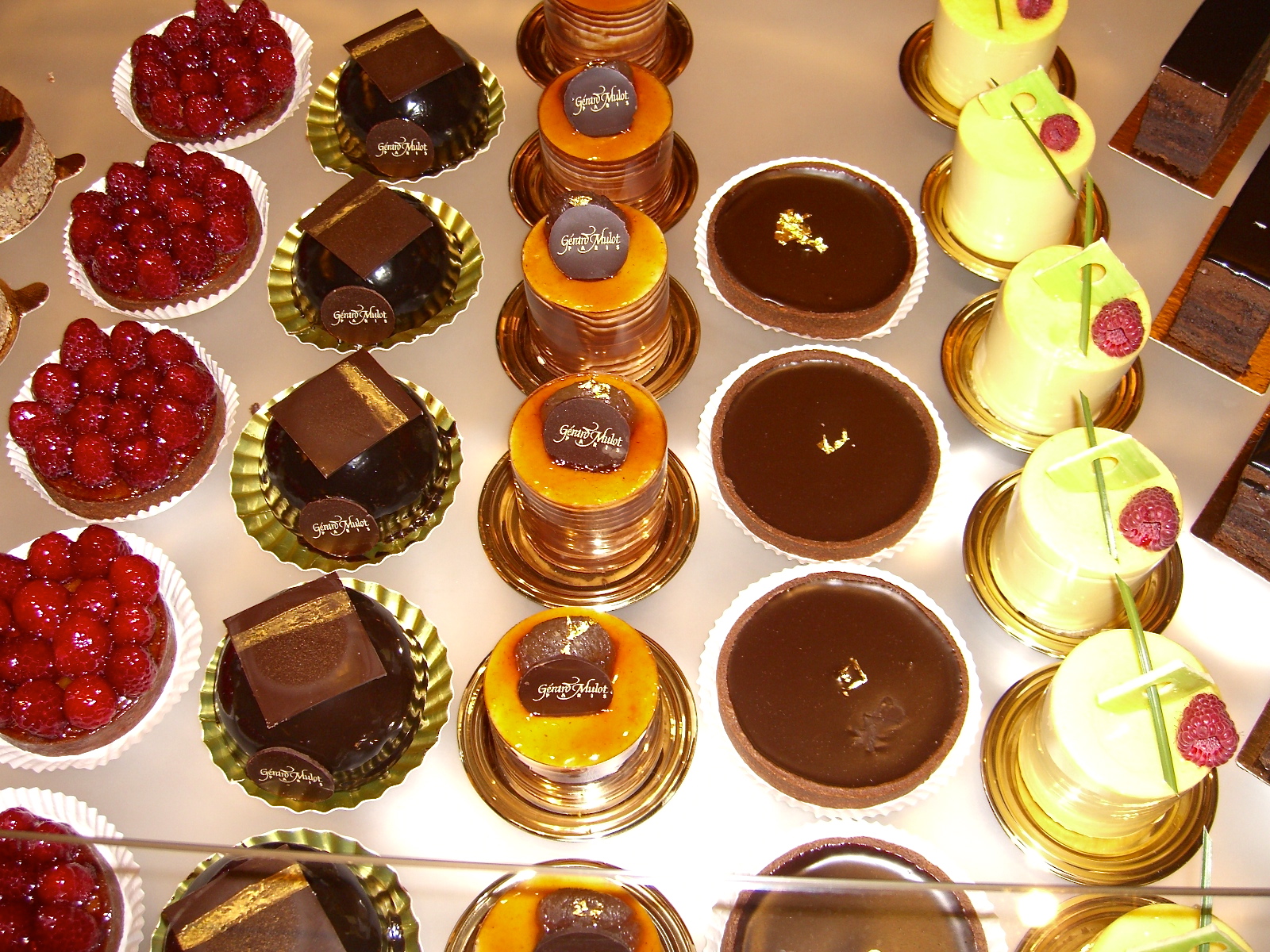
I’d rather have my sweet “bacon” the way the French do it: marzipan and chocolate…


or, just give me any old French pâtisserie, s’il vous plaît.

When the modest pomme de terre arrived in Europe via the Andes Mountains in the 1500s, much like corn in modern day France, they were used only to feed hogs. They were also thought to cause leprosy.
However, in 1772, Monsieur Parmentier, a chemist by training, seeing the benefits of nourishing the famished masses with this compact carbohydrate, came up with a peculiar plot to trick the French into eating this humble tuber.
His plan? To plant a field of potatoes in the outskirts of Paris. His trick? To have arm guards watch over the crops in the daylight, and leave them unprotected when the sun went down. Convinced that the crop in the mysterious field must be valuable, the curious Parisians began to steal the potatoes under the cover of darkness and realized they were pretty darn good for dinner (and lunch and breakfast, I assume).


These days, I can’t imagine French cooking without potatoes. So many French dishes feature or are complimented by these earth apples, and parmentier, pronounced par-maan-tyé, is now used as an adjective to refer to mashed or boiled potatoes in some recipes.
I first became interested in Monsieur Parmentier when my friend Hélène served a delicious Parmentier de Confit de Canard at one of her winetasting. After several months of bugging her for the recipe, she invited a few of us over for a quick cooking lesson from a busy French woman’s kitchen.
This is when I discovered that French women are full of all sorts of secrets and shortcuts that make them seem super human in the kitchen when, in fact, they are mere mortals. In less than 2 hours we had prepared, cooked and eaten a perfect and delicious Parmentier de Confit de Canard accompanied by a fresh green salad and a lovely bottle of wine.


So what is the secret? A couple of hints: you won’t find the answer at the butcher’s, but you will find it at your local super marché; no need to head to the milkman’s—no butter, milk or crème fraîche required.
Now keep this on the low down, but the answer comes in a tin.


Only in France can you find a large can of duck legs perfectly preserved in their fat. Add one of Monsieur Parmentier jewels per person, and some garlic powder, and voilà! Parmentier de Confit de Canard Express.
Vocabulaire
Parmentier de Confit de Canard: a dish similar to shepherd’s pie, consisting of a layer of shredded roasted duck legs topped with a layer of mashed potatoes baked briefly at a high temperature to form a golden brown crust on top.
pomme de terre: potatoes; literally earth apples
super marché: supermarket


 365+ Things I Love About France