Skip to content

Posts from the ‘Shopping’ Category

No. 134: Chocolate Celebration

Paris Chocoloate

“He showed the words ‘chocolate cake’ to a group of Americans and recorded their word associations. ‘Guilt’ was the top response. If that strikes you as unexceptional, consider the response of French eaters to the same prompt: ‘celebration’.”

Michael Pollan, In Defense of Food: An Eater’s Manifesto

Scottish Chocolate

I know that most of us carry around emotional baggage tied to food and that there are plenty of French women (and men) who see food as the enemy, but I do find this cultural difference between the above word associations thought-provoking.

It does my body good to luxuriate in an exquisite piece of chocolate or share an artisanal pastry in a special moment, in the right atmosphere, rather than guiltily guzzling down a dozen of quelque chose in front of my computer.

gâteau au chocolat Paris

After 2 ½ years in France, I’m getting better and better at thinking of chocolate (and other foods) as a celebration and choosing smaller portions and higher quality foods over huge and highly processed junk.

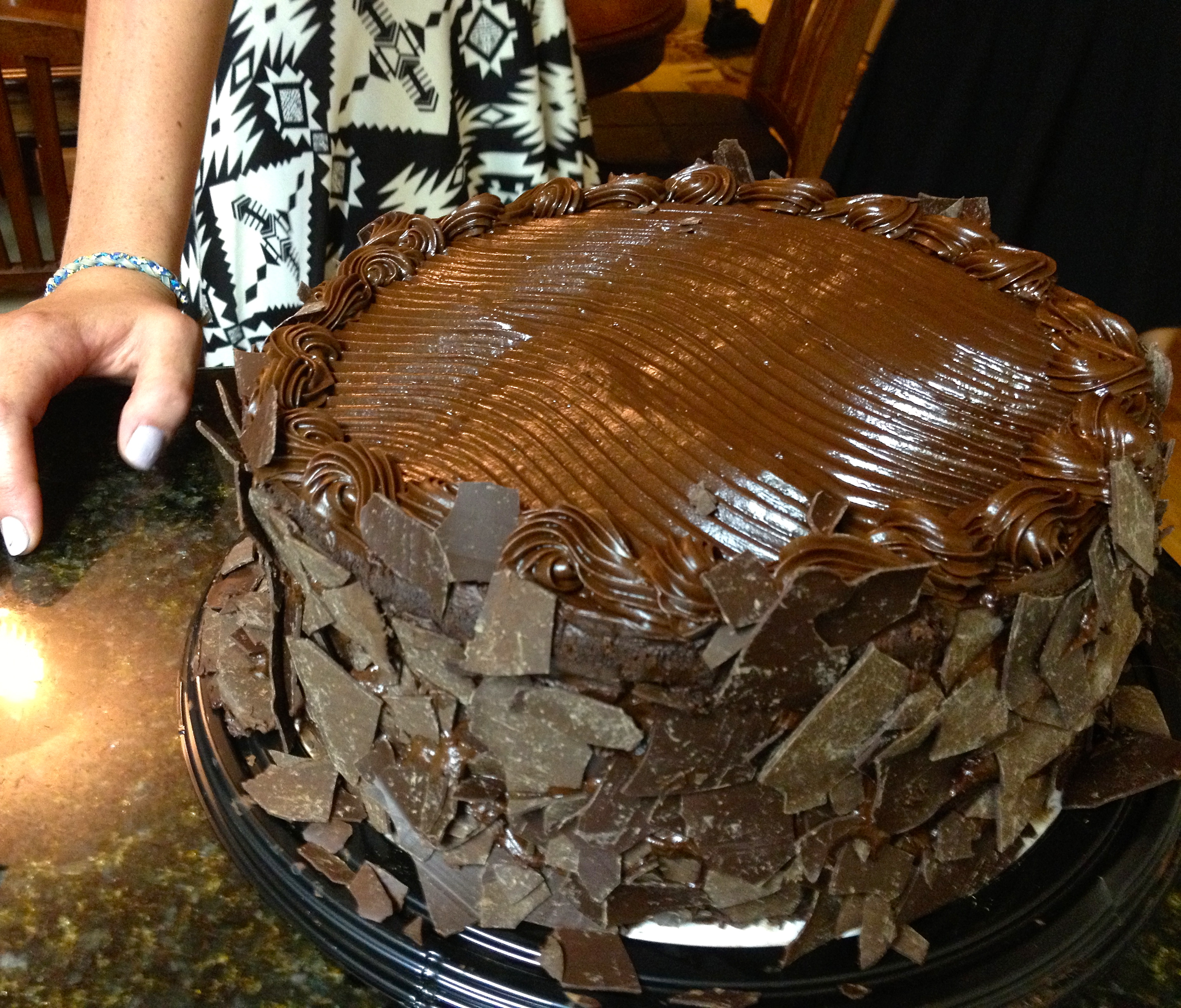
….a massive 7-lb American chocolate cake from COSTCO...

….a massive 7-lb American chocolate cake from COSTCO…

Old habits die hard, but I find that this particular bad habit is easier to break en France.

…a much smaller, and far more expensive and delicious gâteau au chocolat (55€-$75), one could only afford for a true celebration...

…a much smaller, and far more expensive and delicious gâteau au chocolat (55€-$75), one could only afford for a true celebration…

Vocabulaire

en France: in France

quelque chose: something, anything

No. 118-119: Spéculoos and le Musée du quai Branly Combined

Out and about this morning and in search of a birthday gift for Charlotte, my favorite soon to be 4-year-old, I decided to pop into la librairie du Musée du quai Branly and take a peek at their unique collection of gifts. Much to my delight, I came across this in the children’s book section:

Spéculoos! La quête/Spéculoos! the Quest

Spéculoos! La quête/Spéculoos! the Quest

When I first spied it, I thought surely, there must be another meaning for the word Spéculoos that I don’t know. Mais non!

Speculoos

This is actually a tale of an extraordinarily happy, rotund and spoiled princess from a magical far eastern land who is saved by Spéculoos!

The princess leads a grandiose life. When she wakes up, she nibbles cake and pralines. For dinner she gobbles pralines and cake, and for dessert, she savors ice cream with pralines. Mais un jour, la Princesse n’eut plus faim/but one day, the princess was no longer hungry. Well, this certainly makes her very sad and she cries for a very long time. Not one single soul in the entire kingdom can find a cure for her sickness.

But then one day Maurice, le ménestrel de la Cour, who, naturally, is profoundly in love with princess, has an idea. He will go to the sorcière, and ask if he has any ancient potions to cure his secret love. And this is what the sorcerer tells him:

J’ai ce qu’il te faut, une très vieille recette de biscuit, mais qui agit mieux qu’une potion/I have what you need, a very old cookie recipe, that is better than any potion. 

…and the cookie that’s better than a magic potion? Spéculoos, obviously.

Speculoos

So he travels dans des contrées lointaines pour ramener le gingembre, le clou de girofle, la cannelle, la cardamone et la muscade/to distant lands to find the ginger, cloves, cinnamon, cardamom and nutmeg. Upon hearing about his plan and envisioning the recipe, the princess falls instantly and madly in love with her hero.

From Nigeria to Zanzibar, to India and the red Orient, and onward to Sri Lanka and the Indonesian archipelago, love struck Maurice diligently gathers the indispensible spices.

Upon his return he bakes her the cookies (as can Charlotte, by following along with the simple recipe)…

…et en goûtant le Spéculoos, la Princesse avait retrouvé toute sa gaieté. Mais plus que le biscuit, c’était le courage de Maurice qui l’avait conquise/and upon tasting the Speculoos, the princess’ cheerfulness was restored. But more than the cookies, it was the courage of Maurice that conquered her malady and won her heart.

Speculoos

Awww…shucks….

I have to say, I’ve had some days where Speculoos is as good as, if not better, than any other magic potion to chase away the blues. I’m glad the Musée Branly thinks so too!

Spéculoos

But if you don’t like Spéculoos, the Quai Branly Museum has plenty of other nifty and colorful gifts for you to choose from.

Vocabulaire

la librairie du Musée du quai Branly: the bookshop at the Branly Museum

le ménestrel de la Cour: the court minstrel

Mais non! But, no!

sorcière: sorcerer

No. 114: Things I Never Thought I Would Eat but Have, or Might…

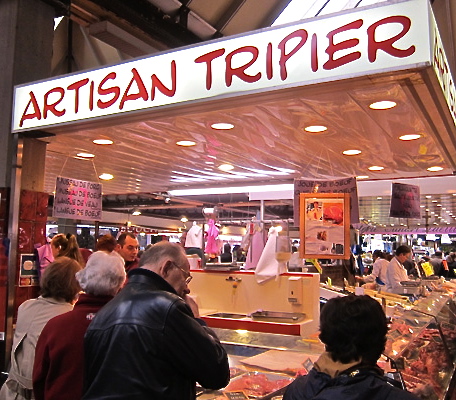
Some days I go to the outdoor marchés and marvel at all the weird and wonderful things on offer. Today was one of those days, as my friend and cooking teacher Marie-Françoise introduced me to a new French word: le tripier.

Le tripier is a very special kind of butcher, not the kind you go to to get your everyday ordinary cuts of meat. I’m not even sure there is a comparable word or profession in the U.S. The best definition I can come up with is the “tripe butcher”. For those of you who aren’t quite sure what tripe is, it’s the first or second stomach of a cow, oxen, sheep, goats or other ruminant that is used as food.

source: le blog de boulogne billancourt

source: le blog de boulogne billancourt

Mais le tripier doesn’t just specialize in stomach number 1 and stomach number 2, no, no, he has several refrigerated cases full of all sorts of animal parts you’ve probably never, ever considered eating.

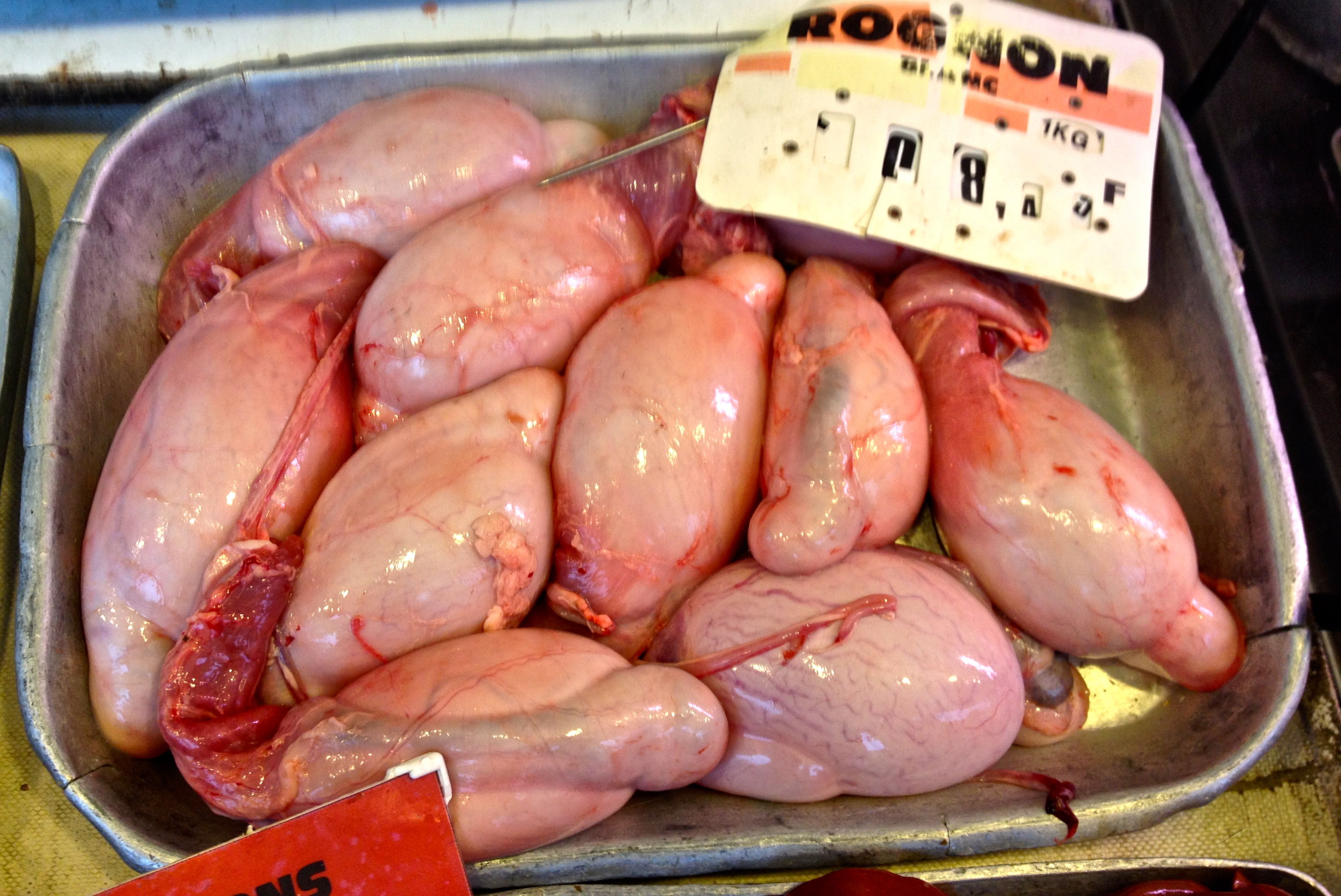
rognon blanc…white kidneys

rognon blanc…white kidney

Mais les Français, ils mangent tout!

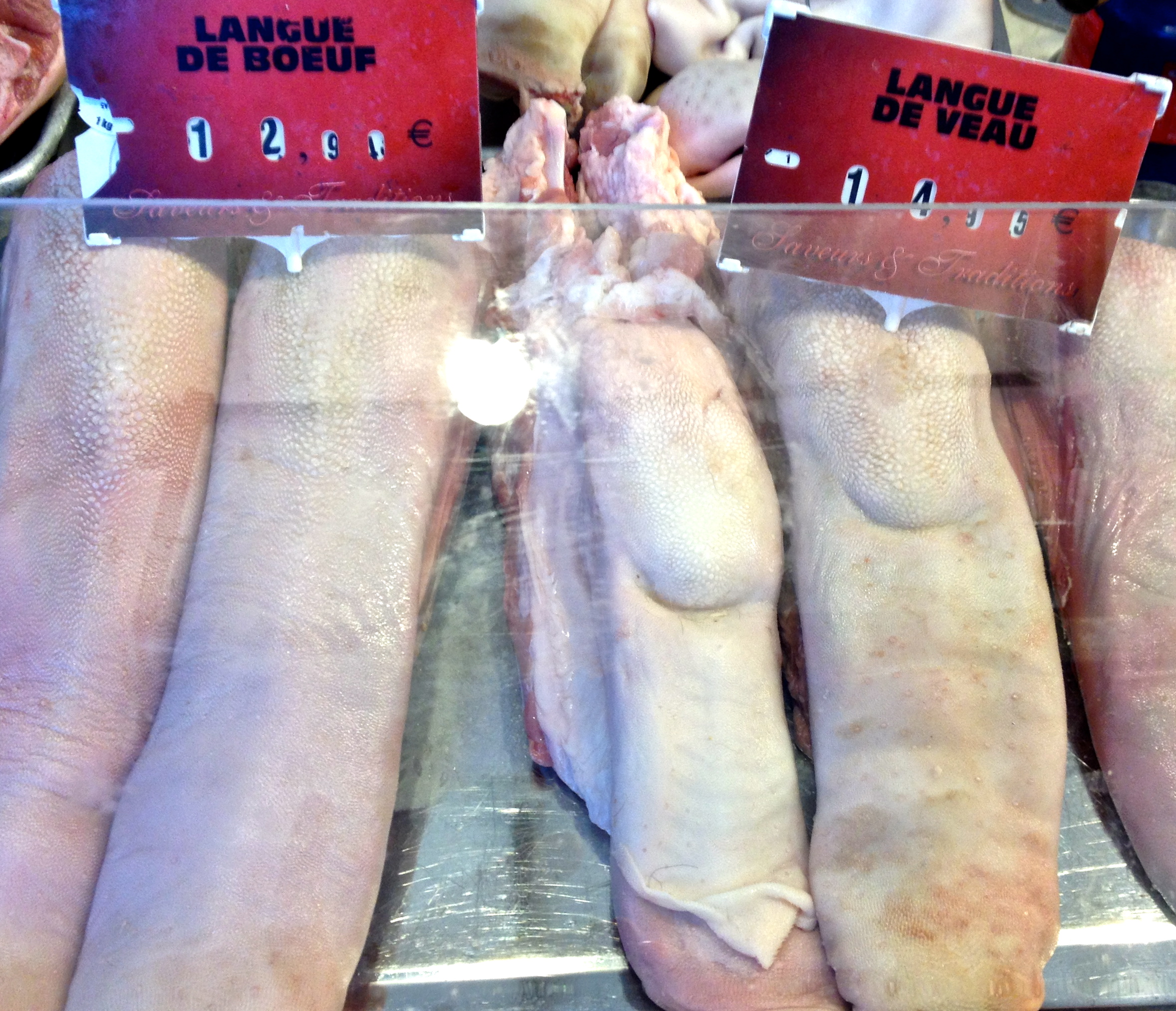
langue...tongue

langue…tongue

Or, as I heard in class today, “Tout est bon dans le cochon!” (All parts of the pig are good!)

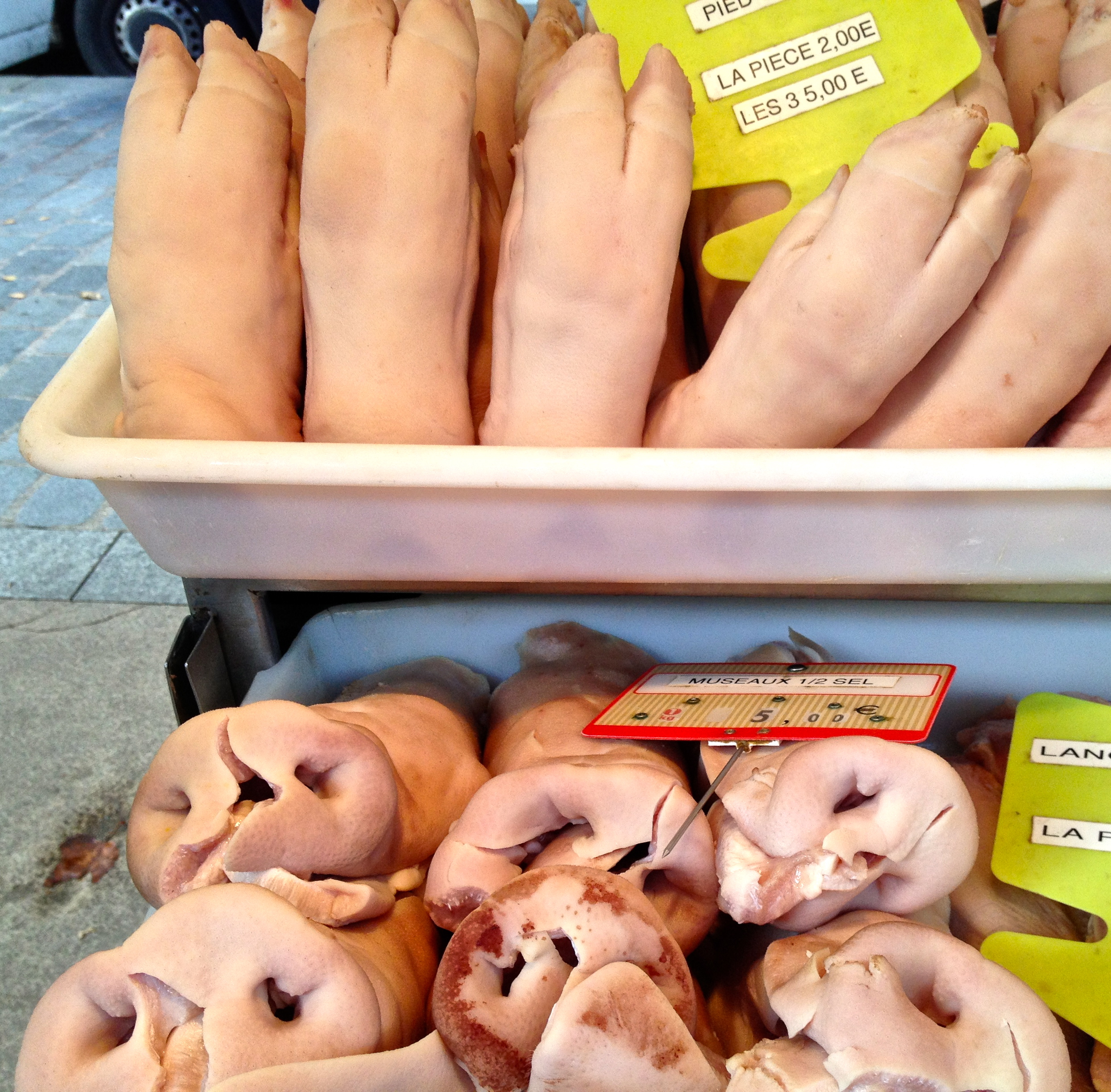
pieds de porc...pigs' feet

pieds de porc…pigs’ feet

les oreilles de porc…pigs' ears

les oreilles de porc…pigs’ ears

museau de porc...pig snout

museau de porc…pig snout…usually served chopped in a vinaigrette

Le tripier not only supplies the home chef with ears, snouts, feet and stomachs, he also has a real “know-how”, a second sense if you will, and can provide his clients with detailed culinary advice on exactly how to cook these curious cuts, and how to eat it. If you get in good with the man, he’ll even save the crème de la crème of the bits and bops you never even knew you wanted.

Here is a small sample of what else you might find at a good tripier stall. It’s not for the faint-hearted.

Vocabulaire

crème de la crème: cream of the crop

le tripier: tripe butcher

Mais les Français, ils mangent tout! But the French, they eat it all!

marchés: outdoor markets; farmer’s market

No. 113: La Truffe

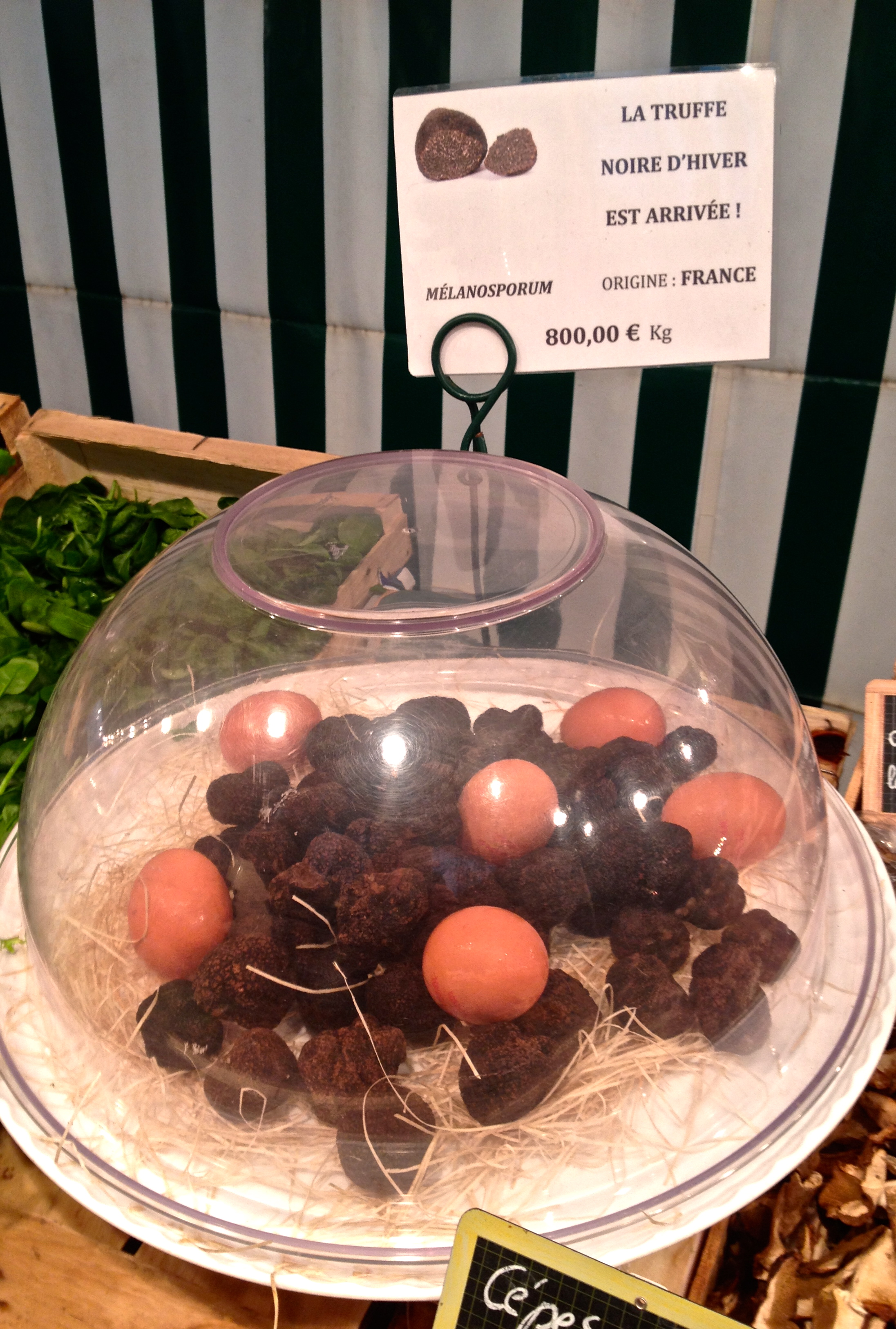
Black Gold!

Black Gold!

La Truffe Noire d’Hiver est Arrivée! And what a bargainonly 800€ Kgbut, you only need one!

Vocabulaire

la truffe: truffle

No. 105-106: Fabophiles and the Galette des Rois

Along with every other French-themed blogger posting today on Epiphany, the Twelfth day of Christmas (marking the Magi’s visit to the Christ Child), I too have a story to tell about the Galette des Rois (the Kings Cake).
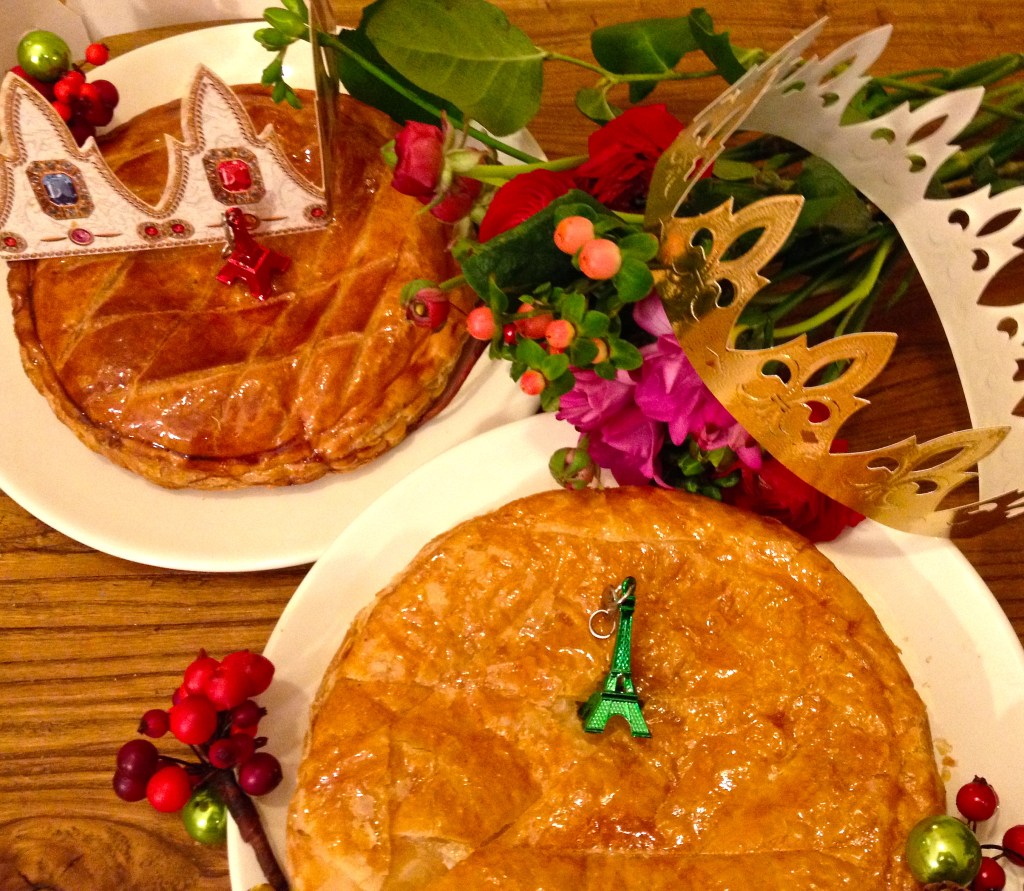
Galette des Rois

As you may already know, each year on January 6, the French gather to share this special cake made with flaky puff pastry and dense frangipane, a sweet almond filling. They cut the Galette des Rois so that each person sitting at the table plus one extra guest receives a piece. (In the olden days, the extra slice was given to the first needy person to pass by your home.)

La fève, literally a broad bean, but these days a tiny porcelain or plastic charm, is hidden inside the cake. The lucky diner who finds it, (beware of cracking a tooth!), gets to be king of the feast or king for the day and sports a handsome paper crown.

Only a mild fan of the cake itself, I was interested in taking a broader look at the types of charms found inside these cake. In my three Epiphanies in France, I have only come across cheap plastic baby Jesus’s and mini, chipped royalty. It seemed to me that there had to be more.

And more there is. En fait, there is a pretty decent-sized blogosphere dedicated to “favophilie/fabophilie”.

In case you haven’t heard, a fabophile (or favophile) collects the beans and charms from the Galette des Rois. They call themselves “Fabos”.
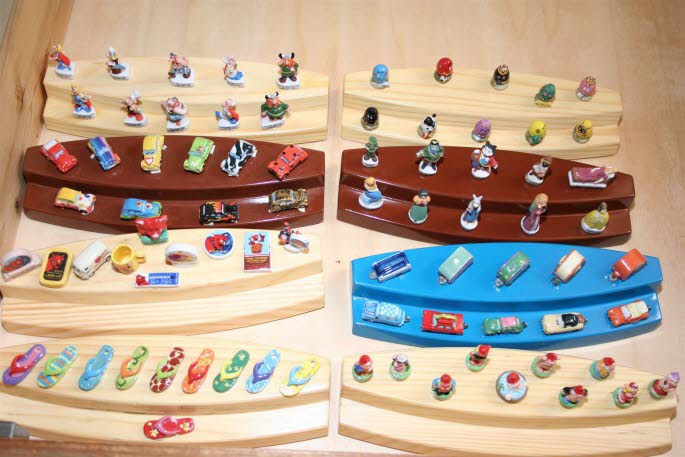
photograph: isabelle-lottaz

photograph: isabelle-lottaz

The keenest Fabos seek out whole “series” of charms and, of course, those rare and hard to find models. From what I understand, there are three types of fèves: figurines, custom “beans”, and standard “beans”.

The figurines originally started out representing holy figures, the Christ Child, and royalty. Now it seems that anything goes—from religious icons to cartoon characters to celebrities.

Custom beans are the most valuable as they are limited additions, often brand marked, and sometimes quite expensive. For these beans the sky’s the limit—depicting cutesy animals to kitchen utensils to great works of art.

The standard beans are mass manufactured and sold to any-old-buyer (such as your local boulanger). These ordinary fèves are sold by the box and often repurposed by us homespun chefs who put them in our own cakes.

In addition to the three categories of fèves, there is another thing to look for if you’re thinking of becoming a Fabo: the finish, your choice: matte or glossy.

So if you are really gung-ho about collecting, you could in fact amass two sets of everything, shiny AND dull.

Truth be told, and actually quite scarily, had I grown up in France, it’s likely I would be a very serious fabophile, knee deep in tiny porcelain treasures and a good 10 kilos heavier from slogging through the Galette des Rois in search of my prize.
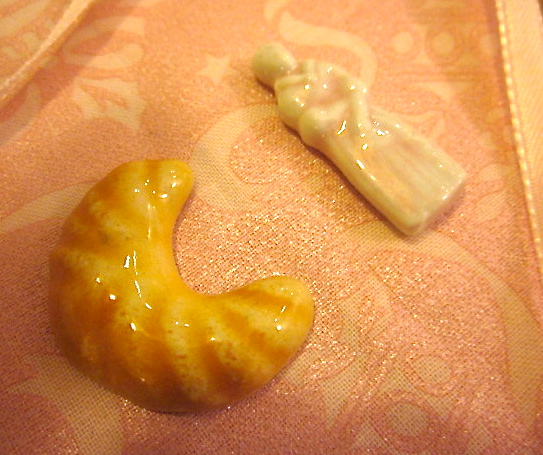
mes fèves so far this year...

mes fèves so far this year…

If you want to make your own fancy one at home, hop over to David Lebovitz’s blog for a fabulous but time intensive recipe. If you want the quick and easy version check back in a few days for Galette des Rois à la Rachel.

Vocabulaire

boulanger: baker

en fait: in fact

fabophile / favophile: a person who collects fèves; Febo for short.

favophilie / fabophilie: the act of collecting fèves

frangipane: a thick almond filling

Galette des Rois: the Kings Cake, eaten on Epiphany and throughout January; in the U.S. it is also eating during the lead up to Mardi Gras.

une fève: the tiny porcelain/plastic prize found inside the Galatte des Rois; also a broad bean or fava bean.


No. 86: Marché de Noël

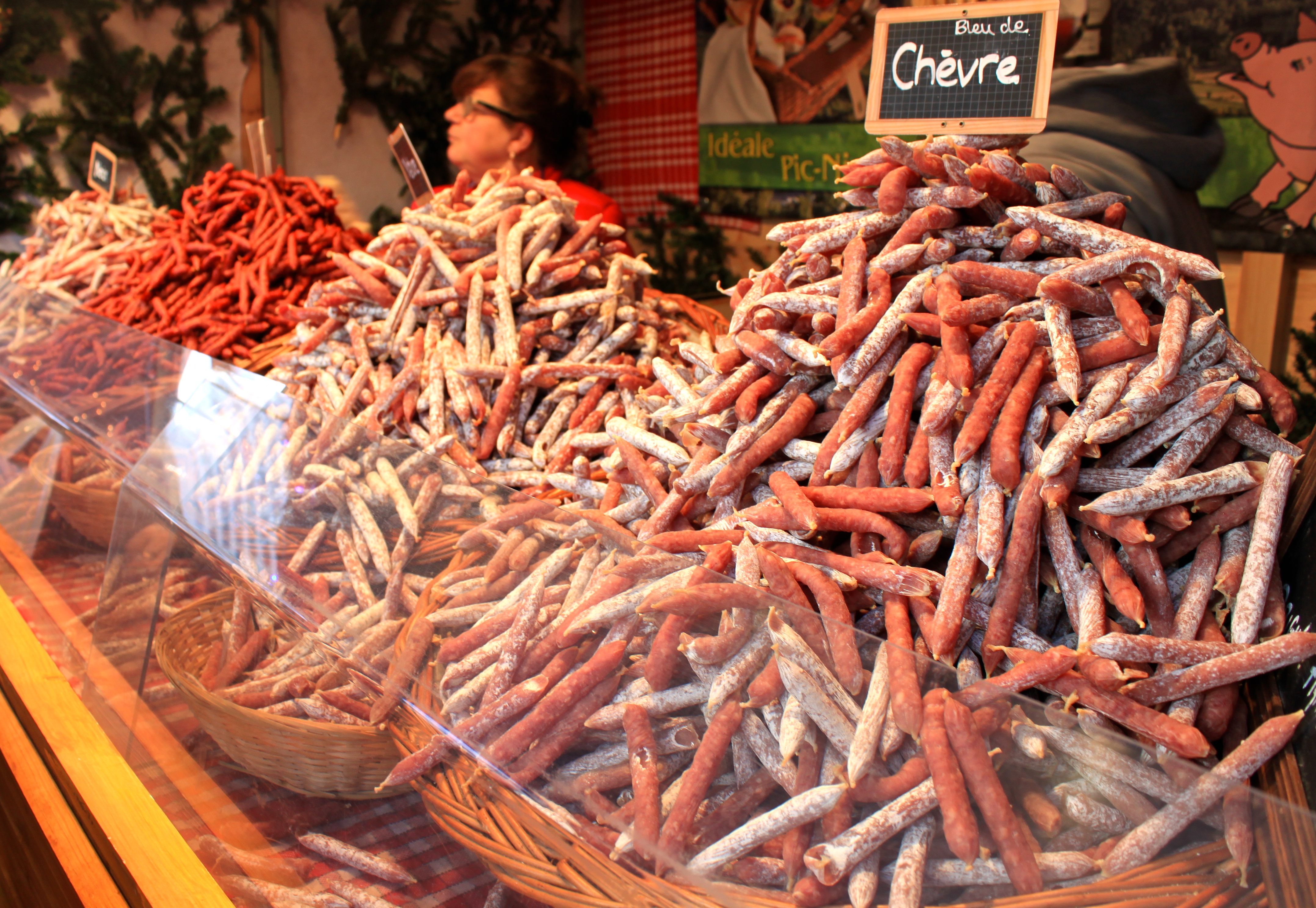
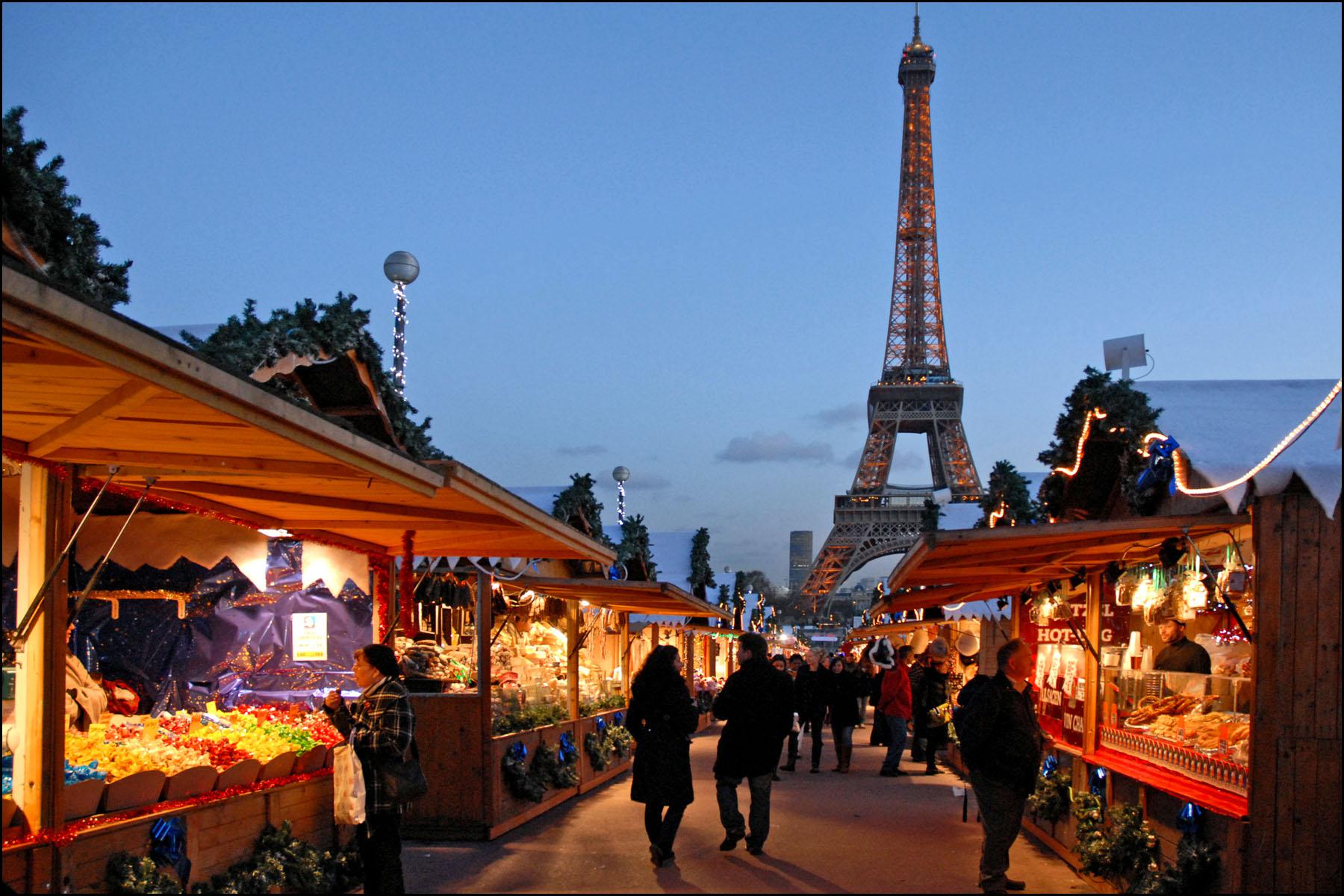
Christmas markets can be found in all the major cities of France, and also in the small villages and hamlets. Most of them are characterized by charming wooden chalets, vin chaud, local food specialties, gingerbread, and lots and lots of saucisson.

IMG_9170

They have strayed from their original purpose of supplying rural French femmes au foyer with all the hard to find ingredients for preparing the traditional holiday feast. And while the marché de Noël originated in the northern Alsace region, (belonging to Germany at assorted moments in history) and tend to draws on German Christmas market traditions, these days, at least in Paris most of the “handcrafted” toys and gifts are junky stuff mass produced in China.

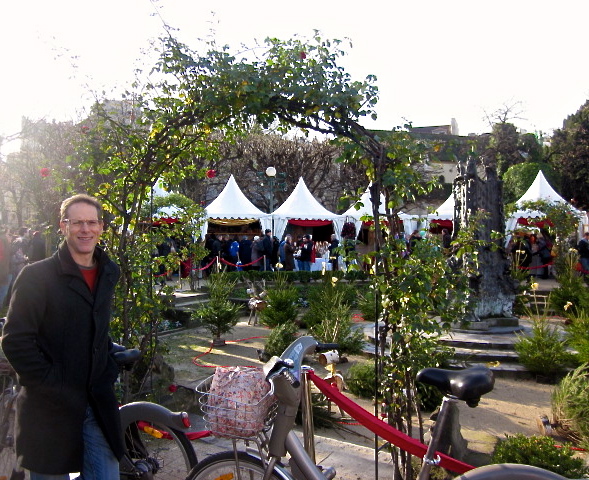
That said, I still love them. They do add a terrifically festive feel to France in December. Here are the ones I’ve managed to see this year.

Marché de Noël Suédois, Swedish Church in Paris

I’d never been to a Swedish Christmas market so I really enjoyed this one. It was small and intimate, and the Swedish community was so very friendly. All things Swedish and holiday-ish available, including reindeer sausage, amazing ginger crisps, and of course Swedish meatballs and Glögg. (Held right before Lucia, so you’ve already missed it, but do look for it next year.)

IMG_2427

Marché de Noël, La Défense

More than 350 stands, very jolly despite the chalets nestled in the surreal setting of glass high-rise buildings and the ominous Grande Arche. (November 27-December 28.)

IMG_9168

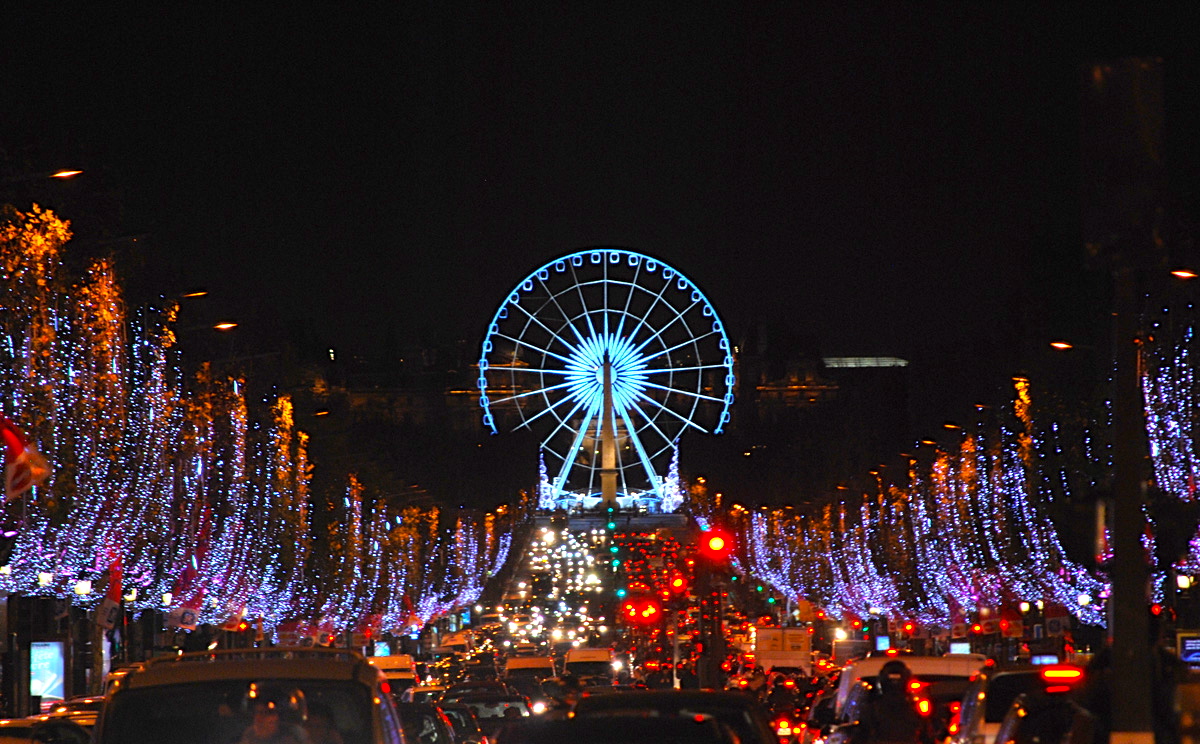
Marché de Noël, Avenue des Champs-Elysées

The largest Christmas market within the Paris city limits. Incredibly crowded and best at nighttime—if you are going to brave the throngs of people, you might as well see the lights. (November 15-January 5.)

Marché de Noël, Trocadero

About 100 stands, a “snow” village, and an ice-skating rink with the best view of the Eiffel Tower in Paris. Lots of tourist, kiddos, African Eiffel Tower sellers, and pickpockets.

Marché de Noël, Notre Dame Cathedral

IMG_3580

IMG_3579

Charming and cheery Christmassy views. Good photo opportunities. Beware of the gypsies and their tricks.

Marché de Noël on my bucket list:

Marché de Noël, Strasbourg

The mother of all Christmas markets and the largest and oldest one in France. A pilgrimage for those obsessed with Noël. Set in front of the Strasbourg Cathedral. I’ve seen pictures and the views are spectacular.

Marché de Noël, Bordeaux

Supposedly one of the more “magical” of the French Christmas markets, and of course, a great opportunity to stock up on wine from Bordeaux.

Marché de Noël, Nancy

Even though Nancy, France is my namesake, I have never made it there. I need to. Know for its range of traditional and regional foods and less junk from China.


Vocabulaire

femmes au foyer: housewives

marché de Noël: Christmas markets

saucisson: sausage

vin chaud: mulled wine


No. 85: Edible Christmas Windows

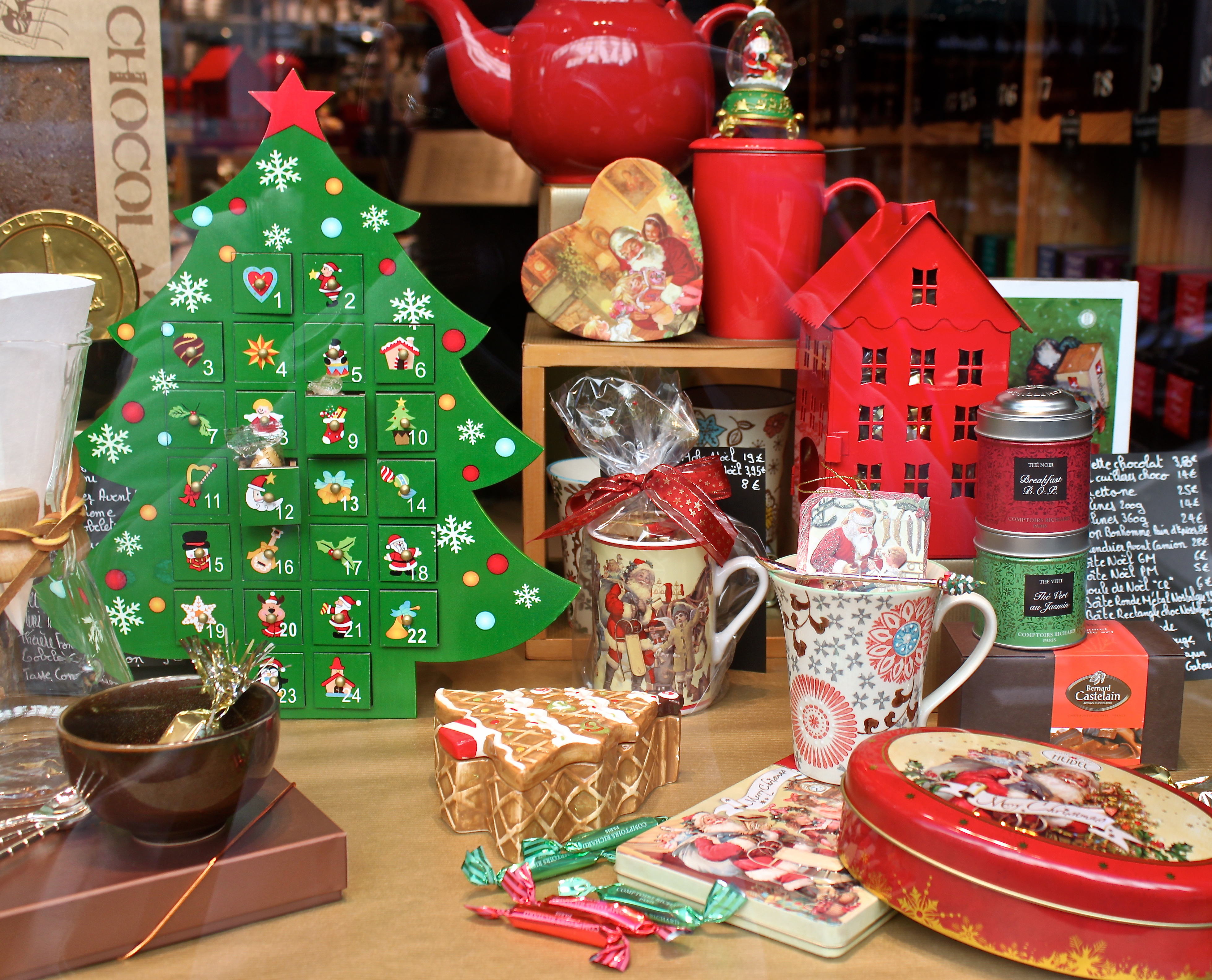
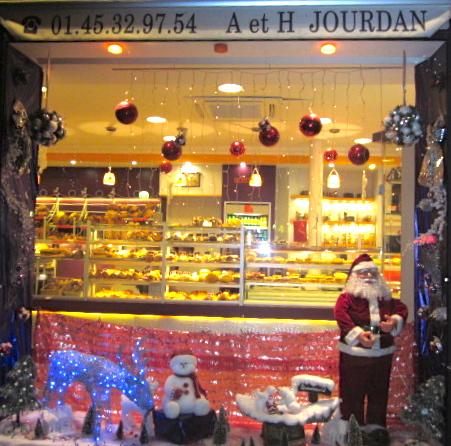
These Christmas windows aren’t just for licking, they are for eating.

IMG_4365

IMG_4364

IMG_2238

IMG_8500IMG_2579

IMG_1872

IMG_2235

IMG_2762

IMG_4419