No. 12: Automne Deux Fois
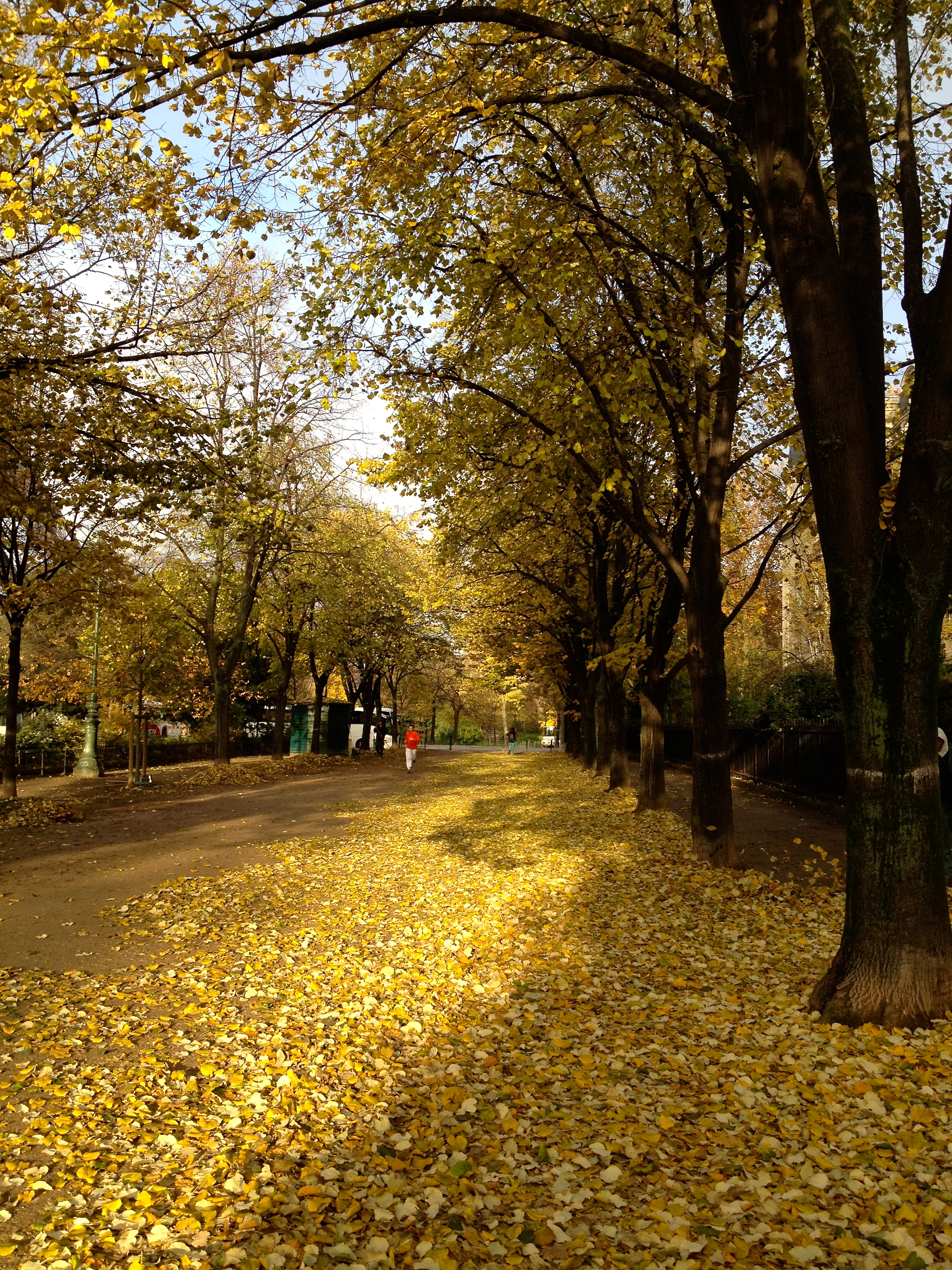
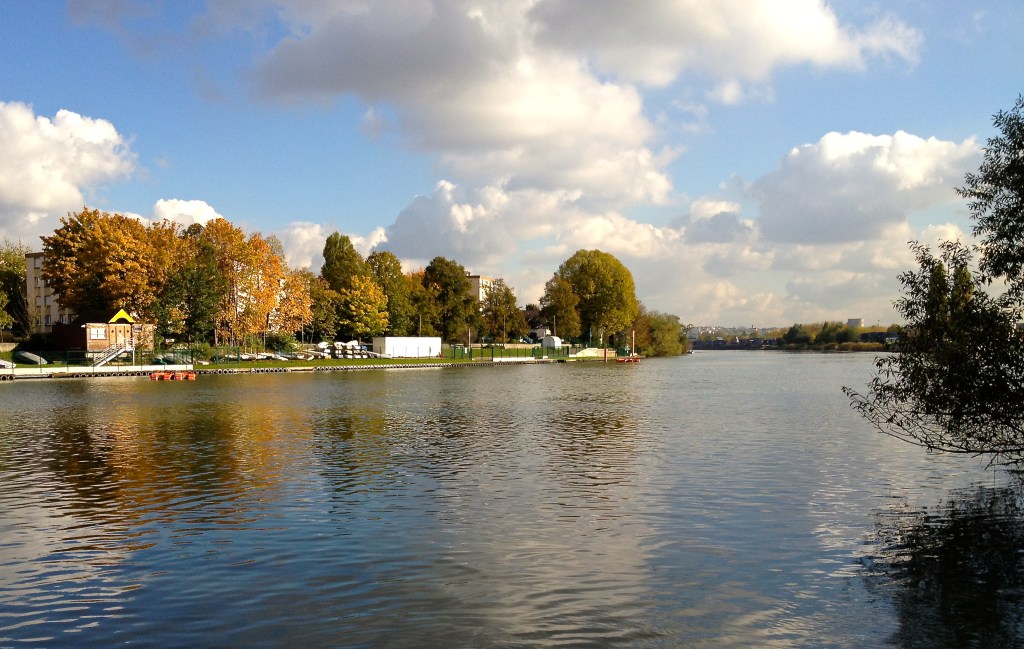
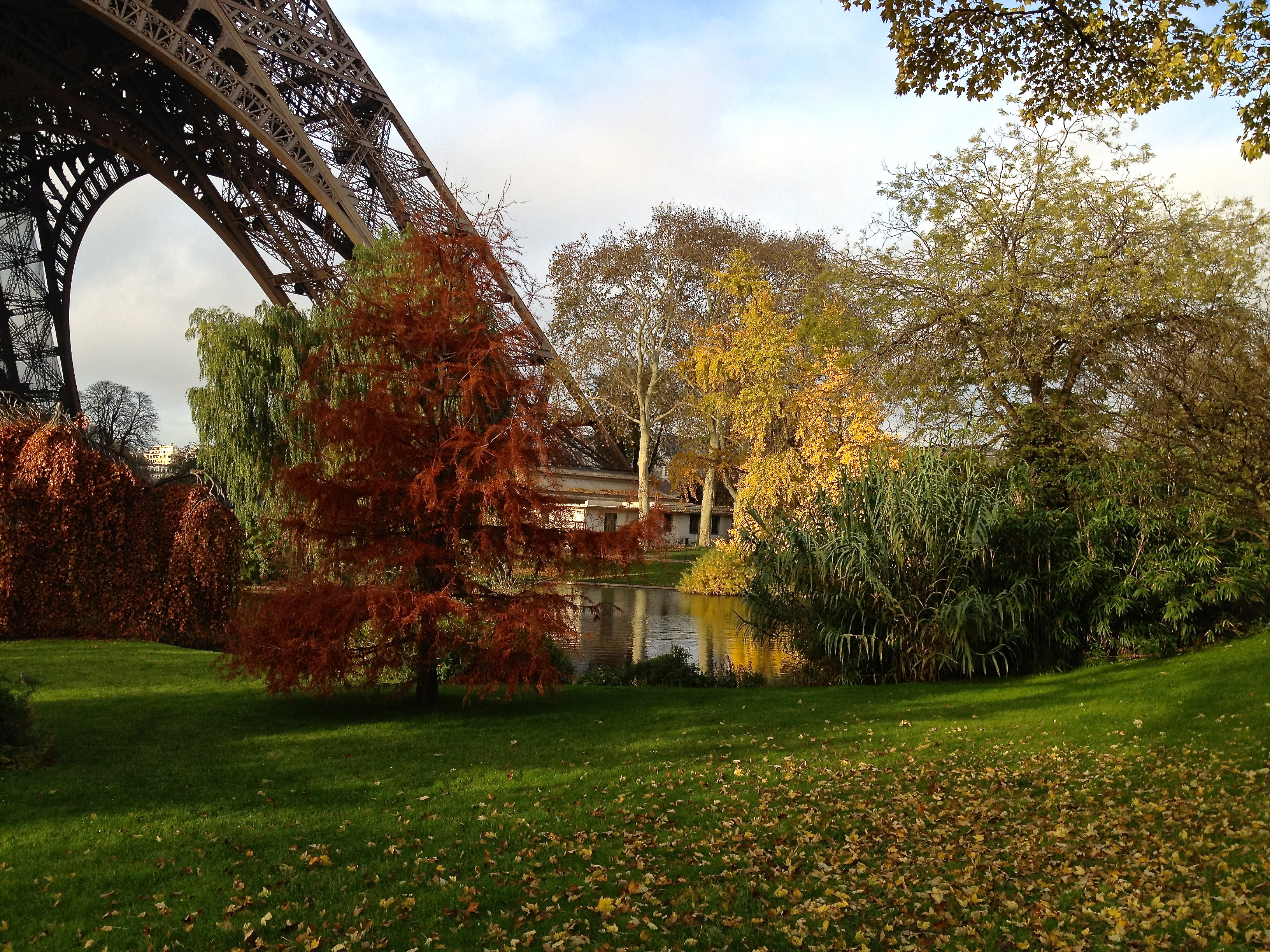
Automne, j’adore!
I just can’t seem to get enough of fall in Paris and am looking forward to some travels further south in France over the Toussaint Holiday to see what autumn looks like there!
Oct 5
Automne, j’adore!
I just can’t seem to get enough of fall in Paris and am looking forward to some travels further south in France over the Toussaint Holiday to see what autumn looks like there!
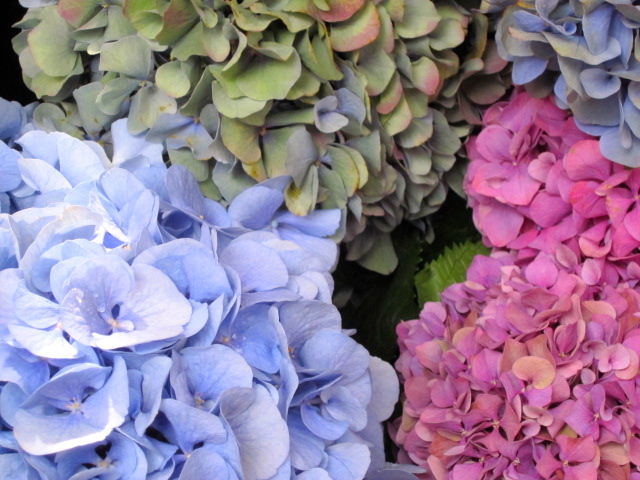
I love fall in France. I suppose I love it more than most because I come from a region of the USA where there is a conspicuous lack of deciduous trees. So, the radiant blushes of color surrounding me in France never cease to amaze. Sometimes I feel like a dolt, pointing out the vibrant reds and oranges that I suppose seem quite normal to most. But lately, I just can’t help myself. With summer gone, and the impending grey winter on my mind, I plan to enjoy every last drop of scarlet, amber and tangerine.
I think what makes fall even more special for me in France, is that there seems to be a boundless amount of planning, both at the public level as well as at the individual level. This dedication to civic design, on the government’s part is seen throughout France, from the smallest village to the major cities. The October flowerbeds and gardens fiery and fierce, compliment the arbors and forest, thoughtfully planted and groomed sometimes centuries ago. Meanwhile I think the Frenchies take pride in their own small piece of the world. They seem to have a very strong sense of follow through and possibly a sense of duty to their fellow citizens to provide their neighbors and community with something lovely to look at. Their sense of esthetics and beauty saturates what might otherwise be a gloomy backdrop to life. I feel a commitment to beauty in France.
So when autumn is in the air and the seasons begin to change, not only are we spoiled by nature’s streaking sweep of the paintbrush, we are also spoiled by la madame’s sixth floor window boxes and her not-so-amateur palette of colors.
I am a huge fan of Marc Chagall.
I was lucky enough to see the Chagall exhibit at the Musée du Luxembourg in Paris at the end of summer, and it was stunning. I adore his vibrant palette and enthusiasm. Boy, could Chagall do color! As Picasso said, “When Matisse dies Chagall will be the only painter left who understands what color really is”. Je suis d’accord, brother.
Although Chagall was born in Belarus, the French considers him first a French artist, and then a Russian painter. While he did spend the majority of his life in France, much of his work reflects and was inspired by his memories and dreams of his homeland in Vitebsk. But, fortunately for all us admirers, many of his most famous works can still be found in France.
The expos. A remarkable thing about living in Paris and France is the exceptional access to great works of art. At this exhibit, I fell in love with his fiddlers dancing on the roofs and his ghostly figures gliding through his magical sky, the green and yellow dancers and whimsical forms, the purple roosters and blue violins, the stuff that dreams are made of…his hopes, longings, and losses—a delightful and thought-provoking display of some of his major works.
A night at the symphony. The Palais Garnier, Paris’ famous opera house, is also the home to his famous, fanciful ceiling. Although there was a whole heap of debate and some very disgruntled Frenchies when he was first commissioned to paint it in 1963, it has become a much beloved part of any evening at the opera or ballet.
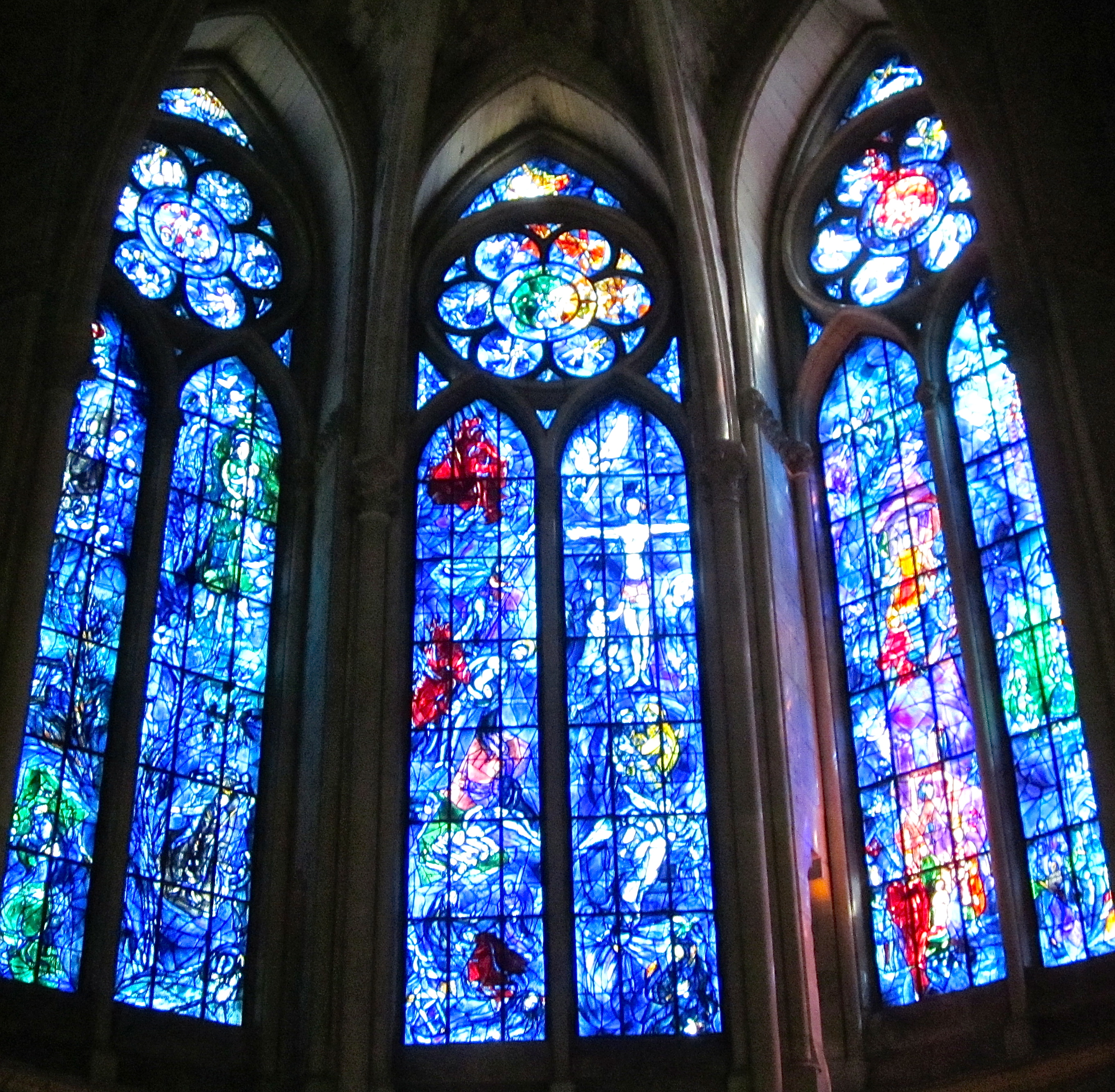
The windows. You may not know that a set of Chagall stain glassed windows is housed in Reims at the gothic Notre-Dame Cathedral. I was oh so pleasantly surprised to find them when touring Champagne country. Someday soon I hope to make it to Metz to visit Saint-Etienne Cathedral to see, as one French friend has told me the most “flamboyant” of all of Chagall’s windows.
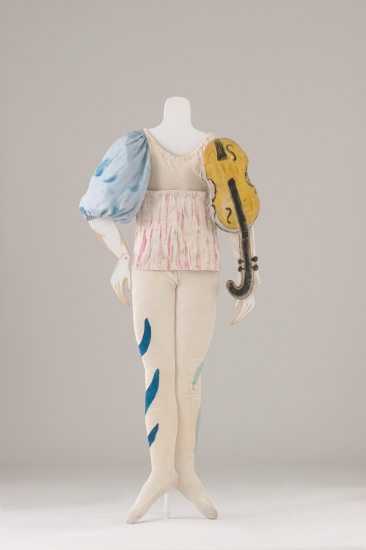
The sets and costumes. On top of that, I just learned from my lovely daughter and dancer, Kitcat, that Chagall also designed and hand-painted the madly imaginative costumes and sets for the1942 production of Aleko, for the New York Ballet Theatre and did the same for New York’s Metropolitan Opera’s production of the Magic Flute, later in the 1960s. (Do I have to go to New York to see them? Does anyone know where they are housed?)
Most definitely on my radar this fall, is a trip to the Carrières de Lumières, via Marseilles, to see the “Monet, Renoir… Chagall: Journeys around the Mediterranean” expo…and, of course Nice is my Mecca. Someday I hope I’ll visit the Musée National Marc Chagall.
Vocabulaire:
Je suis d’accord: I agree
Oct 1
I wasn’t always a coffee snob, in fact, I’m not sure that I am one. I’m pretty inexperienced. I’ve only been drinking coffee for a few years, turned on to the benefits of possibly staving off Parkinson’s disease, as it runs in my family. Watching my maman decline and eventually die from this dignity denying disease, I have chosen to cling to any remedy that offers a hope of preventing me from succumbing as well. So naturally when I saw the recent studies showing a link between prevention of Parkinson’s and coffee drinking, I very easily picked up the daily habit of drinking two café noisettes. (Which by the way has nothing to do with hazelnuts.)
I say easily, because it such a part of the French culture to have a coffee. They drink their coffees standing in the morning at a bar, sitting in a brasserie for lunch, reclining at their cafés at teatime, and of course, luxuriously finishing their final cup after dinner at a resto with a pack of cigarettes.
The Frenchies aren’t so much of a coffee culture as they are a café culture, and I think that’s where things have gone wrong in regards to a good cup of Joe. I’m not sure it matters to them what they are drinking as much where they are drinking it, and with whom. There have been many an article and blog post written about the regretfully awful coffee served in France, with headlines ranging from bad to worse: Why is French Coffee so Bad? How the French Ruined Coffee, and my favorite, How Not to Drink Black Tar in Paris.
But there is still hope. When I asked my Italian friend Sarah where to get a good cup of coffee in Paris, she said, and I quote, “There are only two places I can recommend: Coutume on rue de Babylone and the Fiat dealership (yes, no kidding, they have a bar there!!!) on the Rond Point des Champs Elysees”.
Vocabulaire:
un café noisette: An espresso with a little bit of hot milk.
une noisette: a hazelnut
un restau: a cool way to say restaurant
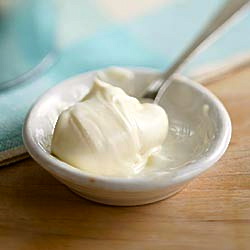
Excuse me while I take a moment to pop the top button on my skinning jeans and ask, “What is not to love about crème fraîche?” Bien sûr, it holds a place on the 365-things-I-love-about-France list. And who’d of thunk that before I landed in Paris, I’d never even heard of it.
According to people in the know, all you need is one willing dairy cow, a set of nimble milking hands, a simple means to separate the milk from the cream, and a little time to let the natural lactic bacteria take over, et voilà, before you know it: crème fraîche; the most delicious and divine “sour cream” you can imagine, albeit with a MUCH higher fat content. I shudder to associate American sour cream with French crème fraîche, there really is no comparison, especially when you buy it from the lively M. Laitier at le Marché Saxe in the seventh arrondissement in Paris.
In regards to French cooking, Julia Childs certainly had it right when she said, “If you’re afraid of butter, use cream.” And boy do the Frenchies know how to use cream. Each time I take a French cooking class, at least one, if not all five recipes call for a minimum of one generous tablespoon. Crème fraîche is used in sauces, dressing, pastry, custards, and soups; with, poultry, beef, pork, fish, chocolate, tartes and crêpes. Of course it is exquisite with fresh fruit; or if you are like me, you could always eat it straight from the pot. Its unique sweet and slightly tangy flavor and creamy texture is, as Button would say, “Like heaven popped on a plate!”
Can’t find it in your favorite grocery store back home, try this do-it-yourself recipe from Emeril Lagasse.
Vocabulaire:
bien sûr – of course
crème fraîche – fresh cream
le laitier – milkman, dairy farmer
Whenever I need a slice of home and reminder that the French and the Americans do actually have a history based in friendship, I grab Superman and Taz and make the short trek to the Pont de Grenelle. Following the stairs down to the allée des Cygnes we make our way onto the Île aux Cygnes (the Isle of the Swans). This artificial island on the Seine besides playing host to a charming tree-lined walking path, benches (a rarity), and doggie leash-free zone (even more rare), is also the home to one of the two miniature models of the Statue of Liberty in Paris. (The other, lately the target of vandals and even smaller, rests among a cluster of trees in the Jardin de Luxembourg.)
The two “Mini-Mes” were the practice runs for Frederic-Auguste Bartholdi and Alexandre-Gustave Eiffel before they built the full scale Statue of Liberty shipped off to the USA in 1885, and offered as a reminder of our international friendship.
Sep 25
The farmers’ markets may be where the purist buys their ingredients, but the rest of us (Frenchies and expats alike) know the true secret of French cuisine, Picard.
When I first arrived in France with not a lick of French, I used to hesitate when I passed these ultra-white, antiseptic stores, glancing furtively, I’d wonder, “What the heck is going on in there? And who are those workers in the crisp white lab coats?” Hmmm…Picard Surgelés?
With my brilliant grasp on the French language, I decided that “surgelés” obviously had to have something to do with surgery; therefore, these must be stores exclusively for pharmaceutical and surgical supply reps. I imagined, freezer after freezer filled with lifesaving vaccinations and disease curing antibodies, but why were all the women filling huge shopping carts with medicine?
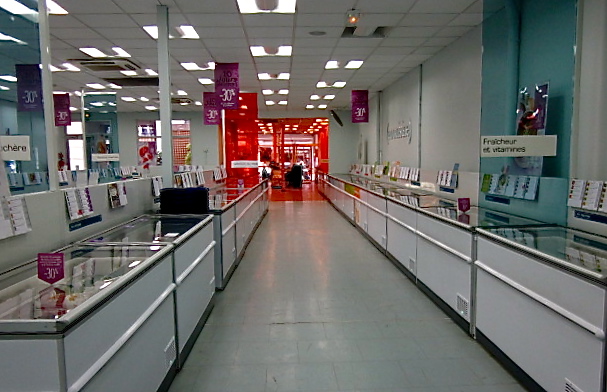
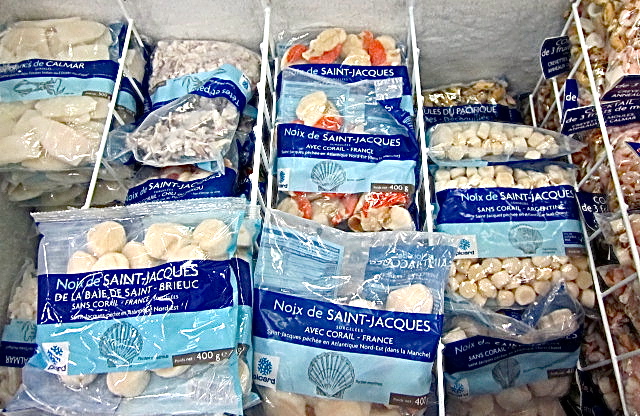
It turns out that Picard Surgelés is the French retailer specializing in frozen food started by M. Picard, a purveyor of ice blocks in the early 1900s in Fontainebleau. Now with over 800 stores in France (100 in Paris alone), and more than 1,000 rotating products, Picard is the sneaky solution to every French woman’s dinner party. While it may feel like cheating sometimes, I’m all for cutting out a few hours of slicing, dicing and sautéing, in exchange for some face time with my family and friends. Not only is Picard a huge time saver, it is also the surest way to assuage a maman’s guilt when she dares to leave the family for her annual girls’ weekend: “They have Picard,” she thinks, “Cassolettes aux noix de Saint-Jacques on Friday night.” (A slight step up from the Totino Pizzas, my folks would offer us on their date-night.)
So heartily have the French embraced Picard, I have yet to attend a dinner party where something from Picard is NOT being served. When pressed even the most traditional French hostess will admit to using les ingrédients congelésis in their delicate creations. Heck, I’ve even been to French cooking lessons, where the chef has clandestinely thrown in a handful of something popped fresh from Picard’s freezer. These sterile stores are a sight to behold, row after row of neatly arranged freezers, humming and glowing, what they lack in market romance and charm, they more than makes up for in convenience. When you spot that shining snowflake in the distance, you know dinner is saved.
Zut alors! So much grub to try: Australian wild boar, New Zealand doe, flash frozen ostrich, Burgundy snails, frog legs in creamy walnut pesto, lobster tails from Maine, and scallops floating in a Sancerre wine sauce. Need to spice up your spiceless French fare? Pick up some ethnic vittles: Thai, Japanese, Indian, Mexican, Lebanese, Mediterranean, Latin America and Caribbean, to name a few. By God, François Théron even has his own designer-line of gourmand ice creams and sorbets.
Donc, bravo surgelés. When the French do it, they do it right!
Vocabulaire:
surgelés: frozen food