Skip to content

Posts from the ‘French’ Category

No. 91: Overseas Departments: Martinique

139_w

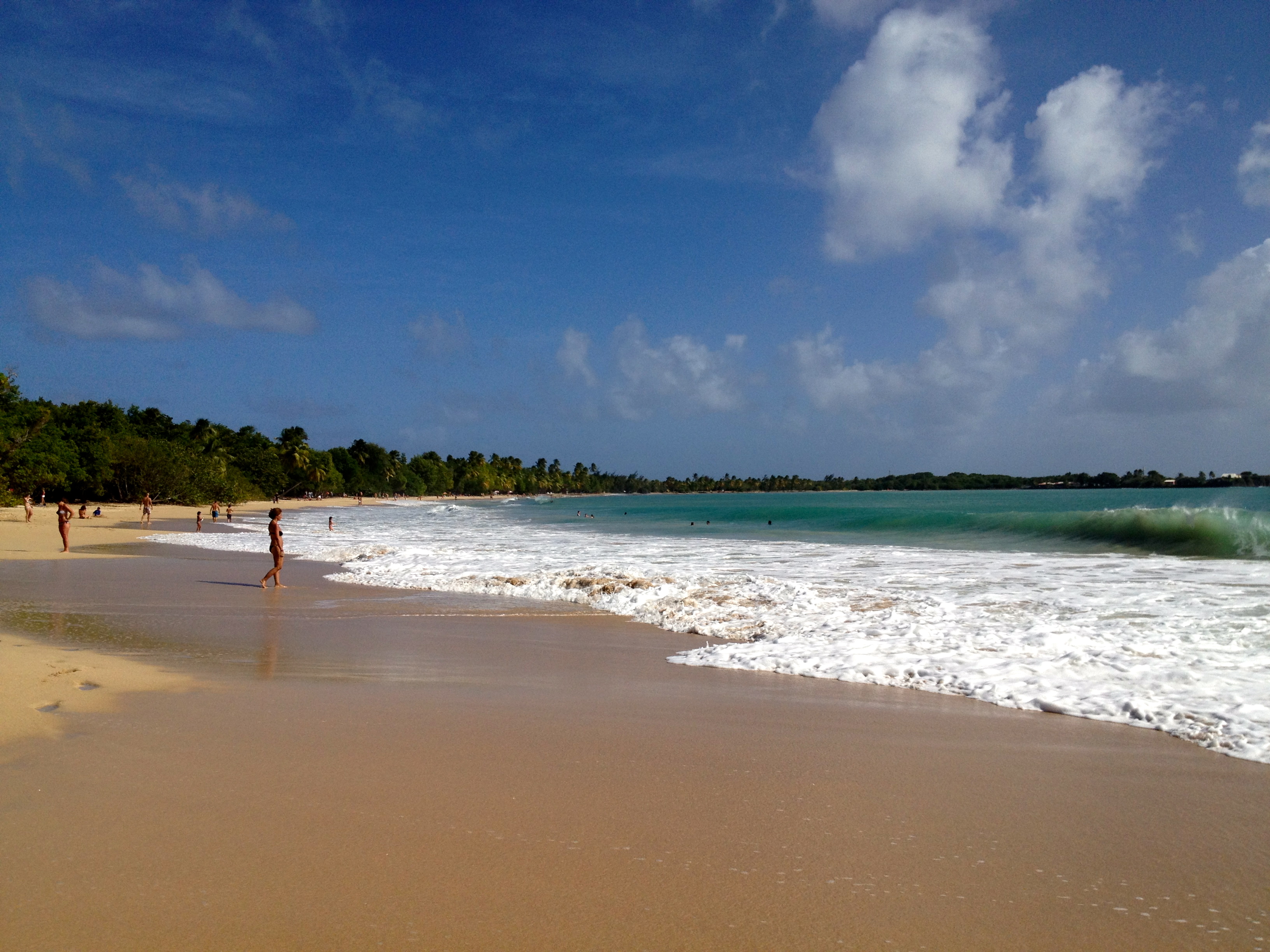
One of my goals this year is to see as much of France as possible, so I feel incredibly lucky to have the opportunity to visit one of the five overseas departments belonging to France.

Having secured a sweet deal on flights (it would have almost cost as much to take the four of us to Strasbourg’s Marché de Noël by TGV), I am thrilled that we chose Martinique.

It’s a funny thing to think of a Caribbean island as part of France. I’d love to have a conversation with our new friends here about whether or not they consider themselves French, and what they think about mainland France.

Martinique, like many countries taken over by European and American colonialist, has quite a sad history. The more time I spend on this island, the more I wonder what life would be like here today, if the French had ignored it the way Columbus did when he first sighted it in 1502.

Thanks to Columbus’ indifference, the indigenous population was granted an 85-year reprieve before the French claimed them and began colonization in 1635. This is when the true atrocities of colonial history (now conveniently whitewashed in history books) began. In every article or book I read about Martinique before leaving Paris, the initial colonization of Martinique was reduced to barely two sentences, and it was presented something like this:

“…colonization began in 1635, when the French promised the native Caribs the western half of the island, in return for establishing a settlement on the eastern half. Then the French proceeded to eliminate the Caribs…”

After annihilating 6,500 years of civilization in a few short decades, the French realized they were short on manpower and began to “import” African slaves as sugar plantation workers. With no indigenous population to stand in their way, a tropical climate, an abundance of sugarcane, and free slave labor to boot, Martinique quickly became one of France’s most valuable colonies.

As rum production (from sugarcane), distilleries, and sugar refineries became more lucrative, the African slave trade became even more important to the colonialist and life for the slaves became even more unbearable. In addition to providing the labor for the sugar and rum production, the slaves were also recruited into the island militia to fend off the British attempts to take control of the island. (In return they were promised their freedom.)

The Brits did manage to occupy the island for a short while in 1762, but returned it the following year in exchange for a small country called Canada. They invaded and held the island once again in the early 1800s, but in the end, it was returned to the French.

By the mid-1800s, Martinique had more slaves and “freedmen” than free colonists. Slavery was abolished in 1848. Obviously life was still not peachy for the former slaves and things got worse when in 1902 Mount Pelée erupted and destroyed the capital, Saint Pierre, wiping out 30,000 inhabitants in less than an hour.

So in many respects, Martinique’s society is a very young one, made up mostly of decendents of African slaves , decendents of their former colonial masters, and often a mix of both. Their language is a fusion of Créole and French, with French the official language. The food is a mingling of French and Créole, heavy on the Créole side and influenced by the locally grown products. There is definitely a French vibe to Martinique, but not too much to stifle the vibrant and colorful culture.

IMG_4463

No. 89: French People who want to be Tutoyer-ed

In addition to enjoying the luxury of hanging out with the slow speaking Martiniquais and the confidence boost they provide to my own speaking ability, I also love the fact that the people on this island want to be tutoyer-ed.

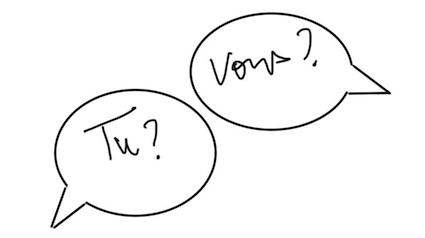
Yes. In case you don’t know, the French actually have a verb for calling someone by the familiar form of “you” (tu)tutoyer versus the formal form of “you” (vous)—vouvoyer. So you can actually ask someone if they would like to be “tu”-ed or “vous”-ed.

trnd_tu_tutoiement

I always err on the side of caution and choose to “vous” everyone until I am told otherwise, or notice that they have begun “tu”-ing me. It’s my default position. The way I see it, it’s better to be formal than risk starting off on the wrong side of the rue with the French.

IMG_9212As English speakers, this phenomenon of “tu-ing” and “vous-ing” does not exist in our language, and sometimes I find it too elitist for my taste. I’m guessing my difficulty with the French way of sorting out who is a friend/family versus who is an acquaintance, is the same difficulty but in reverse for the French when they travel to Anglo countries. They must find it quite startling when we greet them for the first time as if we are chums and ask them gamely how they are, when, in fact, they really don’t want to share that information with a stranger.

But the Martiniquais are different. From the minute we met the family we are renting our house from here, it has been “tu”, “tu”,“tu”. When I asked our hosts about it, they simple said, “Mais bien sûr, nous sommes amis, comme de la famille!”

What a delightful change. In my American mindset it makes me feel at ease and makes me feel a greater sense of equality, and all and all just makes me feel good.

Vocabulaire:

Mais bien sûr, nous sommes amis, comme de la famille! But of course, we are friends, like a family. 

rue: street

tu: you, informal

tutoyer: to use “tu” when speaking to someone

vous: you, formal and plural

vouvoyer: to use “vous” when speaking to someone


No. 88: French People Who Speak French Slowly

IMG_2804Oh, how I love when the French speak French slowly. Every time I leave Paris and travel around France my confidence gets a boost when I realize I actually know more French than the hard knock Parisians have led me to believe.

It is such a relief to be on the Island of Martinique, the French territory off the coast of Venezuela.  Obviously it’s a relief for many of the normal reasons: work stress, school stress, family dysfunction, etc. The whole tropical-island-paradise-thing certainly helps out with that. But the real relief is being removed from cranky French people, who definitely don’t count patience as a virtue, and wouldn’t dare crack a smile if their life depended on it.

It is a welcome respite to be in a part of France where French isn’t the chosen language, but the colonial language, and where the people are quite happy to have you stumble along in French, so pleased that you are trying.

The Martiniquais don’t seem to give a rat’s patootie if you make a mistake. Their patience is immense, their smiles are large and they seem to have all the time in the world to let you mangle their not so precious language.

Most importantly they speak S-L-O-W-L-Y. And slow is so very appreciated by us not so fluent speakers.


No. 83: Tacky Christmas Trees

What I love about these really tacky Christmas trees in France is that the fact that they exist proves that the French do NOT have impeccable taste, and are, after all, human like the rest of us.

These foam sprayed trees don’t just come in white (to mimic snow), but in every color imaginable, and they seem to be selling like hotcakes.

Tacky Christmas Tree

No. 81: THE Sapin de Noël

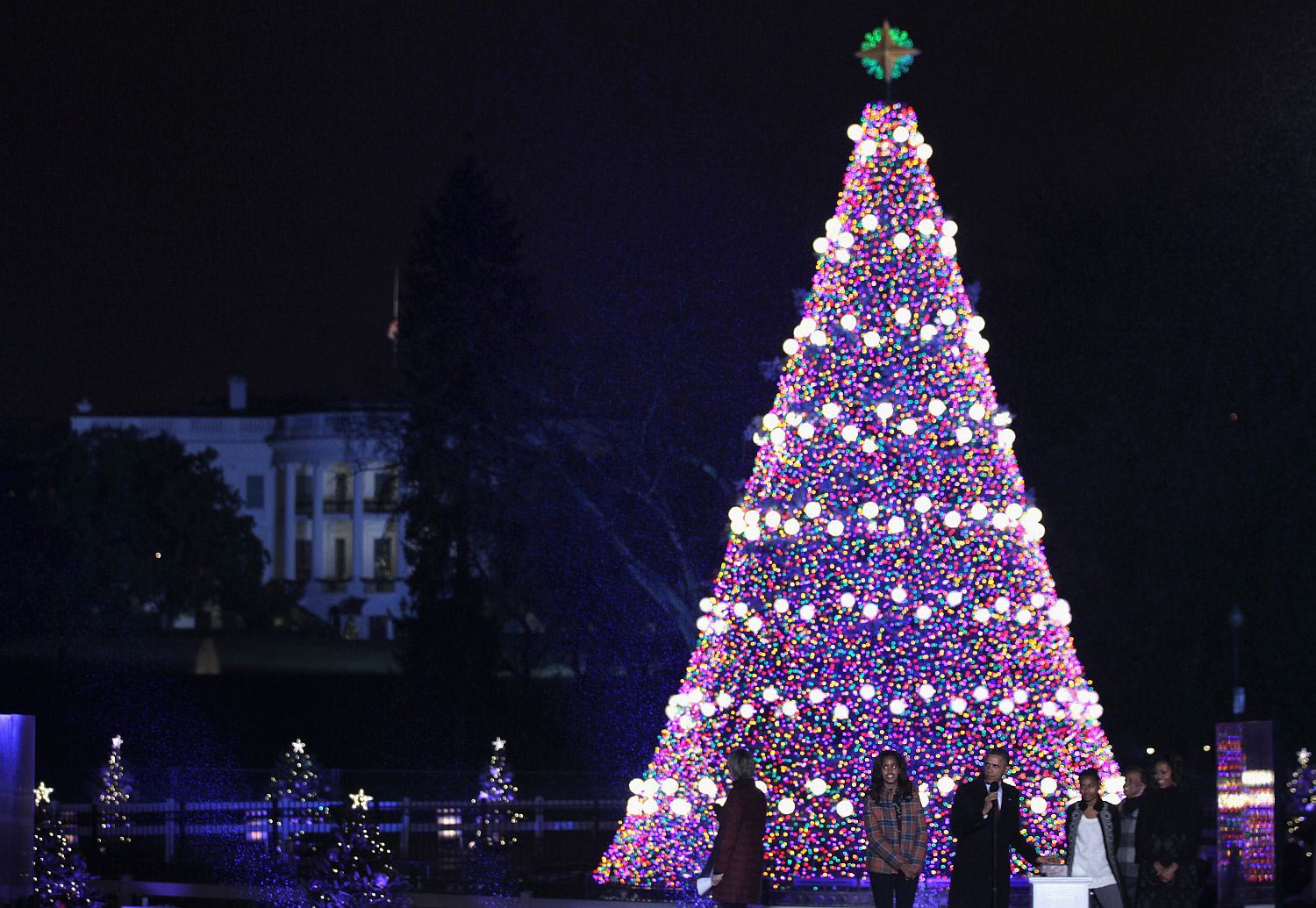
In America we have our National Christmas Tree in Washington D.C., on the Ellipse near the White House.

Photo by Alex Wong/Getty Images

Photo by Alex Wong/Getty Images

I am wondering if the sapin de Noël at the Galeries Lafayette is the French equivalent of our nation’s tree?

It certainly is enormous (20 meters high), stunning, stylish, and as Paolo de Cesare, Printemps CEO said, “makes a statement for Paris, for France and for the world.”

Perched under the famous cupola in the center of Galeries Lafayette, the tree features a toy village at the base that springs to life on the hour, every hour, and compliments the Christmas window theme: Il était une fois Noël avant les douze coups de minuit.

IMG_2737

The cheerful tree continues the adventures of Lily the doll and Martin the Teddy Bear. As she wakes up their sleepy Christmas village, Monsieur and Madame Wolf, a gang of mischievous mice, a clowder of cats, and a family of snow white owls spring into action to beat the clock and get ready for Noël.

If you can brave the tourists and Christmas shoppers, it’s definitely magical and worth seeing…go early, and get out quickly.

Vocabulaire

Il était une fois Noël …avant les douze coups de minuitOnce upon a time at Christmas…before the clock strikes twelve.

Printemps: one of the largest and fanciest department stores in Paris (literally, spring)

Sapin de Noël: Christmas tree


No. 80: Humour à la française

The French have a very unique brand of humor. Sometimes it annoys the heck out of me, sometimes it makes me stop and say, “What the f**k?!”, but most of the time it makes me smile and be glad to be able to experience absurdity from a different cultural perspective.

Yesterday at the Corrida de Noël was no exception. Humour à la française was out in force.

Absolutely the most hilarious déguisement of the day...

The bûche de Noël, absolutely the most hilarious déguisement of the day.

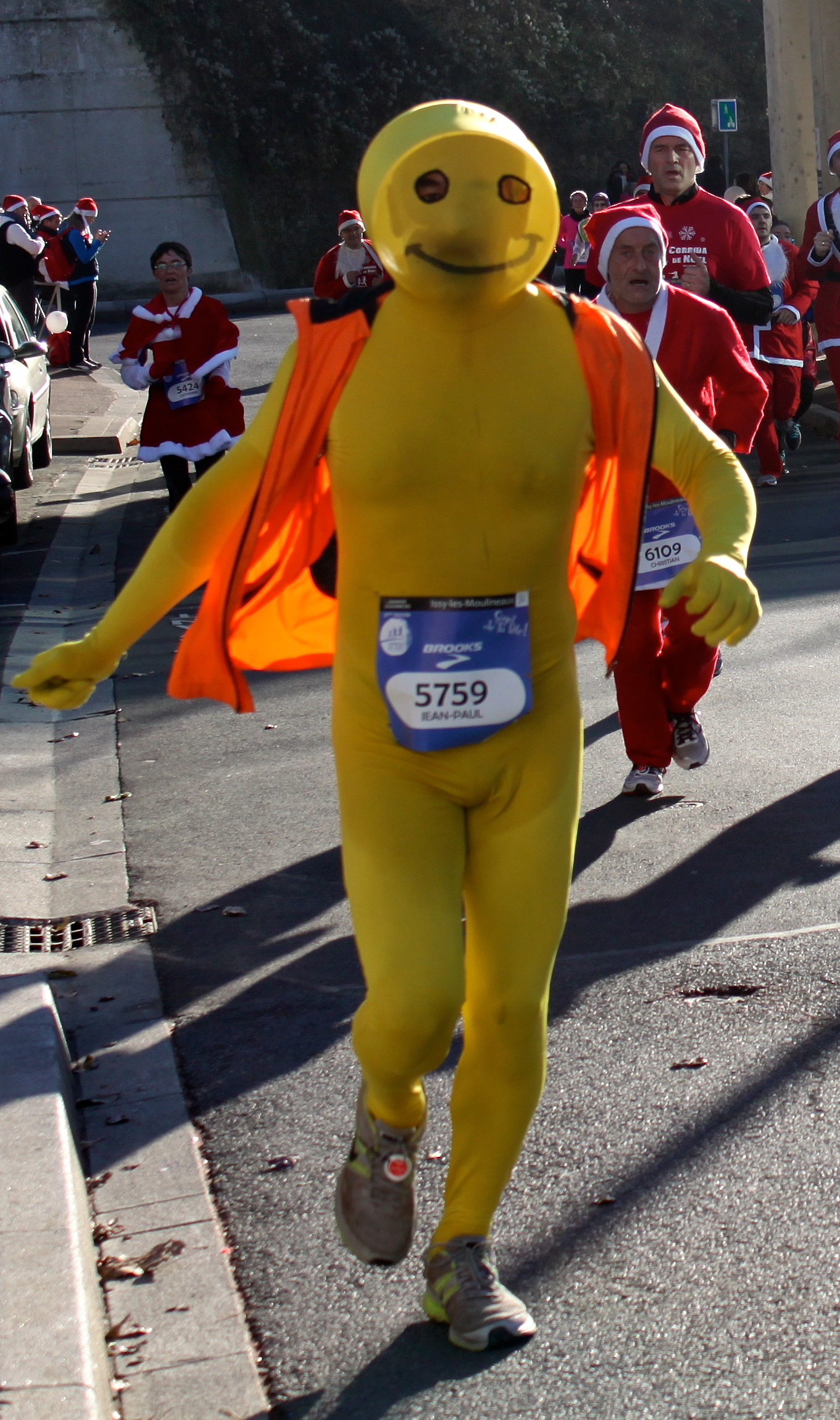
French smiley face?

French smiley face?

Yikes! I got flashed by Mrs. Clause.

Yikes! I got flashed by Mrs. Clause.

Òu est Charlie?

Òu est Charlie?

Dominique Strauss-Kahn??

Dominique Strauss-Kahn??

WTF? Still not quite sure what this was all about.

WTF? Still not quite sure what this was all about.

Vocabulaire

Humour à la française: French humor


No. 79: Santa en mass

IMG_9042

We ran across some great holiday cheer outside of Paris yesterday. Or I should say Superman and his best buddy Nigel ran across it, or more accurately, in it.

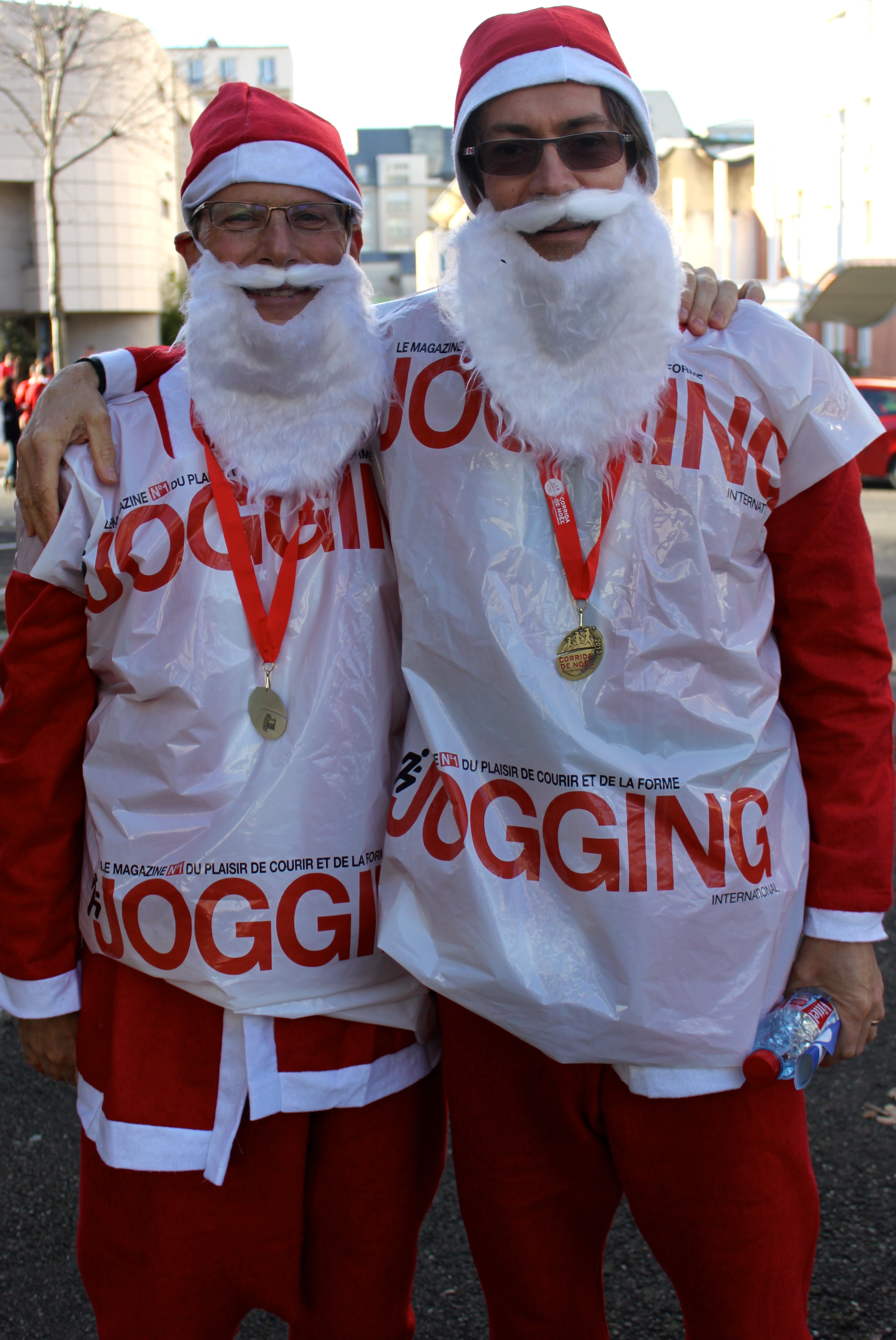
The Corrida de Noël, is an annual 10k race where the reason to run is the tacky Santa suit that comes with the race registration fee. This is one race where your finish time doesn’t matter, but your tribute to Père Noël makes all the difference in the world.

IMG_9023

This year there were over 5,000 runners who ticked the racing box for the course déguisée and ran the race dressed as Old Saint Nick.

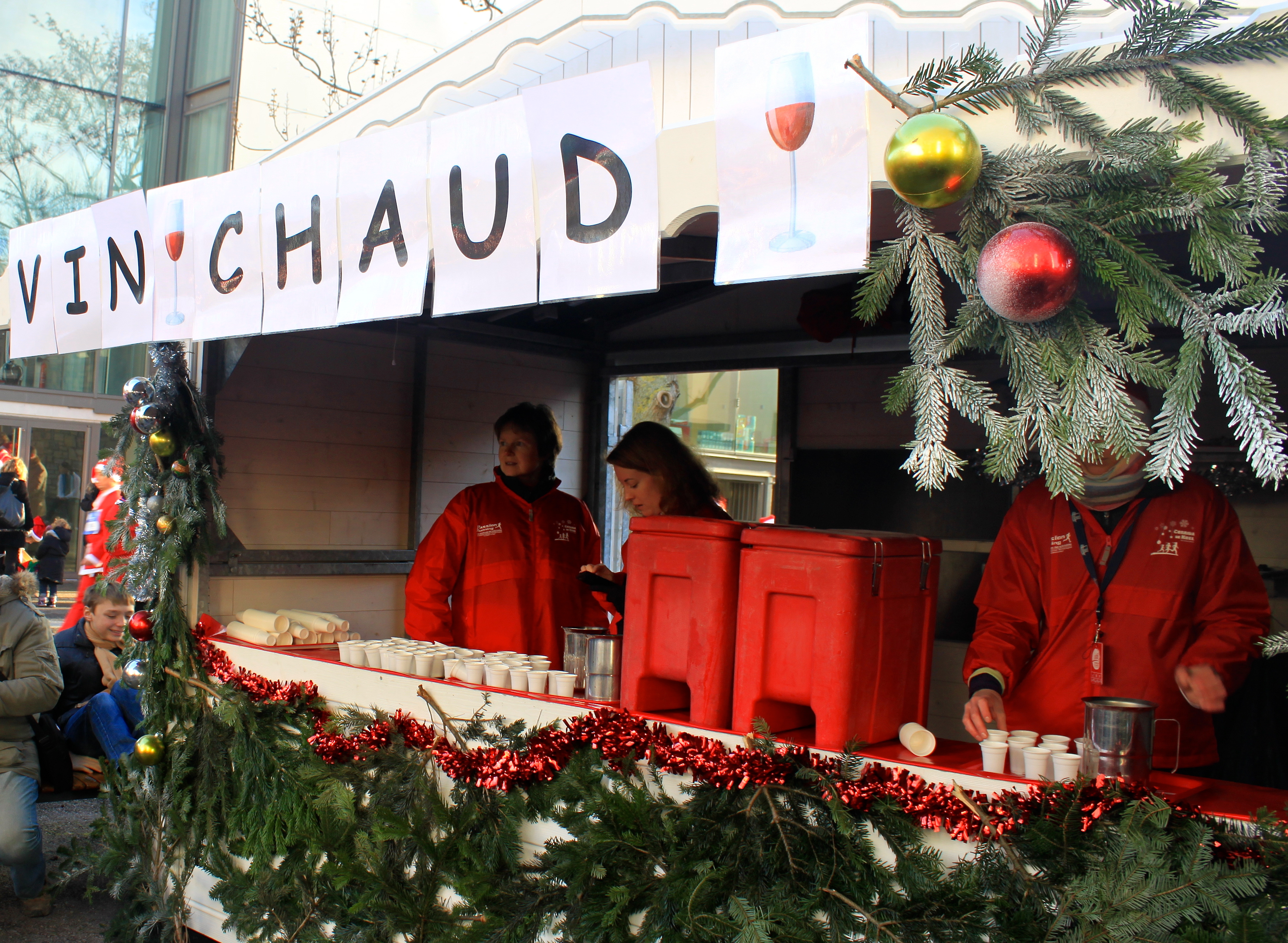
And why not? Where else but in France would you get to smoke and drink mulled wine before the race even starts.

IMG_9020

 What a great way to sprint to Christmas…only 8 more days until Kris Kringle makes his way down your chimney.

IMG_9163

Vocabulaire

course déguisée: the disguised/costumed race