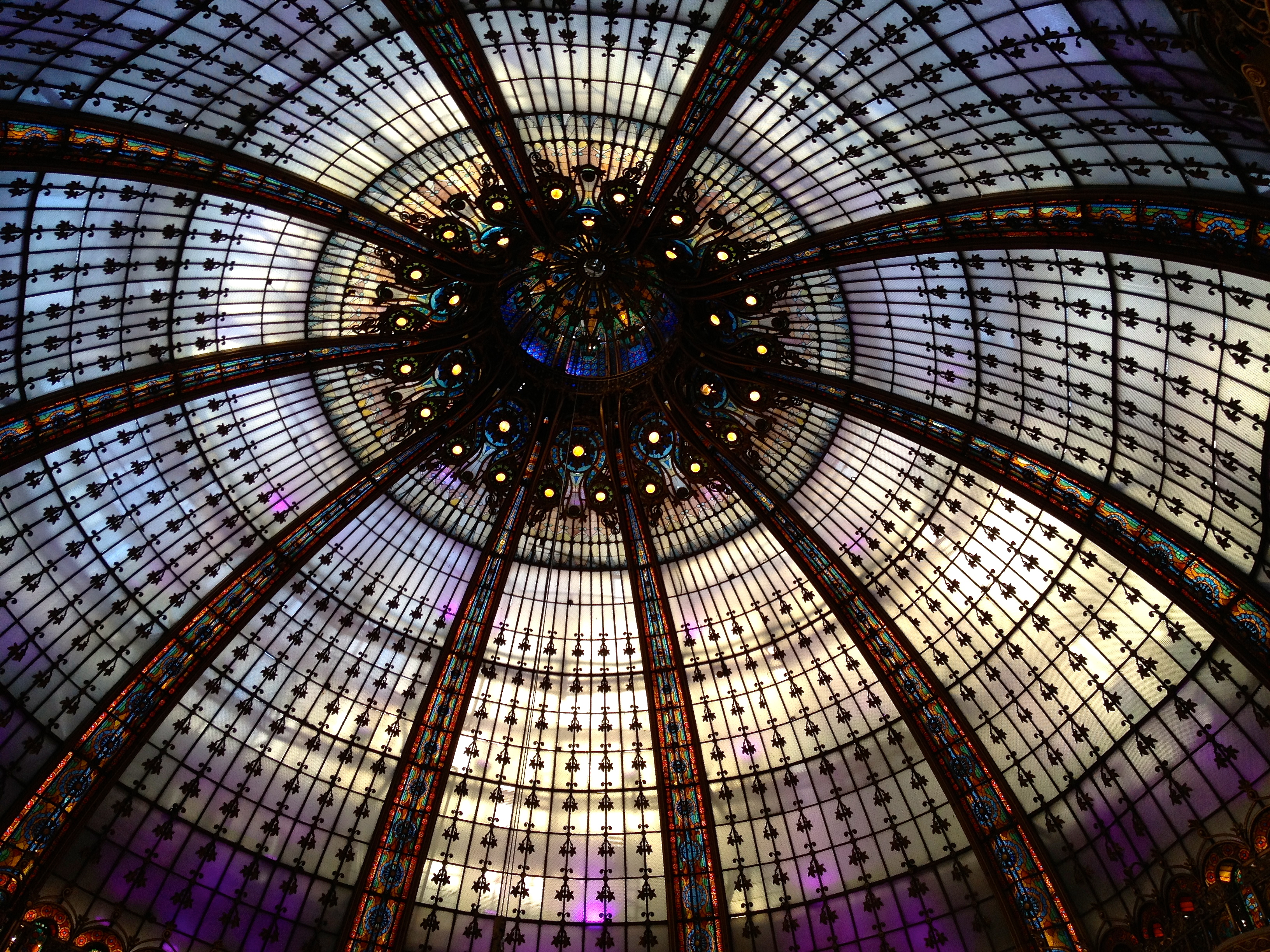
I am only a bargain shopper and I really only buy things at the dernière démarque, and I have never bought anything at the Galeries Lafayette, accept a couple of macarons at the in-store Ladurée. But every now and again, when I’m in the neighborhood of the les grands magasins, I like to pop in, look up, and admire the glorious dome.
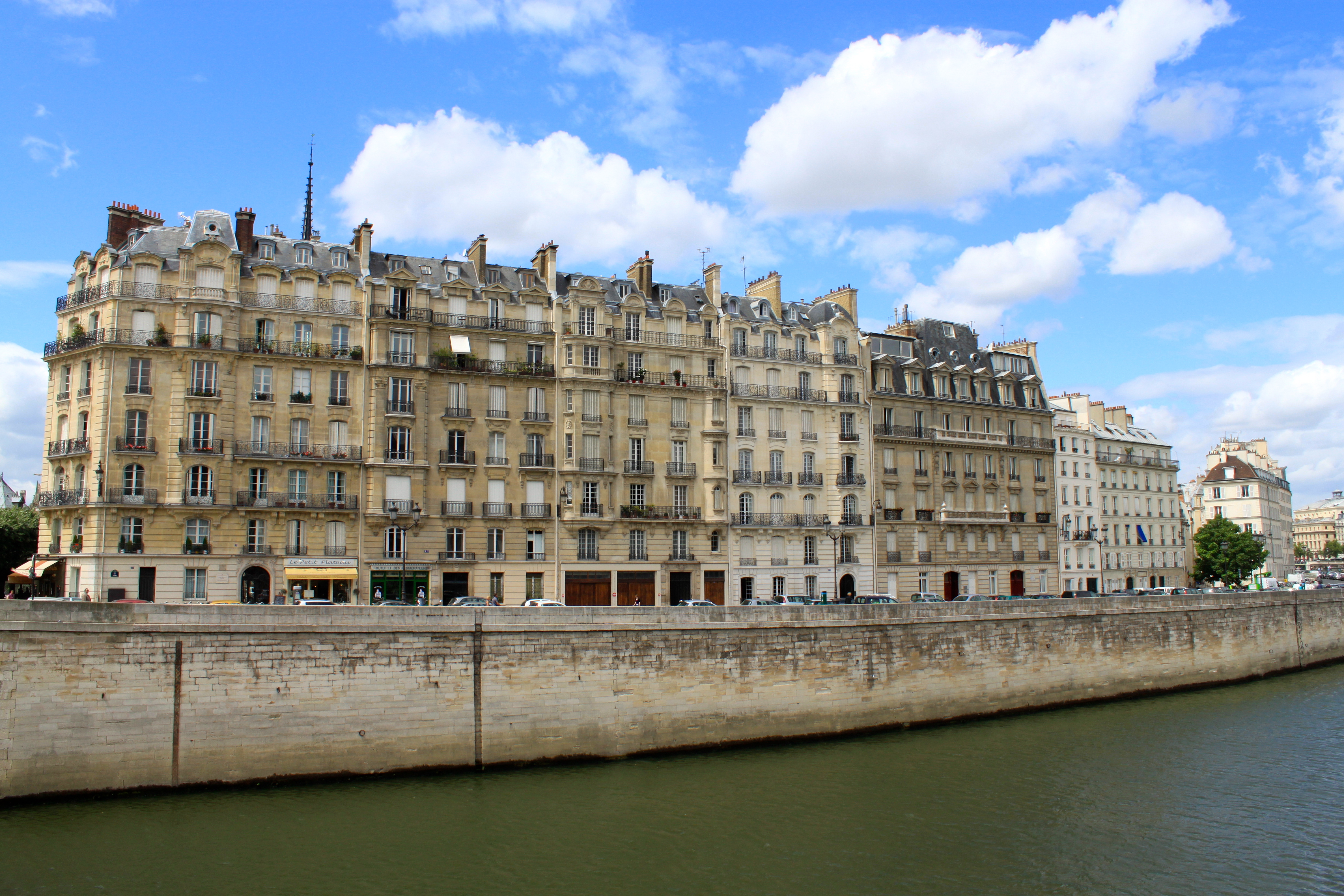
One of my very favorite things about living in Paris is spending Sundays on the Seine and Marne.
Every Sunday if we are both in town and the weather is even marginally nice, Superman and I jump on the Vélibs and head down to the Seine. The former mayor of Paris made it a priority to make the Seine accessible to families sharing a Sunday stroll and fitness enthusiasts alike. Since we fall into both of those categories (plus do not own a car), we are huge fans of ex-Mayor Bertrand Delanoë and his progressive policies to improve the quality of life in Paris. We are especially grateful for all he did to make it so easy to jump on the path (and closed roads) along the Seine and explore life beyond Paris.
After almost three years, we have discovered all sorts of chemins, quaint streets and hamlets, and peaceful riverside breaks. We are now very familiar with the point where the Seine and the Marne split, or merge, depending on how you look at it.
We have discovered that the farther you get from the city centre, the more easily the folk smile and dit “Bonjour”. We have come across a few places we would love to live, and admired some striking river front property.
Our latest fascination is the suburb of Créteil (12km southeast of Paris and part of Val-de-Marne). When you arrive by métro it seems like a gray, university suburb with highrises and little character, but when you arrive by bike along the Marne, it is a whole different story. For two decades, Créteil has been one of France’s “four-flower” Villes et Villages Fleuris. The city flowerbeds, particularly at this time of the year, dazzle.
The award winning flowering city of Créteil.
There are over 70 different species of trees in the “town”, numerous fountains, and even a lake. There is some great architecture, including the Château des Mèches, and gorgeous canal and riverside homes. The residents seem pretty focused on outdoor activities. Families dig in community vegetable gardens and race miniature boats on the canals. We checked in with a kayaking club last week learning to roll. We have come across groups rock climbing and canoeing, fisher people, and of course multitudes of cyclists, runners, and strollers.
Sundays may be a day of rest, but for us it is definitely worth the two-wheeling effort to escape from the city and enjoy the Seine and Marne and a little bit of the “country life”.
Another one of the things I love about France is the very different and interesting culture that the Algerian immigrants and citizens bring to this country. The North Africans bring so much color, flavor, and vibrancy to the forever black and often mild palette of Paris.
I was recently reminded of this wonderful Algerian influence when I was exploring the 11éme arrondissement and came across yet another La Bague de Kenza Pâtisserie. The name, “The Ring of Kenza”, as all good names do, has a story attached to it. It has to do with one of the owners losing (and then finding) one of his daughter’s precious rings. I’m not sure why the father had her ring to begin with, but I like to imagine him panicked in the street of Paris, asking every one he came across if they had seen “Kenza’s ring”.
It is fitting that bague means ring, because La Bague de Kenza is filled to bursting with sparkling, pastry jewels, the pâtisseries orientales. Everything behind the glass counter is yummy, but as I am nutty for pistachios, I always go straight for the pochette pistache, chopped pistachio and honey paste tucked into a light pouch of heavenly dough. The marzipan shaped fruit aren’t just delightfully whimsical, they are also every bit as delicious as German marzipan.
As you can imagine these pastry chefs bake with many different incarnations of almonds and dates, and pine nuts make a star appearance in several of my favorites, as do walnuts and coconut. La Bague’s pastries are a nice change of pace from French pastries and perfect as a delicate, and different dessert at your next dinner party. Mildly sweet and exquisitely crafted, it is worth stopping by just for the photo opportunity. And if sweets aren’t your thing, they do a mean tangine and fruity couscous, and don’t forget your mint-leaf tea.
“Coffee is a way of stealing time that should by rights belong to your older self.”–Terry Pratchett, Thud!
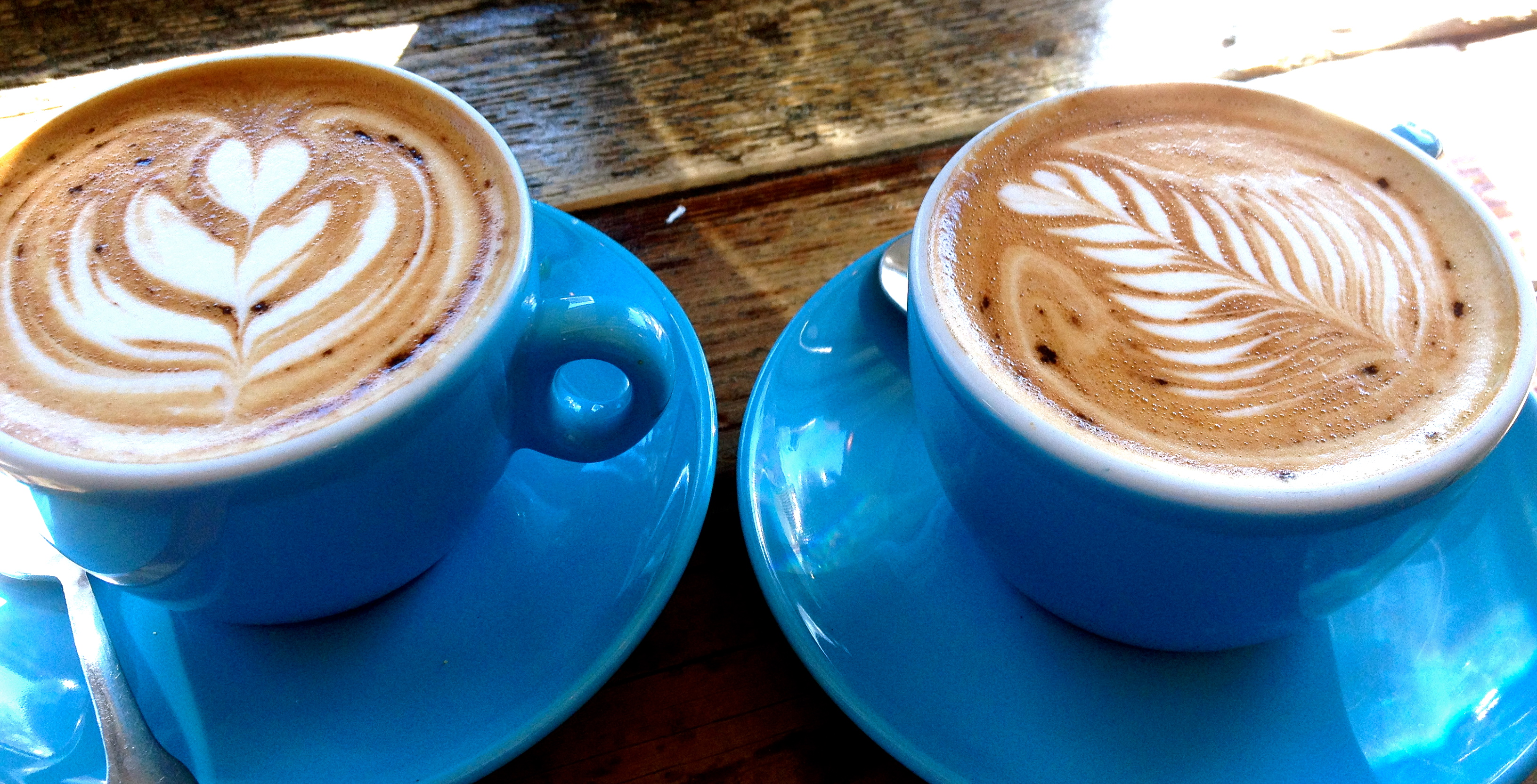
I was not a coffee drinker until I moved to France.
That said, getting addicted to Java has absolutely nothing to do with the superior quality of coffee in France. Au contraire, en fait, it is pretty widely accepted that French coffee is well below standard when compared to coffee in other countries.
My newfound love of coffee does however have a lot to do with my Nespresso machine (which I have already waxed poetically about), the “break” part of the word “coffee break”, and the centuries old café/coffee culture of France.
The idea of taking a 20-30 minute break in the afternoon either chez toi or at your corner café is quite civilized, and something I never allowed myself to do in my multitasking life in America. I also love the French tradition of always having a small coffee to finish off your meal with or without one of the many delectable French desserts you may have on hand.
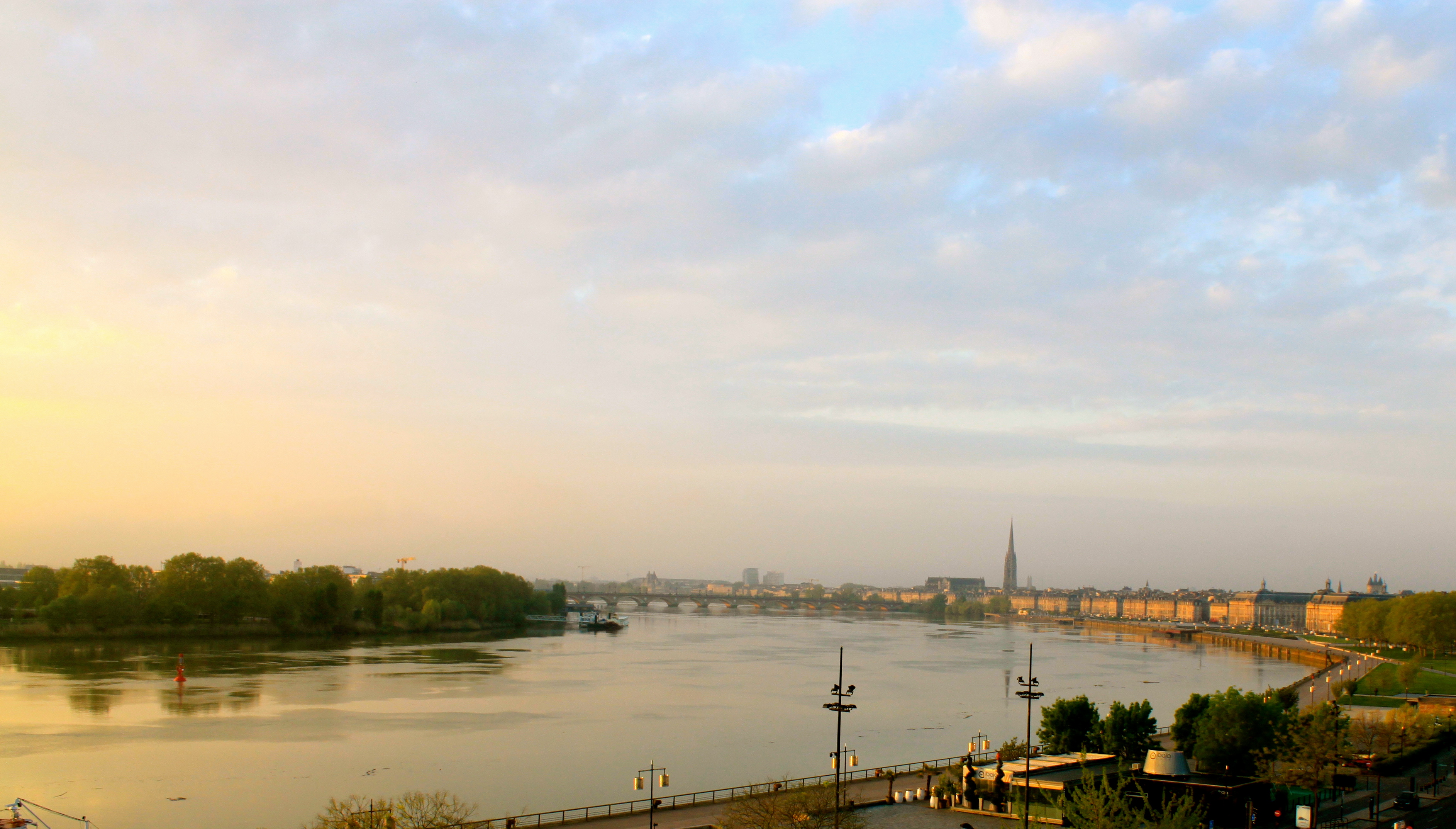
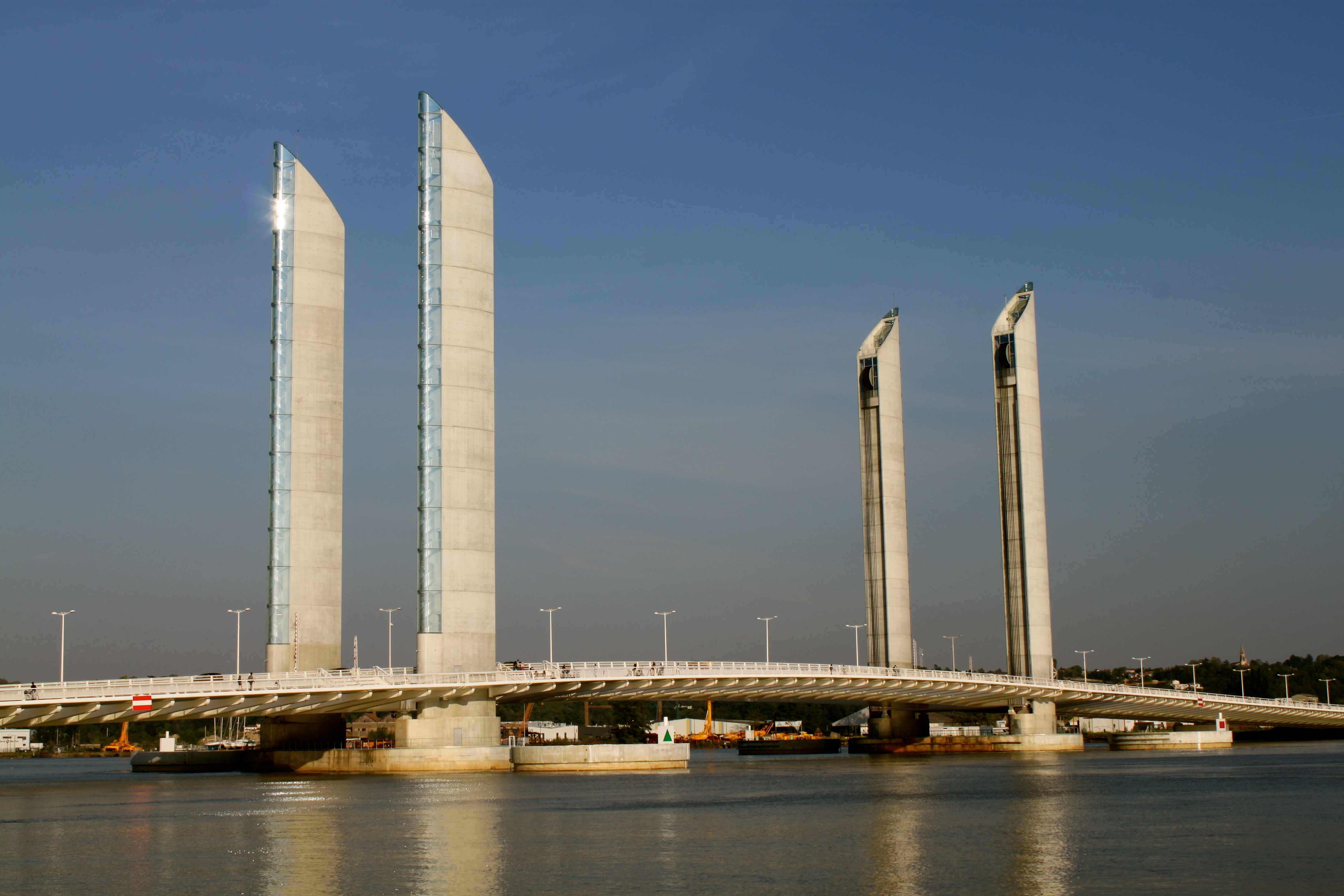
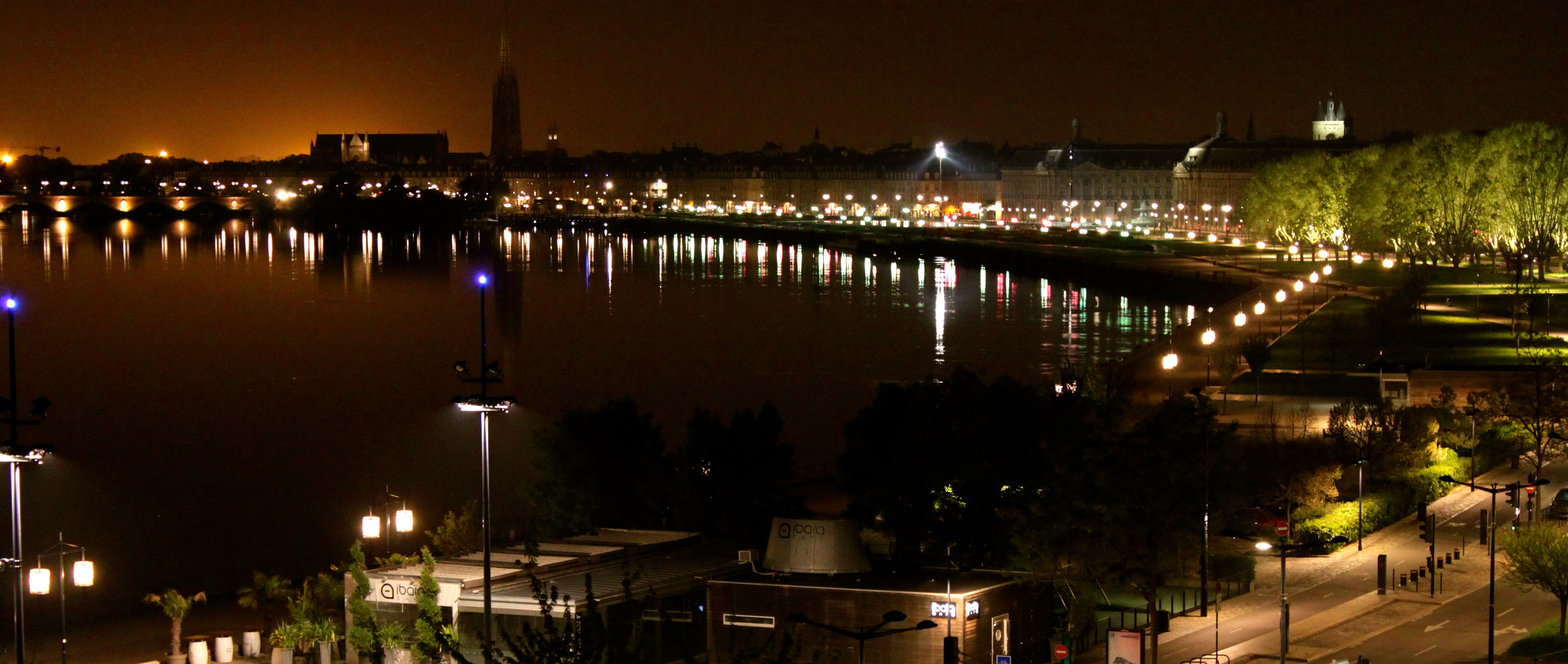
We are just back from our warm and relaxing trip to Bordeaux. I fell in love with la perle d’Aquitaine, as Bordeaux is known, and hope that sometime in my life I get to spend at least 365 days there. At the moment, it is the newest bee in my bonnet.
Bordeaux is France’s ninth largest city (with the sixth largest metropolitan area) and is the first French city Superman could see himself living in for the long-term. Three particular aspects of the city sealed the deal for us: the laid back, sporty, friendly and slow-speaking Bordelais(es), the fresh, multipurpose boardwalk, and the balmy, sunny weather.
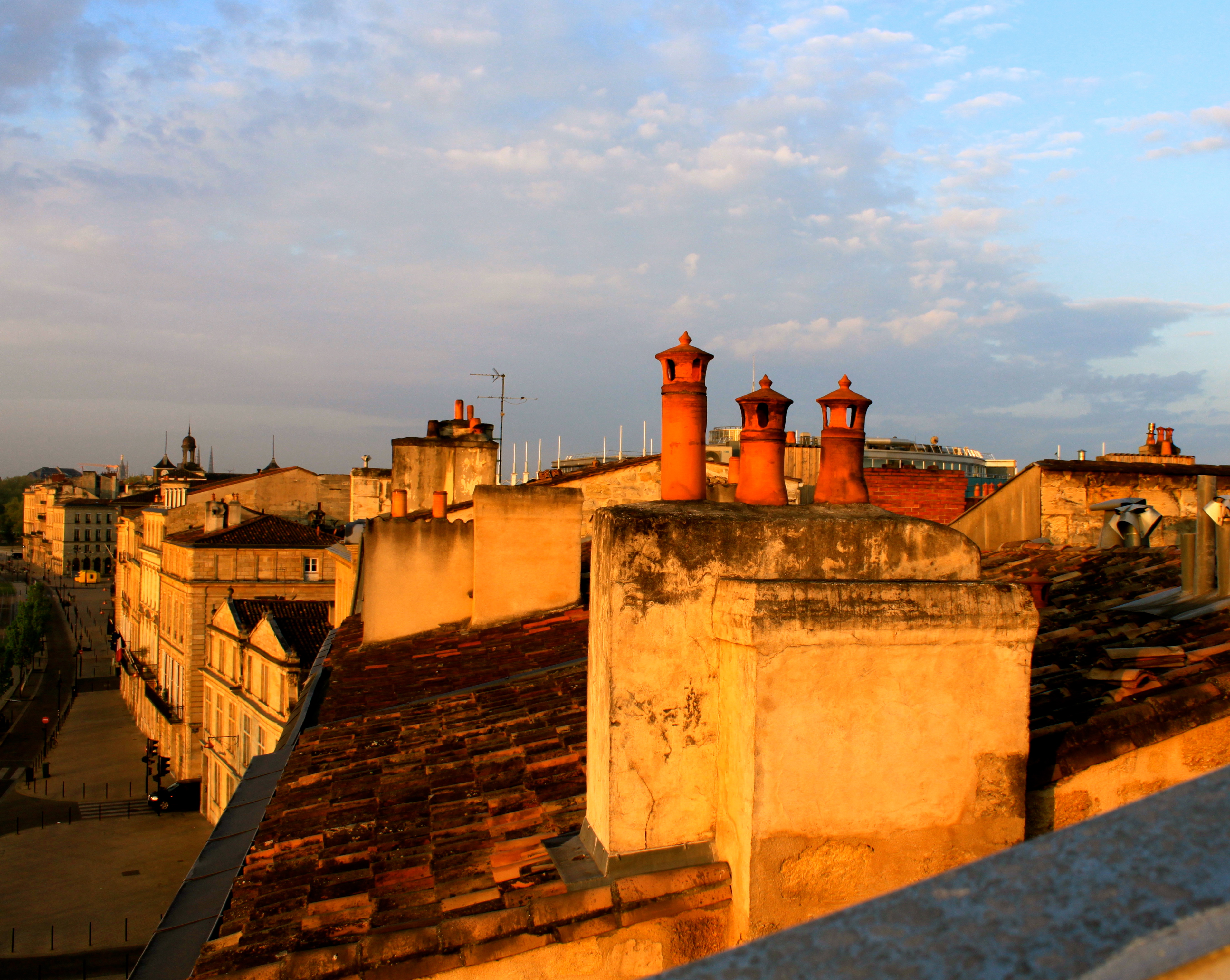
We were lucky to stay in a riverside apartment with a terrace in the charming Chartrons district near the historic UNESCO World Heritage part of the city and found that its inviting squares, funky neighborhoods, and lively markets made it the ideal city to meander through both on foot and bike. The city, famous for wine, is like a fine wine itself, offering the perfect balance of ageless grandeur and architecture, fresh, modern tones and more than a hint of fruitiness and fun.
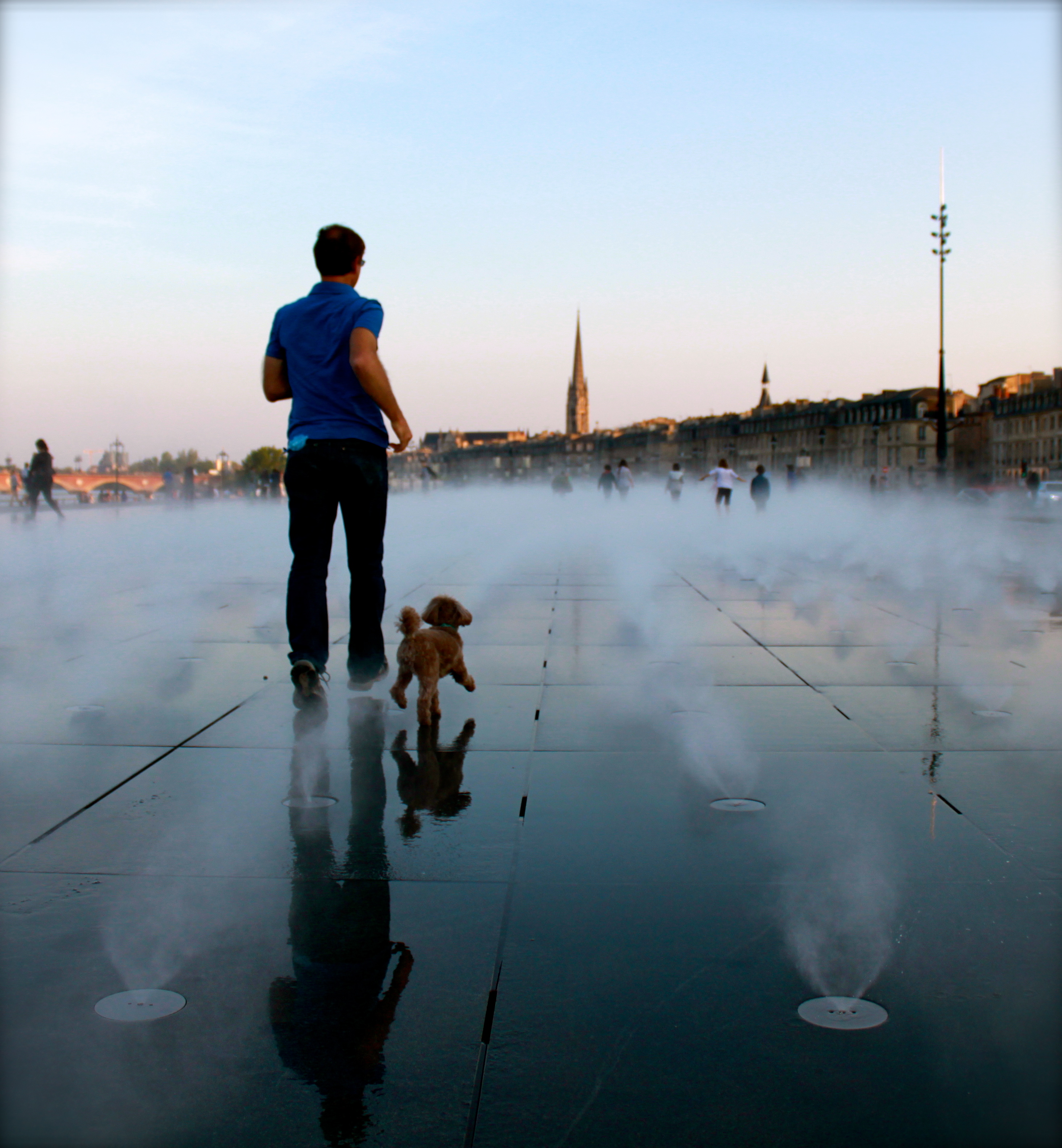
I posted earlier about what I’m calling Bordeaux’s Saint Marc’s Square, but is in fact called the miroir d’eau (water mirror). In my opinion, this central feature of the boardwalk lining the Garonne River is one of the most striking urban sites in France reflecting both the joyful heart of the city and the impressive Palais-de-la-Bourse. The boardwalk is a spot for young adults, extended families, casual wanderers and serious athletes all pulsing in sync. Rollerbladers duck and zoom, runners pant and croon, old couples hold hands and beam, youngsters scoot and skip, furry friends wrestle and romp, and vélos roll by, their cheery chimes announcing their approach.
crevettes flambées 5€ le cornet
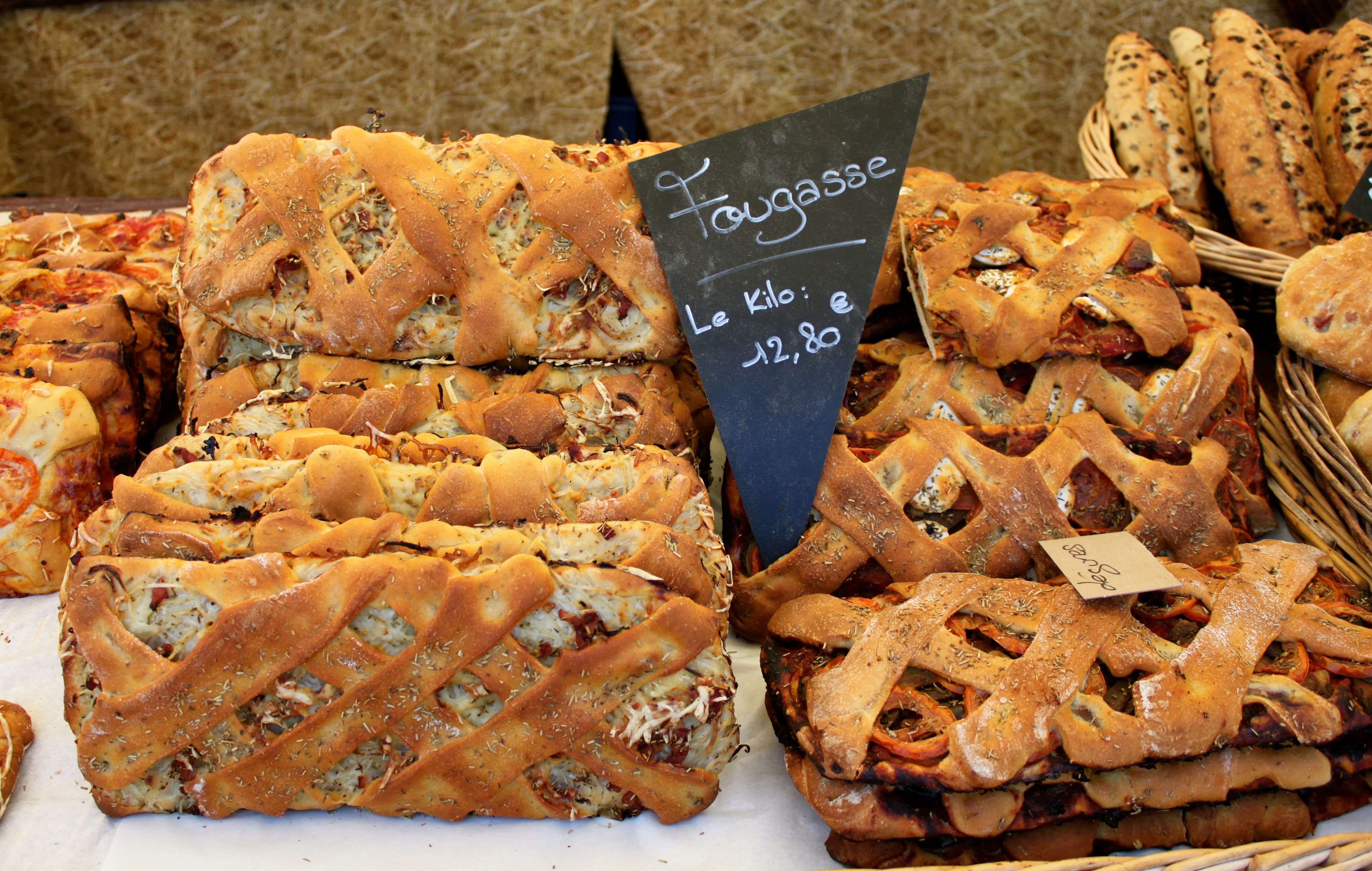
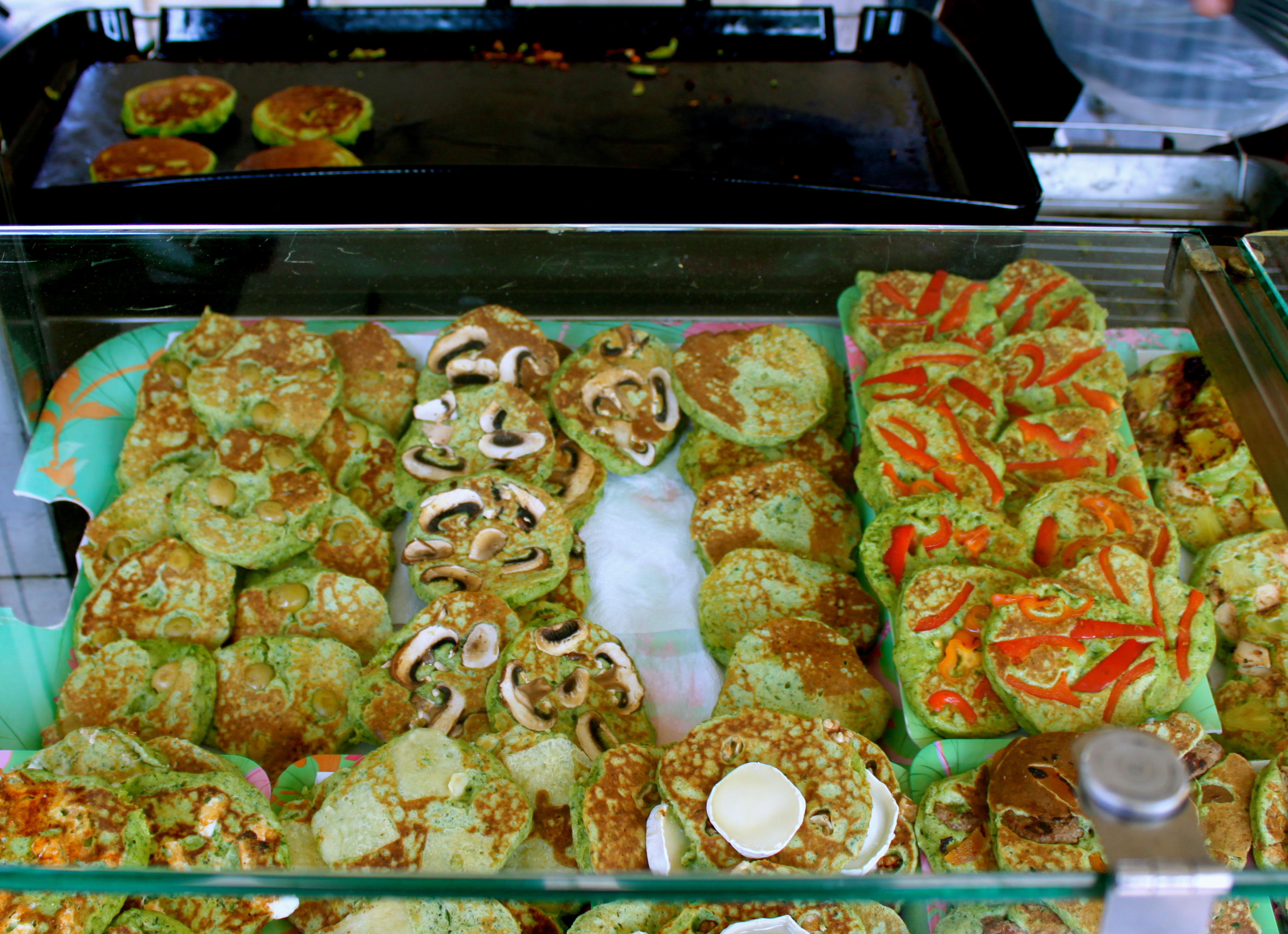
The city boasts numerous outdoor cafés, lots of spots for picnicking, live music jams, colorfully clad open-air tangoing, first-class museums, gorgeous architecture, fresh seafood (yummy oysters) and haute cuisine, and of course, caves for tasting the region’s wine. There is also an excellent farmers market on Sundays (Marché des Quais) selling all the usual suspects along with some of the unusual and distinctively Bordelaise spécialités. Comme ça:
Farcou (herb pancakes) 3/5€ or 7/10€
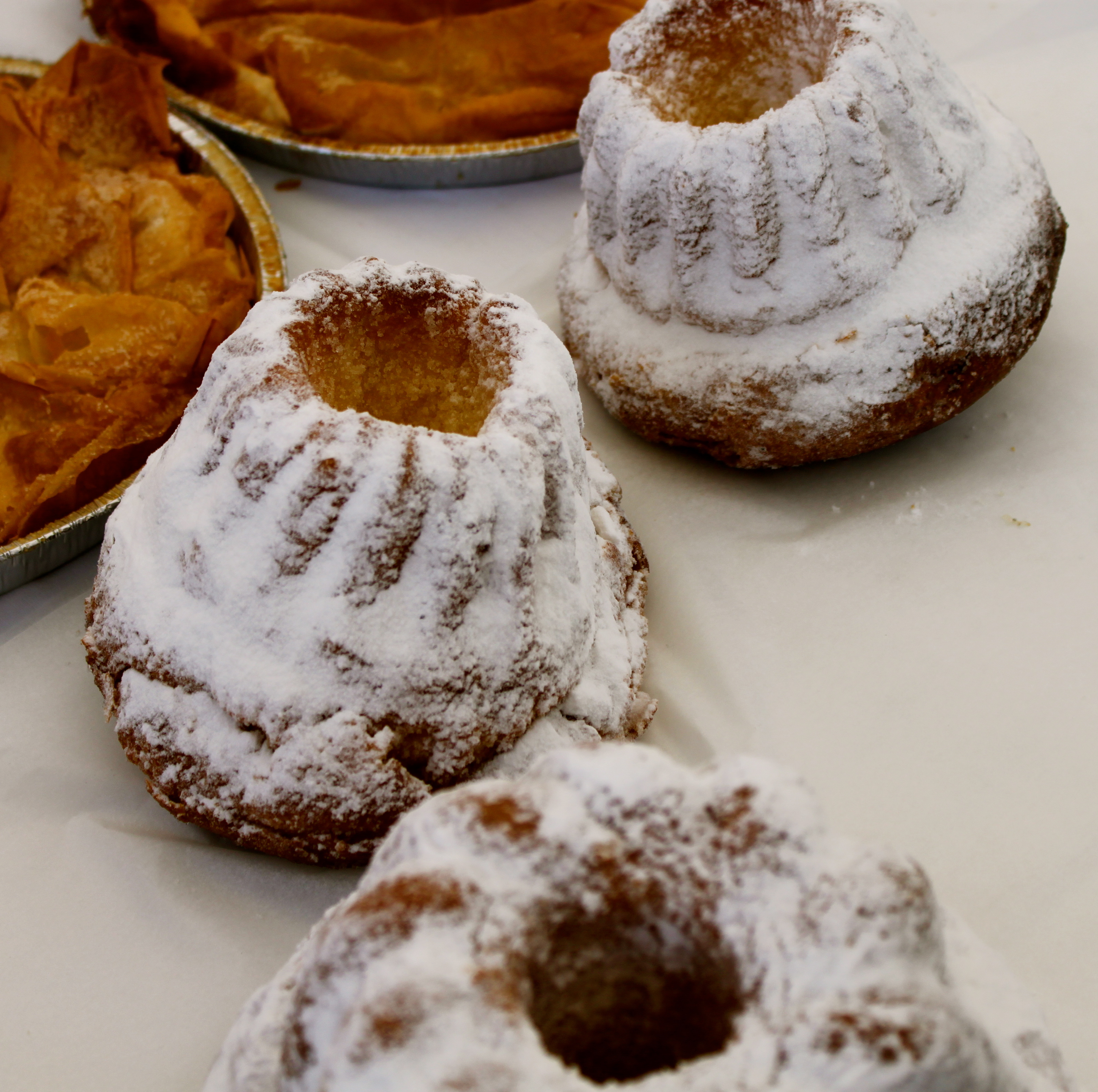
Kongloff…giant brioche cake with powder sugar
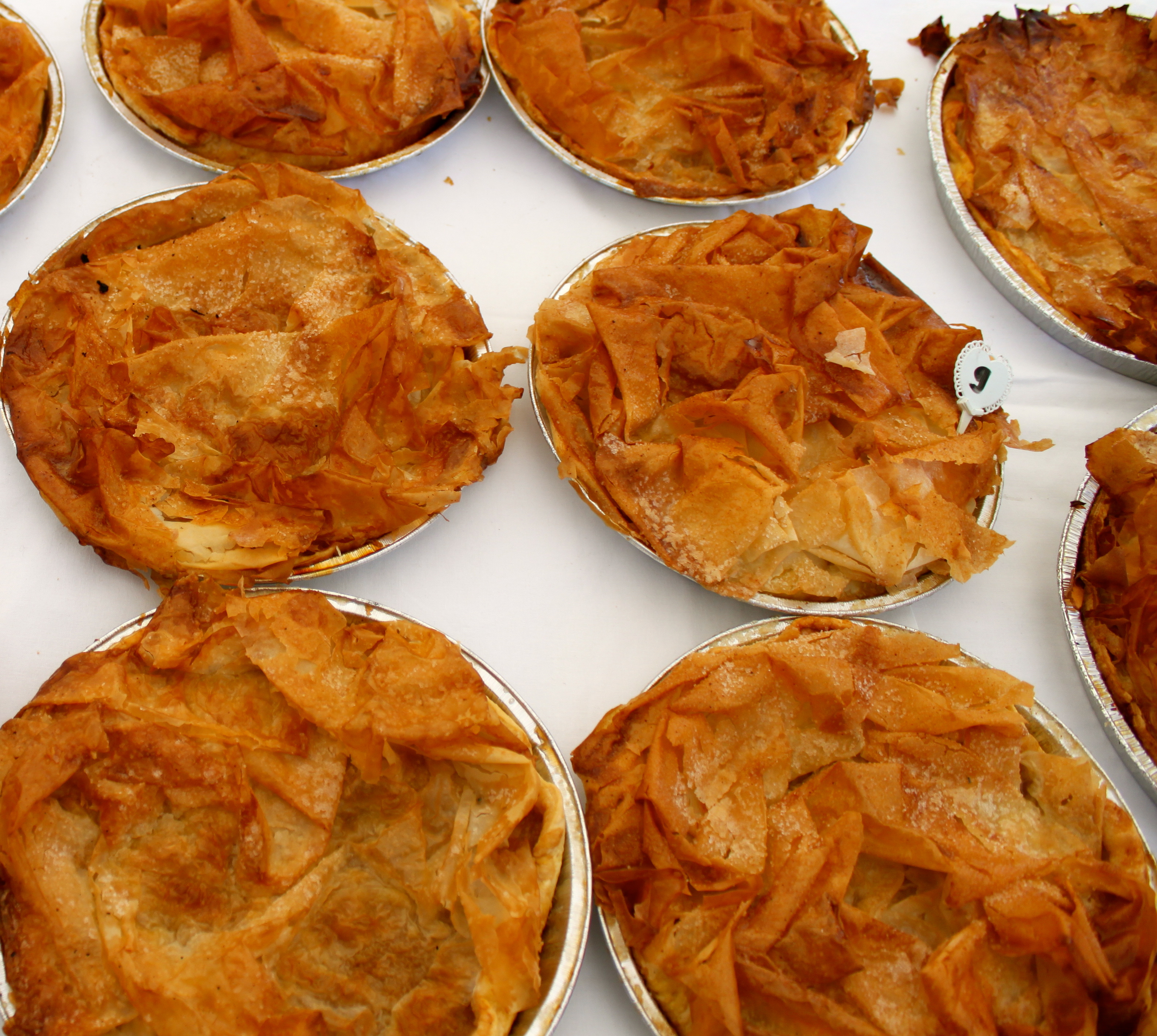
la petite croustades…filo, apples sauce and almond paste…
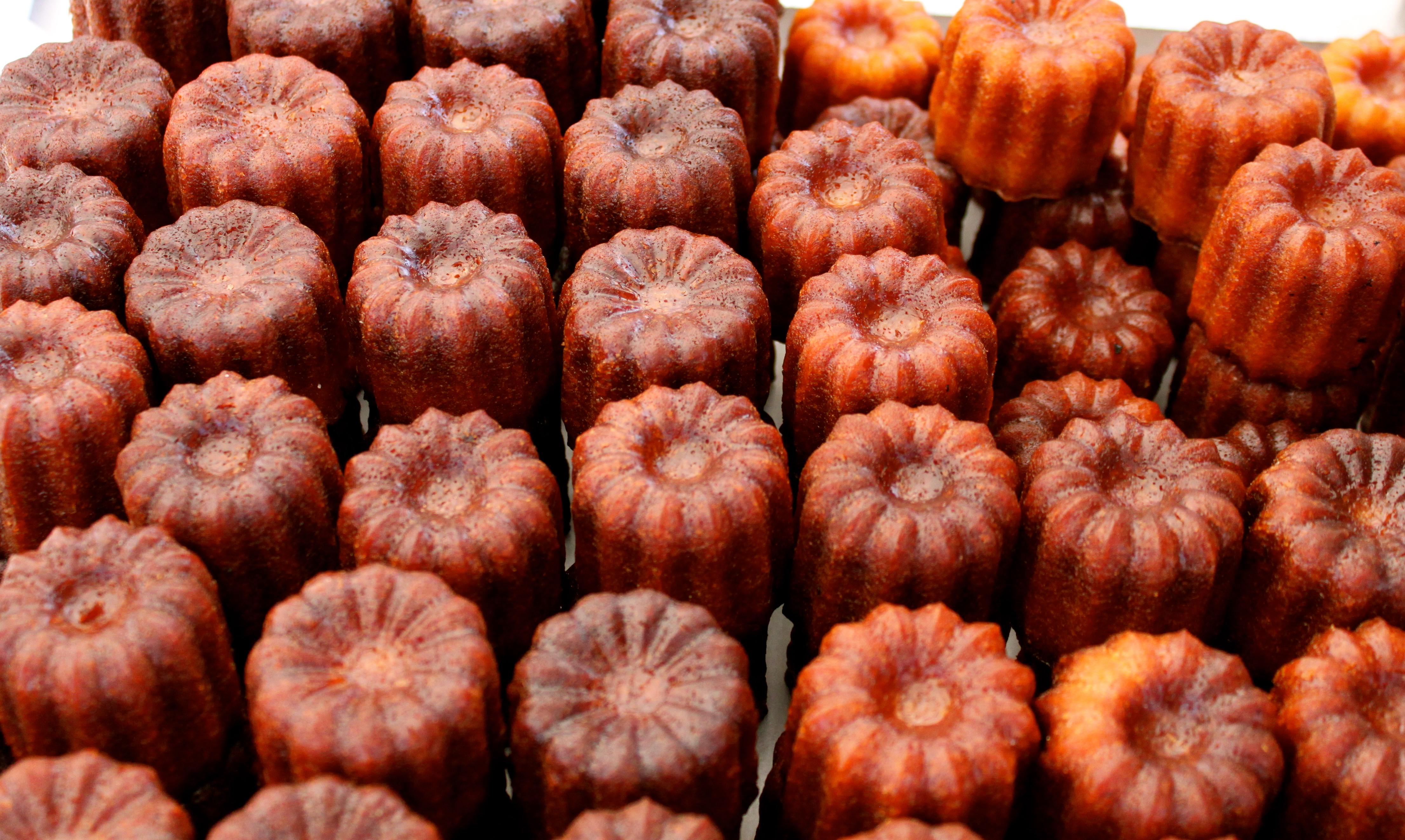
caneles de Bordeaux
As you may have noticed, I am totally smitten with Bordeaux and this region of France. The sparkling pearl of Aquitaine has a little something for everyone and is quite effectively enticing this Parisphile south…
Vocabulaire
Bordelais(es): people from Bordeaux
caves: wine cellars, storage space
Comme ça: Like this:
la perle d’Aquitaine: the pearl of Aquitaine (the Aquitaine pearl)
Another one of the things I love about France is the country’s dedication to national holidays, especially in the springtime.
While most of my friends and family stateside are back at work today, us lucky folks in France are quietly enjoying Easter Monday sans travail. I remember envying my friends who had kids in Catholic schools when we lived in the Wild West, their children never seemed to be in school.
Now that we live in France, we don’t have to play hooky from school, we can, even as lapsed Catholics, benefit from the excess of sanctioned religious and national holidays during April and May. This is a particularly good year as all the “one-off” spring holidays fall during the week. In fact we only have one full week of school/work during the month of May.
And as I mentioned, today, Easter Monday, is actually a national holiday in this Catholic nation, so even if you’re not a believer, you still get to spend today recovering from the holiday, sort of a vacation from your vacation, which in my opinion is the best way to end a vacation.
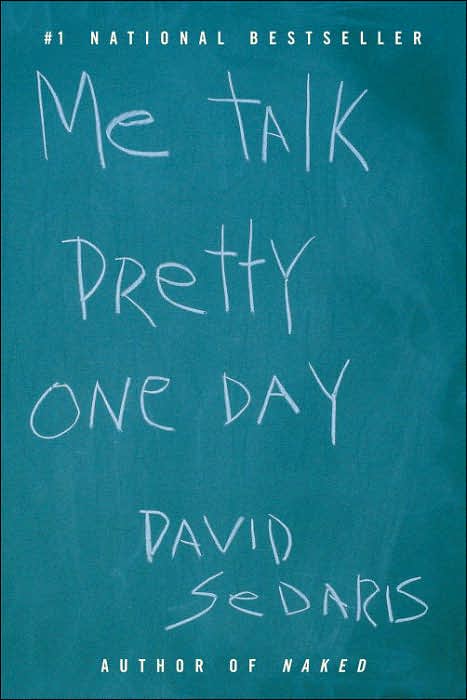
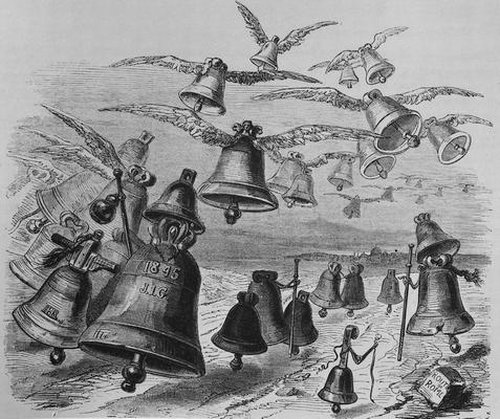
David Sedaris’ Me Talk Pretty One Day is a must read for any expat in France, especially those of us who have taken too many French classes to count, and are still longing to “talk pretty” one day. In this particular excerpt, Sedaris and his global classmates are asked to explain the religious significance of Easter to an Islamic student who has never heard of the holiday. Without having the vocabulary for “cross” or “resurrection” let alone, “He gave His only begotten Son”, the conversation, and I use that term very loosely, quickly degenerates to trying to explain the Easter Bunny, and understand how and why the French Easter Bells fly in from Rome.
Take a listen (or read the transcript below).
It is a dead on and excruciatingly accurate (and hilarious) portrayal of those cringe worthy moments in French class when your dismal vocabulary and tenuous grasp on grammar leads you to say things like:
“He call his self Jesus, and then he be die one day on two . . . morsels of . . . lumber.”
Jesus Shaves by David Sedaris
“And what does one do on the fourteenth of July? Does one celebrate Bastille Day?”
It was my second month of French class, and the teacher was leading us in an exercise designed to promote the use of one, our latest personal pronoun. “Might one sing on Bastille Day?” she asked. “Might one dance in the street? Somebody give me an answer.”
Printed in our textbooks was a list of major holidays alongside a scattered arrangement of photos depicting French people in the act of celebration. The object was to match the holiday with the corresponding picture. It was simple enough but seemed an exercise better suited to the use of the word they. I didn’t know about the rest of the class, but when Bastille Day eventually rolled around, I planned to stay home and clean my oven. Normally, when working from the book, it was my habit to tune out my fellow students and scout ahead, concentrating on the question I’d calculated might fall to me, but this afternoon, we were veering from the usual format. Questions were answered on a volunteer basis, and I was able to sit back, confident that the same few students would do the talking.
Today’s discussion was dominated by an Italian nanny, two chatty Poles, and a pouty, plump Moroccan woman who had grown up speaking French and had enrolled in the class to improve her spelling. She’d covered these lessons back in the third grade and took every opportunity to demonstrate her superiority. A question would be asked and she’d give the answer, behaving as though this were a game show and, if quick enough, she might go home with a tropical vacation or a side-by-side refrigerator-freezer. By the end of her first day, she’d raised her hand so many times, her shoulder had given out. Now she just leaned back in her seat and shouted the answers, her bronzed arms folded across her chest like some great grammar genie.
We finished discussing Bastille Day, and the teacher moved on to Easter, which was represented in our textbook by a black-and-white photograph of a chocolate bell lying upon a bed of palm fronds. “And what does one do on Easter? Would anyone like to tell us?” The Italian nanny was attempting to answer the question when the Moroccan student interrupted, shouting, “Excuse me, but what’s an Easter?” Despite her having grown up in a Muslim country, it seemed she might have heard it mentioned once or twice, but no. “I mean it,” she said. “I have no idea what you people are talking about.”
The teacher then called upon the rest of us to explain. The Poles led the charge to the best of their ability.
“It is,” said one, “a party for the little boy of God who call his self Jesus and . . . oh, shit.” She faltered, and her fellow countryman came to her aid. “He call his self Jesus, and then he be die one day on two . . . morsels of . . . lumber.”
The rest of the class jumped in, offering bits of information that would have given the pope an aneurysm.
“He die one day, and then he go above of my head to live with your father.”
“He weared the long hair, and after he died, the first day he come back here for to say hello to the peoples.”
“He nice, the Jesus.”
“He make the good things, and on the Easter we be sad because somebody makes him dead today.”
Part of the problem had to do with grammar. Simple nouns such as cross and resurrection were beyond our grasp, let alone such complicated reflexive phrases as “To give of yourself your only begotten son.” Faced with the challenge of explaining the cornerstone of Christianity, we did what any self-respecting group of people might do. We talked about food instead.
“Easter is a party for to eat of the lamb,” the Italian nanny explained. “One, too, may eat of the chocolate.”
“And who brings the chocolate?” the teacher asked.
I knew the word, and so I raised my hand, saying, “The Rabbit of Easter. He bring of the chocolate.”
My classmates reacted as though I’d attributed the delivery to the Antichrist. They were mortified.
“A rabbit?” The teacher, assuming I’d used the wrong word, positioned her index fingers on top of her head, wiggling them as though they were ears. “You mean one of these? A rabbit rabbit?”
“Well, sure,” I said. “He come in the night when one sleep on a bed. With a hand he have the basket and foods.”
The teacher sadly shook her head, as if this explained everything that was wrong with my country.
“No, no,” she said. “Here in France the chocolate is brought by the big bell that flies in from Rome.”
I called for a time-out.
“But how do the bell know where you live?”
“Well,” she said, “how does a rabbit?”
It was a decent point, but at least a rabbit has eyes. That’s a start. Rabbits move from place to place, while most bells can only go back and forth–and they can’t even do that on their own power. On top of that, the Easter Bunny has character; he’s someone you’d like to meet and shake hands with. A bell has all the personality of a cast-iron skillet. It’s like saying that come Christmas, a magic dustpan flies in from the North Pole, led by eight flying cinder blocks.
Who wants to stay up all night so they can see a bell? And why fly one in from Rome when they’ve got more bells than they know what to do with right here in Paris? That’s the most implausible aspect of the whole story, as there’s no way the bells of France would allow a foreign worker to fly in and take their jobs. That Roman bell would be lucky to get work cleaning up after a French bell’s dog -and even then he’d need papers.
It just didn’t add up.
Nothing we said was of any help to the Moroccan student. A dead man with long hair supposedly living with her father, a leg of lamb served with palm fronds and chocolate. Confused and disgusted, she shrugged her massive shoulders and turned her attention back to the comic book she kept hidden beneath her binder.
I wondered then if, without the language barrier, my classmates and I could have done a better job making sense of Christianity, an idea that sounds pretty far-fetched to begin with. In communicating any religious belief, the operative word is faith, a concept illustrated by our very presence in that classroom. Why bother struggling with the grammar lessons of a six- year-old if each of us didn’t believe that, against all reason, we might eventually improve?
If I could hope to one day carry on a fluent conversation, it was a relatively short leap to believing that a rabbit might visit my home in the middle of the night, leaving behind a handful of chocolate kisses and a carton of menthol cigarettes. So why stop there? If I could believe in myself, why not give other improbabilities the benefit of the doubt? I accepted the idea that an omniscient God had cast me in his own image and that he watched over me and guided me from one place to the next. The virgin birth, the resurrection, and the countless miracles -my heart expanded to encompass all the wonders and possibilities of the universe.












 365+ Things I Love About France