No. 235: La fête de la Victoire 1945

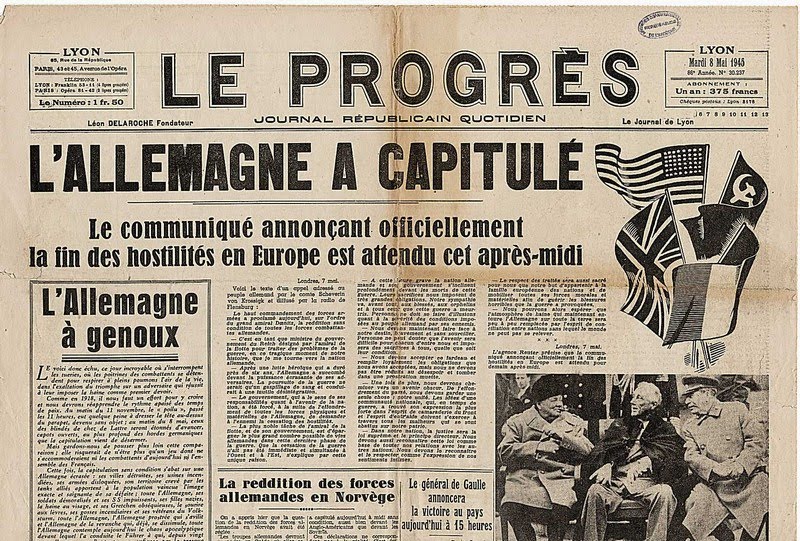
unconditional surrender at Reims, France; source: defense.gouv.fr
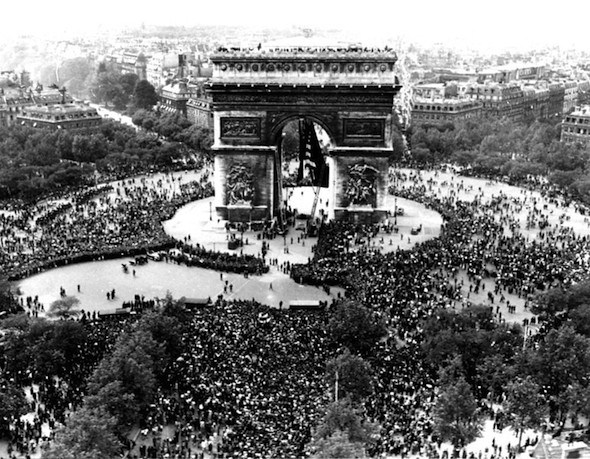
Arc de triomphe; source: AP Photo/Griffin
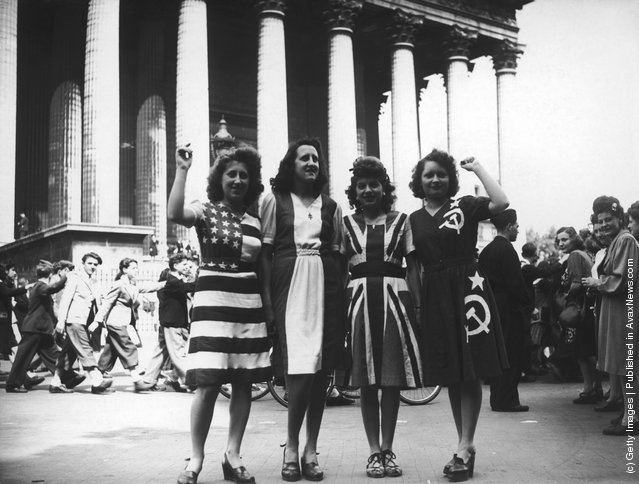
la Madeleine; source: http://www.gettyimages.com
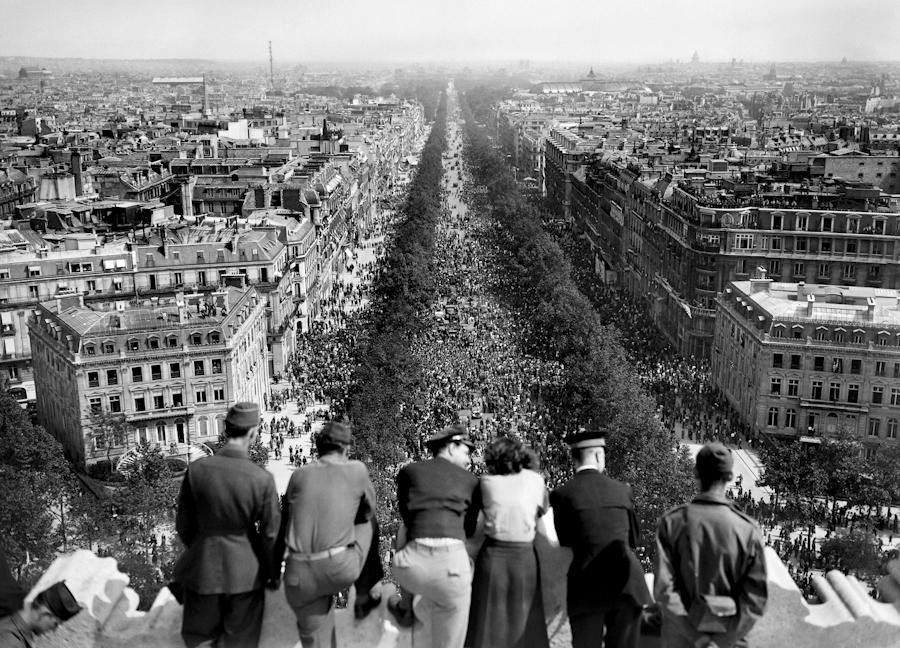
Champs-Élysées; source: frenchmoments.edu
May 8
unconditional surrender at Reims, France; source: defense.gouv.fr
Arc de triomphe; source: AP Photo/Griffin
la Madeleine; source: http://www.gettyimages.com
Champs-Élysées; source: frenchmoments.edu
Mar 27
The other day, we made a quick trip to the city of Reims (pronounced ““rINce”—sort of rhymes with a nasally “France”) on our way to the Champagne region.
According to legend, Reims, 80 miles northeast of Paris, was founded by those naughty Roman brothers, Remus and Romulus, and houses some impressive Roman artifacts. Whether or not the brothers as founding fathers is true, Reims has always been an important city for the French monarchy, its beautiful cathedral could be called the Westminster Abbey of France. Not only was this historic cathedral the site of 25 royal coronations, it is also a glorious example of Gothic architecture.
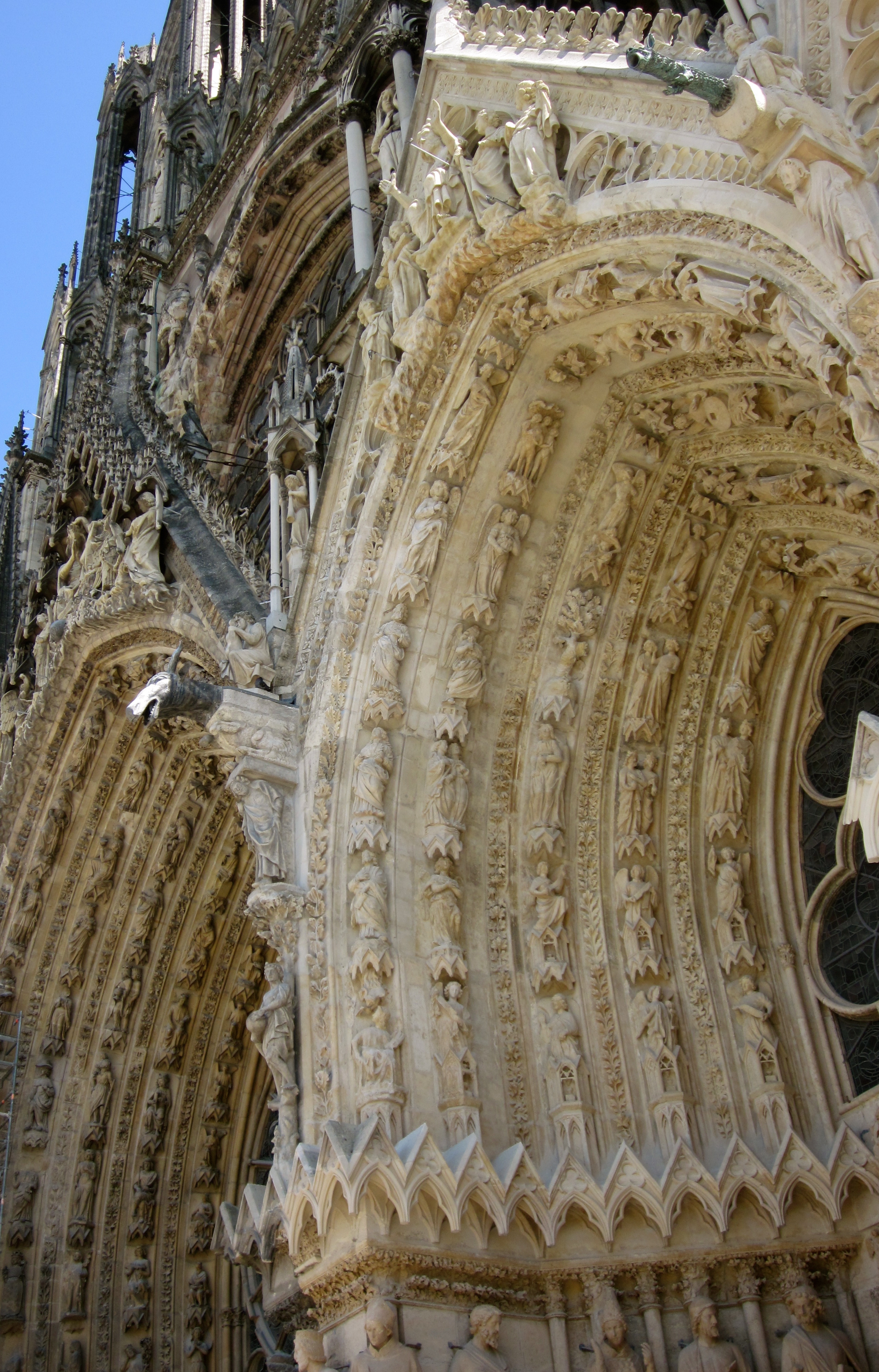
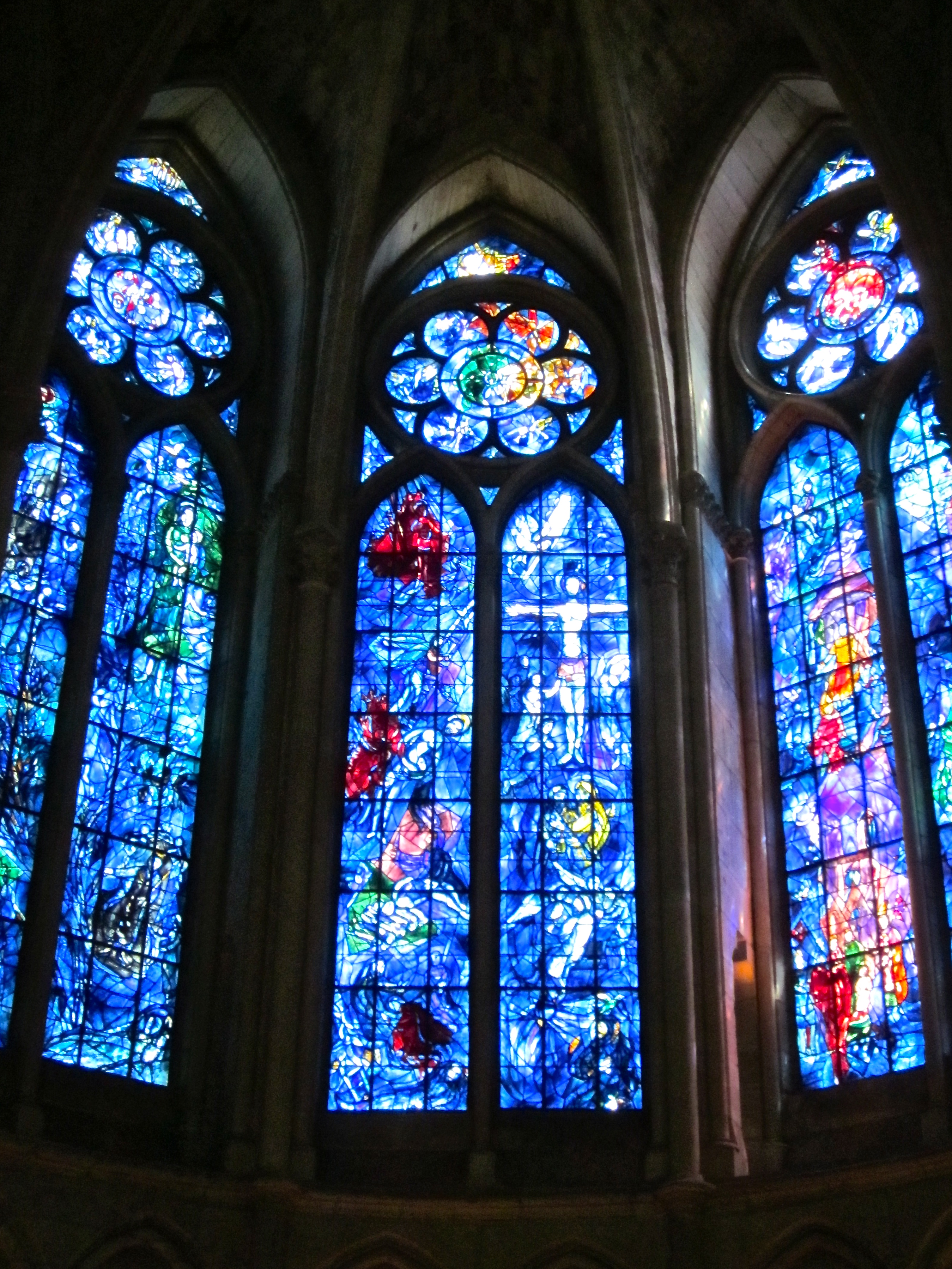
Unfortunately it sustained terrible damage during WWI and was further damaged during WWII. Thankfully it has been restored (no small thanks to John D. Rockefeller) to all its splendor. In addition to housing an amazing original rose window (dating from 1255), it also holds a luminous set of Marc Chagall’s stained-glass windows.The windows are dazzling and the church a welcoming spiritual home for believers and non-believers alike.
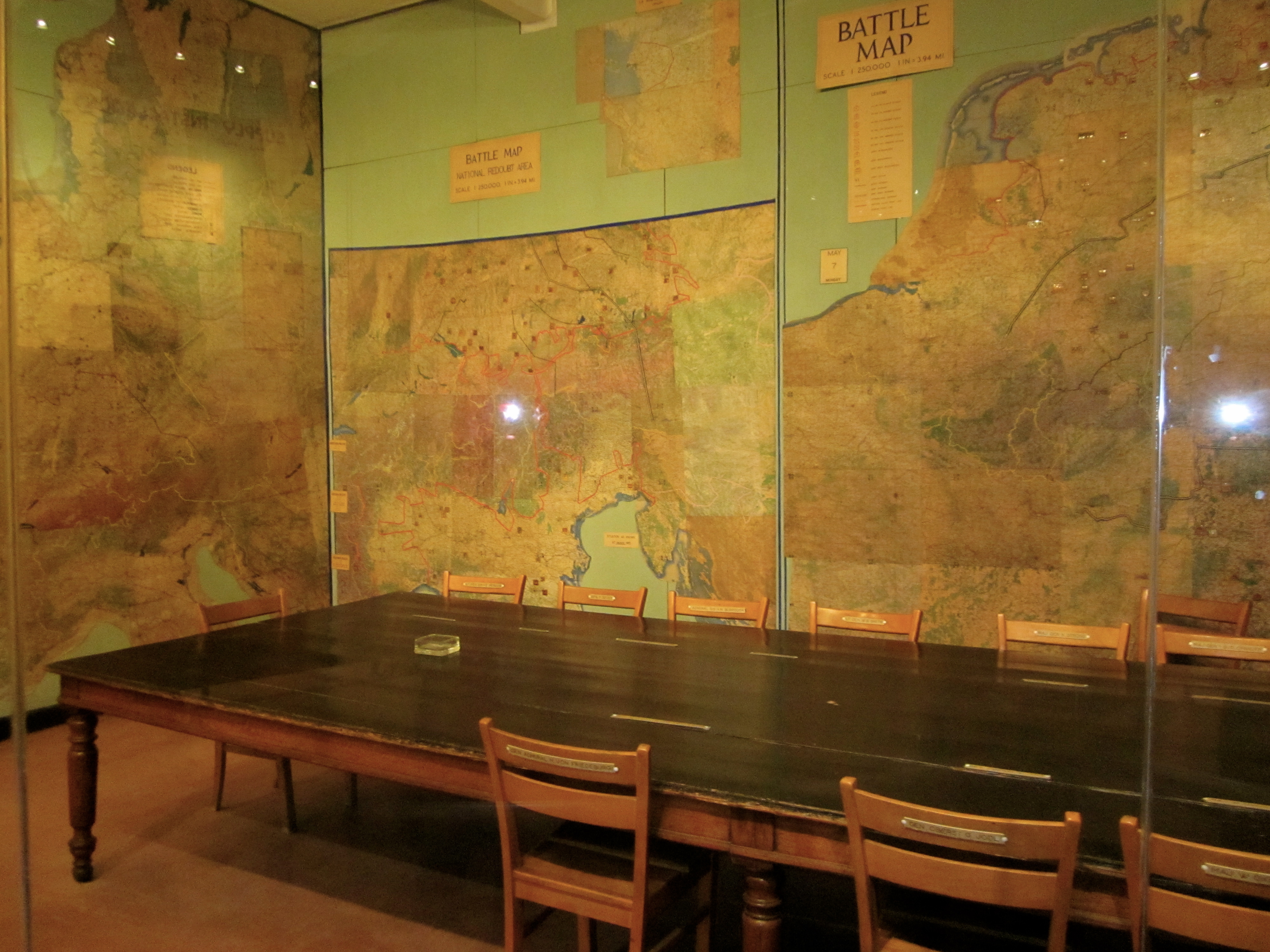
Reims is also famous for its red schoolhouse which now houses the Museum of Surrender (Musée de la Reddition). It was here that on May 7, 1945 at 2:41 in the wee hours of the morning, the Germans under General Jodl surrendered unconditionally to General Eisenhower, ending World War II in Europe. This fascinating museum houses photographs, press clippings, relics, and a good film detailing the last days of the war in France. The small signing room remains exactly as it was on that day in May and is exceptionally moving to see.
From Reims we headed to the countryside on an arduous trek (someone had to do it) to learn the ins-and-outs of the journey champagne makes from grapevine to glass.
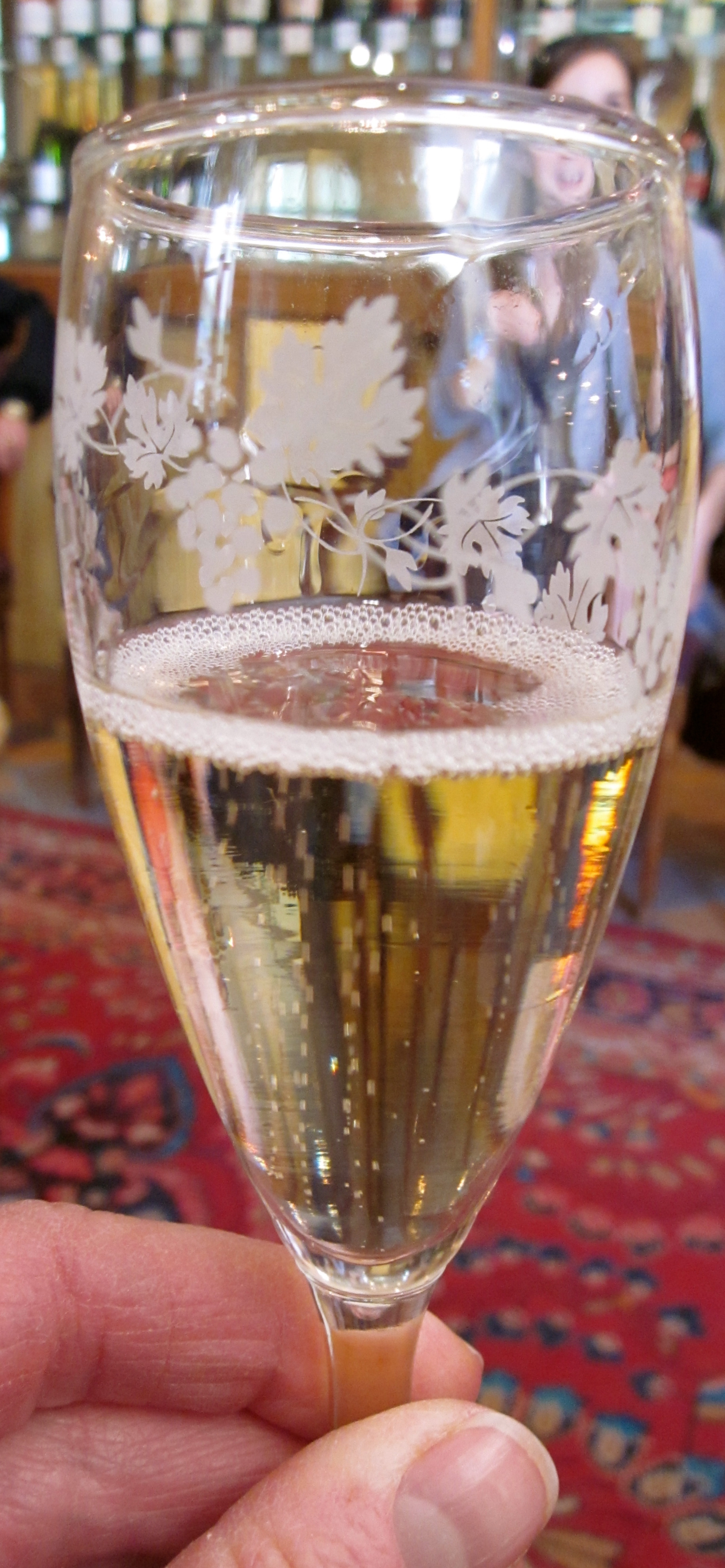
As you know, champagne gets its name from the region in France of the same name: a strictly defined area encompassing 634 villages in five different départaments. What you might not know is that during the Middle Ages, church wine used for the Eucharist was one decidedly sought after commodity. As luck would have it, the English preferred the “light and crisp” wines made in the Champagne region. Their high demand and the low supply led to the continued cultivation of grapes in the region, which with new techniques, eventually evolved into our favorite apéritif. Although the first sparkling wines were produced near Carcassonne, France, when the “sparkling” technique was applied to Champagne’s wines in the 1700s, champagne as we know it was born.
In our quest to appreciate and sample champagne, we toured both swanky champagne houses and homey and relaxed estates. In the name of research, we burrowed hundreds of metres below ground into the dark and chilly caves and listened to several Chef de Cave explain what makes champagne, champagne. Personally, I found the champagne making process fascinating and instructive. The tasting wasn’t so bad either.


I now understand why champagne is so expensive (the double fermentation process and a minimum of 2-years ageing) and the historic and climatic reasons that the grapes are grown in the Champagne region.
Next stop, Chablis…
Vocabulaire
Chef de Cave: The cellarmaster, who is typically the person in charge of the winemaking team. In the New World this person might be called a “winemaker”, but in many champagne houses the winemaking team is large, involving multiple winemakers, and the chef de cave is the one who heads the group and provides overall direction.

La Danse 1950-1952
I am a huge fan of Marc Chagall.
I was lucky enough to see the Chagall exhibit at the Musée du Luxembourg in Paris at the end of summer, and it was stunning. I adore his vibrant palette and enthusiasm. Boy, could Chagall do color! As Picasso said, “When Matisse dies Chagall will be the only painter left who understands what color really is”. Je suis d’accord, brother.
Although Chagall was born in Belarus, the French considers him first a French artist, and then a Russian painter. While he did spend the majority of his life in France, much of his work reflects and was inspired by his memories and dreams of his homeland in Vitebsk. But, fortunately for all us admirers, many of his most famous works can still be found in France.
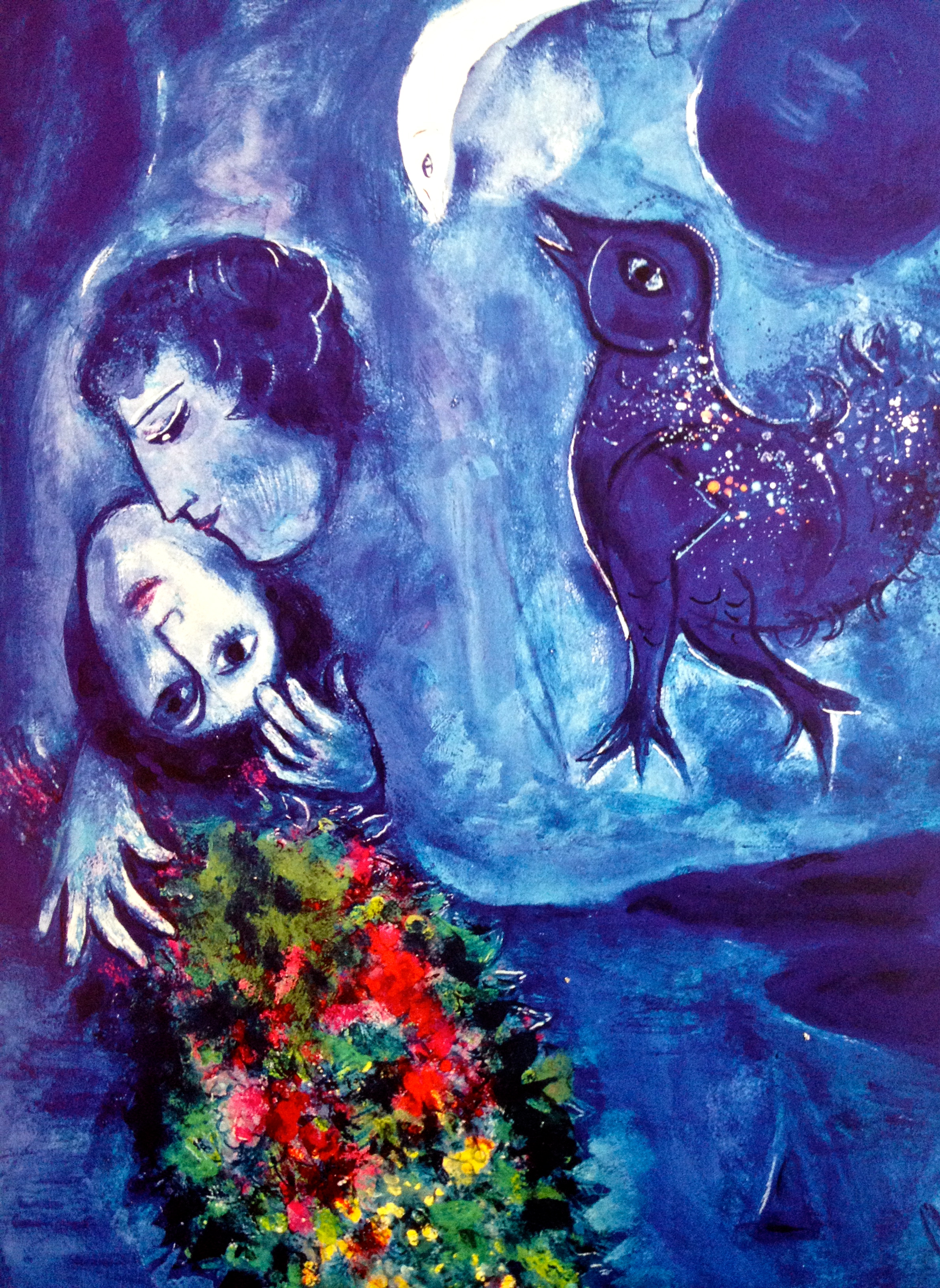
Le Paysage Bleu, 1949
The expos. A remarkable thing about living in Paris and France is the exceptional access to great works of art. At this exhibit, I fell in love with his fiddlers dancing on the roofs and his ghostly figures gliding through his magical sky, the green and yellow dancers and whimsical forms, the purple roosters and blue violins, the stuff that dreams are made of…his hopes, longings, and losses—a delightful and thought-provoking display of some of his major works.
A night at the symphony. The Palais Garnier, Paris’ famous opera house, is also the home to his famous, fanciful ceiling. Although there was a whole heap of debate and some very disgruntled Frenchies when he was first commissioned to paint it in 1963, it has become a much beloved part of any evening at the opera or ballet.

Palais Garnier, Paris
The windows. You may not know that a set of Chagall stain glassed windows is housed in Reims at the gothic Notre-Dame Cathedral. I was oh so pleasantly surprised to find them when touring Champagne country. Someday soon I hope to make it to Metz to visit Saint-Etienne Cathedral to see, as one French friend has told me the most “flamboyant” of all of Chagall’s windows.
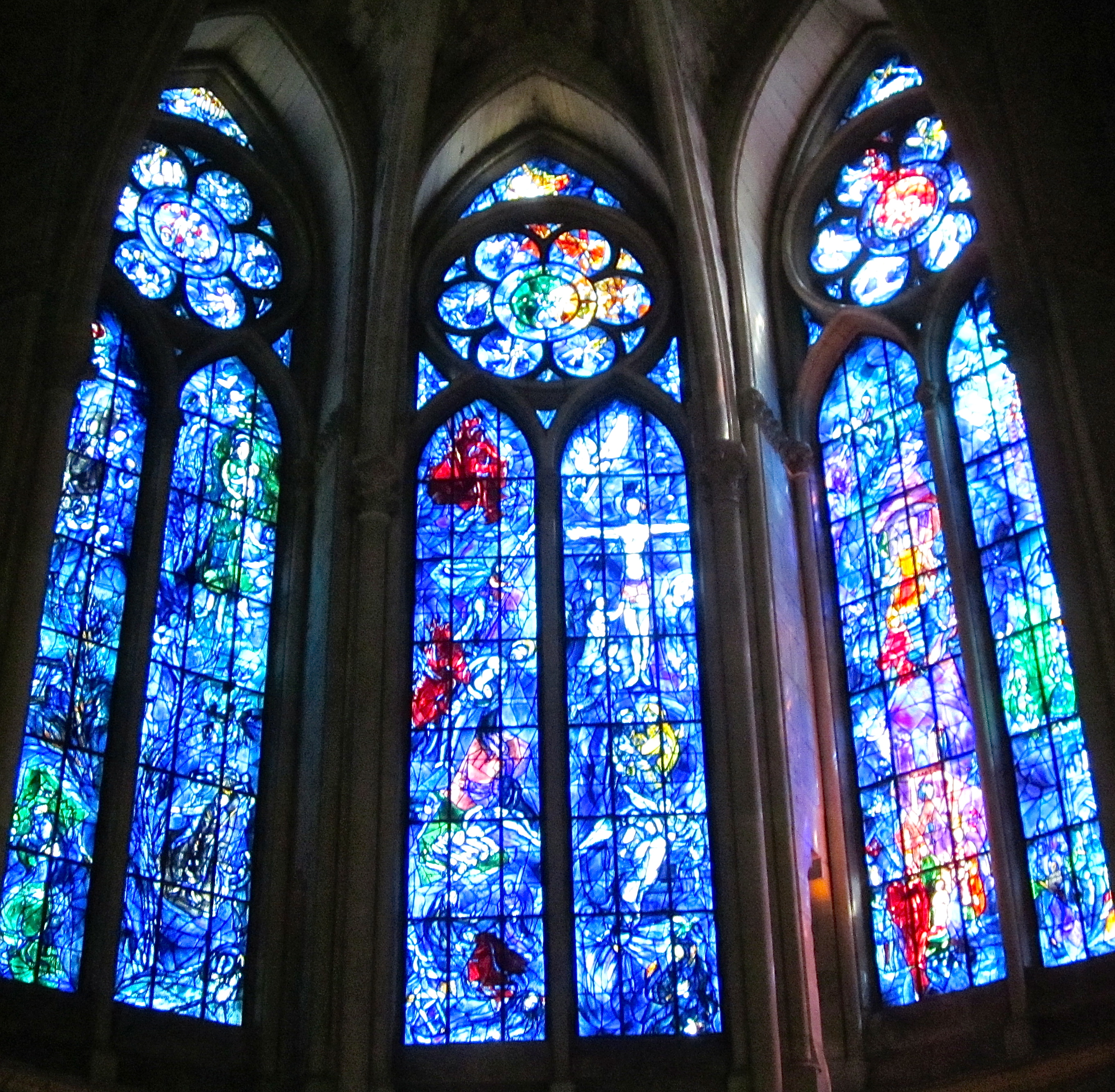
Reims Cathedral
The sets and costumes. On top of that, I just learned from my lovely daughter and dancer, Kitcat, that Chagall also designed and hand-painted the madly imaginative costumes and sets for the1942 production of Aleko, for the New York Ballet Theatre and did the same for New York’s Metropolitan Opera’s production of the Magic Flute, later in the 1960s. (Do I have to go to New York to see them? Does anyone know where they are housed?)

Fish
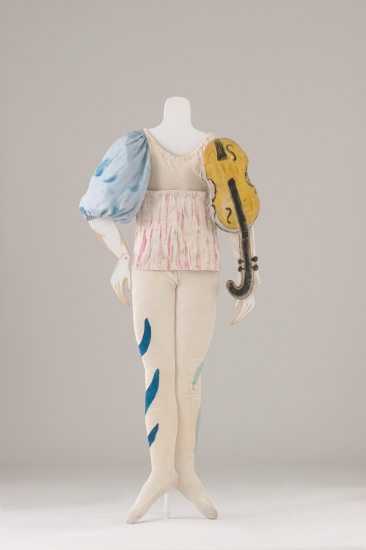
Clown costume, Aleko
Most definitely on my radar this fall, is a trip to the Carrières de Lumières, via Marseilles, to see the “Monet, Renoir… Chagall: Journeys around the Mediterranean” expo…and, of course Nice is my Mecca. Someday I hope I’ll visit the Musée National Marc Chagall.
Vocabulaire:
Je suis d’accord: I agree


 365+ Things I Love About France