Skip to content

Posts tagged ‘Paris’

No. 177: Roquette

rue-de-roquette-paris.jpg

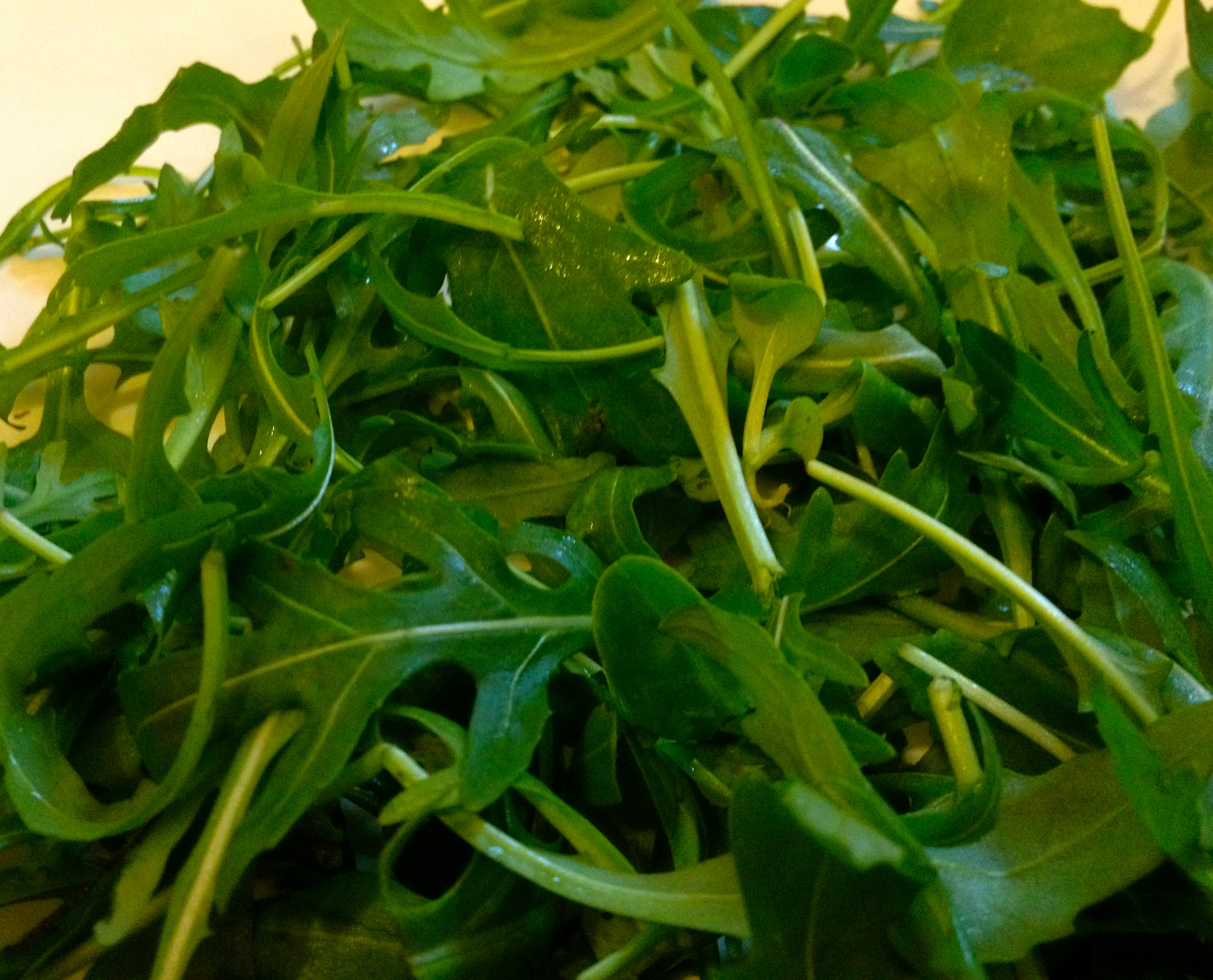
Known to us Americans as arugula—I don’t think it is generally loved in my native land. Mais, moi, I find it especially delicious. I am absolutely nutty for its pungent and spicy horseradish-like flavor. A member of the mustard family, the Italians call it ruchetta or rucola. The Greeks say roka. The Brits call it rocket. Superman calls it therapy, and has been growing it on our windowsills since January. Unfortunately two stormy February days knocked out the first crop, but the second crop is starting to take hold, and the third extra crop will be planted this weekend. Roquette is extremely easy and satisfying to grow, even in window boxes and it does well in the cooler spring weather.

It is brilliant with tomatoes, capsicum, radicchio, and shavings of Parmigiano-Reggiano, or tossed with slices of pear and Bleu d’Auvergne. It makes a refreshing and tangy pesto accompaniment to meat, and is perfect sprinkled on goat cheese pizza, Italian bruschetta, or tucked into any sandwich.

roquette-salad-paris.jpg

It is a fancy-pants cancer fighting food, a palate cleanser, and as an extra bonus, it is thought to be an aphrodisiac, said to “excite the sexual desire of drowsy people.” Hmmm…

roquette-paris-France.jpg

Maybe this tired mom should pick up an extra demi-kilo at the market tomorrow.

No. 172-176: French Frights: hugs, first names, smiles, hurried friendships, and filer à l’anglais

I can take no credit for this post, but I just had to share it.

For all you expats out there wondering what you can do to fit in a little more easily with your French hosts, co-workers, neighbors and new found “friends” (who might actually only be acquaintances), please watch the comic, but always insightful, Géraldine from Comme une Française TV…my new favorite virtual Frenchie, as she tells us: How to Scare the HELL out of a French Person.

In case you need a reminder, here are the top five ways to  to frighten the French, remember to:

  • hug them tightly and often. (The French don’t even have a word for hugging.)
  • start an email with a first name. (It’s threatening.)
  • be over enthusiastic. (You can’t be trusted and may be selling a scam.)
  • rush along a friendship. (There are at least seven levels of friendship in France. Go slowly.)
  • filer à l’anglaise or don’t say goodbye. (Neglected bises and au revoirs will land you in the dog house.)

Merci bien, Géraldine…thanks for helping me “live in France, (and) feel at home”…please visit her site here. She is a language learning and cultural decoding gem.

Vocabulaire:

bises: cheek kisses

filer à l’anglaise: leave like an English(man)

No. 171: The Jewish Quarter

purim-marais-paris.jpg

One of the great things about living in a big city like Paris is the easy access to diverse cultures and heritage. Yesterday I had the pleasure of wondering through the Marais, the city’s most famous and lively Jewish neighborhood, with my lovely friend Emily. The Marais, known as the Pletzl, or “little Place” in Yiddish, has been home to Jews on and off since the thirteenth century. Today although many trendy and expensive fashion boutiques have moved into the quarter, it is still heavily Jewish and has maintained many of the original Jewish establishments from the nineteenth century and earlier.

IMG_4761

IMG_5088

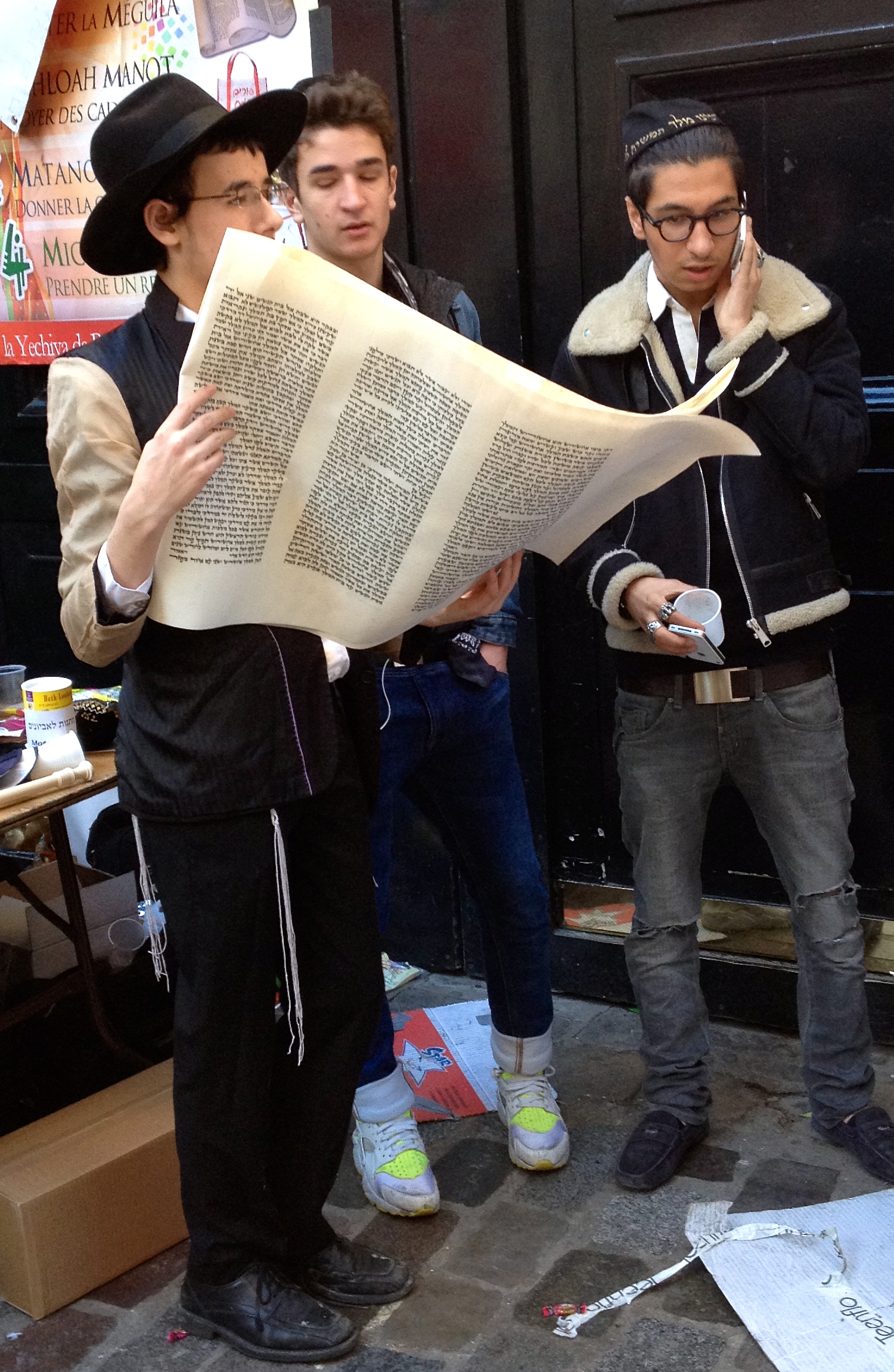
Yesterday was Purim, the jubilant celebration of the deliverance of the Jews from the nefarious Haman by Queen Esther and Mordecai. There is a lot more to Purim than meets the eye, but it was fun to get caught up in the carnival-like atmosphere of the day. Sometime (incorrectly) referred to by non-Jews as the “Jewish Mardi Gras”, children and adults were decked out in disguises, scholars were reciting the Megillah (Scroll of Esther) in the streets, synagogues and prayer rooms, visitors and residents were exchanging gifts of special holiday delicacies, and money was happily shared with those less fortunate. It was a special treat to experience and learn more about Purim with Emily and participate in her holiday.

purim-marais-costumes-paris.jpg

Although Superman is Jewish by identity, I was raised in a liberal Catholic church, and it sometimes falls to la maman to carry-on the traditions of both religions in our household. So I was very grateful to talk with the enthusiastic young orthodox Jews about the meaning of their celebration and their faith and to learn about some of their rituals and, of course, their festival foods, particularly the hamantaschen.

IMG_4762

I absolutely adore these one-off experiences in Paris. It is such a blessing to, so to speak, have the world at my doorstep, and just one more thing to love about my France.

Vocabulaire

Hamantaschen: a triangular, filled pastry served on Purim. The word hamantaschen is derived from two German words: mohn (poppy seed) and taschen (pockets). Mohntaschen is German for “poppy seed pockets”, a popular German pastry. Hamantaschen means “Haman’s pockets”, as in the evil Haman. There are several explanations as to why the Hamantaschen are three-cornered pastry:

  • the evil Haman’s pockets were triangular and filled with bribe money,
  • Haman wore a three-cornered hat, and eating Haman’s hat is a way to symbolically destroy his memory, and,
  • finally, in Queen Esther’s story, she describes Haman bent over and covered with shame, and humiliated (literally with clipped ears). The three-cornered hamantaschen are symbolic of Haman’s clipped ears. In Hebrew, hamantaschen are called Oznay Haman, which means Haman’s ears. This is the explanation we were given yesterday.

No. 166-170: Hoofing It, Men’s Shoes, Asparagus, Magnolias, and Legal Ice Cream

This fabulous weather has made it difficult for me to stay chez moi and blog the sunny days away. There are so many things to admire in France when the sky is blue, the temperature is warm and the natives are smiling. But it’s time to start catching up on the remaining 200-things-I-love-about-France, so here is a quick list of five springtime things I’m crazy for:

  1. Not having to own a car. I’ll take a walk, trot, stroll, gallop, amble, promenade, tromp, pedal, ride, or glide any day over having to sit behind the wheel of a car. I love the freedom to be able to get most anywhere by foot or bike

    source: hikingartist.com

    source: hikingartist.com

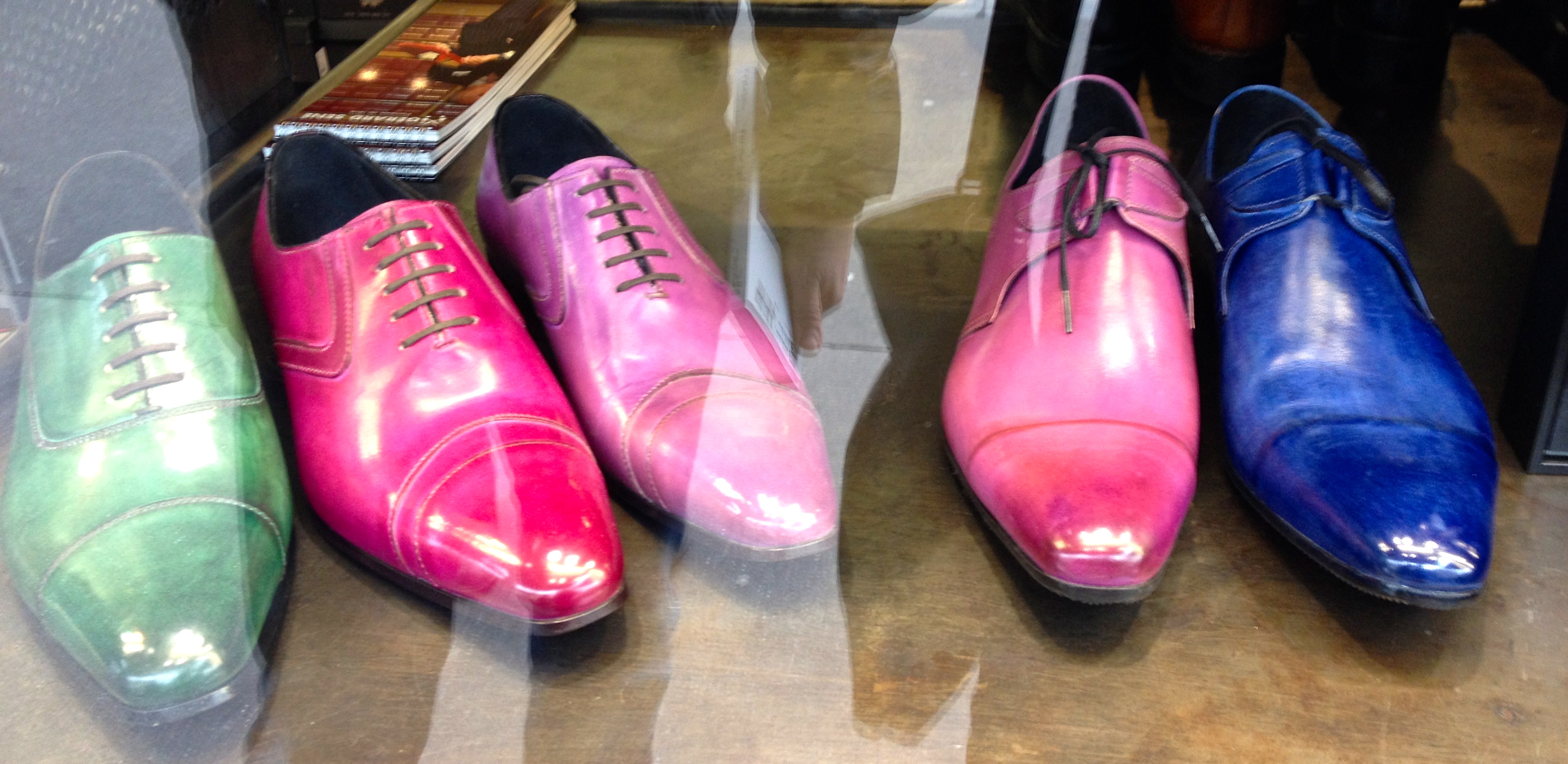
  2. Colorful Men’s Shoes. Gorgeous, happy, and fun. If only I could get Superman to slip on a pair.shoes-paris.jpg
  3. Asparagus Season. It’s here! It’s here! It’s here! One of the my favorite springtime veggies has just arrived at the market.asparagus-at-market-paris.jpg
  4. Magnolia Blossoms. Splendid, superb and spectacular.magnolia-paris-spring.jpg

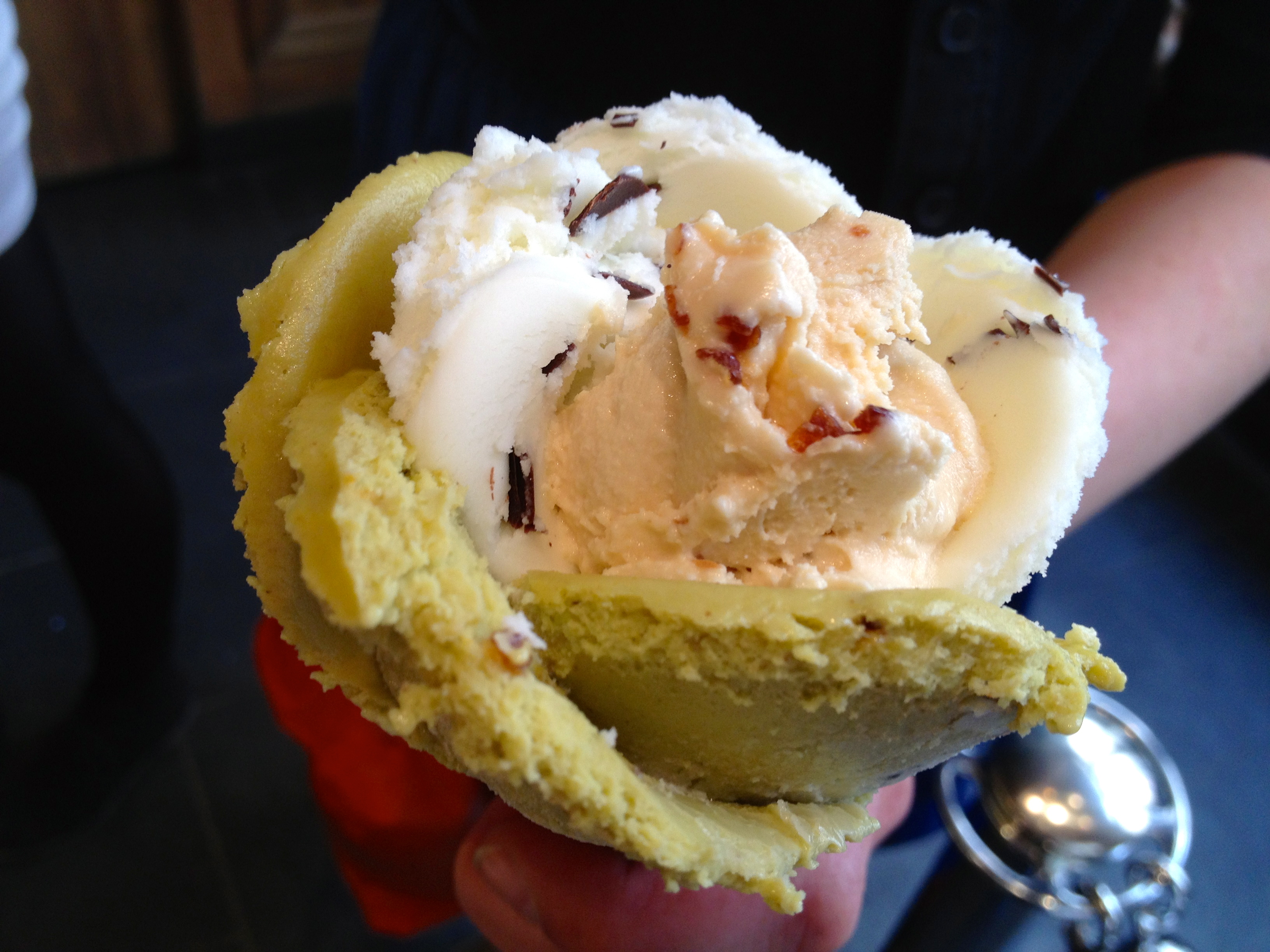
5.    It’s now “legal” to eat ice cream in public. Need I say more?ice-cream-paris.jpg

No. 165: Idioms/Expressions with our Second Favorite Furry Four-footed French Friend

I’m not a cat person. I never have been. I’m highly allergic to cats, so that doesn’t help matters. I’m also a very sensitive soul, which means, when a cat snubs me, I take it personally. Never a big fan of aloofness, felines aren’t generally my cup of tea…

…except maybe this gorgeous Parisian cat, who could possibly steal a petite corner of my heart if I spent enough time with her.

lily-the-cat-paris.jpg

For Lily’s sake and for all you cat lovers, as promised, I’ve uncovered a few French expressions which incorporate your favorite furry four-footed friend. As my morning has been packed, I’ve only had a wee bit of time to devote to les chats, but my initial observation is that cats could use a little more respect en France, at least linguistically.

There seems to be some greed and gluttony and whipping and scalding associated with our French feline friends. Par exemple:

  • il n’y a pas de quoi fouetter un chat: literally, there’s nothing to whip a cat about, or, it’s not worth worrying about.
  • avoir d’autres chats à fouetter: to have other cats to whip, or as we might say, to have other fish to fry.
  • chat échaudé craint l’eau froide: literally, (a) scalded cat fears cold water, or en anglais, once bitten, twice shy.

In regards to behavior, one can be:

  • gourmande comme un chat: greedy or gluttonous like a cat

While some things can be:

  • C’est du pipi de chat: literally, this is cat’s pee, or it’s pathetic, a waste of time, or tastes terrible or weak (referring to coffee or other drinks)…please do not use this phrase, it’s not very polite.

Cats have also found their way to the mouths and throats of the French, as in:

  • Donner sa langue au chat: to give one’s tongue to the cat, or to give up, stop guessing, (as when you can’t think of anything else or what the right answer might be).
  • While we have a frog in our throats when we’ve lost our voice and it’s croaky, the French have un chat dans la gorge, which really must be hard to talk through.

If you are super busy, one can:

  • faire une toilette de chat: wash oneself quickly, or give oneself a lick and a promise.

But thankfully, you can also be (like Lily):

  • amoureuse comme une chatte: very affectionate

Donc, I think we better ne réveillez pas le chat qui dortlet sleeping dogs lie, or as the French say, not wake the sleeping cat.

No. 164: Idioms/Expressions with our Favorite Furry Four-footed French Friend

taz-in-paris-dog.jpg

Two dog things happened today.

One, I came across a great dog related French expression, and two, while playing ball with mon petit chien at the Champ de Mars, I realized how much joy pets add to our lives (and even the lives of some solemn locals who aren’t habitual smilers).

The literal meaning of the expression I came across in a French fashion magazine: avoir du chien—to have some dog, sent me searching for my French-English dictionary. It turns out that when you “have some dog”, you are attractive or have that certain (indescribable) something about you. I want to have me some dog!

Well that made me smile, and want to find out what other French sayings incorporate our favorite furry four-footed friend.

Here are a few of the funnier ones I came across just now:

  • arriver comme un chien dans un jeu de quille: to turn up when least desired or expected, to show up at the worst possible moment; literally, to arrive like a dog in a bowling game. I like the fact that the French have the dog showing up, of all places, at a bowling alley.
  • chiens écrasés: newspaper articles that serve as filler, literally crushed dogs. This one I need to explore further. Can anyone help me out? What is the correlation between squashed dogs and fluff pieces in the media?
  • un chien vivant vaut mieux qu’un lion mort: a bird in the hand is worth two in the bush; literally, a live dog is worth more than a dead lion. Mais, oui. je suis d’accord.

And of course, my favorite:

  • les chiens ne font pas des chats: the apple doesn’t fall far from the tree; literally, dogs don’t make cats. Well, that’s for darn tooting sure….

…sorry cat-loving readers, but I promise a post tomorrow on expressions with our second favorite furry four-footed friend…and s’il vous plaît remember: Qui m’aime aime mon chien. 

Vocabulaire:

Mais, oui. je suis d’accord: Oh, yes. I agree.

mon petit chien: my little (male) dog

Qui m’aime aime mon chien: love me, love my dog; literally, he who loves me loves my dog


No. 163: Café Music

street-muscian-paris.jpg

I am a sucker for French café and street music. And now that spring seems to have sprung in Paris, the accordion players and buskers are starting to reemerge around the city to serenade the tourists and locals. I suppose it is a bit cliché, but I still find it charming. I’ve always wanted to have a soundtrack to my life, and in some moments in France, this is the perfect theme song. Take a listen while you sip your morning café or evening apéro.

Sous le ciel de Paris – Under the Paris sky