No. 254: Bidets

…so civilized and refreshing…
May 23
May 21
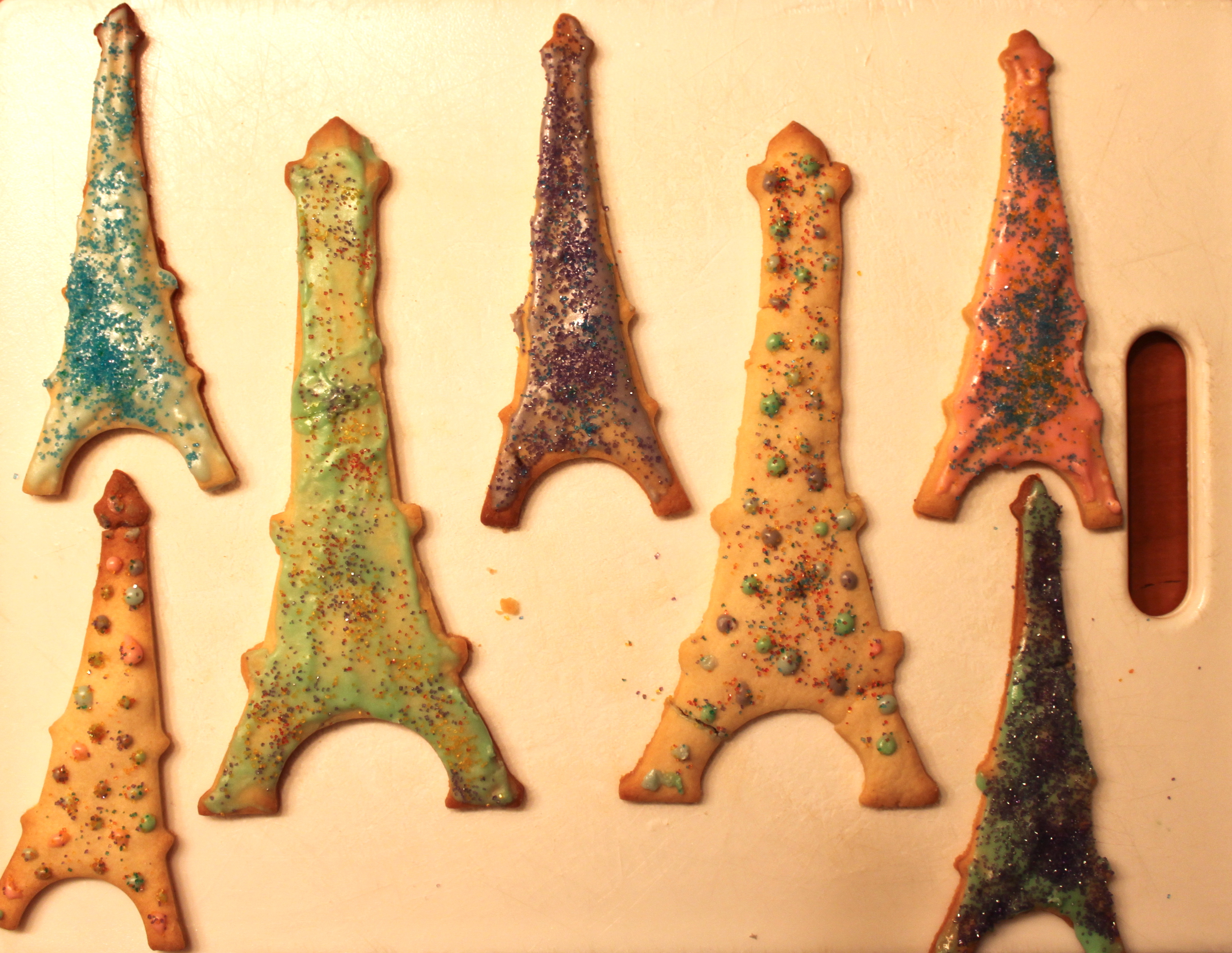
Since I am crazy for the ET or TE (tour Eiffel) as the French say, I thought I’d try my hand at making some at home with the help of a few little hands. They may not be as pretty as the ones you find in the shops, but they do taste pretty darn good, and were made with love.
May 20
After my semi-successful attempt in January to interpret French body language, my favorite virtual French teacher, Géraldine, has come to my rescue again with her helpful new lesson: 12 Common French Gestures.
Finally a clear explanation of j’ai du nez: tapping the side of your nose = I have a good instinct/idea; I have flair; and she offers up a few new ones that I have seen a lot of lately but had not quite understood correctly:
Follow Géraldine weekly on Comme une française TV every Tuesday. Moi, j’adore.

Here is what I know about the American military’s Ready to Eat Meals or MREs: the military chefs strive to make meals that “don’t just taste good… but last … for three years stored at 80 degrees F (26 degrees C), are capable of withstanding chemical or biological attacks, and (can) survive a 10-story free fall (when packed in a crate of 12).”
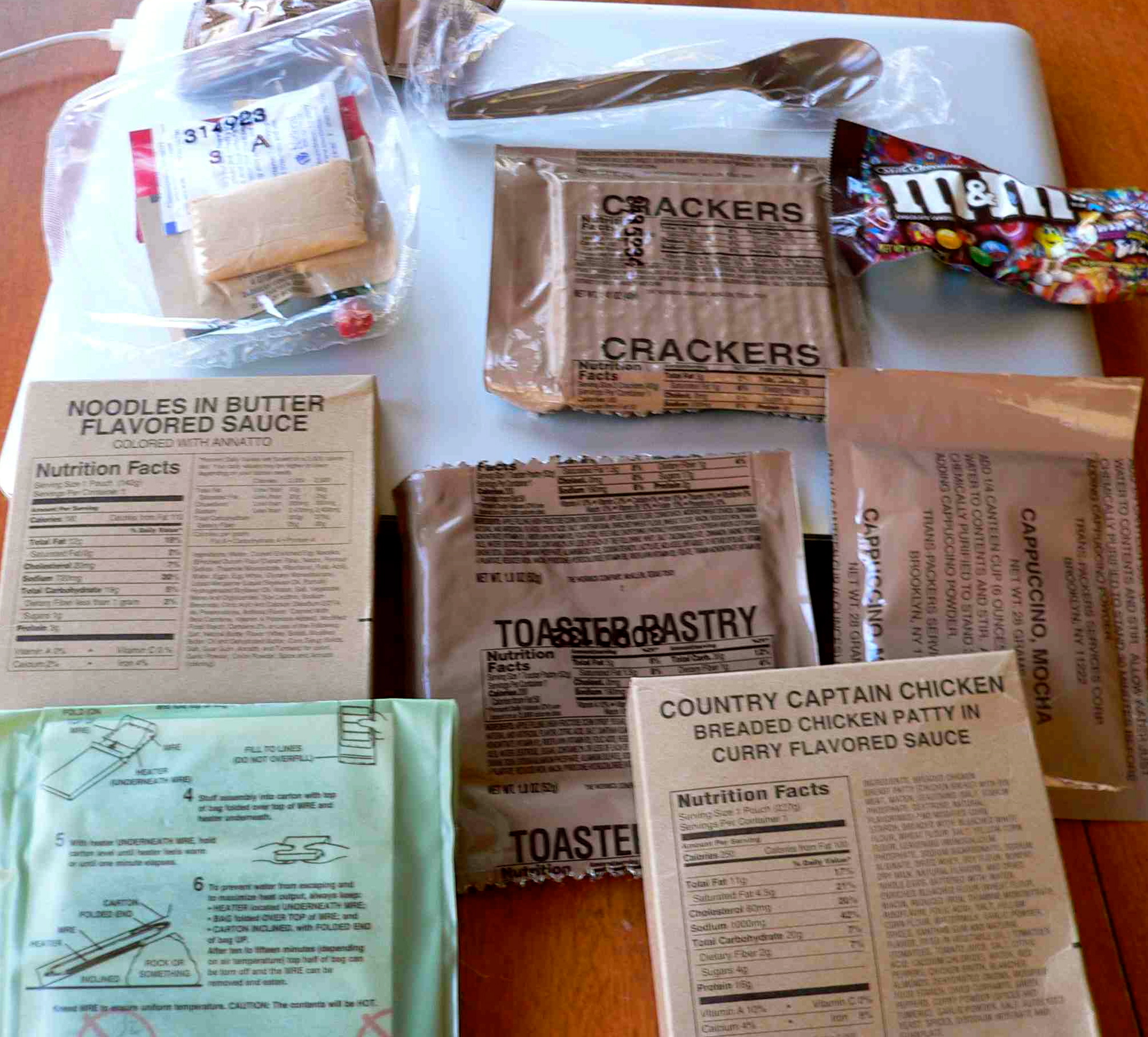
American MRE: noodles in butter flavored sauce and toaster pastries
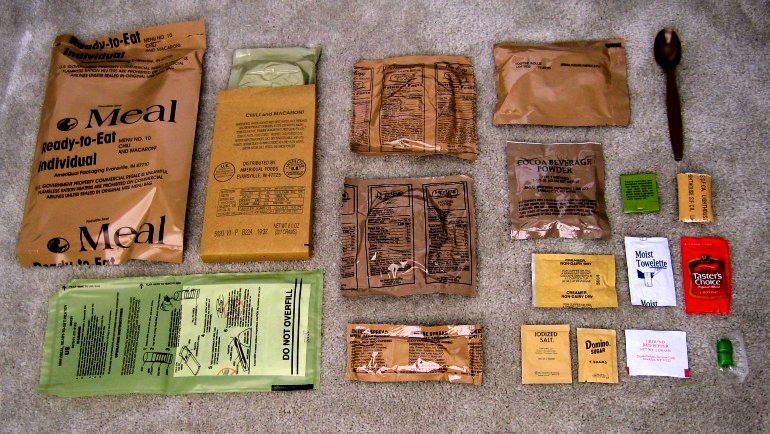
American MRE: chili macaroni
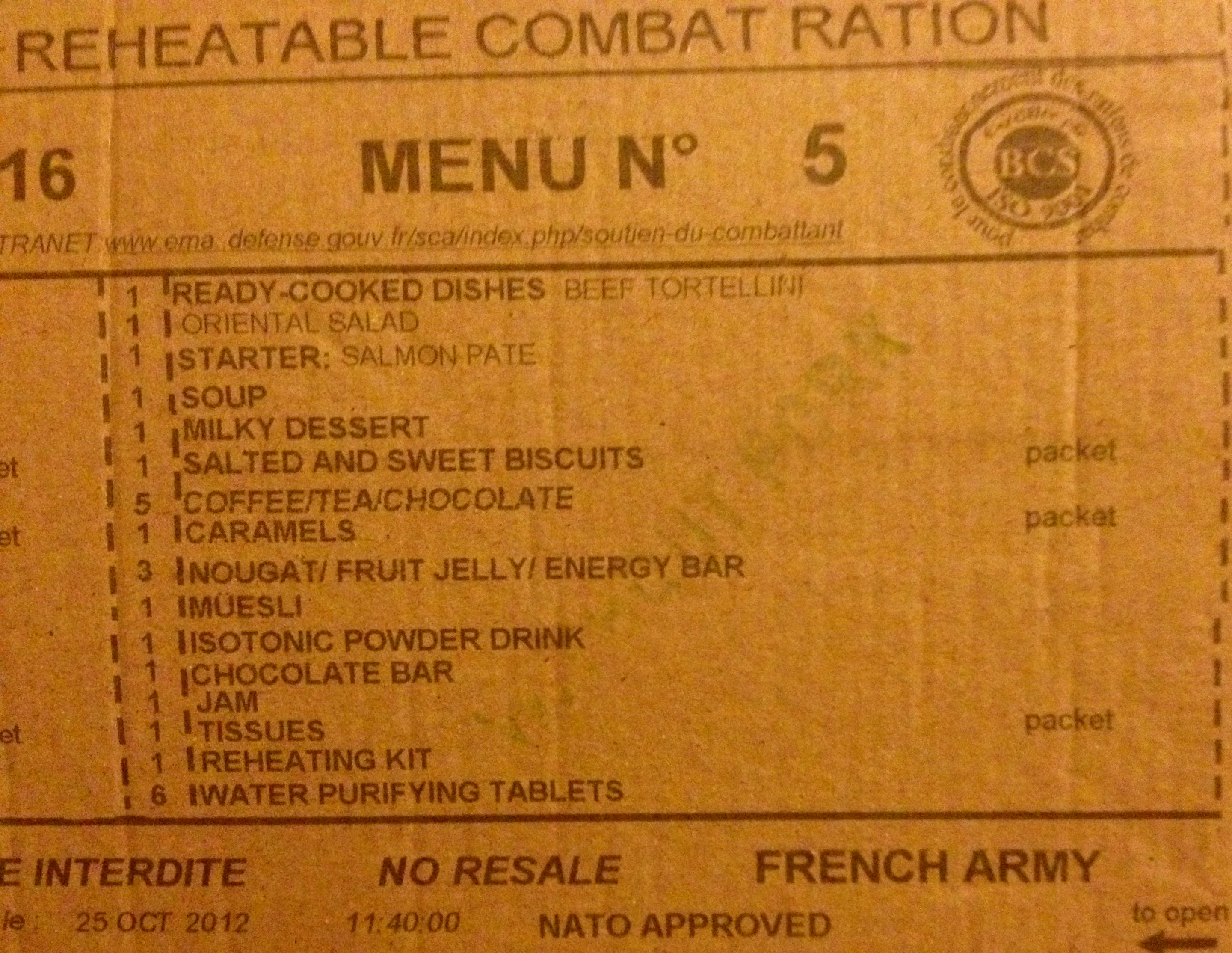
I am assuming that the French Ration de Combat Individuelle Rechauffable (Reheatable Individual Combat Rations) or RCIRs, which a friend of mine in Paris let me take a peak at, have to follow the same rigorous guidelines, as they are NATO approved.

French RCIR: slightly more gourmand…
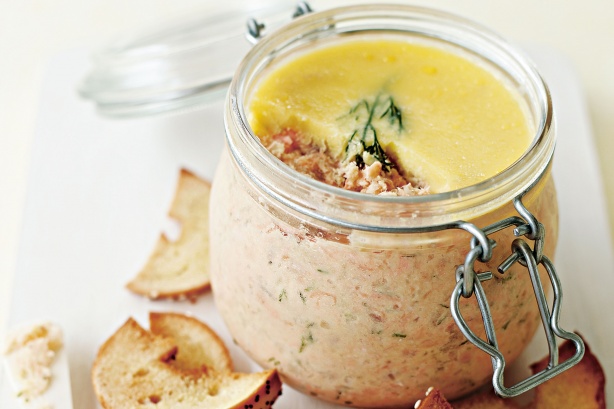
Whatever the circumstances, you’ve got to love the French’s dedication to meal planning. I don’t know what the rest of the brave soldiers serving their countries are eating tonight, but somewhere in the world, some French soldiers are eating rillettes de saumon préparé en Bretagne (salmon pâté from Brittany).

rillettes de saumon préparé en Bretagne, along with some other very French eats…

SALMON RILLETTES : Food and Wine Magazine – Anna Zepaltas
ACTIVE: 30 MIN
TOTAL TIME: 1 HR 45 MIN
SERVINGS: MAKES 2 CUPS
INGREDIENTS
. 1/2 pound center-cut, skinless salmon fillet
. 1 tablespoon anise-flavored liqueur, such as Pernod
. Salt
. Freshly ground white pepper
. 1 celery rib
. 1 leek, halved lengthwise
. 1 small onion, quartered lengthwise
. 1 bay leaf
. 1 teaspoon black peppercorns
. 1 cup dry white wine
. 4 cups water
. 5 tablespoons unsalted butter, softened
. 1 large shallot, minced (1/4 cup)
. 1/2 tablespoon sour cream
. 1/4 pound skinless hot-smoked salmon, flaked
. 2 tablespoons snipped chives
. 1 1/2 tablespoons fresh lemon juice
. 1 tablespoon extra-virgin olive oil
. 1/4 teaspoon smoked sweet paprika
. Toasted baguette slices, for serving
DIRECTIONS:
MAKE AHEAD
The rillettes can be refrigerated for up to 3 days. Pack into a crock and press a sheet of plastic wrap onto the surface. Pour melted butter over the top to seal in freshness.
May 18
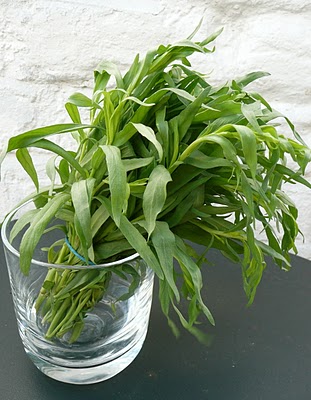
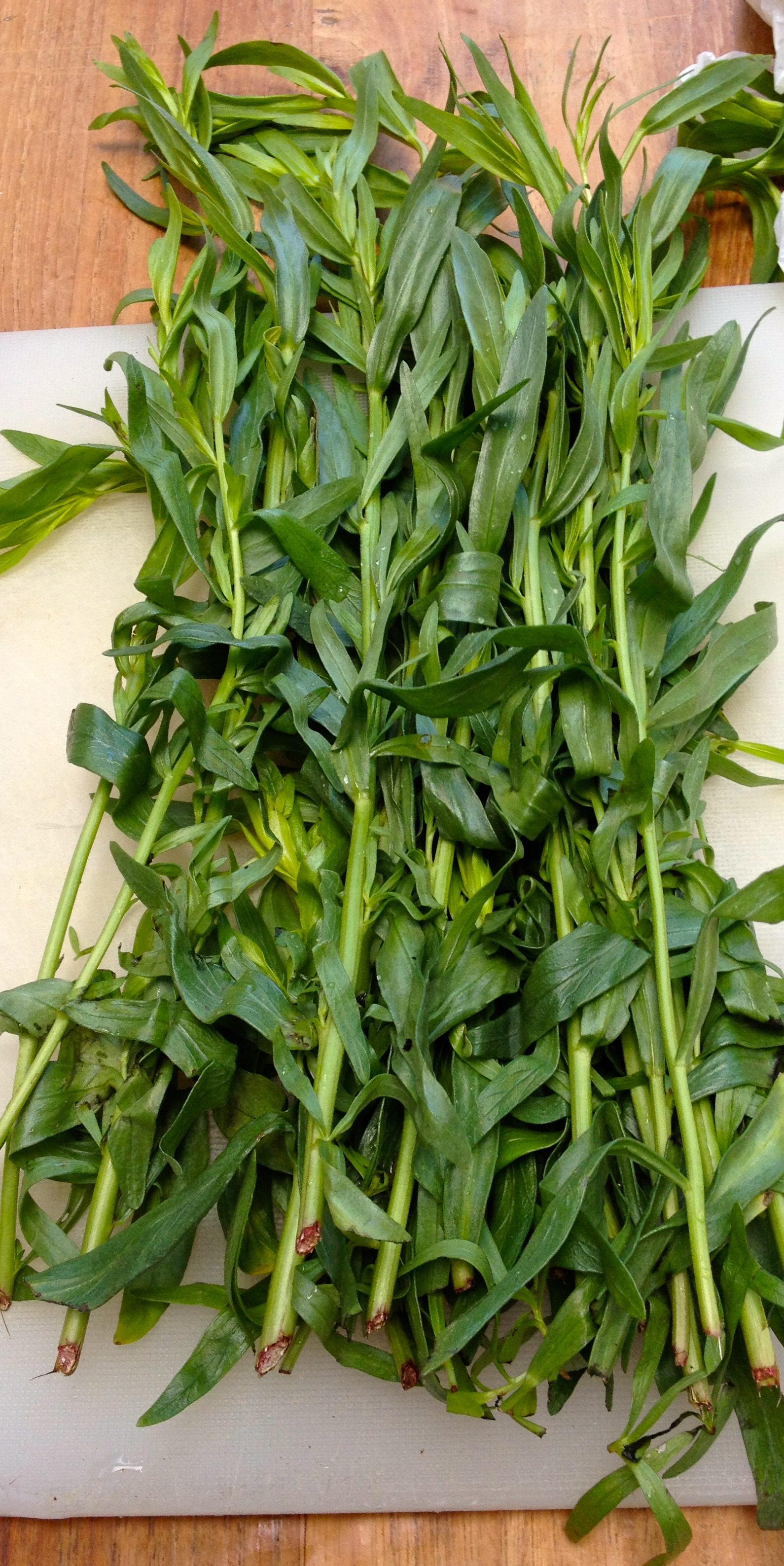 Before your mind starts to wander to the widely debated female hormone that’s fluctuation can send us femmes d’un certain âge spiraling through rapid mood swings, drop the final “e” and add an “o” and you will realize my ode is to the terrific, tried and true French herb, tarragon, not the natural chemical so essential to the female of the species.
There are so many sensory delights at the French markets, and quite a few that I am completely nutty for, and estragon is certainly one of them. Prior to moving to France, I had rarely cooked with tarragon, and I had certainly never cooked or eaten fresh from the market or garden tarragon. Now I can’t seem to get through a day without it.
I throw it in so many different dishes, that the last time I served a couscous salad with chopped up green flecks, a guest asked what it was, and then another replied, “hmmm…tastes like Nancy, must be tarragon.”
source: tastingpages.blogspot.fr
Maybe too much of a good thing can be too much, but I am not quite ready to say that about my beloved estragon. I’m always looking for uses for my favorite window box friend.
To refresh you memory, tarragon is the herb known for its anise-like flavor and scent. Its longish, green leaves are slender and tender and heavenly scented. This delicate yet tasty herb is wonderful with eggs, salads, cheese, and fish and makes the elegant and mouth-watering Tarragon Chicken Fricassée my new favorite dish.
Lucky for all of us, my friend Marie-Françoise just taught me how to make this old-fashioned French recipe. Give it a go, you won’t be sorry.
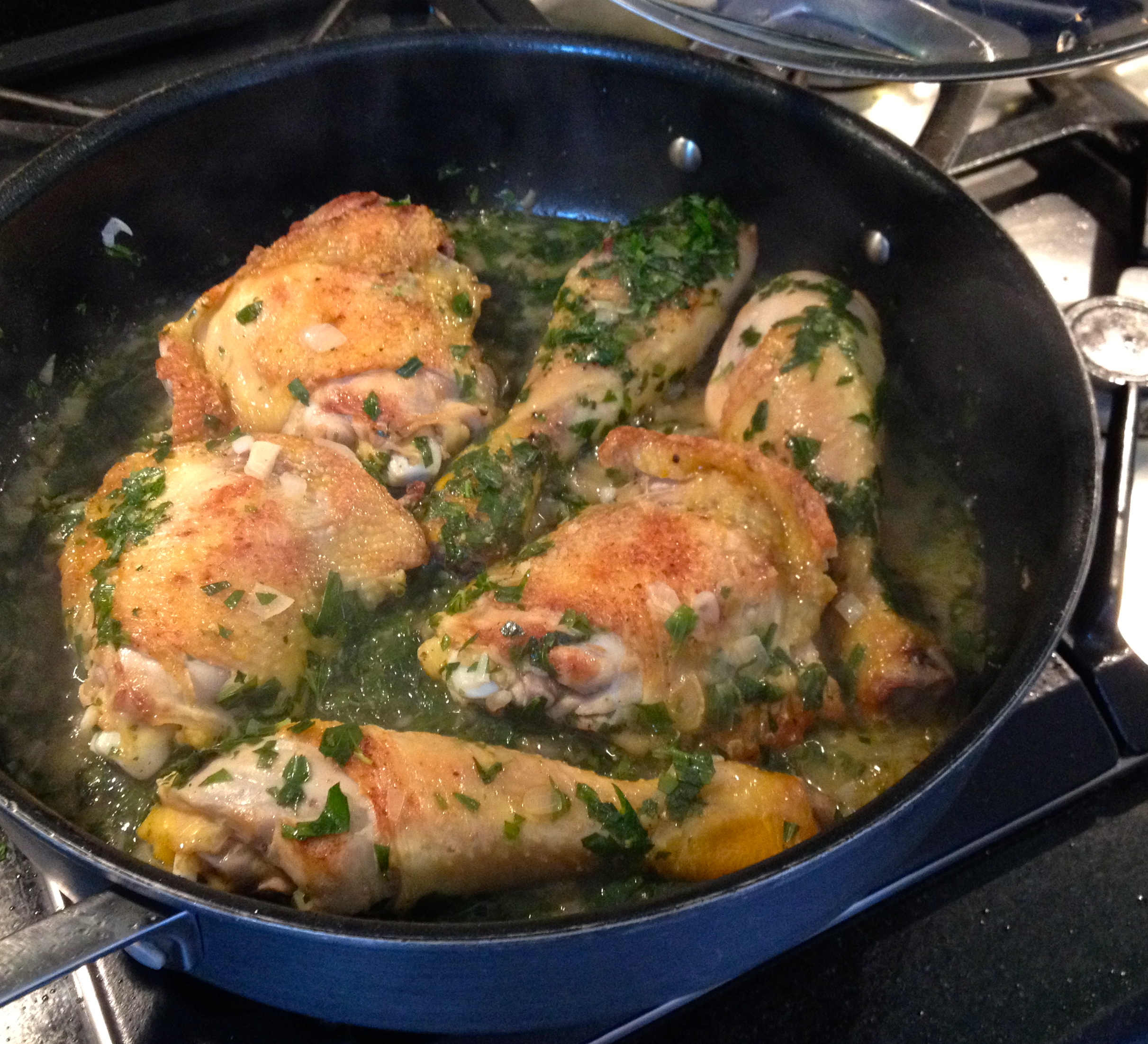
Tarragon Chicken Fricassée (Serves 4)
From the kitchen of Marie-Françoise
Ingredients:
6 large free-range chicken thighs (or legs)
4 shallots (or fresh spring onions), finely chopped
3.5 oz. almond powder
1.5 oz. butter, divided
1 Tbsp. l’huile d’arachide (peanut oil)
½-1 cup dry white wine
½ cube chicken bullion
5 oz. crème fraîche
2 bunches fresh tarragon, washed, spun, and finely chopped
salt and freshly ground pepper
Directions:
Vocabulaire
estragon: tarragon—and a few tips—smell your herbs before buying, they should have a clean, fresh scent, and keep it fresh for up to five days by wrapping it in a just damp paper towel and sealing it in a plastic.
femmes d’un certain âge: women of a certain/unknown age
May 16

source: villedeparis advertising campaign

source: demaeparamae.pt



source: countesslv.blogspot.com
source: amycoady.drupalgardens.com

source: 76actu.fr


May 13
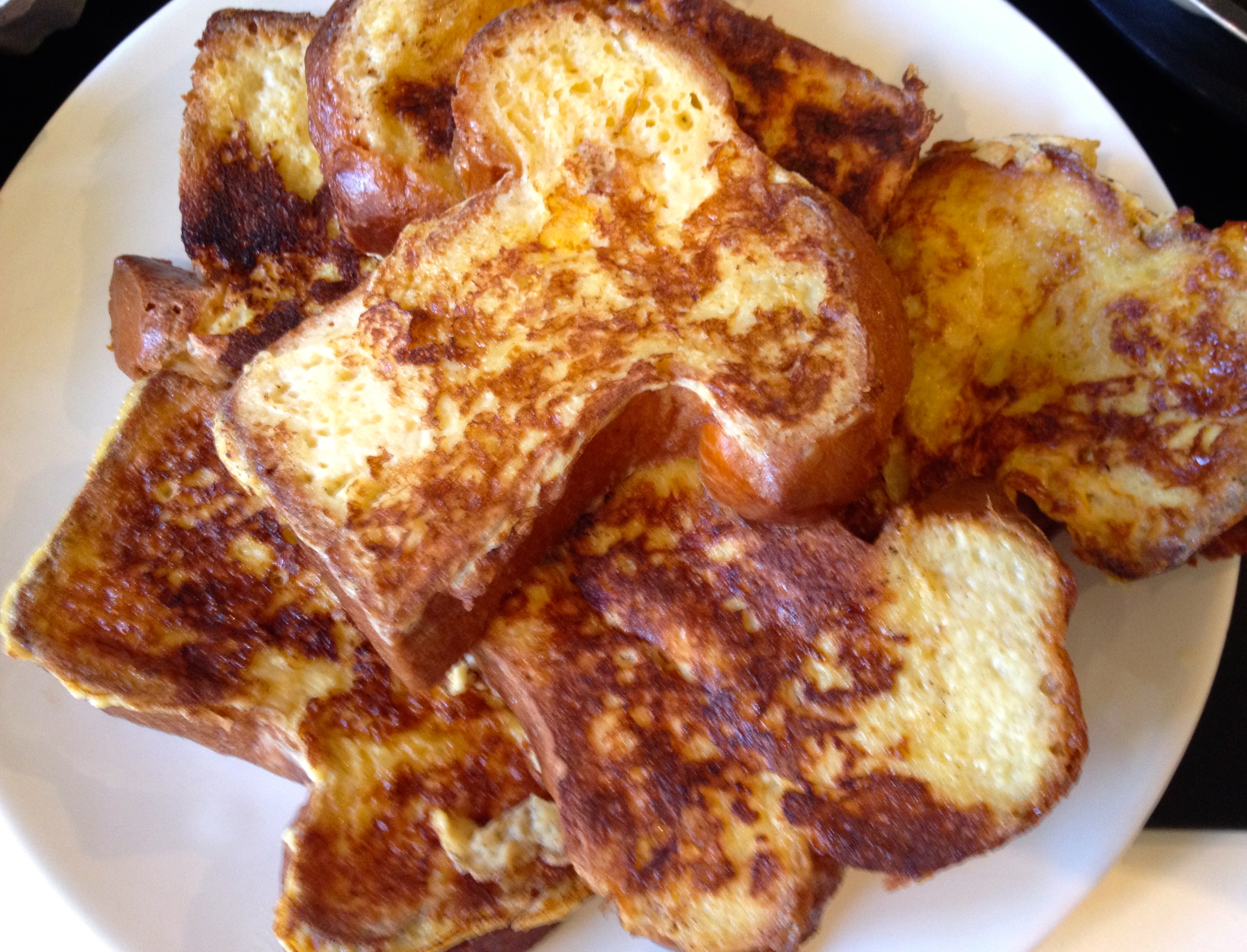
It was another rainy and cool day in Paris, making it the perfect day to serve up some pain perdu, lost bread as the French call it, or “French toast”, as we Americans call it.
The facts and history don’t seem to back up our anglicized name, as its origins date much further back than the foundation of a French state. En fait this delicious French dessert or American breakfast staple can be traced back to medieval times when the recipe (and I use that term loosely) first appeared to make inedible, stale loaves of bread more appetizing. Times were tough back in the day, and the masses could not afford to throw away any bit of edible anything, so the otherwise “lost” bread was battered, buttered, rescued and revived instead of being thrown out.
It doesn’t appear that the French were the first to dip their bread in a milky-egg mixture and fry it up. The English had their own versions (suppe dorate and tostees dorees) during the Middle Ages, and later a similar dish called “Poor Knights of Windsor”. There are even some “French toast” recipes traceable to ancient Roman times, which ironically, the French named pain a la Romaine (Roman bread).
It is also interesting that pain perdu was not just a meal for the poor man. Indeed the wealthy kept this staple on their menu too. Of course, the rich had their chefs make it to order, which meant only the finest white bread could be used—the crust cut off and discarded—before it was dipped in a mixture of beaten eggs, sugar and rose water, fried in butter or lard and topped off with more saffron and sugar infused rose water.
Like the medieval peasants, I also grew up making pain perdu with stale bread we could not afford to throw away. And boy, did my dad make a mean Sunday morning French Toast (and “Eggs Over Bread”), another poor man’s delight.
In France, I have learned that the best and most authentic way to make pain perdu is with day-old brioche (a lightly sweet bun or loaf-that the boulangers of France do so well), sliced thickly and dipped in eggs, milk, or better yet crème, seasoned with a little sugar and nutmeg, and gently fried in, what else, salted butter from Bretagne.


C’est délicieux! Que pensez-vous?
Here is a recipe for the “original” pain perdu, and please click the underlined links for my other favorite “lost bread” recipes along with my daddy’s famous Eggs Over Bread.
From: The Medieval Kitchen, Recipes from France and Italy by Odilie Redon (dated to 1450)
Vocabulaire
C’est délicieux! Que pensez-vous? It’s delicious. What do you think?
pain a la Romaine: Roman bread
pain perdu: French toast, literally: lost bread


 365+ Things I Love About France