No. 113: La Truffe
Black Gold!
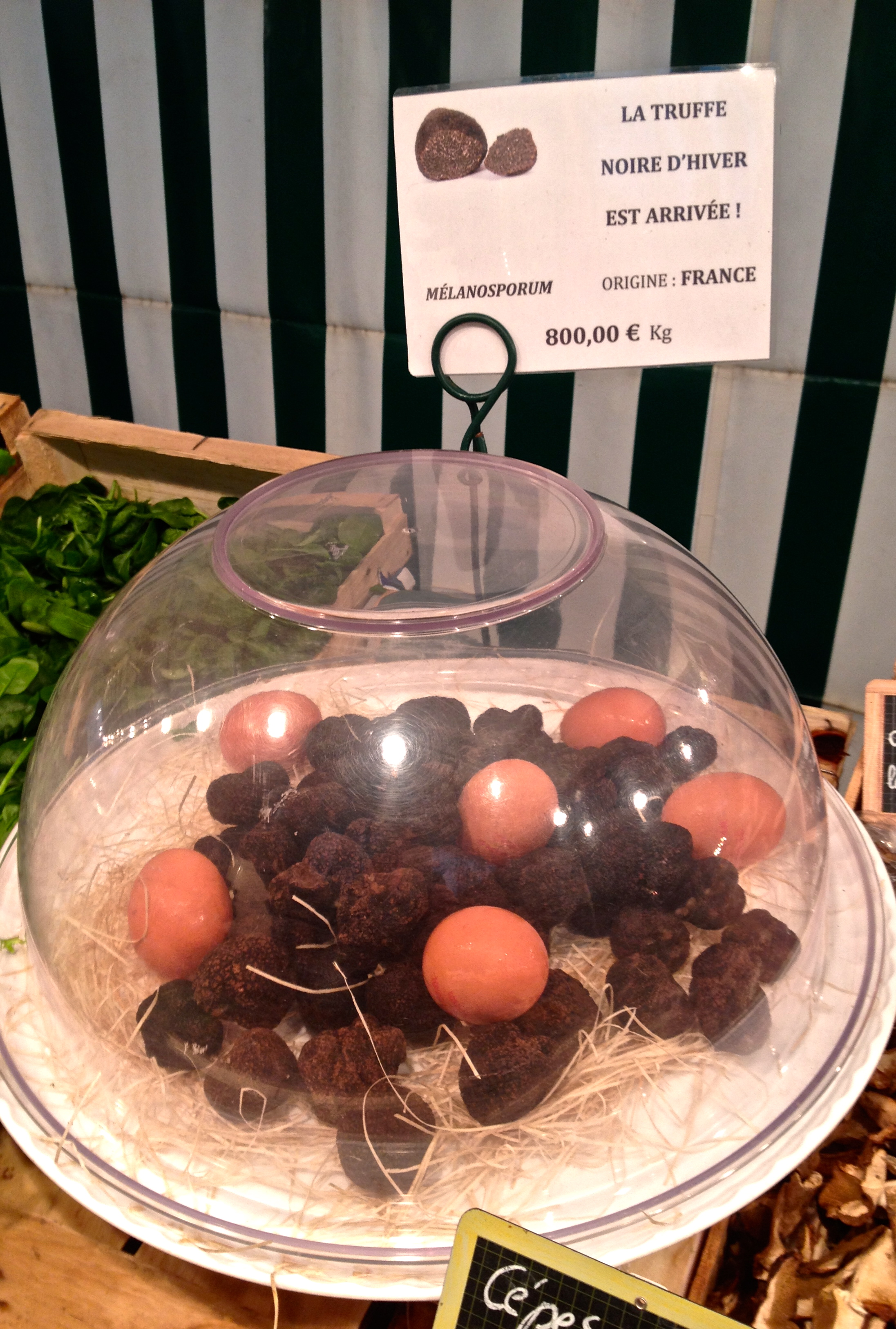
La Truffe Noire d’Hiver est Arrivée! And what a bargain…only 800€ Kg…but, you only need one!
Vocabulaire
la truffe: truffle
Jan 16
Black Gold!
La Truffe Noire d’Hiver est Arrivée! And what a bargain…only 800€ Kg…but, you only need one!
Vocabulaire
la truffe: truffle
Jan 16
I don’t think Spéculoos originated in France, but for me it will always remind me of France because this is where I first discovered it. Even though it’s not at its height of popularity en ce moment, it can still be found everywhere, in all its various incarnations.

In case you have been living under a log, Spéculoos / Speculaas / Spekulatius is a thin and crispy spiced, shortcrust cookie, which was traditionally baked around Saint Nicolas Day in Germany, Belgium and the Netherlands. Nowadays you can find the cookies year-round in your local grocery store. Spéculoos biscuits always have some sort of impression stamped on the front of the cookie, originally related to Christmas, but these days it can be a branding swoosh, an animal, a figure, or really anything your heart desires.
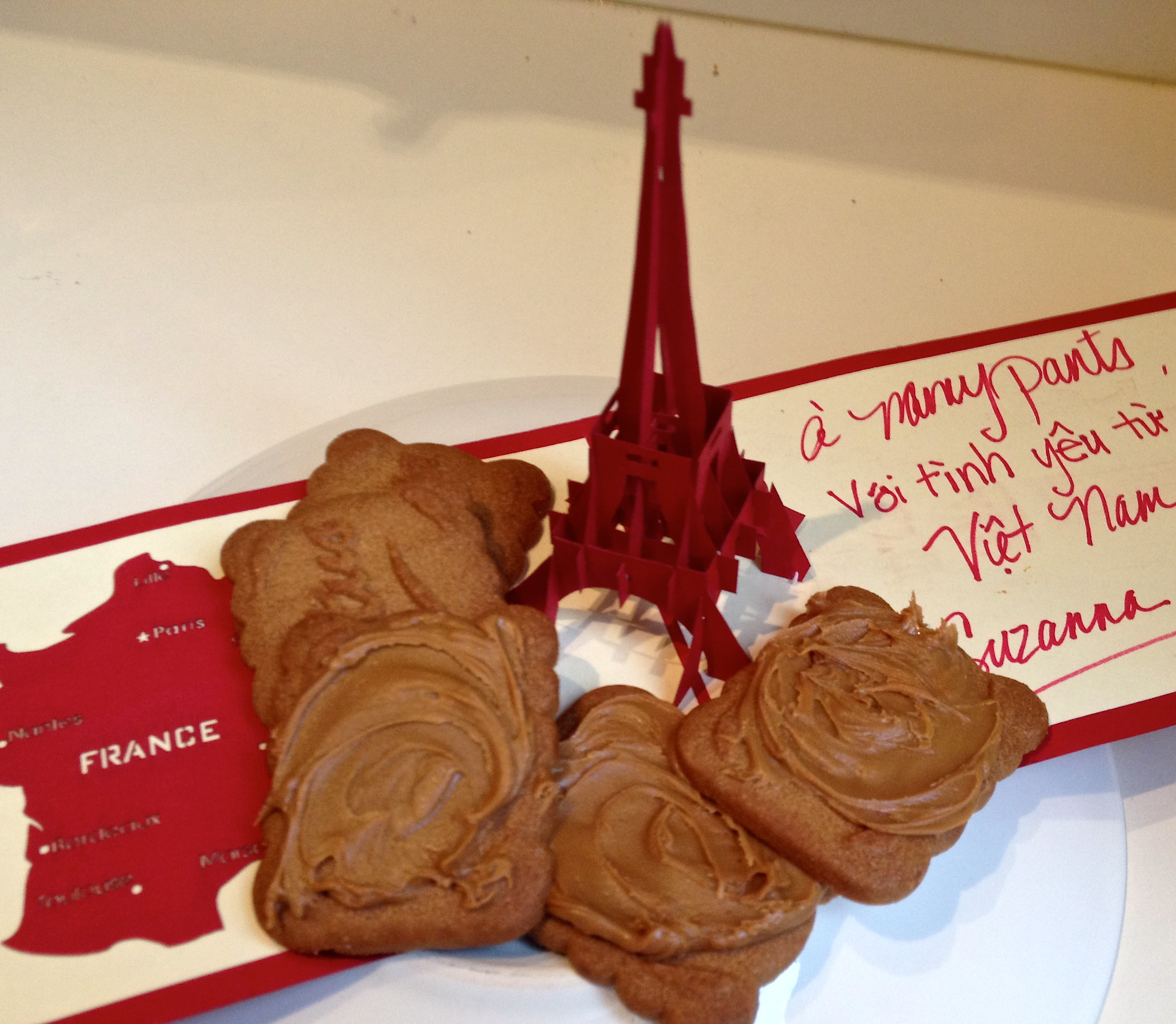
How about some Spéculoos on Spéculoos?
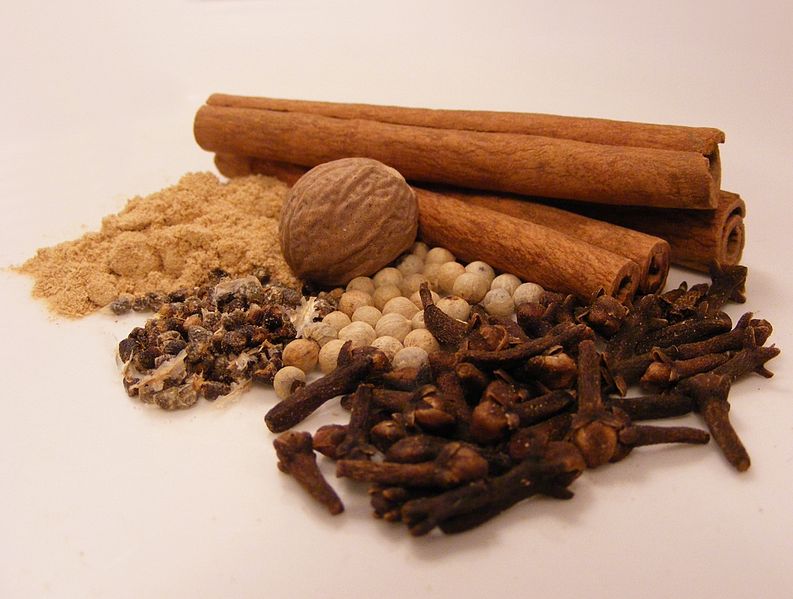
The combination of ginger, cloves, cinnamon, nutmeg, cardamom and white pepper, along with plenty of butter, I’m sure, is what makes these cookies so addictive. They are an excellent accompaniment to hot chocolate or coffee. Sometimes French cafés serve them, in lieu of a small piece of chocolate, when they bring your boisson chaud.
Relatively recently, a couple of companies in Belgium decided that the cookie itself wasn’t enough. They decided the world needed a Spéculoos spread. Apparently they were right…people seem to be crazy for it.


It looks like peanut butter and comes in a jar like peanut butter, but it tastes nothing like the good old American standby. It is literally a spread made from crushed cookies and vegetable oil. It’s super high in calories, and pretty darn delicious in small quantities or by the spoonful.
Adding Spéculoos cookies and Spéculoos spread to make desserts even more decadent seems to be the game. As well as flavoring different baked goods with Spéculoos, I’ve also seen savory meat dishes cooked with Spéculoos.
So far this week, I’ve come across a Spéculoos apple tarte, a bacon-kiwi-Spéculoos pancake stack, a friend who eats oatmeal, bananas and Spéculoos before she goes running, Spéculoos covered popcorn, a Spéculoos macaron (bien sûr), Spéculoos ice cream, Spéculoos milkshakes, and the traditional moelleux au chocolat filled with melted Spéculoos instead of chocolate.


Of course Picard and a couple of boulangeries around town are featuring special Galette des Rois filled with chocolate and Spéculoos instead of frangipane.


I see the draw when it’s used in a dessert, but I think only the diehard fans will be inclined to order Stir Fried Chicken and Spéculoos Lettuce Wraps or Roasted Pork Fillets drizzled with a Spéculoos Sauce.
Vocabulaire
bien sûr: of course
boisson chaud: hot drink
en ce moment: at the moment
Galette des Rois: Kings cake, a puffed pastry cake filled with almond paste and served on Epiphany and during January.
moelleux au chocolat: an individual-sized chocolate cake filled with melted chocolat; lava cake.
Jan 14
I go through extreme ups and extreme downs when it comes to learning French. Some weeks I feel very confident and have great ego-boosting moments when I faire les courses, give proper directions to lost French tourists, or can have a solid conversation with my gardienne. But there are a lot of weeks, when I feel like a toddler trapped in a grown woman’s body just trying to be understood.
Learning French has been one of my biggest stumbling blocks over the last 5 years. I’ve studied hard and taken many classes. I listen to French on my iPod everyday. I keep journals of new vocabulary. I do lots of grammar worksheets. I’m fine on paper when I read and write, and I’m fine on understanding spoken French. But often when I speak, I completely freeze. My mouth dries up, my tongue gets tied, and my brain seems to go on holiday. It is a pattern I can’t seem to break.
Spoken French is the monkey on my back.

source: cheeeseburger.com
I just wish he would climb off and head back to the tropics!
2014 has to be the year that I finally stick to my resolution to stop being afraid of making mistakes and learn to laugh at myself.
Having been trying to make that resolution my mantra for the last 2 weeks, it was quite fortuitous that this (from my new favorite online teacher, Géraldine of Comme une Française TV ) showed up today, just as I was beating myself up about a rough exchange with Air France over the telephone.
Géraldine is great at making me realize I am not alone in my foibles and always encourages her students to shrug it off, chuckle at yourself, and keep on trying.
Give her newest video a lookie-loo and smile!
Five (Very) Embarrassing Mistakes from Comme une Française TV
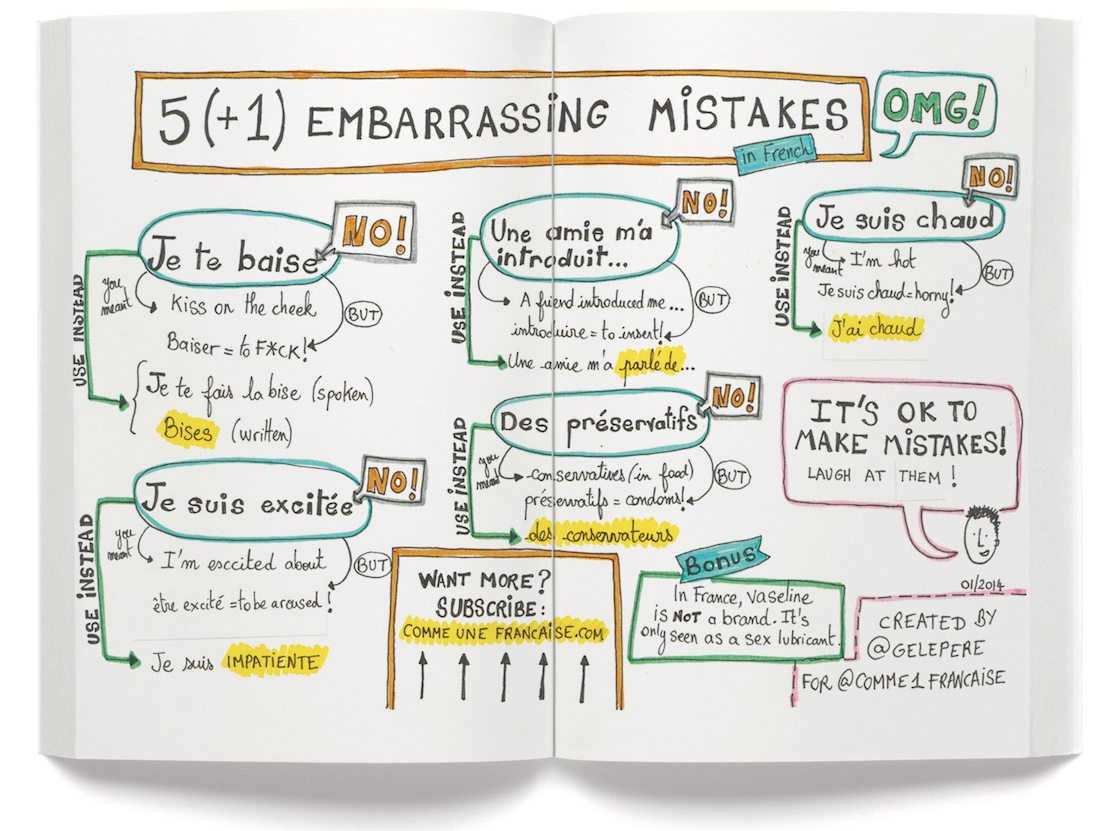
A great website for learning everyday French: source: http://www.commeunefrancaise.com
Vocabulaire
Comme une Française: Like a French (woman), as in speak like a French woman; also a brilliant website to learn very practical French taught by a thoughtful but silly française.
gardienne: caretaker, the person (often a Portuguese woman) who watches over your apartment building
faire les courses: do the shopping, run errands

I love this website:
http://www.commeunefrancaise.com do take a look!
Jan 12
 I ride the métro a fair bit, especially when I am taking French classes. It’s not my preferred form of transport, that would be my feet or the Velib (the fantastic bike share program found throughout France). If those options won’t get me where I need to be, than I try to hop on a bus before heading underground.
But when I do have to head down under, the Paris métro is fast and efficient. It could be a little cleaner and I’d like it if it was less crowded, but all in all, it’s a marvelous system. Some days though, like in any big city, jumping on the métro in Paris can just be a slog. Everyone is cranky, no one smiles, and sometimes people smell.
It always cheers me up though when I open a carriage to find a musician entertaining the commuters. I’m not sure how the French feel about them. Not many travelers open their wallets when the musicians pass their cup, but they always brighten my day, and if I have cash, I toss something in.


Sometimes they are just singers alone with their speaker and microphone. Sometimes one musician may have six instruments. I have even seen a five-piece band. I was completely devastated when I missed the Hungarian sting quartet struggling to get their cellist off the métro just as I was getting on.

And in case you are wondering, there is absolutely no shortage of accordion maestros in this town.


I’ve heard a lot of really bad Frank Sinatra, some so-so Edith Piaf, some crazy, lyrical poetry jam, some pretty decent opera, and a lot of average Paris café music.

I give these people a lot of credit, we are not the friendliest crowd. But I for one am glad they choose to get up every day and try to earn a living. The good, the bad and the great, they all make me smile.
Anyone who has lived in France or visited knows that public bathrooms are not plentiful. Unlike the States, cities in France often don’t provide nice communal toilettes for their residents and guests. If they do happen to sponsor some sort of toilette, it’s usually pretty dégoûtant, and often Turkish-style to boot. I was talking to a good French friend of mine who now lives in Washington, D.C. and when I asked her what she likes about living in the US, public toilets was on her Top 10 List.
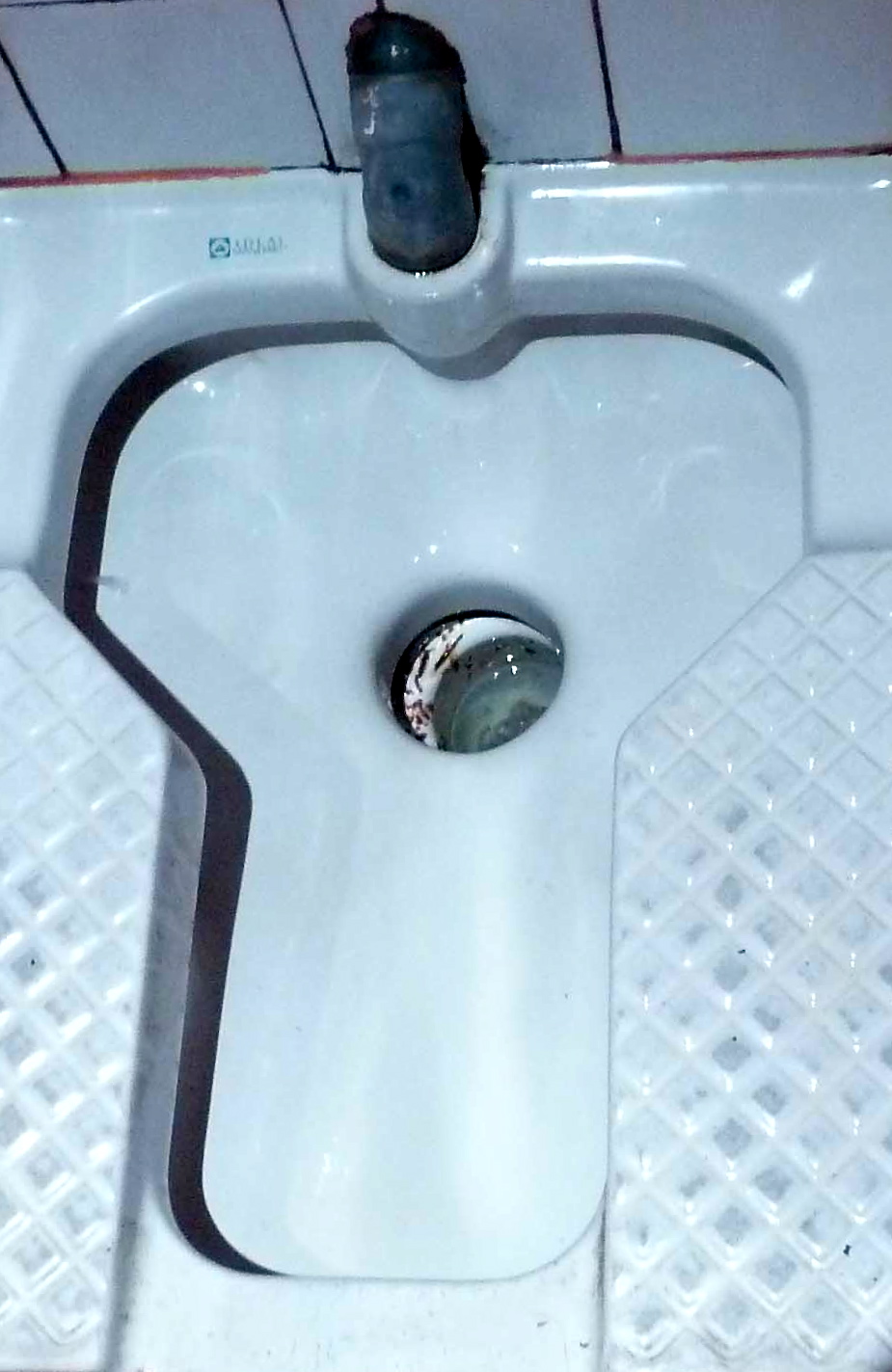
Turkish, or as Brits call them, French toilet
Yep. In the U.S., if you need to pee when you’re out and about it’s never a worry. Public bathrooms are plentiful and most of the time clean, and you never have to squat over a hole to pee. En fait, my hometown of Golden, Colorado, boasts one of the “finest” public toilets in the Denver Metro area. We actually had a parade, lead by our plunger-waving Mayor, when our fancy public facility was opened (and christened the the Taj Mastall).

The Taj Mastall, Golden, Colorado
So, you can imagine my dismay when, coming from this small town that strongly valued public sanitation, I landed in a huge metropolis where public toilets are so few and far between. Perhaps this lack of facilities is why so many men in France pee in public gardens and on the street.
Mais, what about us girls? We can’t pee in the breeze.
Well it turns out Cécile Briand had the exact same question, and answered it by writing the nifty guidebook: Où faire pipi à Paris. (Where to pee in Paris).

It is a brilliant little book that fits neatly in my purse, and c’est pain bénit, (it’s a godsend), especially for women.
She has listed (and updates yearly) 200 toilettes in Paris that are accessible to the public. Her guide, arranged by arrondissement and including handy maps, also includes a history of public toilets and is limited to only toilets which are:
si possible, sont agréables, en accès libre (sans fouille de sac ou rarement), gratuite et bien répartis dans la ville (when possible, pleasant, with open access (without or rarely having to have your bag searched, i.e. museums), free, and well located in the city.
While some of the toilets she lists aren’t up to American standards, at least I know that if nature calls, somewhere in my general vicinity I can faire pipi.
Vocabulaire
C’est pain bénit! It’s a godsend!
dégoûtant: disgusting
en fait: in fact
faire pipi: pee, go to the bathroom
mais: but
Où faire pipi à Paris? Where to pee in Paris
Jan 9
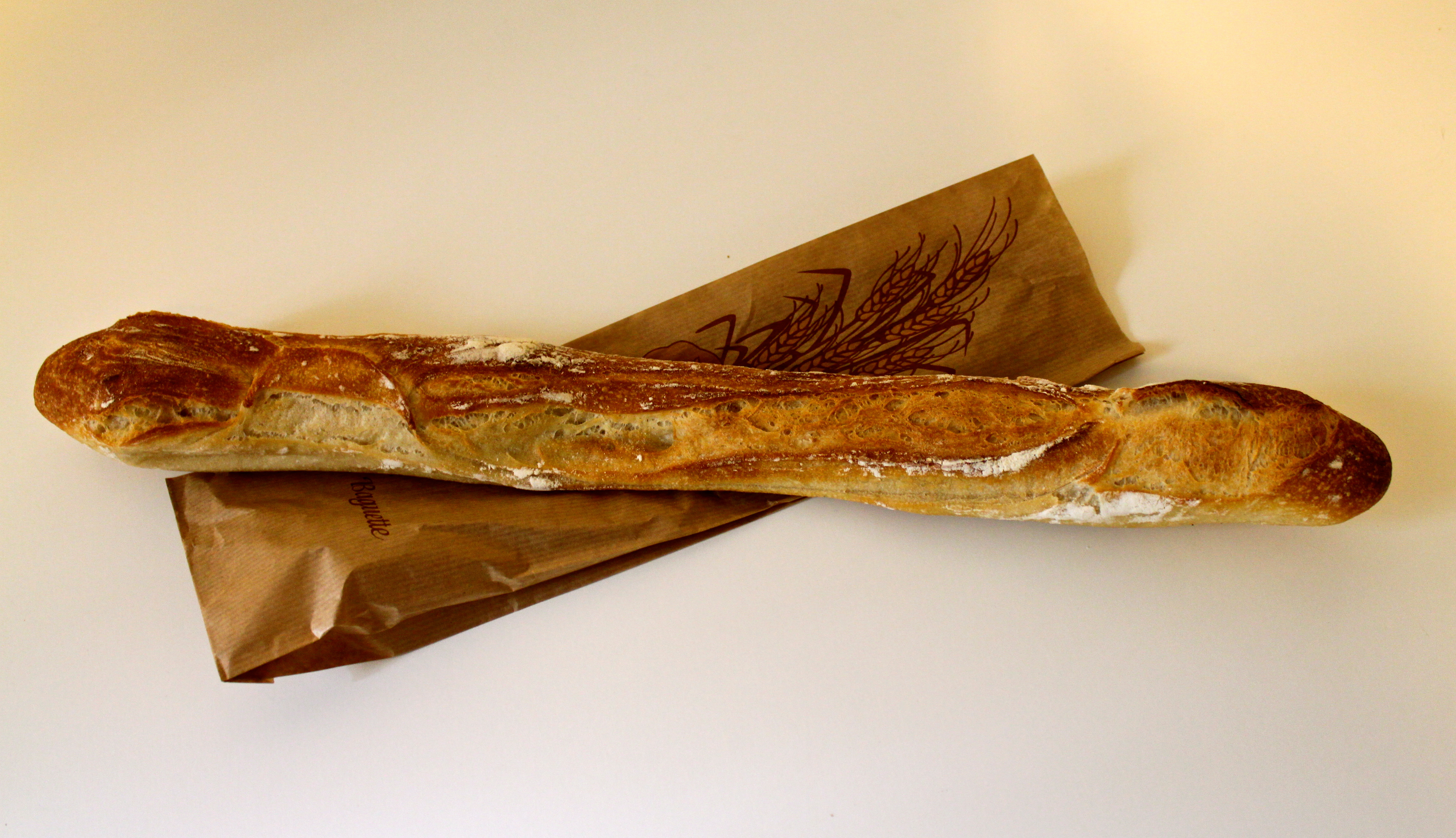
Bread. Glorious bread…
One of the many things France does right is bread. There are so many different types of bread to choose from in the boulangeries, it can get overwhelming at times. I had planned to do an extensive homage to bread this month, mais malheureusement, je suis au régime, and bread is one of my biggest weaknesses.
Donc, you will have to settle today for what I hope will be fun: idioms from the bakery or idiomes de pain.
Now, the first thing to know about bread is the French word for it: pain. No it is not p-a-i-n, as in agony, affliction, grief, heartache, and misery, but pain as in let’s-mix-some-flour-yeast-and-water-together-and-get-baking, and rather “Frenchily” pronounced: “pehn”.
One of my favorites expressions with “pain” which I hear the little boys shouting in my apartment corridors: Je vais au pain! Literally: I go to the bread, but meaning: I’m going to get the bread!
And we all need to get the bread. Bread is life, bread is sustenance, and bread is also clever when in the mouths of the French. Come have a taste.

Some happy exclamations:
C’est pain bénit! (This is blessed bread.) It’s a godsend!
Bon comme (du) bon pain! (Good like good bread) Extremely good!
Nul pain sans peine! (No bread without penalty) No pain, no gain!
A tragic saying:
If my father-in-law is a plus de la moitié de son pain cuit (his bread is more than more than half baked), sadly he won’t live long.
Are you a worrier?
Don’t tell your mother you’re avoir peur de manquer de pain (fear running out of bread) worried about the future.
Regarding money:
If your son has a job, he gagne son pain (earns his bread), make his living.
If you are a good bargain hunter, you can pick up something pour une bouchée de pain (for a mouthful of bread) cheap, or for a song.
If you are a lousy bargain hunter, you manger un pain trempé de larmes (eat bread soaked in tears), pay a lot for something.
If your product se vendre comme des petits pains (sell like rolls), it’s selling like hotcakes.
It’s bad if you être à l’eau et au pain sec (to be given only water and bread) because you are bankrupt.
Regarding work:
If you avoir du pain sur la planche (have bread on the board), you have a lot on your plate.

Looking for a doughy insult? Try these:
If somebody vendre son pain avant qu’il ne soit cuit (sell his bread before it is baked), they are a bit presumptuous or in American-speak, they “count their chickens before they’ve hatched.”
If your brother ne vaut pas le pain qu’il mange (doesn’t want the bread he eats), he is lazy.
If someone or something is à la mie de pain (the breadcrumbs), they are worthless, or unreliable.
If your friend mange son pain en son sac (eats his bread in his bag) he does it on the sly, and might not be trustworthy.
If your girlfriend pleure le pain qu’elle mange (cries the bread that she eats), she’s stingy.
Politicians may be accused of enlever à quelqu’un le pain de la bouche (take the bread from someone’s mouth) depriving someone of their livelihood.
If you savoir de quel côté son pain est beurré, (know which side your bread is buttered on), you are an opportunist.
Et enfin:
If you faire passer le goût du pain à quelqu’un (take away the taste of bread from somebody), you do them in, knock them off, or take them out, (kill them)…
…and then, I guess they are toast!

Vocabulaire
boulangeries: bakeries
donc: so, therefore
idiomes de pain: bread idioms
Je vais au pain! I’m going to get the bread!
mais malheureusement, je suis au régime: but unfortunately I’m on a diet.
pain: bread
With special thanks to my French teacher Nicolas and my classmates, and About.com, please let us know where we went wrong.
Jan 7
I feel guilty posting these pictures as most of the United States is currently experiencing a deep freeze…bon courage, mes amis.


Meanwhile us folks in Paris are having a very mild winter so far. After our brilliant long-lasting autumn, it seems like spring is already knocking on our door. We are expecting mid-to-high 50s (15-10 C) all week, and we had blue skies all morning.


I add mild winters as one of the things I love about this country, because in my short time in France, I have had two mild winters, and one bone chilling winter. (Fingers crossed that warm bones continue this year.) I’m pretty sure I have been VERY lucky, but coming from a state whose motto is “300 Days of Sunshine”, I am used to bright and sunny winters.

Christmas in Colorado, 2011
While I’m sure that winter hasn’t come and gone in Paris, the trees and flowers on the Champ de Mars, seem to have their own idea.


Vocabulaire
bon courage, mes amis: good luck, my friends


 365+ Things I Love About France