Skip to content

Posts from the ‘Food’ Category

No. 253: ET at Home

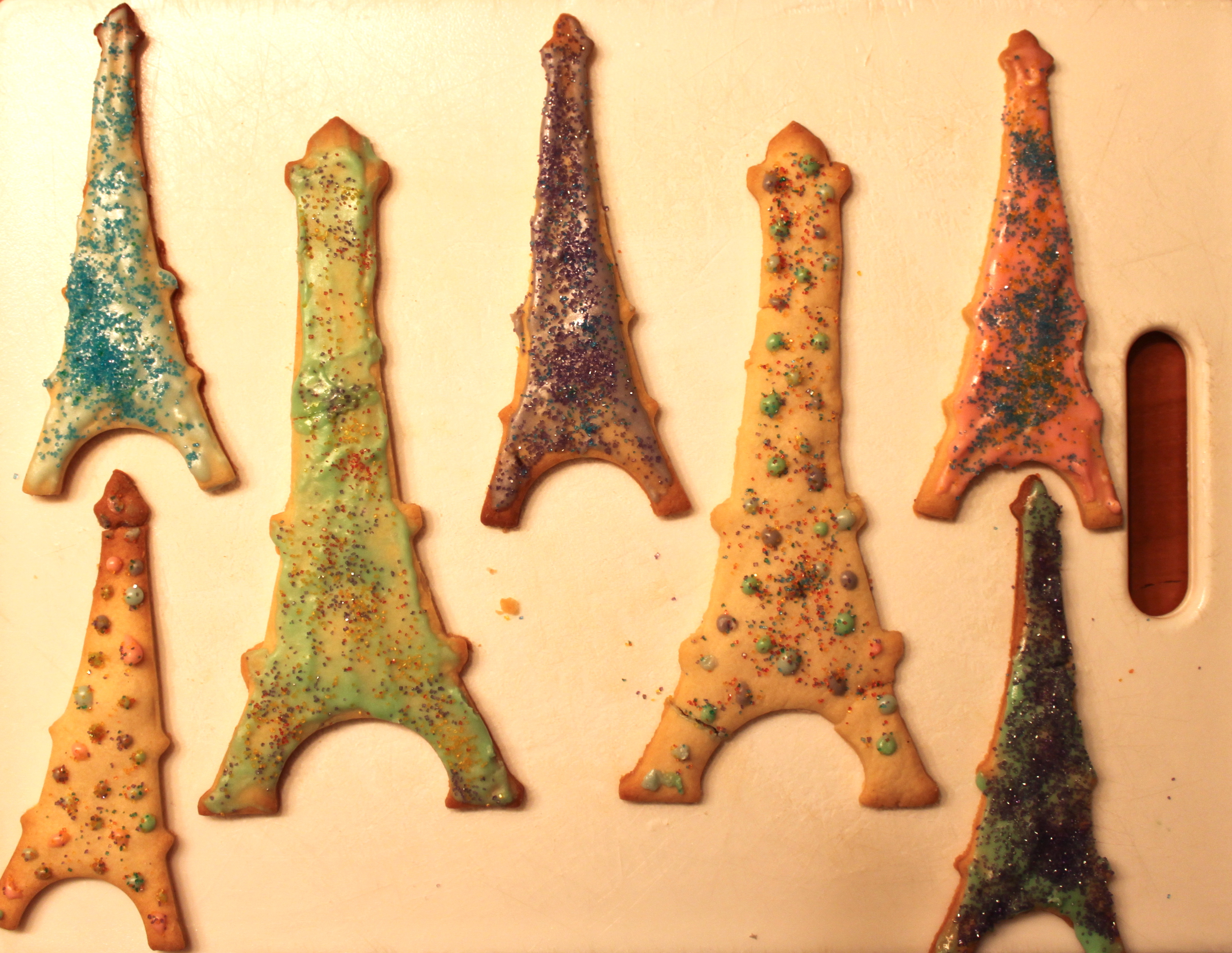
Since I am crazy for the ET or TE (tour Eiffel) as the French say, I thought I’d try my hand at making some at home with the help of a few little hands. They may not be as pretty as the ones you find in the shops, but they do taste pretty darn good, and were made with love.

eiffel-tower-cookies.jpg


No. 251: French MREs (Meals Ready to Eat)

MRE_RCIR_france.jp

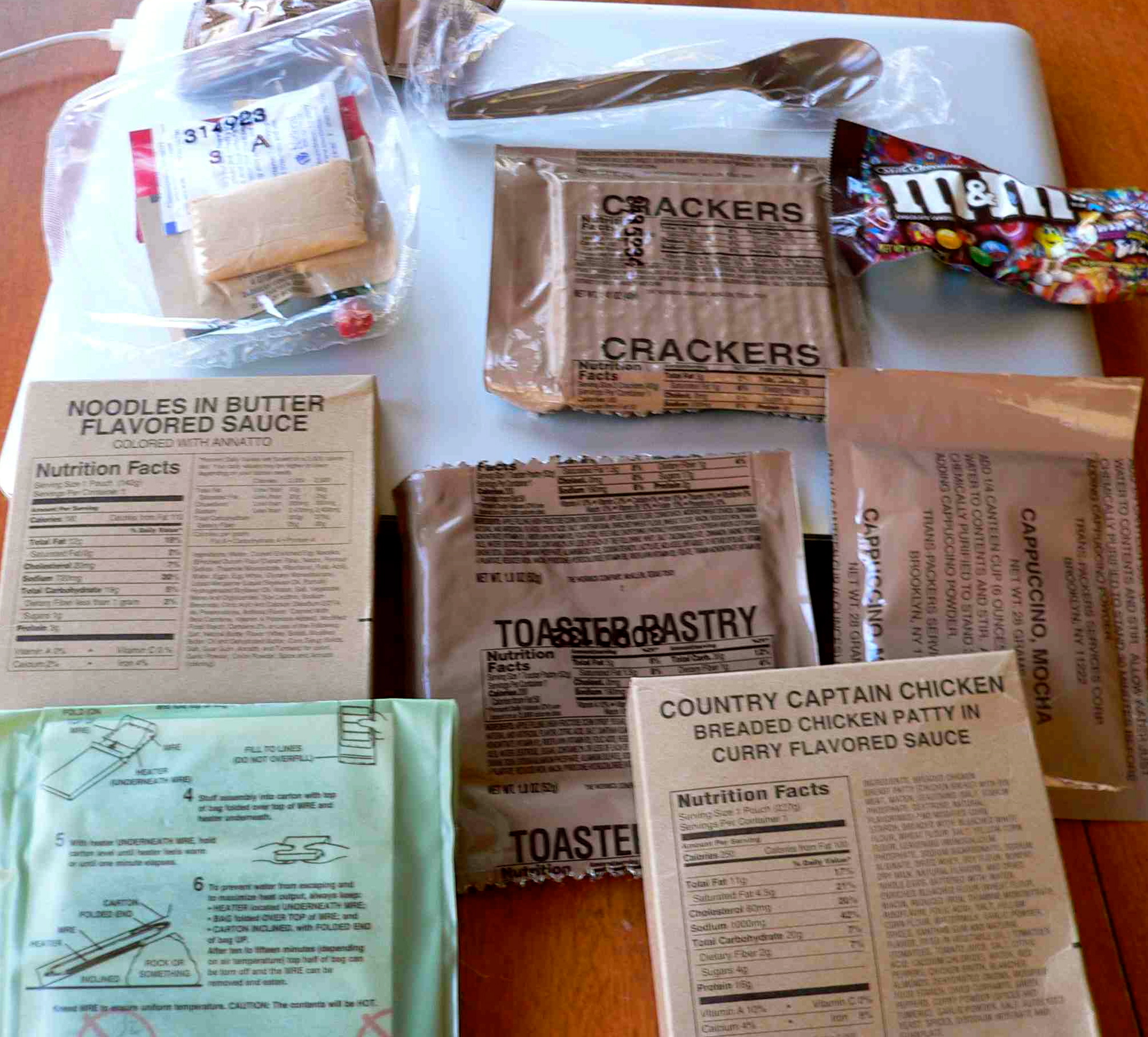
Here is what I know about the American military’s Ready to Eat Meals or MREs: the military chefs strive to make meals that “don’t just taste good… but last … for three years stored at 80 degrees F (26 degrees C), are capable of withstanding chemical or biological attacks, and (can) survive a 10-story free fall (when packed in a crate of 12).”

American MRE: noodles in butter flavored sauce and toaster pastries

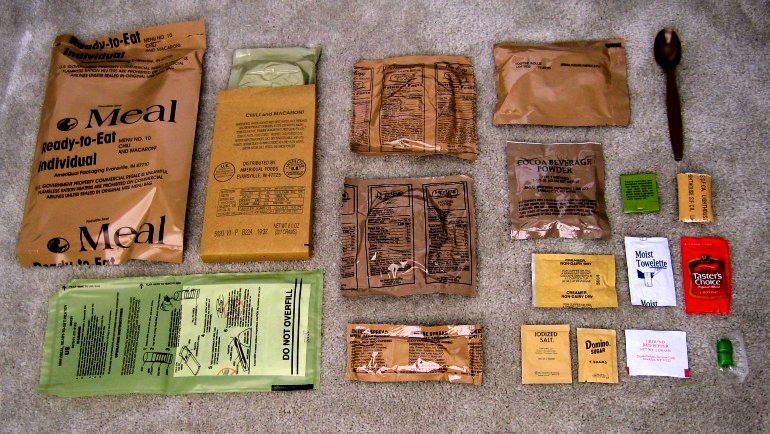
American MRE: chili macaroni

American MRE: chili macaroni

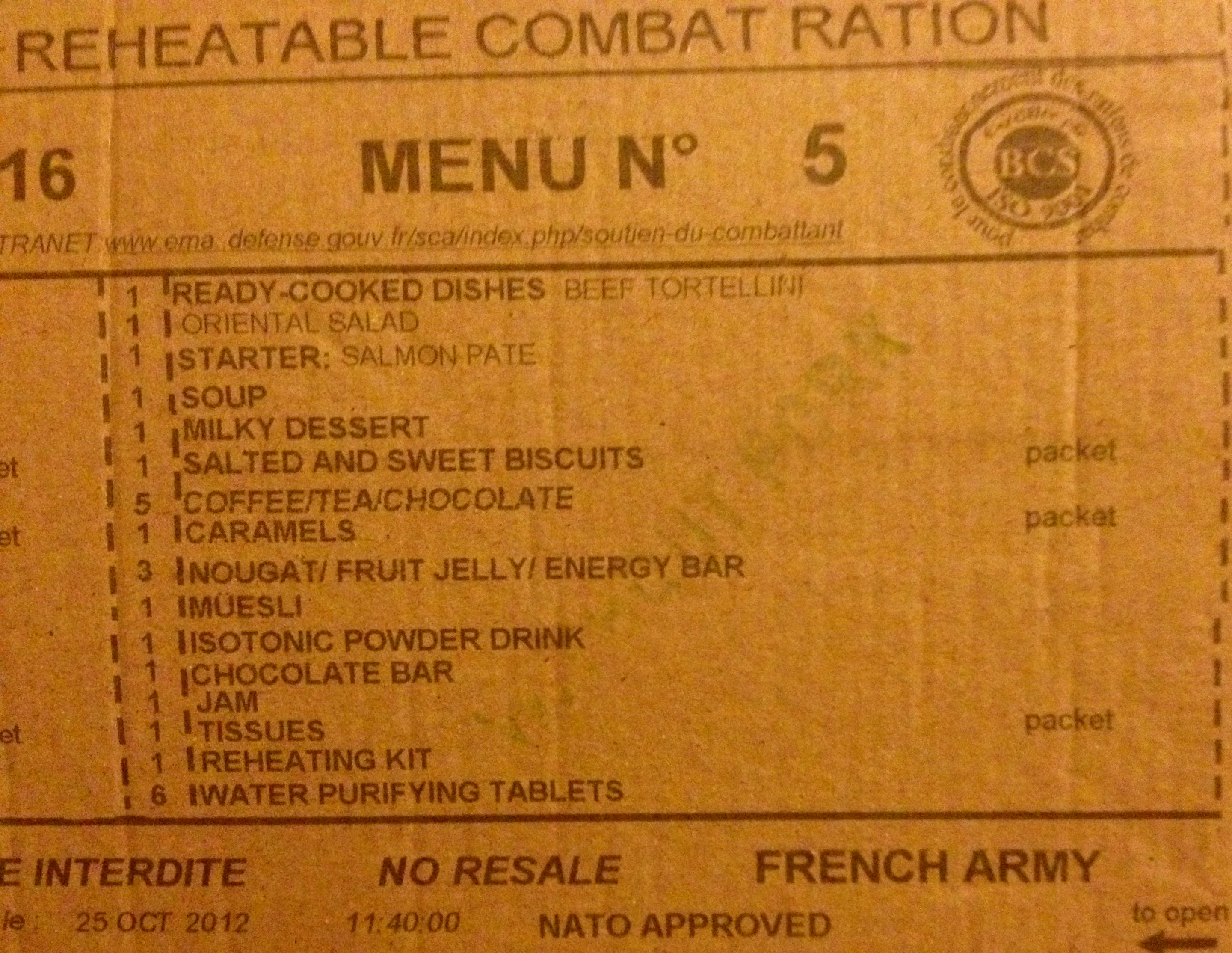
I am assuming that the French Ration de Combat Individuelle Rechauffable (Reheatable Individual Combat Rations) or RCIRs, which a friend of mine in Paris let me take a peak at, have to follow the same rigorous guidelines, as they are NATO approved.

French RCIR: slightly more gourmand...

French RCIR: slightly more gourmand…

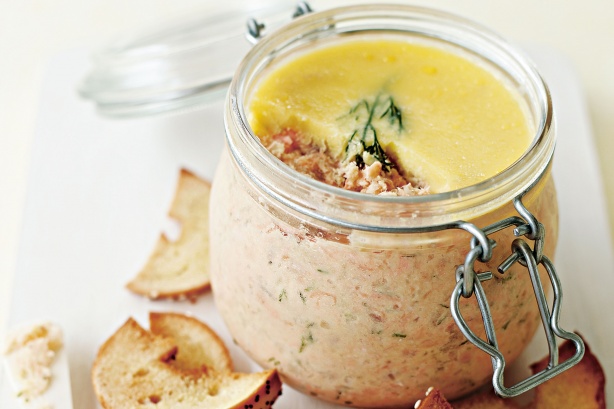
Whatever the circumstances, you’ve got to love the French’s dedication to meal planning. I don’t know what the rest of the brave soldiers serving their countries are eating tonight, but somewhere in the world, some French soldiers are eating rillettes de saumon préparé en Bretagne (salmon pâté from Brittany).

rillettes de saumon préparé en Bretagne, along with some other very French eats...

rillettes de saumon préparé en Bretagne, along with some other very French eats…

MRE_RCIR_france4.jpg

MRE_RCIR_france5.jpg


SALMON RILLETTESFood and Wine Magazine – Anna Zepaltas

            ACTIVE: 30 MIN

            TOTAL TIME: 1 HR 45 MIN

            SERVINGS: MAKES 2 CUPS


 INGREDIENTS 

.    1/2 pound center-cut, skinless salmon fillet

.    1 tablespoon anise-flavored liqueur, such as Pernod

.    Salt

.    Freshly ground white pepper

.    1 celery rib

.    1 leek, halved lengthwise

.    1 small onion, quartered lengthwise

.    1 bay leaf

.    1 teaspoon black peppercorns

.    1 cup dry white wine

.    4 cups water

.    5 tablespoons unsalted butter, softened

.    1 large shallot, minced (1/4 cup)

.    1/2 tablespoon sour cream

.    1/4 pound skinless hot-smoked salmon, flaked

.    2 tablespoons snipped chives

.    1 1/2 tablespoons fresh lemon juice

.    1 tablespoon extra-virgin olive oil

.    1/4 teaspoon smoked sweet paprika

.    Toasted baguette slices, for serving


 DIRECTIONS:

  1. On a plate, sprinkle the salmon with the anise liqueur and season with salt and white pepper. Cover with plastic wrap and let stand at room temperature for 30 minutes.
  2. Meanwhile, in a large saucepan, bring the celery, leek, onion, bay leaf, peppercorns, wine and water to a boil. Simmer for 25 minutes.
  3. Add the salmon to the pan, cover and remove from the heat; let stand for 10 minutes. Remove the salmon, picking off any peppercorns, and refrigerate until chilled, about 45 minutes. Flake the salmon.
  4. In a skillet, melt 1 tablespoon of the butter. Add the shallot and cook over moderate heat until softened. Let cool.
  5. Meanwhile, in a medium bowl, whisk the remaining 4 tablespoons of butter until smooth. Whisk in the sour cream. Add the cooled shallot, along with the poached and smoked salmon, chives, lemon juice, olive oil and paprika and stir until combined. Season the rillettes with salt and white pepper. Serve with toasted baguette slices.

MAKE AHEAD

The rillettes can be refrigerated for up to 3 days. Pack into a crock and press a sheet of plastic wrap onto the surface.  Pour melted butter over the top to seal in freshness. 

Rillettes-salmon-france.jpg


No. 249-250: An Ode to Estragon and Chicken Tarragon


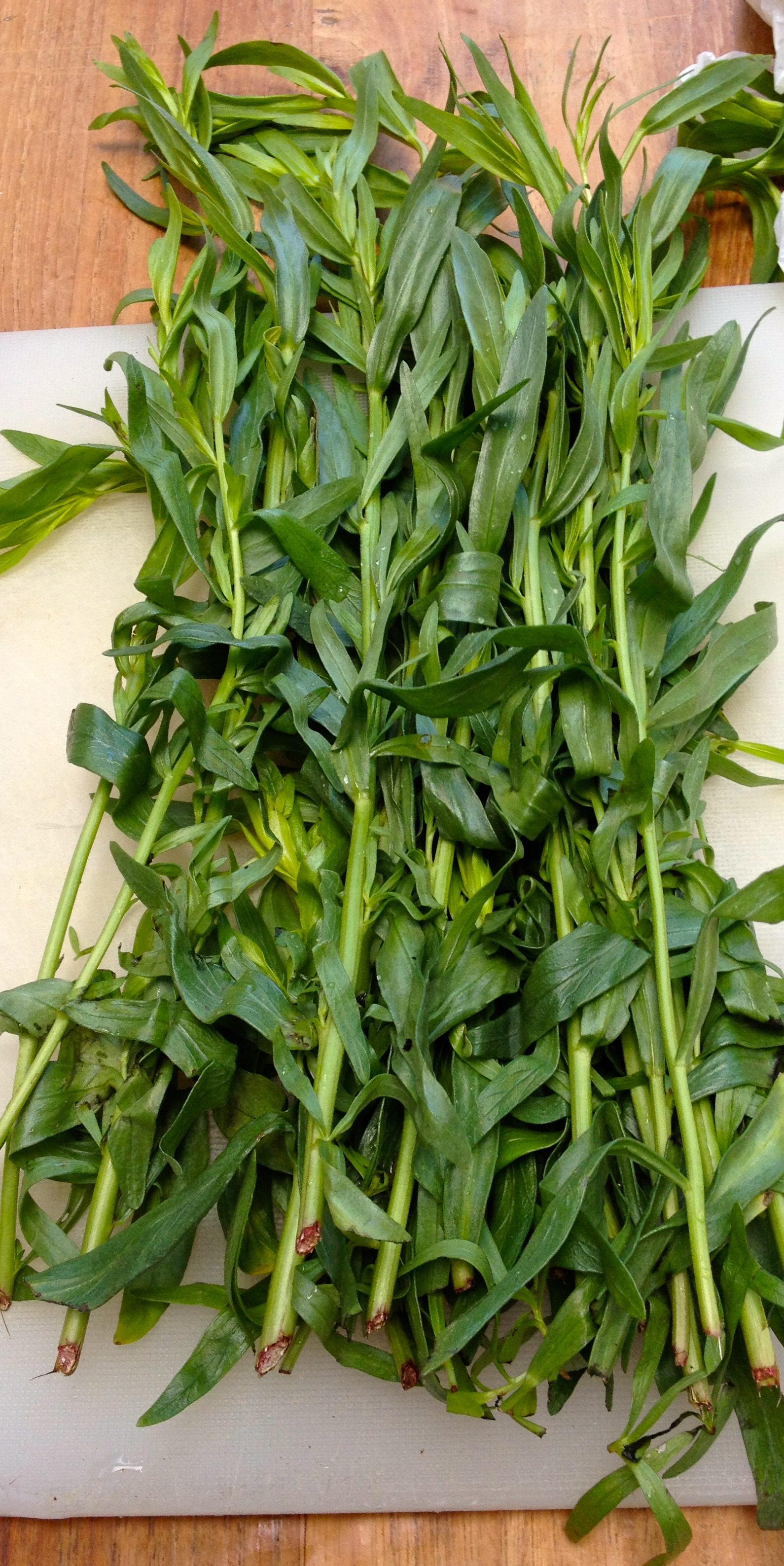
estragon_french_tarragon.jpg Before your mind starts to wander to the widely debated female hormone that’s fluctuation can send us femmes d’un certain âge spiraling through rapid mood swings, drop the final “e” and add an “o” and you will realize my ode is to the terrific, tried and true French herb, tarragon, not the natural chemical so essential to the female of the species.

There are so many sensory delights at the French markets, and quite a few that I am completely nutty for, and estragon is certainly one of them. Prior to moving to France, I had rarely cooked with tarragon, and I had certainly never cooked or eaten fresh from the market or garden tarragon. Now I can’t seem to get through a day without it.

I throw it in so many different dishes, that the last time I served a couscous salad with chopped up green flecks, a guest asked what it was, and then another replied, “hmmm…tastes like Nancy, must be tarragon.”

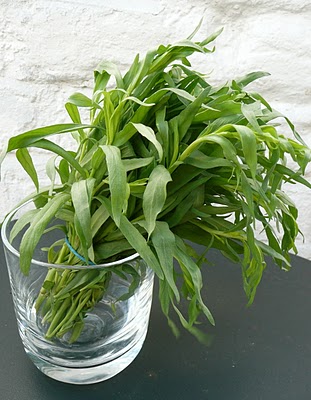
source: tastingpages.blogspot.fr

source: tastingpages.blogspot.fr

Maybe too much of a good thing can be too much, but I am not quite ready to say that about my beloved estragon. I’m always looking for uses for my favorite window box friend.

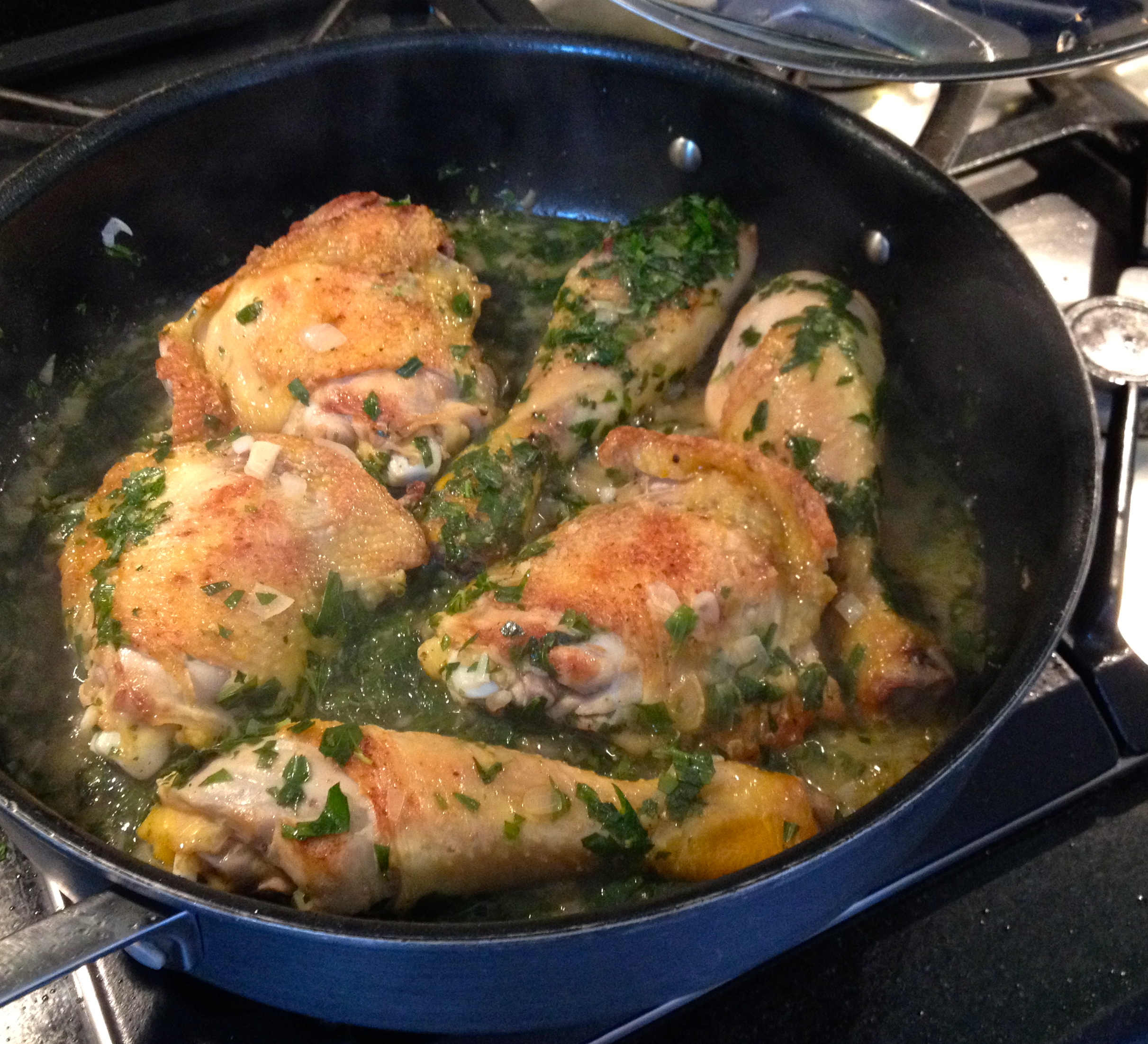
To refresh you memory, tarragon is the herb known for its anise-like flavor and scent. Its longish, green leaves are slender and tender and heavenly scented. This delicate yet tasty herb is wonderful with eggs, salads, cheese, and fish and makes the elegant and mouth-watering Tarragon Chicken Fricassée my new favorite dish.

Lucky for all of us, my friend Marie-Françoise just taught me how to make this old-fashioned French recipe. Give it a go, you won’t be sorry.

chicken_tarragon.jpg


Tarragon Chicken Fricassée (Serves 4)

From the kitchen of Marie-Françoise


Ingredients:

6 large free-range chicken thighs (or legs)

4 shallots (or fresh spring onions), finely chopped

3.5 oz. almond powder

1.5 oz. butter, divided

1 Tbsp. l’huile d’arachide (peanut oil)

½-1 cup dry white wine

½ cube chicken bullion

5 oz. crème fraîche

2 bunches fresh tarragon, washed, spun, and finely chopped

salt and freshly ground pepper

Directions:

  1. In a medium saucepan, heat half of the butter and oil. Add the chicken thighs and brown both sides until golden. Remove from the pan and rest on a plate. Discard the fat and wipe the pan clean.
  2. In the same pan, heat the remaining butter and oil over medium heat and add the finely chopped shallots. Cook for about 5 minutes, stirring often to avoid coloring. When soft and translucent, set aside.
  3. Return the chicken to the pan, add the wine, bullion cube, and shallots. Season with salt and freshly ground pepper and cook covered over low heat for 45 minutes. (You may have to add some water if the sauce looks too thick.)
  4. After 45 minutes, set the chicken aside on a warm plate. Sieve the sauce for a “cleaner” result, or for a true French bistro experience, do not sieve. If sieved, rewarm the sauce and add the almond powder. Cook for 2-3 minutes over medium heat. Add the crème fraîche at the last-minute and incorporate into to the sauce stirring constantly. Do not over cook. You don’t want the crème to “turn”.
  5. Add the chicken and the finely chopped tarragon. Serve immediately with white rice.

Vocabulaire

estragon: tarragon—and a few tips—smell your herbs before buying, they should have a clean, fresh scent, and keep it fresh for up to five days by wrapping it in a just damp paper towel and sealing it in a plastic.

femmes d’un certain âge: women of a certain/unknown age
 

No. 238: Lost Bread

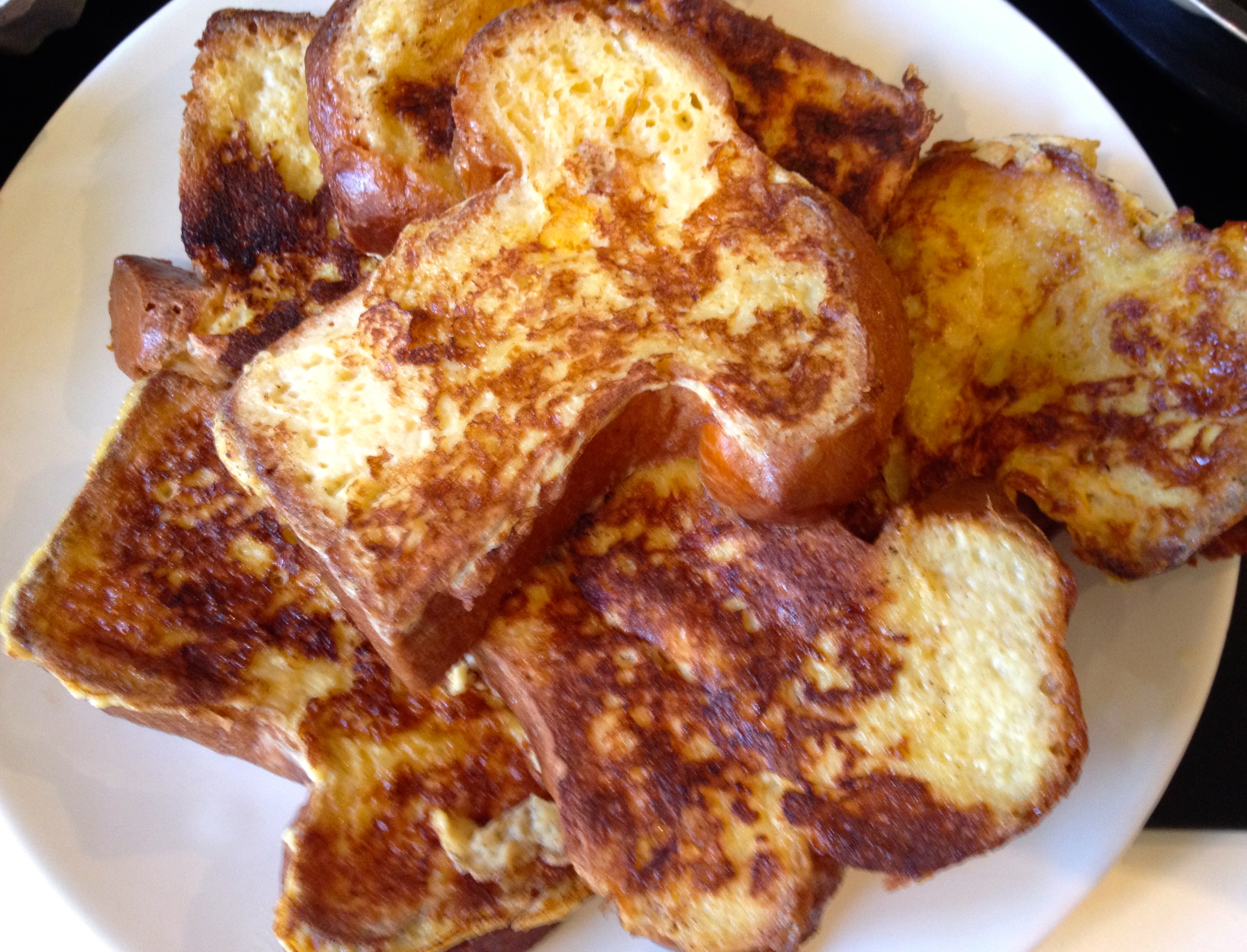
pain_perdu_French_toast.jpg

It was another rainy and cool day in Paris, making it the perfect day to serve up some pain perdu, lost bread as the French call it, or “French toast”, as we Americans call it.

The facts and history don’t seem to back up our anglicized name, as its origins date much further back than the foundation of a French state. En fait this delicious French dessert or American breakfast staple can be traced back to medieval times when the recipe (and I use that term loosely) first appeared to make inedible, stale loaves of bread more appetizing. Times were tough back in the day, and the masses could not afford to throw away any bit of edible anything, so the otherwise “lost” bread was battered, buttered, rescued and revived instead of being thrown out.

It doesn’t appear that the French were the first to dip their bread in a milky-egg mixture and fry it up. The English had their own versions (suppe dorate and tostees dorees) during the Middle Ages, and later a similar dish called “Poor Knights of Windsor”. There are even some “French toast” recipes traceable to ancient Roman times, which ironically, the French named pain a la Romaine (Roman bread).

It is also interesting that pain perdu was not just a meal for the poor man. Indeed the wealthy kept this staple on their menu too. Of course, the rich had their chefs make it to order, which meant only the finest white bread could be used—the crust cut off and discarded—before it was dipped in a mixture of beaten eggs, sugar and rose water, fried in butter or lard and topped off with more saffron and sugar infused rose water.

Like the medieval peasants, I also grew up making pain perdu with stale bread we could not afford to throw away. And boy, did my dad make a mean Sunday morning French Toast (and “Eggs Over Bread”), another poor man’s delight.

In France, I have learned that the best and most authentic way to make pain perdu is with day-old brioche (a lightly sweet bun or loaf-that the boulangers of France do so well), sliced thickly and dipped in eggs, milk, or better yet crème, seasoned with a little sugar and nutmeg, and gently fried in, what else, salted butter from Bretagne.

C’est délicieux! Que pensez-vous?

Here is a recipe for the “original” pain perdu, and please click the underlined links for my other favorite “lost bread” recipes along with my daddy’s famous Eggs Over Bread.


From: The Medieval Kitchen, Recipes from France and Italy by Odilie Redon (dated to 1450)

  1. Take slices of white bread, trimmed so that they have no crusts.
  2. Make these slices square and slightly grill them so that they are colored all over by the fire.
  3. Then take eggs beaten together with plenty of sugar and a little rose-water and put the slices of bread in to soak.
  4. Carefully remove them, and fry them a little in a frying pan with a little butter and lard, turning them very frequently so that they do not burn.
  5. Arrange them on a plate, and top with a little rose-water colored yellow with a little saffron, and sprinkle with plenty of sugar.


Vocabulaire

C’est délicieux! Que pensez-vous? It’s delicious. What do you think?

pain a la Romaine: Roman bread

pain perdu: French toast, literally: lost bread

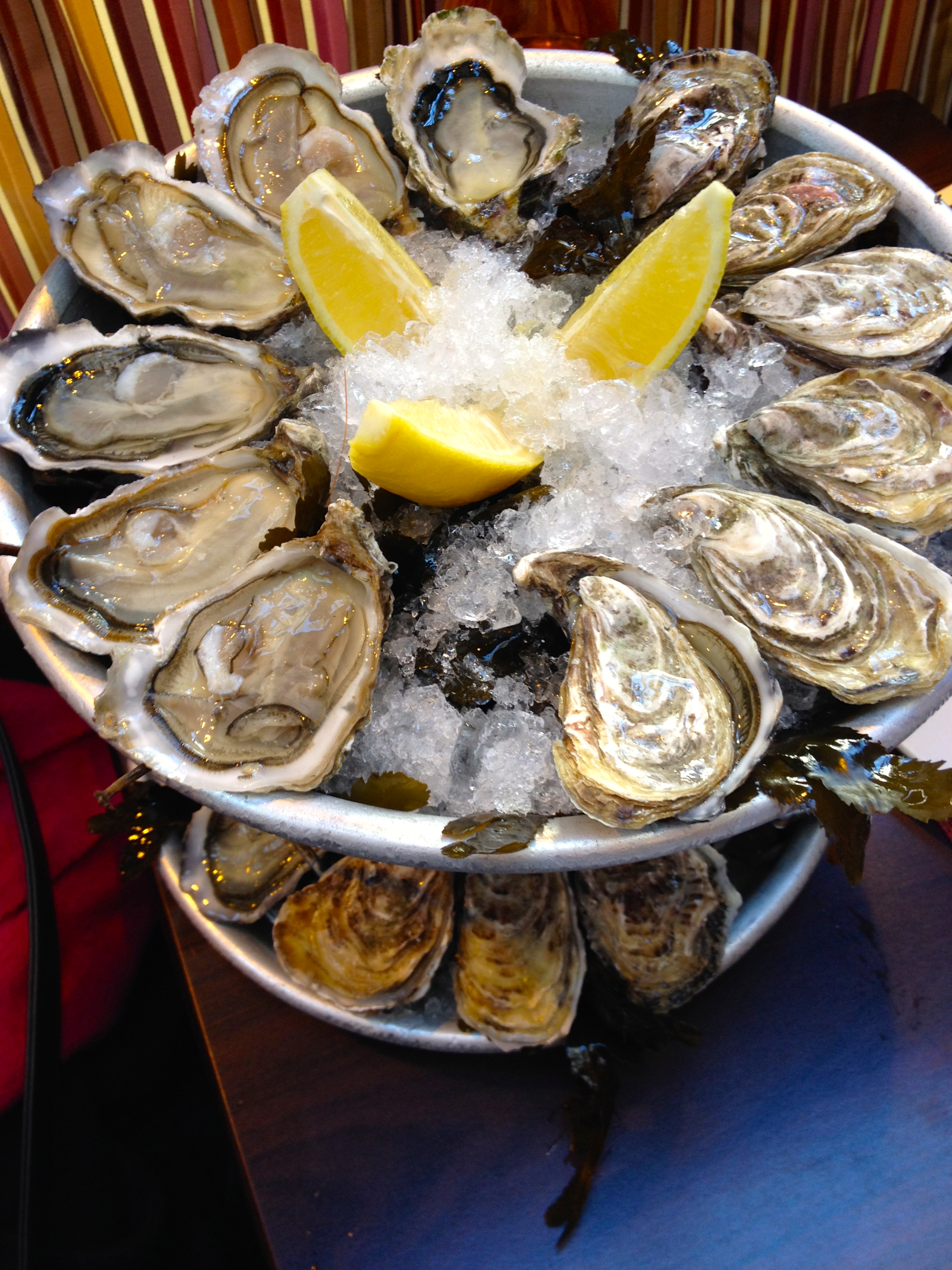
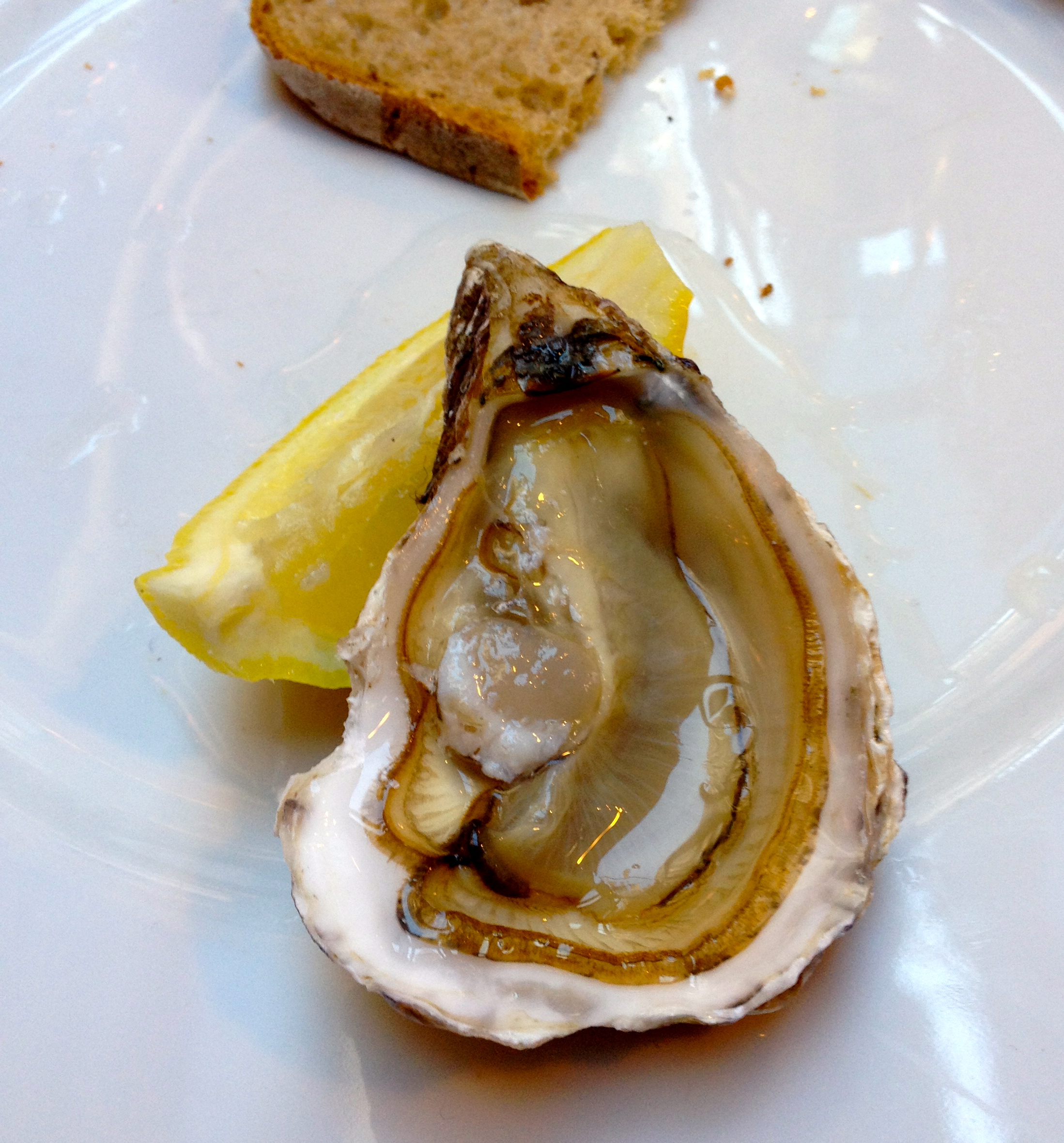
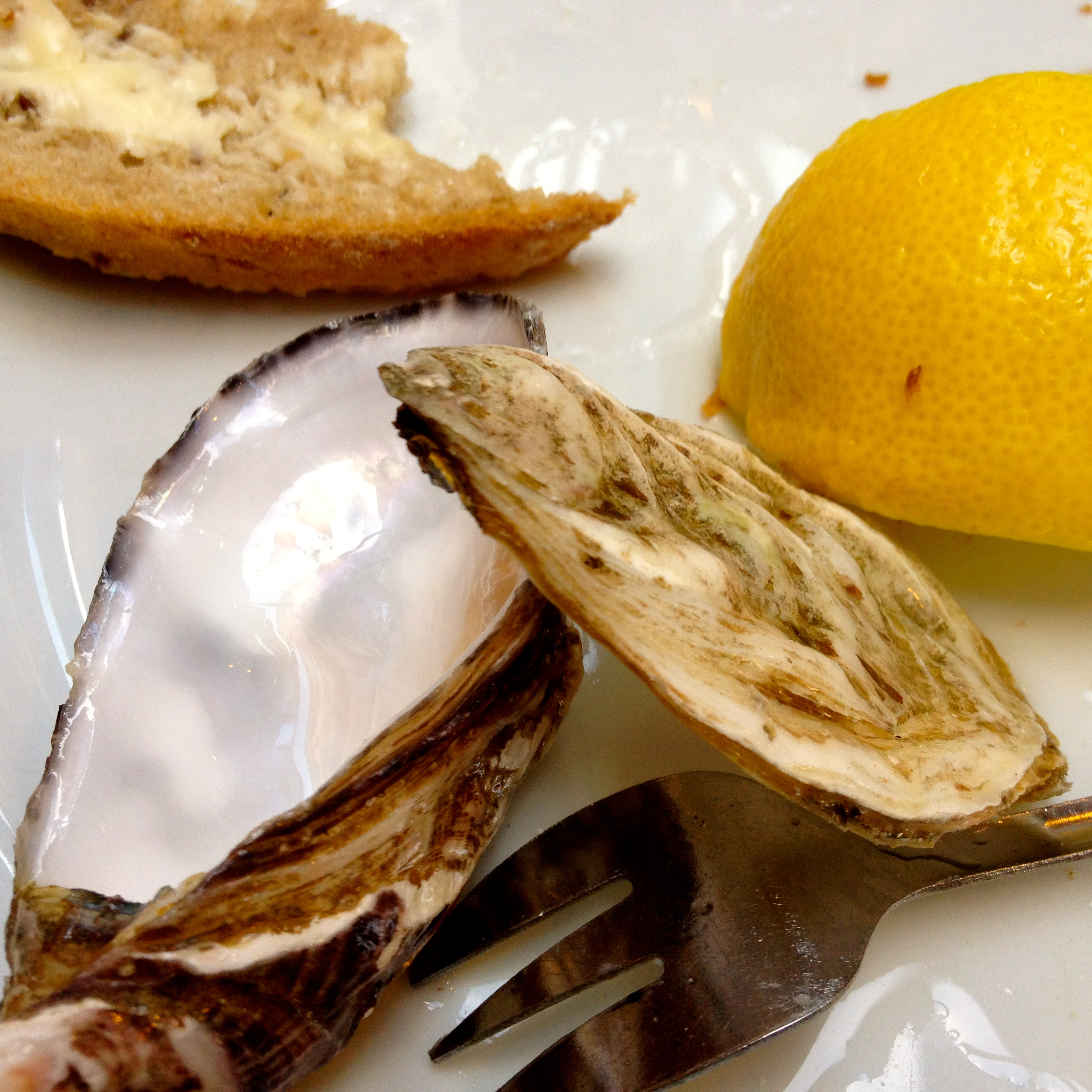
No. 227: Huîtres: Where Have All the “Rs” Gone?

Yesterday was the end of oyster season. Sigh…

oyster_paris_france2. jpg

We have to wait for the next month with an “r” in it to come around before we can enjoy the best of the best huîtres in their proper seasons.

We did have a terrific fall and winter tasting season, and nearly 6-weeks of spring, but now it is May, and May is “mai” en français. Oh why, oh why, can’t “mai” be one of the thousands of French words with a string of silent letters? Why didn’t l’Académie française or one of the 40 all-knowing immortels slip in a silent “r” somewhere between May (mai) and August (août)?

As it is, we will need to wait until September (septembre)—123 days until oyster season rolls around again.

In the meantime, we’ll always have the memories…

oysters_paris_france.jpg

oyster_paris_france3. jpg


oyster_paris_france4. jpg


oysters_paris_france5.jpg

oysters_paris_france6.jpg

oysters_paris_france7.jpg


Vocabulaire

huîtres: oysters


No. 221: Pâtisserie Algérienne

algerian_pastries_Paris.jpg

Another one of the things I love about France is the very different and interesting culture that the Algerian immigrants and citizens bring to this country. The North Africans bring so much color, flavor, and vibrancy to the forever black and often mild palette of Paris.

I was recently reminded of this wonderful Algerian influence when I was exploring the 11éme arrondissement and came across yet another La Bague de Kenza Pâtisserie. The name, “The Ring of Kenza”, as all good names do, has a story attached to it. It has to do with one of the owners losing (and then finding) one of his daughter’s precious rings. I’m not sure why the father had her ring to begin with, but I like to imagine him panicked in the street of Paris, asking every one he came across if they had seen “Kenza’s ring”.

algerian_pastries_Paris2.jpg

It is fitting that bague means ring, because La Bague de Kenza is filled to bursting with sparkling, pastry jewels, the pâtisseries orientales. Everything behind the glass counter is yummy, but as I am nutty for pistachios, I always go straight for the pochette pistache, chopped pistachio and honey paste tucked into a light pouch of heavenly dough. The marzipan shaped fruit aren’t just delightfully whimsical, they are also every bit as delicious as German marzipan.

As you can imagine these pastry chefs bake with many different incarnations of almonds and dates, and pine nuts make a star appearance in several of my favorites, as do walnuts and coconut. La Bague’s pastries are a nice change of pace from French pastries and perfect as a delicate, and different dessert at your next dinner party. Mildly sweet and exquisitely crafted, it is worth stopping by just for the photo opportunity. And if sweets aren’t your thing, they do a mean tangine and fruity couscous, and don’t forget your mint-leaf tea.


106 rue Saint-Maur, Paris 75011 (Belleville)


No. 220: Coffee Breaks

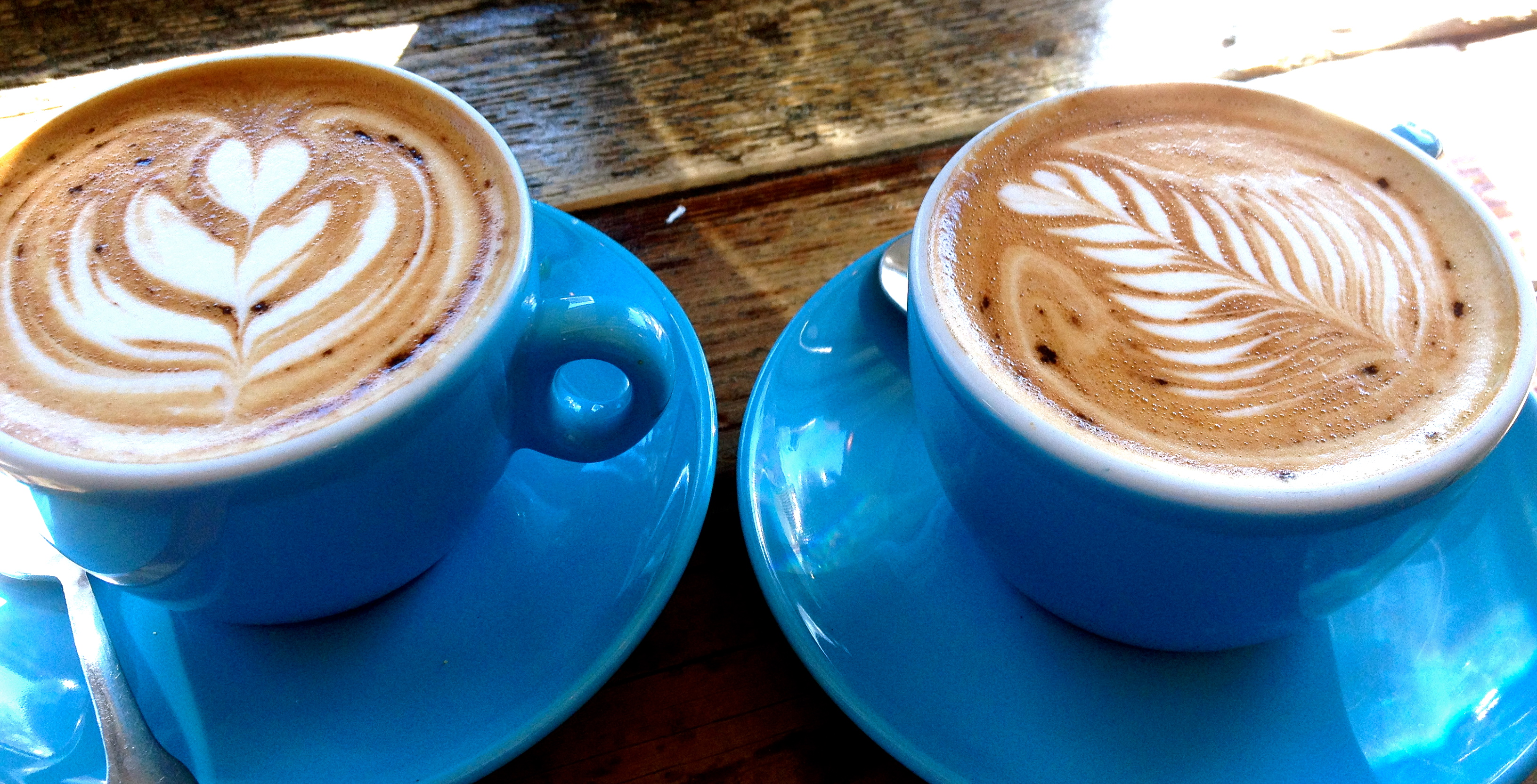
“Coffee is a way of stealing time that should by rights belong to your older self.”–Terry Pratchett, Thud!

café_creme_france.jpg

I was not a coffee drinker until I moved to France.

noisette_paris. jpg

That said, getting addicted to Java has absolutely nothing to do with the superior quality of coffee in France.  Au contraire, en fait, it is pretty widely accepted that French coffee is well below standard when compared to coffee in other countries.

My newfound love of coffee does however have a lot to do with my Nespresso machine (which I have already waxed poetically about), the “break” part of the word “coffee break”, and the centuries old café/coffee culture of France.

nespresso_france.jpg

The idea of taking a 20-30 minute break in the afternoon either chez toi or at your corner café is quite civilized, and something I never allowed myself to do in my multitasking life in America. I also love the French tradition of always having a small coffee to finish off your meal with or without one of the many delectable French desserts you may have on hand.

coffee_break_france9.jpg

Vocabulaire

Au contraire: on the contrary

chez toi: at your house