Skip to content

Posts from the ‘Around France’ Category

No. 279-284: six tartelettes que j’aime

bathroom-scale

I am starting to wonder if I will ever lose those last 10 lbs. while I am living in Paris. I only seem capable of “being good” for 4-5 days at a time, and then I have a complete breakdown and wander into a gorgeous pâtisserie and it is back to square one and late-night bike rides on my vélo d’appartement trying to burn the extra calories from the day.

Let’s just say, it will be a very late evening tonight as I mistakenly strolled into Eric Kayser for a healthy quinoa, salmon and roquette salad and came away with a bit more than I bargained for.

Damn, the French and their daily menus which include a boisson (drink) and dessert along with the salad for only an extra €2.30.

As I have missed several days of blogging this week (due to the deluge of American guests à l’hôtel Nancy—going on 24 days, but who’s counting…), I looked at the stunning display of desserts and thought, “I’ll do a post on tartelettes.” And that mes amis is where the diet went all to hell.

Argh! I almost always go for the fruity tartelettes, mais aujourd’hui, I put my healthy blinders on and went straight for the chocolate and caramel display. And then I saw it, those two magnificent flavors combined, and a mini-dessert I had somehow  managed not to discover over the course of nearly 3 years: la tartelette au caramel et chocolate. Donc, I had to buy one. After all, it was a better deal to get the menu instead of just a salad and drink.

Long story short, I split the first one with Button. It was divine, like heaven popped on a plate. And then for the sake of my readers, I bought a second one to bring home and photograph (and retaste) for my blog. Curses!

tartelette-caramel-chocolat-Paris.jpg

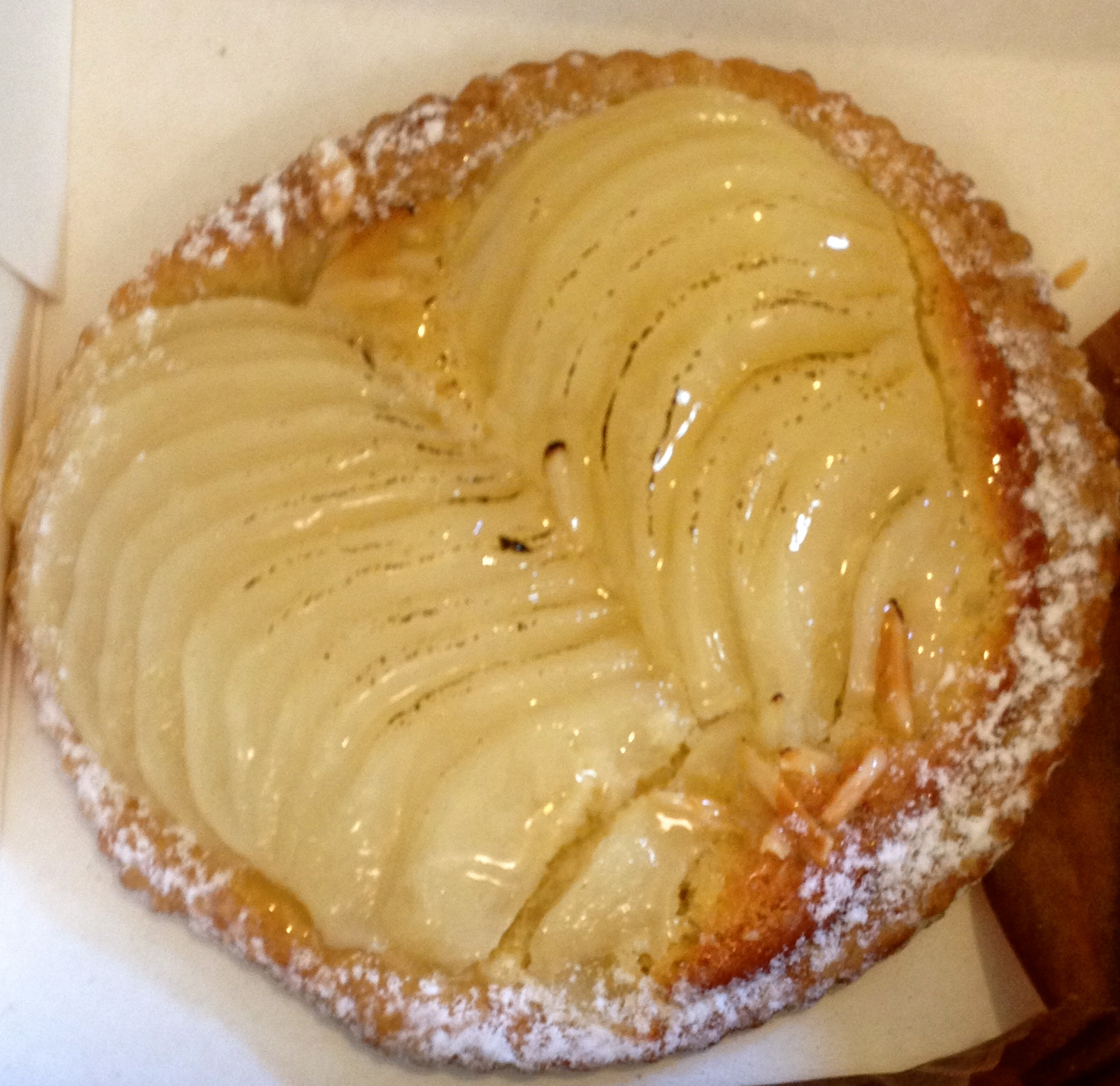
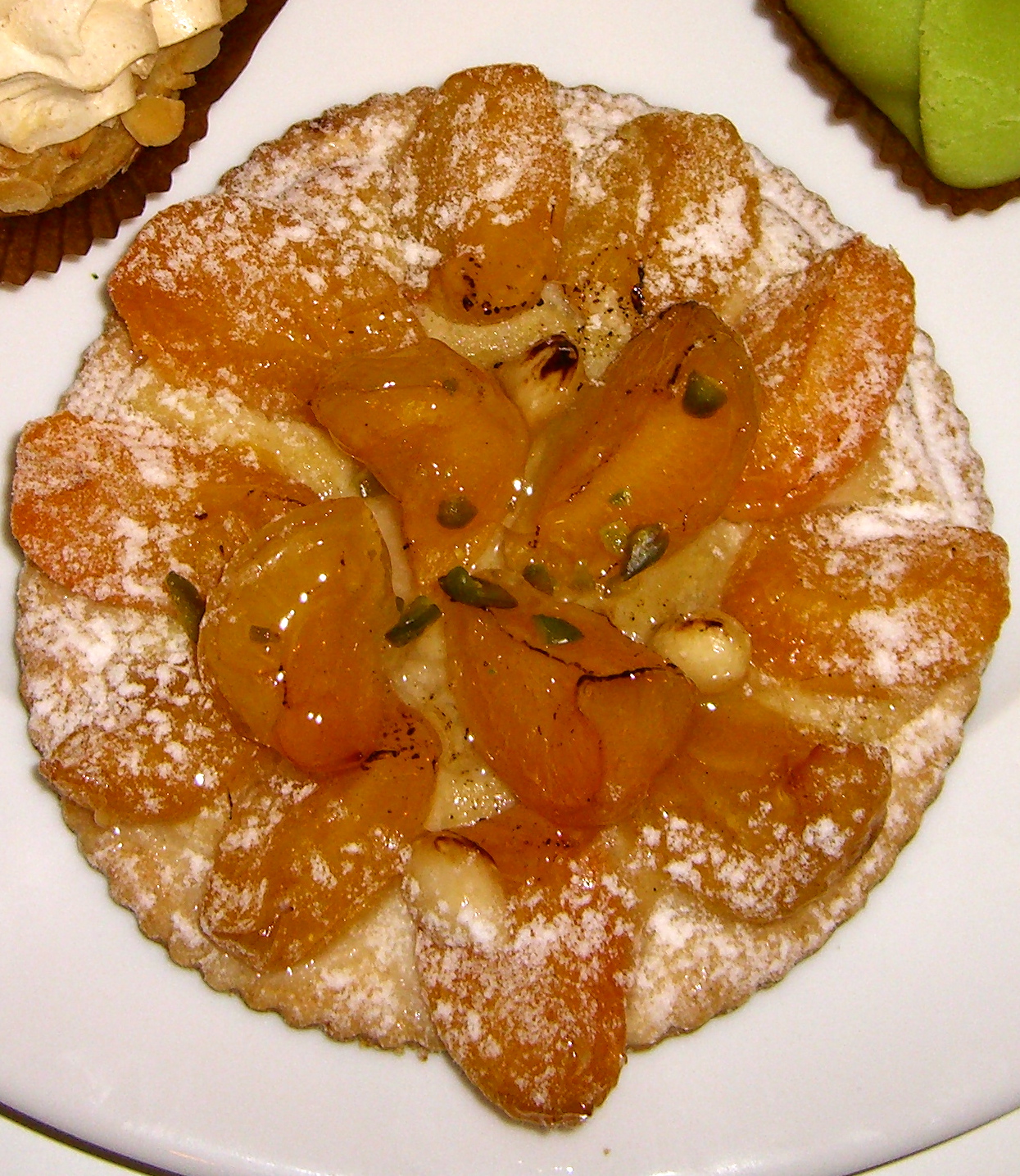
Below please see my six favorite tartelettes that I have eaten at one time or the other over the past years all for you and in the name of research: 

 tarte-caramel-chocolat.jpg

tartelette caramel chocolat

tarte-aux-poires-paris.jpg

tartelette aux poires

tartelette mascarpone fruits rouges

Len_tre_Tartelette_aux_pommes

tartelette aux pommes

tartelette-au-citron.jpg

tartelette au citron

tarte-abricot-pistache.jpg

tartelette  abricots et pistaches

Vocabulaire

mais aujourd’hui: but today

mes amis: my friends

vélo d’appartement: exercise bike


No. 277: mille-feuille

1024px-Mille-feuille_20100916

It seems like it has been awhile since I did a post on food, but I was reminded yesterday evening when I attended a dessert party (so much for the ole regime, encore), of the sometimes underrated mille-feuille, or thousand leaves pastry.

Also know as the Napoleon, it consists of two layers of crème pâtissière sandwiched between three layers of pâte feuilletée traditionally glazed with a white icing and chocolate stripes. The even more delicious versions are filled with whipped cream and/or jam and lightly dusted with confectioner’s sugar or cocoa, or both.

If you are lucky enough to live in France, comme moi, there is no need to ever attempt to make a mille-feuille chez vous, but for those of you who don’t live in France, here is a très instructive recipe video (complete with happy French café music and crackling puff pastry sounds), so you can taste this yummy French dessert at your house.


Vocabulaire

chez vous: at your house

comme moi: like me

crème pâtissière: pastry creme

pâte feuilletée: puff pastry


No. 274: Oradour-sur-Glane

It has been a week of somber remembrances in France marking various events of WWII.

Today is the seventieth anniversary of the massacre of 642 men, women and children in the small village of Oradour-sur-Glane. While this may seem like another odd post, and certainly not something I “love” about France, it is something I think is important to know about France, and an event to be remembered and marked.

Oradour-sur-Glane.jpg

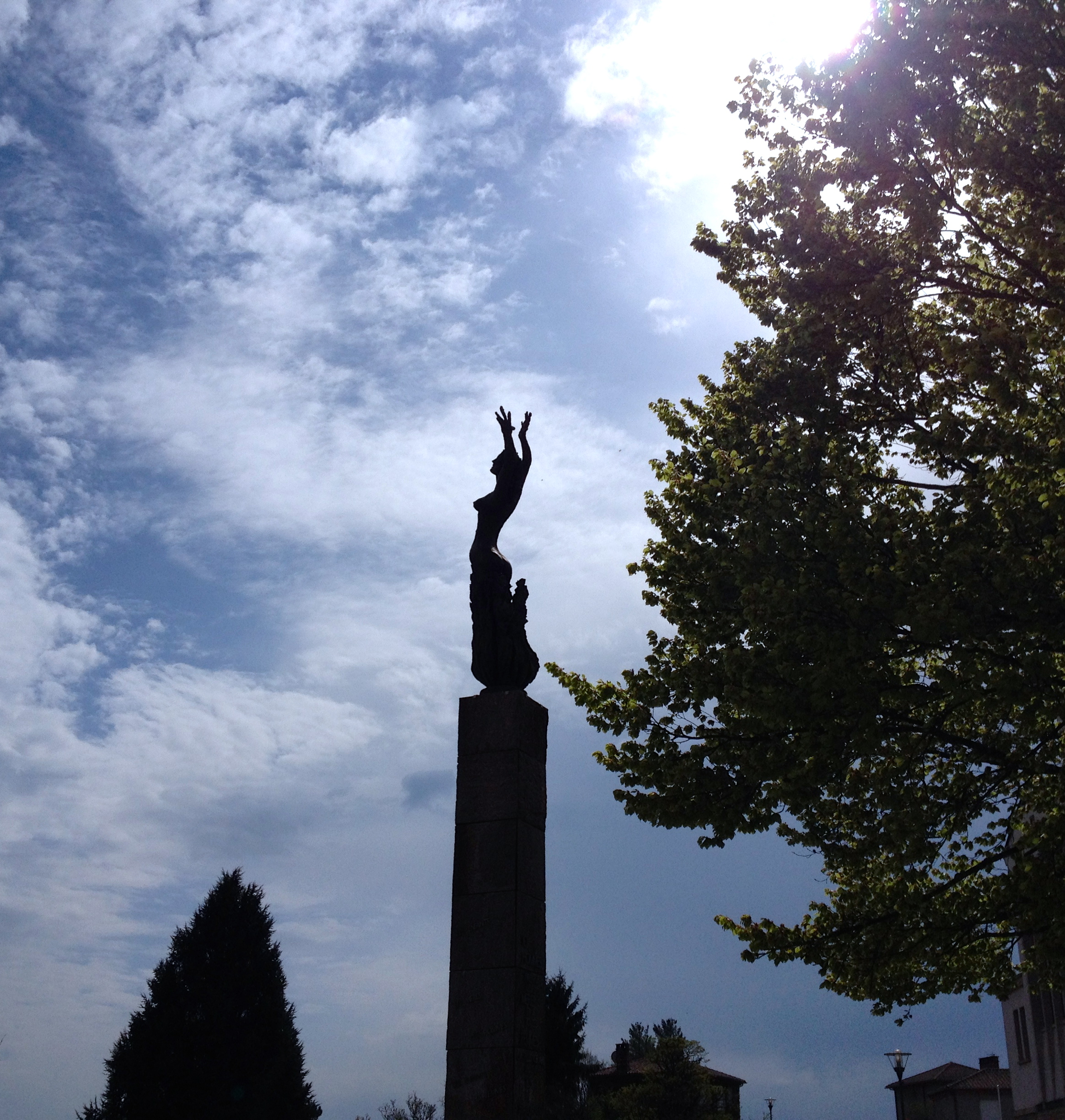
On our way to Bordeaux in April, we stop for the afternoon in this perfectly preserved and moving village-memorial to the horrors borne by French civilians during the Nazi occupation. It is a difficult site to visit, but I am grateful that we did, and grateful to the local government for leaving the village exactly as it died on June 10, 1944.

During the war, Oradour-sur-Glane was an unimportant and peaceful town located close to Limoges, not too far from Dordogne. Like many small hamlets in France, its residents were struggling to get by during the occupation, but there is no clear record of any Resistance activity in the village, although a captured SS officer may have been briefly held there prior to the massacre. But on the morning of June 10, just four days after the D-day landings, the towns’ passive status could not save them from the wrath of the Nazis.

Early in the day, a group of SS soldiers entered the village and rounded up all the residents on the pretext that they wanted to check their identity papers and search their houses for weapons. They moved the men to nearby barns and herded the women and children into the village church, suggesting that they sing as they marched.

Oradour-sur-Glane7.jpg

What followed was the methodical and evil extermination of an entire town within hours. Below is a text chronicling this horrific war crime:

“A large gas bomb, seemingly made out of smoke-screen grenades and intended to asphyxiate the occupants, was placed in the church, but it did not work properly when it went off and so the SS had to use machine guns and hand grenades to disable and kill the women and children. After they had subdued all the occupants of the church, the soldiers piled wood on the bodies, many of which were still alive and set it on fire.

At the same time that the gas bomb exploded in the church, the SS fired their machine guns into the men crowded in the barns. They deliberately fired low, so that many of the men were badly wounded but not killed. The soldiers then piled wood and straw on the bodies and set it alight, many of the men thus burned to death, unable to move because of their injuries. Six men did manage to escape from Madame Laudy’s barn, but one of them was seen and shot dead, the other 5 all wounded, got away under cover of darkness.

Whilst these killings were taking place, the soldiers searched the village for any people who had evaded the initial roundup and killed them where they found them. One old invalid man was burned to death in his bed and a baby was baked to death in the local bakery ovens, other people were killed and their bodies thrown down a well. People who attempted to enter the village to see what was going on were shot dead. A local tram, which arrived during the killings, was emptied of passengers, who after several terrifying minutes were let go in peace.

After killing all the villagers that they could find, the soldiers set the whole village on fire and early the next day, laden with booty stolen from the houses, they left.” (source: www.oradour.info)

Oradour-sur-Glane9.jpg

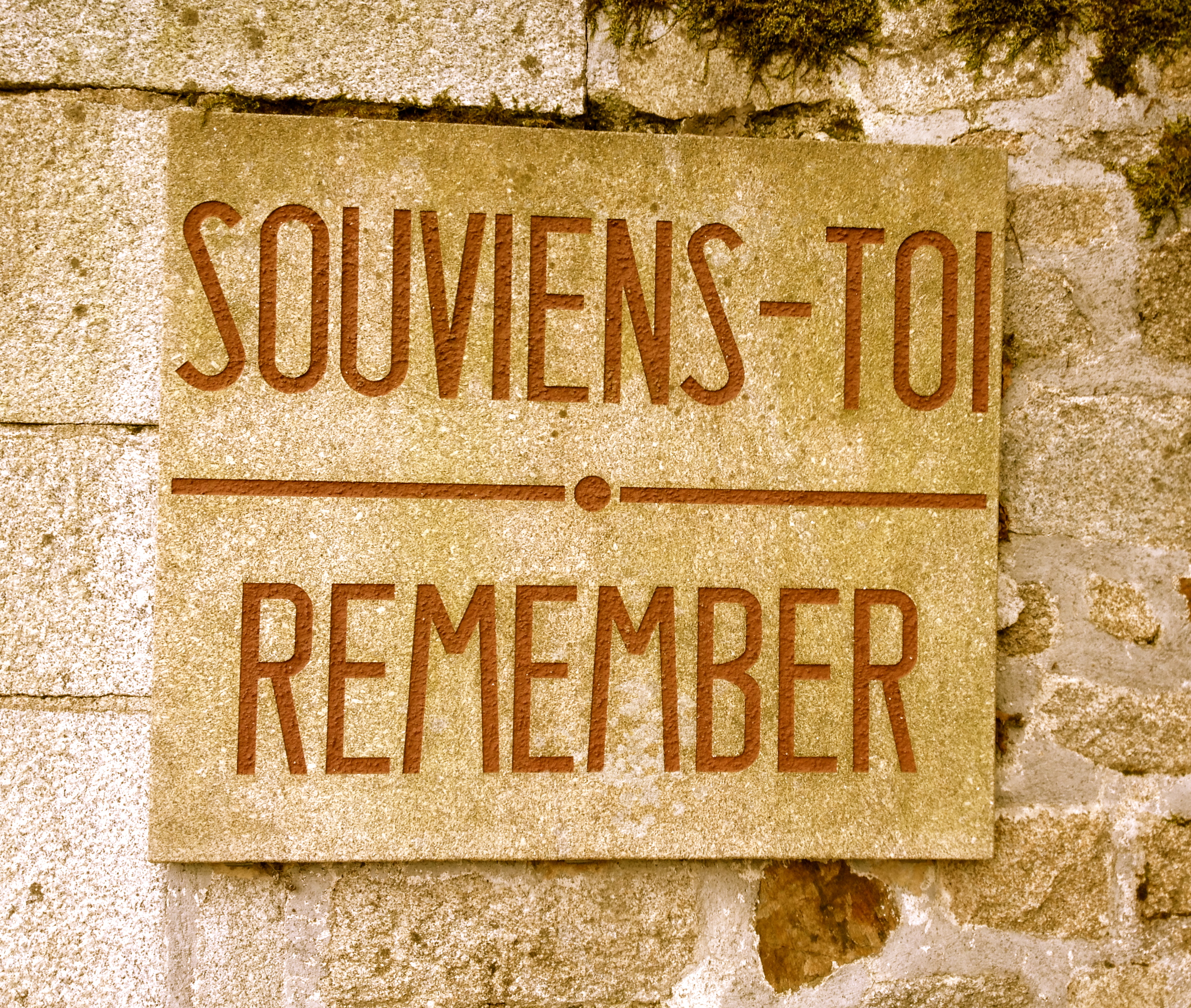
Souviens-toi: Remember

No. 271-272: Normandie—A Soldier’s Letter Home & Giving Thanks

d-day4

November 1944, France

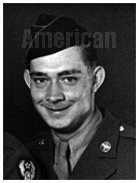
Yesterday was Thanksgiving. We had the turkey and all the trimmings. Most of the doughboys had turkey also. It’s amazing when you think of all of us, so far from home, observing still in the midst of a battlefield, Thanksgiving. I’m sure there was many who gave thanks to God today. I was sure one of them.I recently was able to see some of the dead boys they had just taken off the battlefield. If some of the men back home, whom of personal ambition attempt to prolong the war, could see them–I’m sure the war would soon end. When you look at them you can’t help but think–why are they dead! Just a year or so ago they were either going to school-working-married, and now they’re dead. Many among them had ambition–all looked forward to the future–Now they’re dead. It keeps shooting thru your mind-again and again-why have these men died? I know why we fight-I know of the values we’re trying to secure. I hope these men have not given their lives for empty words. I’m sorry I went up on slight a philosophical side. But I had to air out some of my thoughts.

Love, Harold

Ryan-Hill-uniform-tallNovember 2006, Iraq

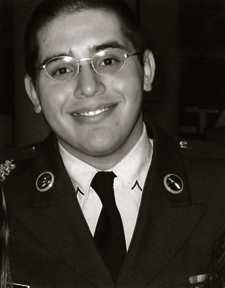
i try not to cry. i have never cried this much my entire life two great men got taken from us way too soon.i wonder why it was them in not me. i sit here right now wondering why did they go to the gates of heaven n not me? i try every night count my blessing that i made it another day but why are we in this hell over here? why? i cant stop askin why? the more i think the more i cry.why? i try n figure out the reasons that people die n i still don’t know why. all i can do is live my life to the fullest but i still don’t know why.

(From the journal of Pfc. Ryan J. Hill, 20, who was riding in a Humvee on Jan. 20, 2007, when an IED buried in the middle of the road detonated under his seat, killing him instantly.)


 Thanks little brother for everything you have sacrificed.

todd2
IMG_3155

No. 270: Normandie—D-day Beaches

“At the edge of the cliffs, the wind is a smack, and D-day becomes wildly clear: climbing that cutting edge into the bullets.”

— John Vinoc

Normandy_D-day_beaches_france.7jpg

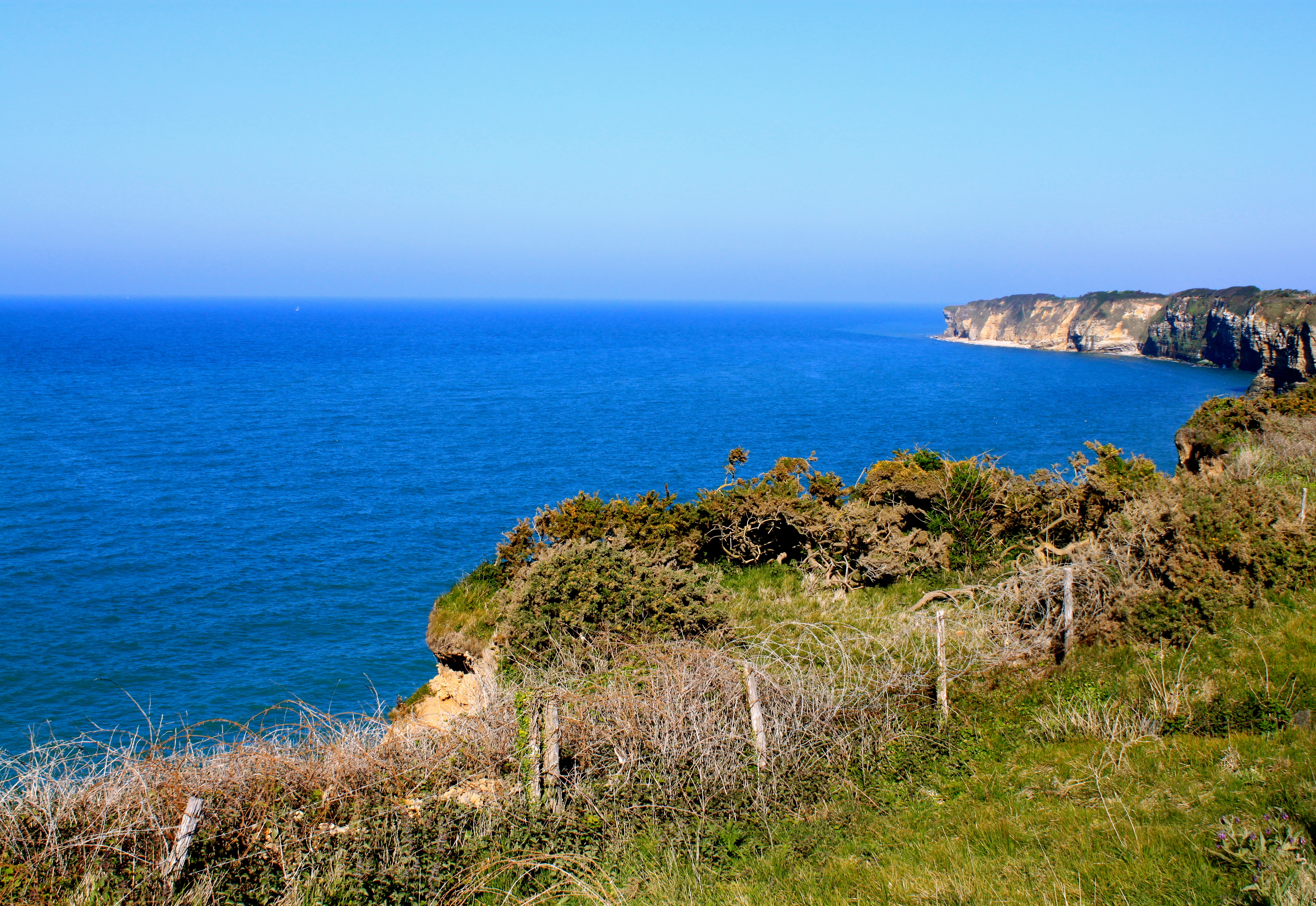
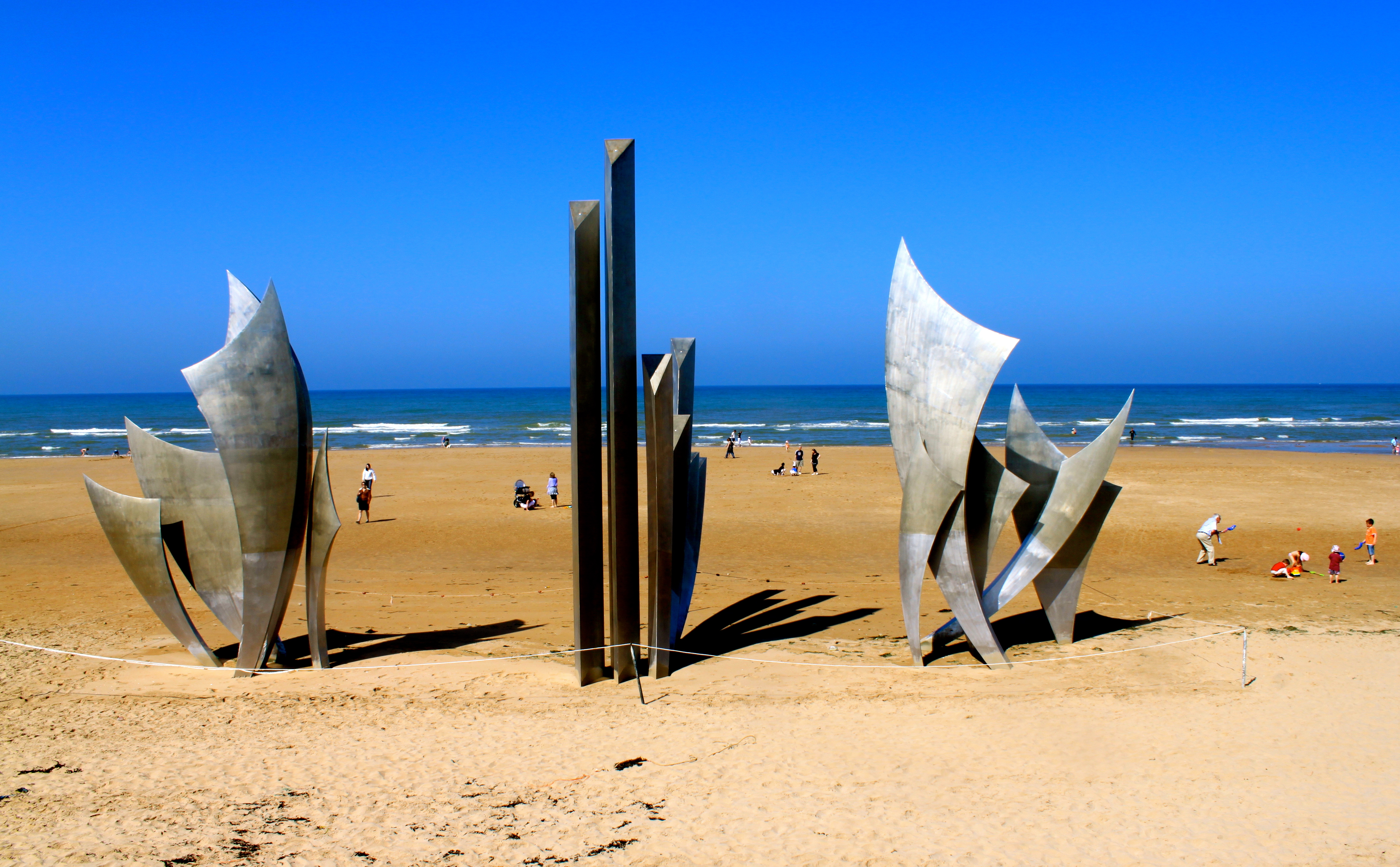
The D-Day beaches in Normandie are a study in contrasts. They are flat-out gorgeous—expansive ginger seaside bound by sheer rocky cliffs, burnt-orange and dripping with green. And beyond the shore, a gem-like sapphire sea too blue to be real, dares us to dip our toes, splash about and maybe even go under. I wasn’t expecting real beaches with colorfully clad beachgoers, sand buckets, and picnics. I had anticipated a more museum-like feel or roped off memorial.

Yet among the vacationers, there is a quiet reverence and consciousness amid the many reminders of the thousands of men who stormed the beaches at the crack of dawn on June 6, 1944. In fact the entire coastline, while still a sunshine playground, pays tribute to the British, American, and Canadian armies who laid down their lives to liberate France and occupied Europe.

Normandy_D-day_beaches_france.2jpg

Never have I felt so close to a moment in history.

To walk the shoreline and climb the cliffs and watch the waves crash towards Winston Churchill’s brilliant artificial harbor, you can almost see the ghosts of Robert Capa’s black and white photographs slugging through the tempest tides, gunned down or drown in the first minutes of the longest day. You certainly can feel their presence.

Overcome with pride and immense sadness and sheer wonder at how the lucky ones physically and mentally survived. Time and again you are reminded of the doughboys and the thousands of wide-eyed journeys they made from the cities and small towns of America, Britain, and Canada to the violent beaches of Normandy, France, to help a country and people they had never seen and to whom they had little tangible connection.

Yet still they came, willingly and righteously, and offered up their lives.

It is nothing short of astounding.


No. 269: James Thiérrée

My creative coiffeur just turned me on to James Thiérrée: part clown, poet trapeze artist, violinists, magician, mime and astonishing contemporary dancer and choreographer. The son of circus performers Victoria Chaplin and Jean-Baptiste Thiérrée and the grandson of Charlie Chaplin, and great-grandson of Eugene O’Neill, the apple certainly hasn’t fallen far from the tree. I adore this type of theatre.

Take a look and tell me what you think.


No. 258-261: Monet, Giverny, “en plein air” and l’Orangerie

giverny_monet.jpg

It is difficult not to develop an affinity for Claude Monet when you live in France, especially in Paris. One of my favorites of the Impressionist’s movement (along with Renoir, and Boudin, bien sûr), M. Monet’s works can be found in numerous museums in Paris, as well as at his beloved Giverny, where you can walk among his self-designed and hand-planted gardens that inspired so much of his work, and oggle at the reflections in the pond of his famous water lilies and Japanese footbridge.

giverny_monet2.jpg

Claude Monet was a man with a vision and visionary friends who rejected the old school approach to landscape painting and looked to nature herself as his teacher. He was a patience observer of the natural world, and found solace and pleasure in watching the play of light, timing and seasons on his subjects.

Supported by his parents, he attended the Le Havre School of the Arts and was befriended and mentored by Eugéne Boudin himself. It was Boudin who introduced him to the idea of painting “en plein air” (outdoor).

Sargent_MonetPainting

Every spring I steel myself to face the throngs of tourists who gather at Giverny, and every year despite the crowds, I’m always glad I’ve made the pilgrimage. Even with what seems like thousands of Russian voyagers snapping thousands of photos, Giverny still offers a flavorful feast for the senses.

His gardens at Giverny are like his paintings—gaily colored patches that are sometimes a bit muddled and cluttered, but at the same time perfectly composed. His estate is split into two gardens. The first is the walled garden laid out in stunning symmetrical flowerbeds with a splendid path running down the middle, sheltered with iron trellises and climbing blooms. The second garden is the water garden—home to the famous Japanese bridge and water-lilied pond reflecting the blue sky, white clouds, wisteria, and weeping willows that line the shore.

Monet spent more than 40 years planting and painting at Giverny. I find it fascinating to think about him and his family meticulously planting their gardens first – creating a tangible, living piece of art—while at the same time envisioning what he would produce on the canvas. I am enchanted by this man who essentially created his artwork twice—first shaping it in nature and then sitting among it and putting it forth on the canvas.

As fond as he was of painting his garden, pond, and water lilies, Monet was also inspired by the banks of Seine and frequently painted en plain air. He traveled throughout the Mediterranean and was especially inspired by Venice, and continued his outdoor works in London, but at Giverny, his famous paintings literally come to life. It’s pure magic.

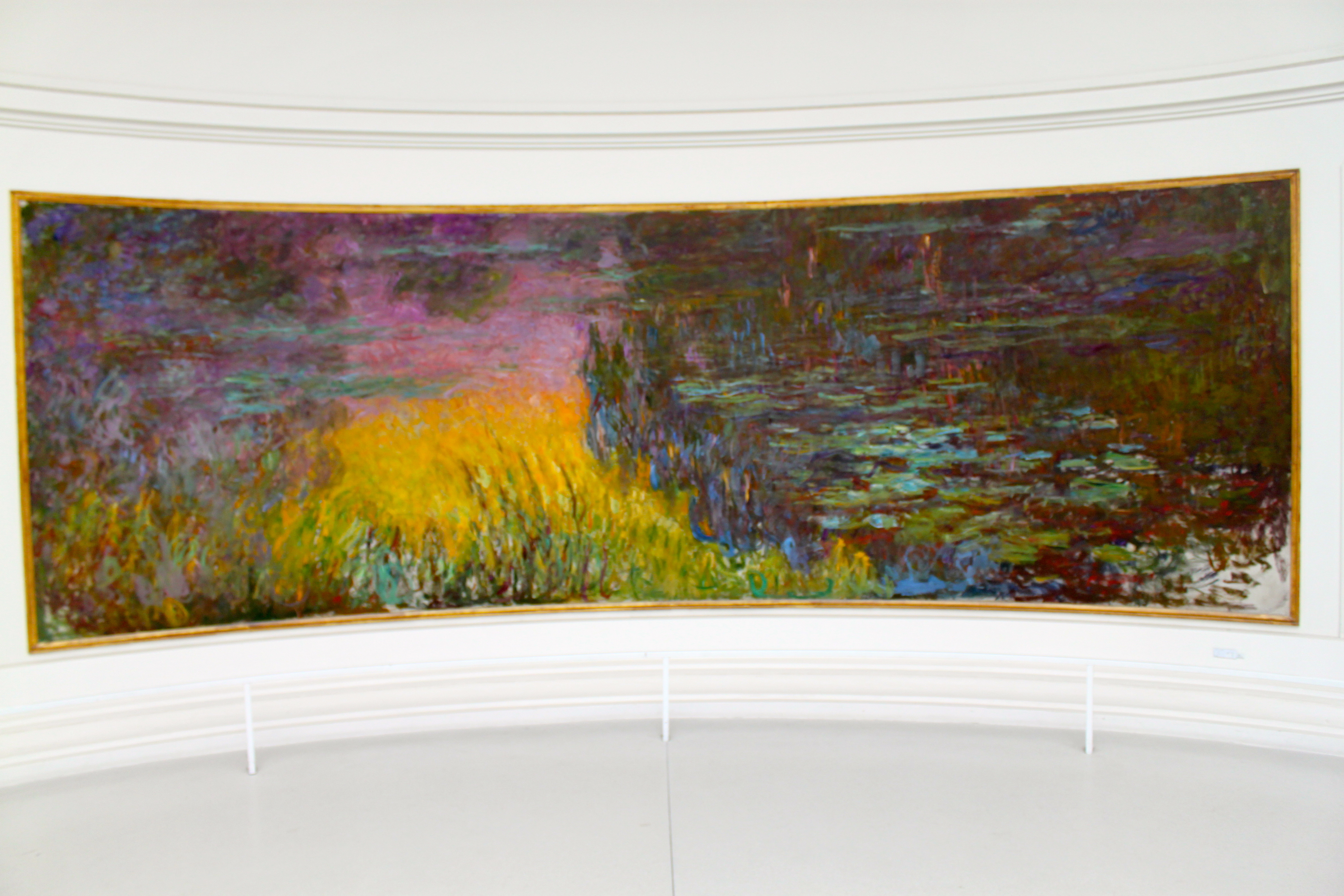
If you don’t have enough time (or patience) to make the trip to Giverny in the spring or summer, I highly recommend stopping by l’Orangerie in Paris where you can see his famous nympheas (water lilies) in a gorgeous space built specifically for them blooming all year long.

monet_orangerie.jpg monet_orangerie2.jpg

Other places to see Monet in Paris:

The Musée d’Orsay and the Marmottan-Monet Museum which has a wonderful permanent Monet collection and is currently hosting what I have heard is an amazing expo: Les Impressionnistes en privé: Cent chefs-d’oeuvre de collections particulières. (The Impressionists in private: One hundred masterpieces from private collections.)