Skip to content

Posts from the ‘Around France’ Category

No. 128: maman gâteau

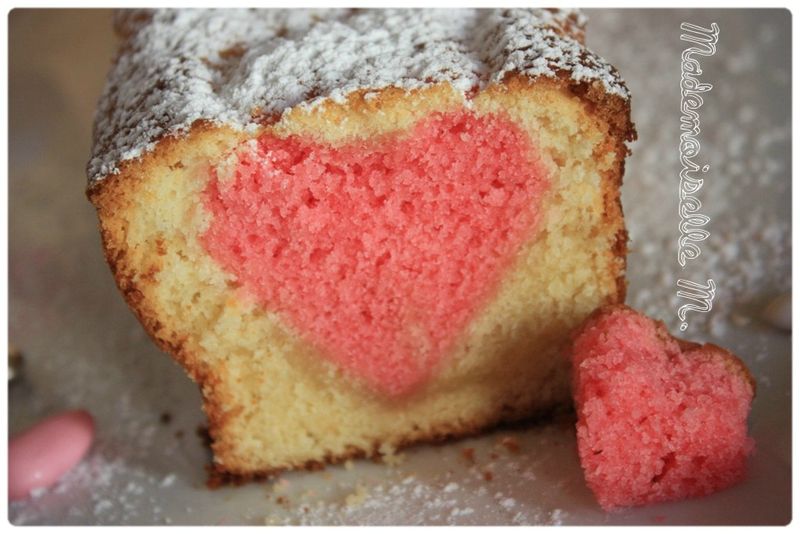
maman gâteau:

femme très attentionnée, qui fait des cadeaux; a very caring/attentive woman who gives presents…

soft, indulgent mother/woman...

I’m not feeling too confident about my French today after yesterday’s post, but I came across this phrase yesterday when I was reading. Not quite sure exactly what it meant,  I went in search of a definition. The second definition: soft, indulgent mother/woman…made more sense in the context of what I was reading. If I’m on target, the phrase makes me smile, because the literal translation is “cake mom” or “mom of cake”…

Who wouldn’t want a cake mom?

source: lejournaldemllem.canalblog.com

source: lejournaldemllem.canalblog.com

Vocabulaire

maman gâteausoft, indulgent mother; but literally, cake mother

maman: mom; mother

No. 127: French Body Language

Lately I have been spending more time with a couple of French women. We try to speak French, but invariably we end up in English as they are far more fluent in my native tongue than I am in theirs. But it is still wonderful, and I feel like I am finally getting a small insiders view to what makes the French woman tick.

I have been secretly studying them, and trying to learn how to be a little more French, at least in my gestures, sounds and facial expressions. I find it very interesting because sometimes their gestures have completely different meanings from the same gesture in America, and sometimes they are gestures I’d never seen before moving to France.

Here are a few of my favorites that I am practicing en ce moment. I’m pretty sure most of these should only be used among friends.

*Ce n’est pas ma faute / Je n’en sais rien.

The French Shrug

These phrases usually accompanies the good old Gallic shrug—raised shoulders, raised eyebrows, lower lip thrust out, hands held up like you are being robbed. Meaning: It’s not my fault / I don’t know (how that happened).


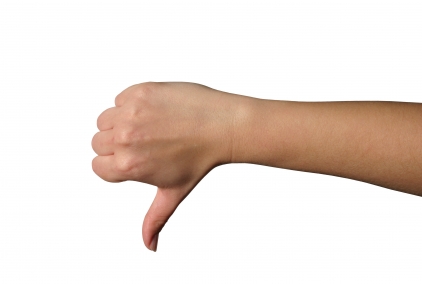
C’est Nul!

thumbs downThis saying accompanies the American thumbs down gesture to indicate something is worthless, foolish or just plain bad.

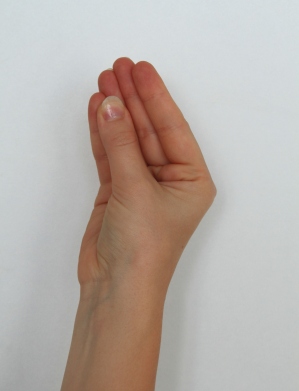
Rien!*

Nul! This one might confuse Americans because for us it’s the A-OK gesture—as in making a circle with your index finger and thumb while your other three fingers stay up. In French body language this actually means zero, zip, nothing, and, I’m guessing, irrelevant.


J’ai du nez.*

Nose_TapThis is a saying I don’t hear very often, but I see this gesture a lot when French women are talking together. They tap their nose with their index finger and look mischievously in your eyes. This, I believe, means they are cunning and quick and have seen the truth faster than anyone else in the conversation. I adore this gesture. It always makes me smile.


Il a un verre dans le nez.

alcoholThis saying and gesture is for when someone you’re hanging out with has had a bit too much to drink. For comedic relief (or behind the drinkers back), you make a fist and hold it up in front of your nose, tilt your head and twist your hand. Try it out at your next party.


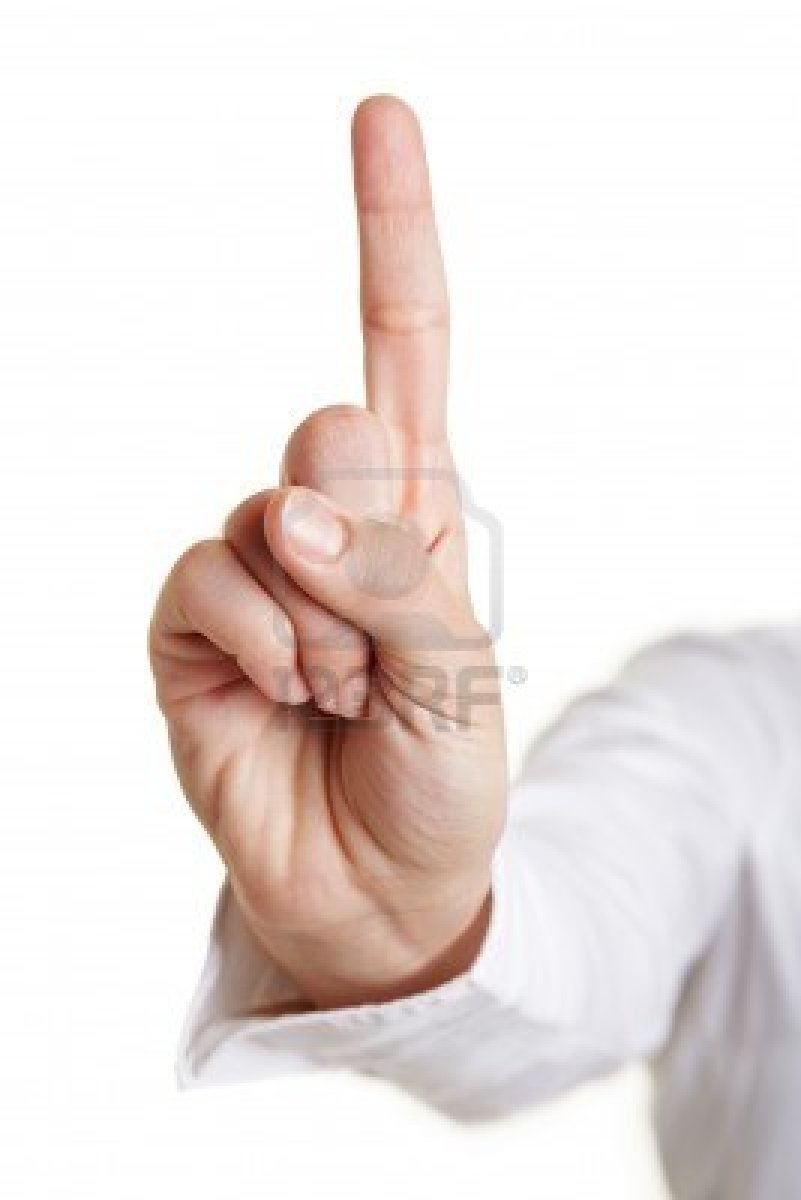
Chut! / Silence!

Silence!When you want some one to shut up or fermez-la, you can hold up your index finger in the air (not in front of your lips), and give a severe look to the people disturbing you. French teachers use this gesture frequently.

Du fric!

too expensive!If you are out shopping with your French girlfriends or even talking about shopping or buying something, you will hear this expression. It accompanies the holding out of your hand and rubbing your thumb across you fingertips. This specifies that something is too expensive for you, or you need the money to buy it.

Et enfin…


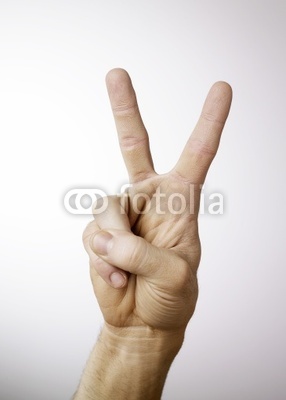
Victoire!

Victoire!I never actually hear women say, “Victoire!”, but I see this symbol all the time. This, of course, in America is the “peace sign” or is used to signifies the number 2, when ordering something, but in France it means victory or success in accomplishing something.

* Please see the comment section for a reader’s different interpretation of some of these gestures. I am very grateful for all your feedback and corrections. French, it isn’t easy for me!

Vocabulaire:

en ce moment: at the moment

Et enfin…And finally…

fermez-la: shut it, or shut up

Victoire! Victory!
No. 125: Roussillon

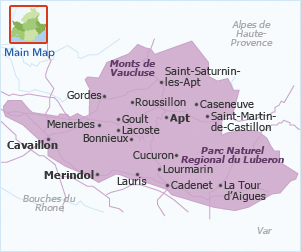
luberon_mapThe stunning village of Roussillon is located in Languedoc-Roussillon, the southernmost region of France, about 10 km northwest of Apt, just a bit north between Avignon and Apt.

En fait this hamlet is so picturesque, it is considered one of the Plus Beaux Villages de France. Set outside an emerald pine forest on bright red-ocre hills, Roussillon is known for its clay-colored rooftops and structures, narrow medieval streets, handsome doors, colorful shutters and of course, great wine. It is a teeny village, but the perfect place to spend a sunny afternoon with girlfriends exploring, eating fabulous fresh food, and sharing a bottle, or two, of Côtes de Luberon on a sun-kissed balcony. It’s also a wonderful place to stop on a romantic holiday with your hubby as you tour this spectacular region in early summer…hint, hint, Superman..

The Sentier des Ocres, or Ochre Trail, also known as the Giants’ Causeway, is an otherworldly natural park (and national treasure) of red cliffs and gorgeous sandy trails just beside Roussillon. For this western girl it’s a happy reminder, albeit on a small scale, of Canyon Lands and Arches National Park. A hike through the park is two very well spent hours among God’s southwestern canvas. A word of warning: so touchable is the reddish-orange sand, the kid-at-heart would be wise to take an extra set of clothing, or at least an extra pair of shoes, to change into as ocres stains are not so easy to wash out.

Roussillon

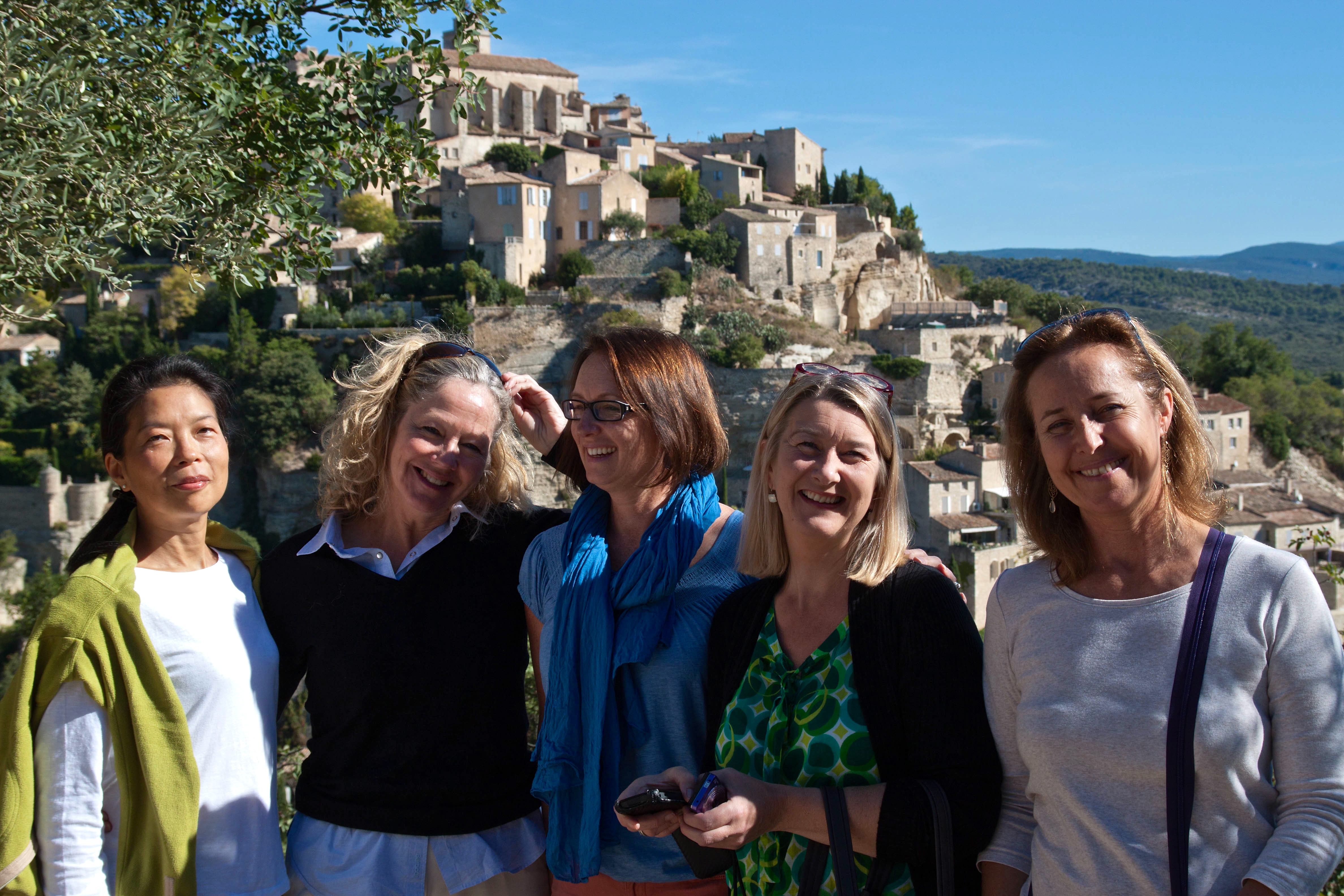
Kudos to the lovely Pascale Moreau for sharing this beautiful photo (above) from our girls’ weekend in and around Languedoc-Roussillon.

And one last interesting fact for my book club friends, Samuel Beckett lived in this terra-cotta town for a couple of years and references Roussillon in Waiting for Godot.

On the way to Roussillon...

On the way to Roussillon…

Vocabulaire

en fait: in fact

Plus Beaux Villages de France: (one of the) Most Beautiful Villages in France

Sentier des Ocre: Ochre Trail


No. 124: Bone Marrow

Humanoids have been feasting on bone marrow for nearly two million years. I, on the other hand, only became acquainted with it about two months ago, and lately it seems to be a consistent offering on my plate.

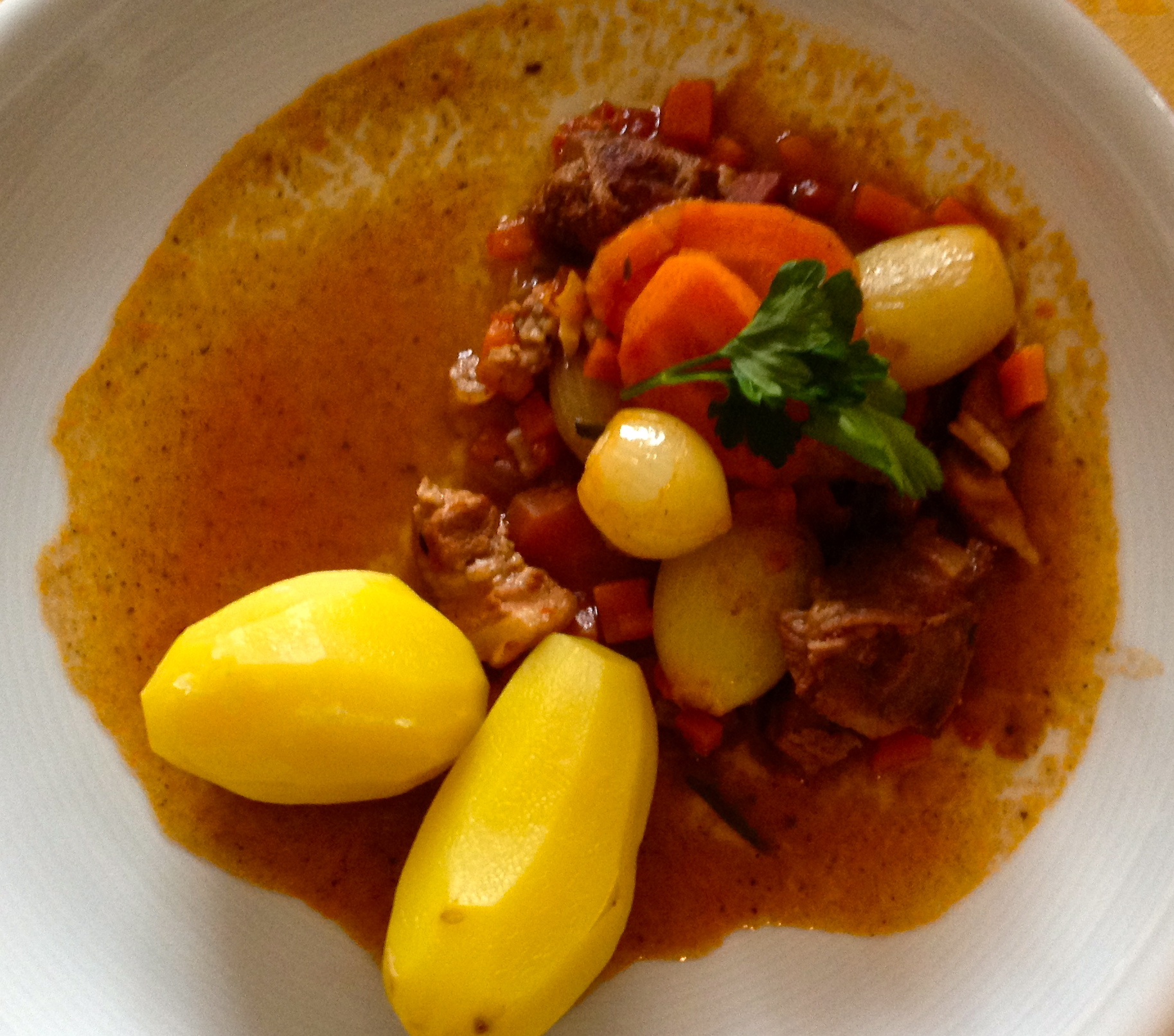
My first go with it was at a lunch lesson that featured Daube Provençale, a hearty pork stew made with pork cheeks, pork belly and a delicious homemade beef broth prepared with beef bones.

l'apéro avant la Daube Provençale

l’apéro avant la Daube Provençale

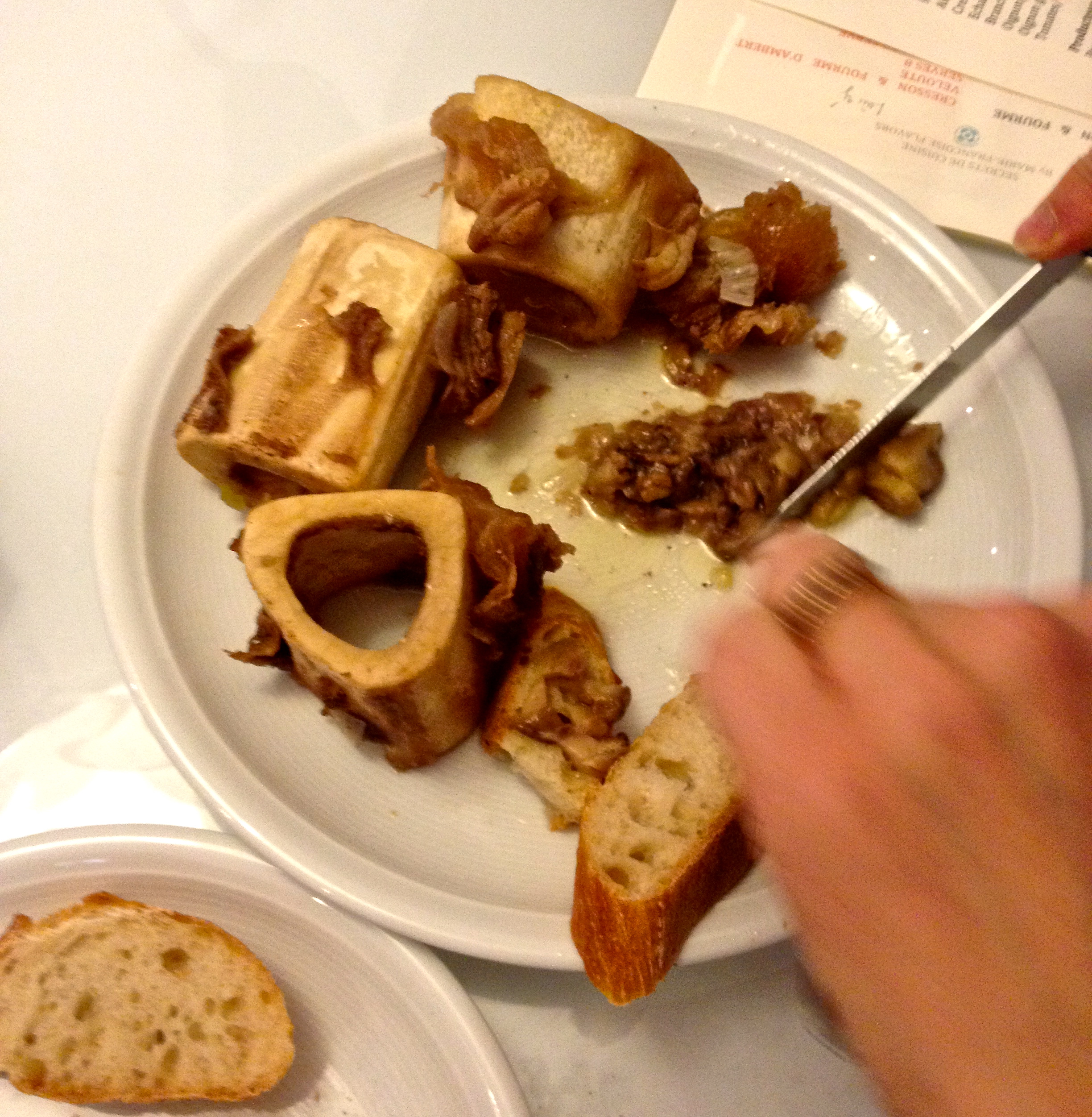
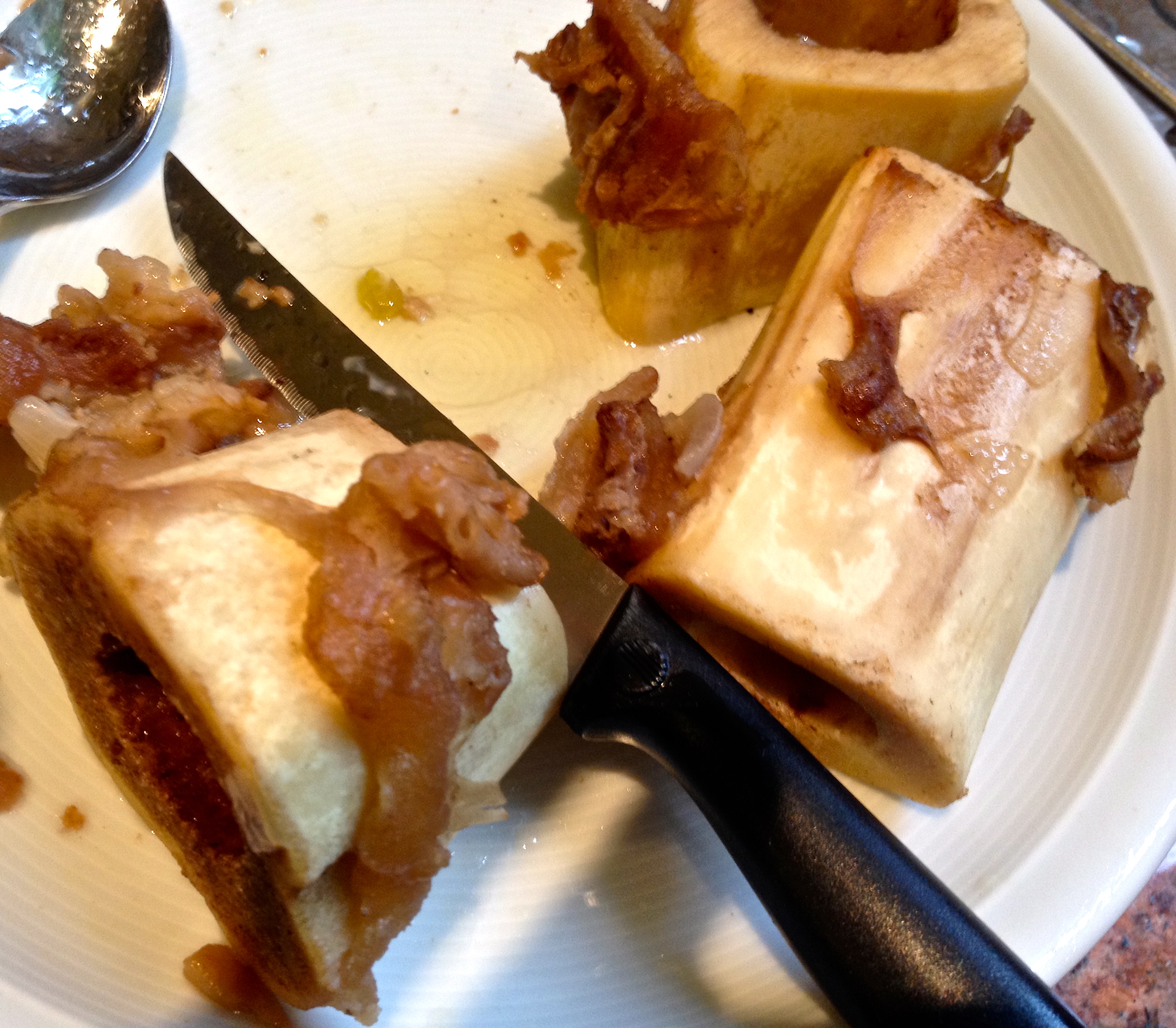
When we finished making the broth, we kept the beef bones, and as an appetizer we spread the marrow on a sliced,  crusty baguette and sprinkled it with a wee bit of sea salt. C’est délicieux! Subtle, a bit sweet, très riche, with a velvety nuttiness, no, this treat should not be carelessly disregarded.

bone marrow

Vite! Vite! Head to your nearest boucher and pick up your bones today. 

daube provençale

Click here for the delicious Daube Provençale recipe.


Vocabulaire

boucher: butcher

C’est délicieux! It’s delicious!

très riche: very rich

Vite! Vite! Quick! Quick!

No. 122: Ten French Proverbs Relevant to this almost 50-year-old

Grandville-Cent-Proverbs-1

  • Rien ne sert de courir, il faut partir à point.
    • Slow and steady wins the race.
    • “There’s no point in running, you have to leave on time.”
  • C’est en forgeant qu’on devient forgeron.
    • Practice makes perfect.
    • “It’s by forging that one becomes a blacksmith.”
  • Ce n’est pas à un vieux singe qu’on apprend à faire la grimace.
    • There’s no substitute for experience.
    • “It’s not an old monkey that one teaches to make faces.”
  • Si jeunesse savait, si vieillesse pouvait.
    • Youth is wasted on the young.
    • “If youth knew, if old age could.”
  • Un chien vivant vaut mieux qu’un lion mort.
    • A bird in the hand is worth two in the bush
    • “A live dog is worth more than a dead lion.”
  • Il faut casser le noyau pour avoir l’amande.
    • No pain no gain.
    • “You need to break the shell to have the almond.”
  • Il ne faut jamais dire « Fontaine, je ne boirai pas de ton eau ! 
    • Never say never.
    • “You should never say, ‘Fountain, I will never drink your water!'”
  • Tourner sept fois sa langue dans sa bouche.
    • Think long and hard before speaking.
    • “To turn one’s tongue in one’s mouth seven times.”
  • L’habit ne fait pas le moine.
    • Clothes don’t make the person.
    • “The habit doesn’t make the monk.”
  • Qui vivra verra.
    • What will be will be.
    • “He who lives will see.”

And one extra that I wish was true…

  • Impossible n’est pas français…hmmmmm…Imposible isn’t French….mais, we all know, ce ne pas possible, non 

No. 121: Profiteroles

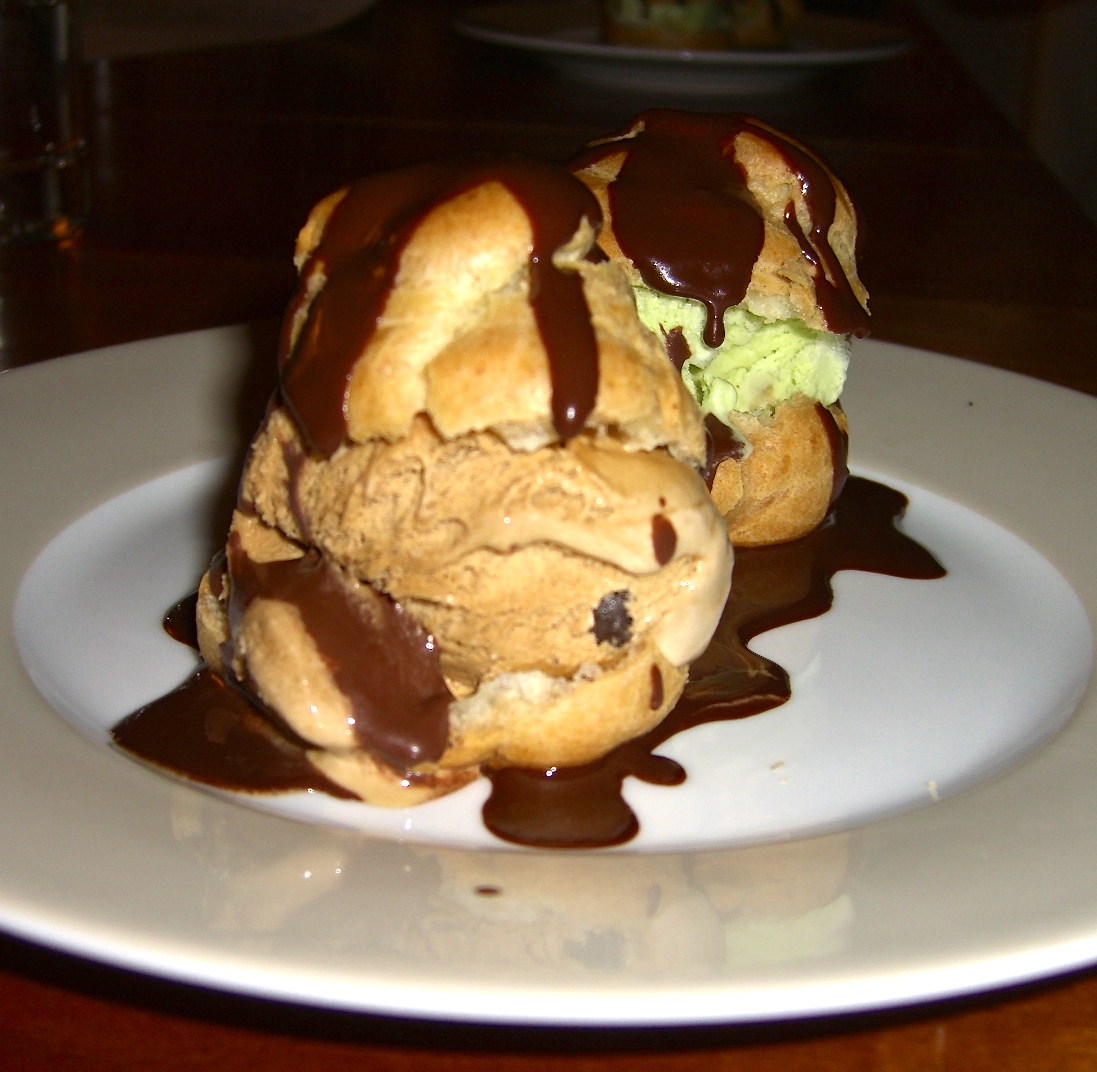
Cream puffs filled with ice cream (usually vanilla) and topped with hot chocolate sauce—that is what the French call profiteroles. Supposedly Catherine de Medici (wife of the French King Henri II) was the first to have a slightly more modest version of this dessert, a pastry puff filled with whipped cream, or as we Americans know them, cream puffs.

Over the centuries, ice cream and chocolate sauce were added to make this delicious and cold treat you will find on most French dessert menus.

profiteroles

The first time I lived in France, I took a course on making pate à choux, fell in love with it (mes petits choux) and since then, profiteroles have been a fan favorite chez nous.

choux pastry profiterole

Once you get the hang of it, it’s really not that hard. They are brilliant with coffee ice cream and caramel beurre à la fleur de sel sauce. For a savory twist, gougères, I make the choux with different types of cheeses (Comté & Bleu d’Auvergne, j’adore) and fresh herbs.

If you want to make Géraldine’s yummy recipes, click the links below:

PROFITEROLE

GOUGÈRES


Vocabulaire:

caramel beurre à la fleur de sel: buttered caramel with sea salt

chez nous: at our house

gougères: savory choux pastry mixed with cheese

j’adore… I love…

mes petits choux: my little cream puffs (a term of endearment not just for pastry)

pâte à choux: a standard puff pastry that can be either sweet or savory, literally cabbage dough; also know as pâte à chaud (heated dough)

No. 120: Chic Bicycle Helmets

Before I moved to Paris, I wore my bicycle helmet religiously. In fact we shipped all our helmets from the U.S. before we arrived. But Parisians are not big on wearing bicycle helmets when they commute to work or run errands, and since living here I have been totally swayed by the herd mentality, and rarely remember to wear mine, unless I’m going for a long weekend ride. There is something about the Vélib bike share program and being able to hop on and off a bike at will that makes me feel footloose and fancy free, and think, hey, I don’t need safety equipment.

I realize this is completely STUPID. And actually everyday when I hop on my vélo, I have the same passing thought, “I wonder if this is the day you will regret forever not wearing a helmet?”

Still I’ve become lazy and annoyed by the chore of lugging it around while je fais les courses, and as much as it shames me to admit it, wary of what Parisians will think about how I look.

Mais, the other day when I was out walking with Taz, I saw a family of three (mom, dad and teenage daughter) on their bikes with some very chic headgear. “Leave it to the French to make bicycle helmets pretty,” I thought, and went home to do some research.

When I opened my email, a monthly newsletter popped up, and one of the top features was this:

folding bicycle helmet closca turtle VERSIONS

Exactly the chic chapeaux the French family had been sporting. I took it as a sign. After more research, I discovered that not only did these helmets (by Closca) look good, but also they are collapsible and safety certified. Apparently I have been totally out of the loop. In most big cities around the world, collapsible bicycle helmets are the latest trend.

And guess what? This particular one is not designed by the French, but created by two Spanish entrepreneurs and design engineers.

Bien hecho! Y muchas gracias!

And I then I found these by Yakkay:

Don’t tell Superman. Who knows, maybe he will find a bicycle helmet cover obsession easier to relate to than a shoe obsession?

Which one do you like?

Vocabulaire

Bien hecho! Y muchas gracias! Well done! And thanks a lot!

Je fais les courses: I run errands; I do the shopping

vélo: bicycle