No. 263: Monet in Venice
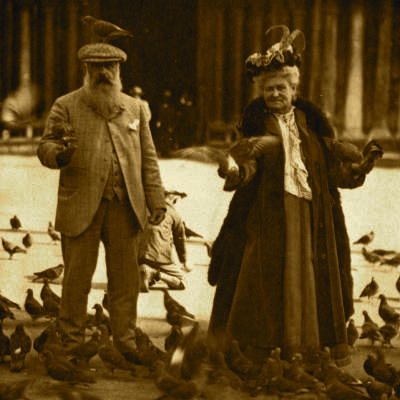
I was extremely fortunate to accompany Superman on a work trip to Venice, the City of Changing Light. A painter’s and photographer’s dream.


May 31
I was extremely fortunate to accompany Superman on a work trip to Venice, the City of Changing Light. A painter’s and photographer’s dream.
May 29

I was so inspired by Giverny and Claude Monet, I decided to make the short trip to one of Paris’ secret treasures, le Musée Marmottan Monet, to take in the exceptional expo marking 80 years since the museum opened. The expo: Les Impressionnistes en privé: Cent chefs d’oeuvre de collections particulières (The Private Impressionists: One-hundred Masterpieces from Private Collections) did not disappoint. I could sit for hours in this spacious and manageable museum, especially on a rainy day, which it was, and simply Zen-out, and be taken away to Monet’s gardens and Londonscapes, Morisot’s femmes, Degas’ dancers, Renoir’s portraits and parties, and Pissarro’s campagne.


The Marmottan is not usually on the standard tourist itinerary, so you can enjoy your viewing without worrying about taking an elbow in the ribs or competing for the best view. Serenity and tranquility are the two words that come to mind when I visit this maison-turned-museum. It’s like coming home to your (extremely wealthy) dotting aunt’s manor and taking an almost private tour.

I am a bit reluctant to share the details of one of my favorite Parisian escapes, so please don’t let the word spread too far.
2, rue Louis-Boilly, 76016
Mardi au dimanche de 10h à 18h
Dernière entrée: 17h30 Nocturne; le jeudi jusqu’à 20 h Dernière entrée: 19h30
Fermé au public le lundi
Vocabulaire
campagne: countryside
femmes: women

It is difficult not to develop an affinity for Claude Monet when you live in France, especially in Paris. One of my favorites of the Impressionist’s movement (along with Renoir, and Boudin, bien sûr), M. Monet’s works can be found in numerous museums in Paris, as well as at his beloved Giverny, where you can walk among his self-designed and hand-planted gardens that inspired so much of his work, and oggle at the reflections in the pond of his famous water lilies and Japanese footbridge.

Claude Monet was a man with a vision and visionary friends who rejected the old school approach to landscape painting and looked to nature herself as his teacher. He was a patience observer of the natural world, and found solace and pleasure in watching the play of light, timing and seasons on his subjects.
Supported by his parents, he attended the Le Havre School of the Arts and was befriended and mentored by Eugéne Boudin himself. It was Boudin who introduced him to the idea of painting “en plein air” (outdoor).

Every spring I steel myself to face the throngs of tourists who gather at Giverny, and every year despite the crowds, I’m always glad I’ve made the pilgrimage. Even with what seems like thousands of Russian voyagers snapping thousands of photos, Giverny still offers a flavorful feast for the senses.


His gardens at Giverny are like his paintings—gaily colored patches that are sometimes a bit muddled and cluttered, but at the same time perfectly composed. His estate is split into two gardens. The first is the walled garden laid out in stunning symmetrical flowerbeds with a splendid path running down the middle, sheltered with iron trellises and climbing blooms. The second garden is the water garden—home to the famous Japanese bridge and water-lilied pond reflecting the blue sky, white clouds, wisteria, and weeping willows that line the shore.


Monet spent more than 40 years planting and painting at Giverny. I find it fascinating to think about him and his family meticulously planting their gardens first – creating a tangible, living piece of art—while at the same time envisioning what he would produce on the canvas. I am enchanted by this man who essentially created his artwork twice—first shaping it in nature and then sitting among it and putting it forth on the canvas.


As fond as he was of painting his garden, pond, and water lilies, Monet was also inspired by the banks of Seine and frequently painted en plain air. He traveled throughout the Mediterranean and was especially inspired by Venice, and continued his outdoor works in London, but at Giverny, his famous paintings literally come to life. It’s pure magic.
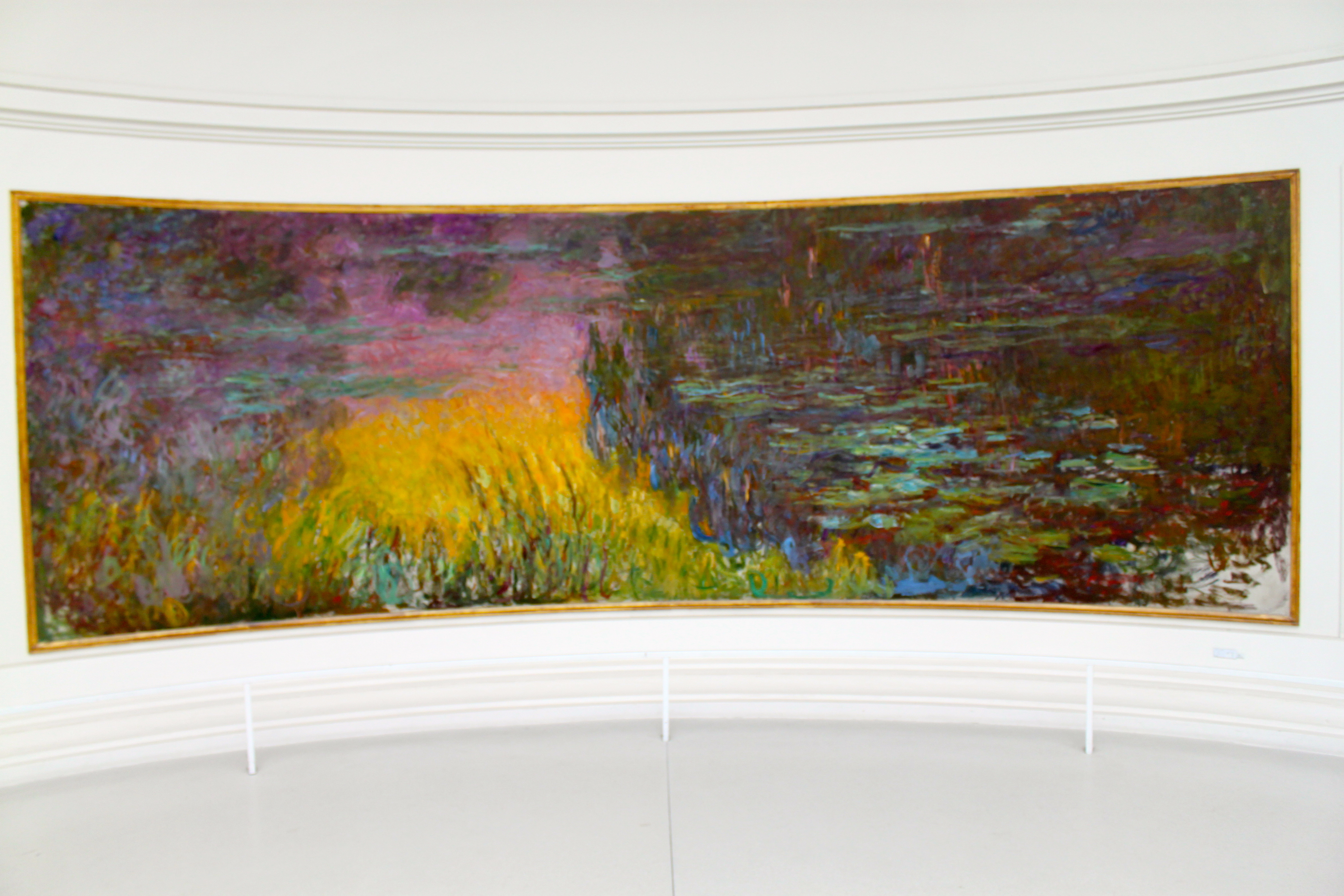
If you don’t have enough time (or patience) to make the trip to Giverny in the spring or summer, I highly recommend stopping by l’Orangerie in Paris where you can see his famous nympheas (water lilies) in a gorgeous space built specifically for them blooming all year long.

Other places to see Monet in Paris:
The Musée d’Orsay and the Marmottan-Monet Museum which has a wonderful permanent Monet collection and is currently hosting what I have heard is an amazing expo: Les Impressionnistes en privé: Cent chefs-d’oeuvre de collections particulières. (The Impressionists in private: One hundred masterpieces from private collections.)
“L’avenir d’un enfant est l’oeuvre de sa mere.” (The future of a child is the work of his mother.)-Napoleon Bonaparte
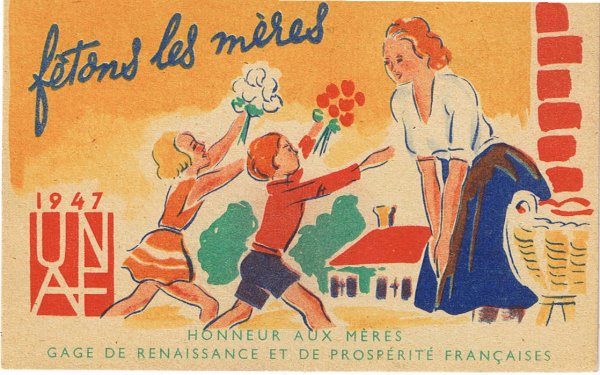
While Mother’s Day in America was first officially celebrated in 1914 after Anna Jarvas campaigned for six long years for a day to honor “the person who has done more for you than anyone in the world,” Mother’s Day in France came to be celebrated with slightly more practical and economic intentions behind it: the necessity to repopulate a country distressed by its declining birth rate.
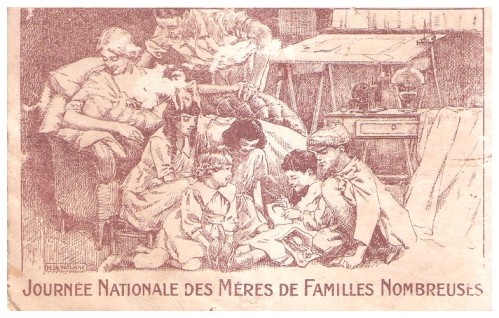
In fact, French Mother’s Day was first instituted with an award attached to it for producing a high number of children. In 1906, a medal of haut mérite maternel (high maternal merit) was awarded to mother’s who had more than nine children. By 1918, some cities in France had established les Journée Nationale des Mères de Familles Nombreuses (National Day for Mother’s of Large Families), and in 1920 it became an official national holiday celebrated on the last Sunday of May. From the 1920s through 1940 the French government continued to support the holiday to help officially promote and reward large family policy and honor those mothers’ with the ability and desire to pop out baby after baby.


During the reign of the Vichy government, in an attempt to win favor with all mothers, the occupational government (while still actively promoting large family policies), extended the holiday to honor all mothers, even those with smaller families. After the war ended, Mother’s Day gradually became less attached to politics and nationalism, and became more of a day to celebrate your fabulous do-it-all mom.
While I was researching the history of French Mother’s Day, I came across this poster from 1941 Vichy France offering advice on how French children should behave on Mother’s Day and throughout the year, according to the field marshal, no less…
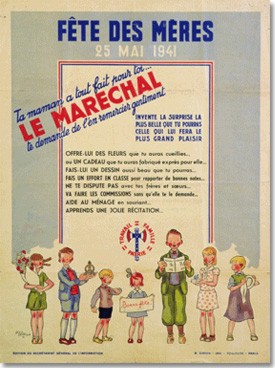
Ta maman a tout fait pour toi, le Maréchal te demande de l’en remercier gentiment.
Invente la surprise la plus belle que tu pourras, celle qui lui fera le plus grand plaisir.
Offre-lui des fleurs que tu auras cueillies…
ou un cadeau que tu auras fabriqué exprès pour elle…
Fais-lui un dessin aussi beau que tu pourras…
Fais un effort en classe pour rapporter de bonnes notes…
Ne te dispute pas avec tes frères et sœurs…
Va faire les commissions sans qu’elle te le demande…
Aide au ménage en souriant…
Apprends une jolie récitation…
Travail-Famille-Patrie.
(Your mom has done everything for you, the field marshal asks you to thank her kindly.
Come up with the most beautiful surprise you can that will give her the greatest pleasure…
Offers her flowers that you picked …or a gift you have made especially for her …
Draw her the nicest picture you can …
Make an effort in class to make good grades …
Do not fight with your brothers and sisters …
Run errands without her asking …
Help with the household with a smile…
Learn a beautiful recitation …
(Remember) Work-Family-Homeland)
…and finally in France, fête your lovely mother with a gorgeous cake from your kitchen or pâtisserie that looks like a bouquet of flowers or something too delicious to be true.
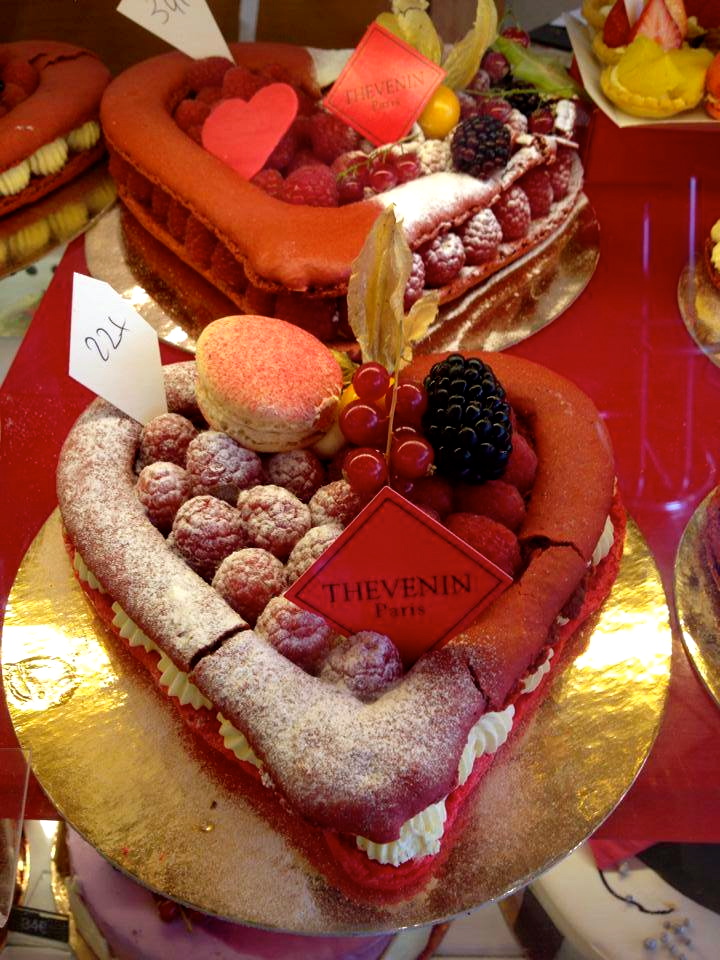
source: Meeting the French
Bonne fête des mères!
May 23
May 21
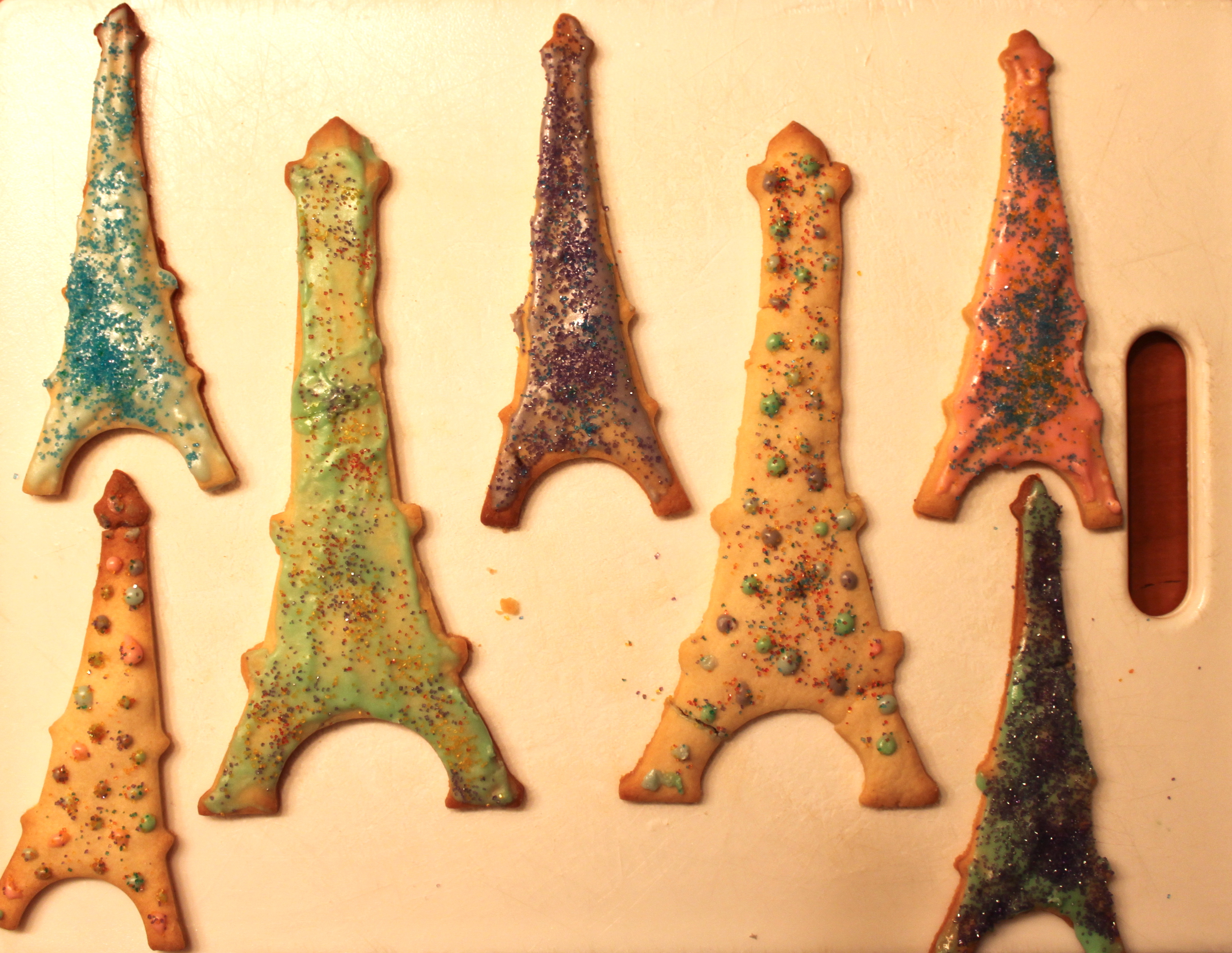
Since I am crazy for the ET or TE (tour Eiffel) as the French say, I thought I’d try my hand at making some at home with the help of a few little hands. They may not be as pretty as the ones you find in the shops, but they do taste pretty darn good, and were made with love.
May 20
After my semi-successful attempt in January to interpret French body language, my favorite virtual French teacher, Géraldine, has come to my rescue again with her helpful new lesson: 12 Common French Gestures.
Finally a clear explanation of j’ai du nez: tapping the side of your nose = I have a good instinct/idea; I have flair; and she offers up a few new ones that I have seen a lot of lately but had not quite understood correctly:
Follow Géraldine weekly on Comme une française TV every Tuesday. Moi, j’adore.




 365+ Things I Love About France